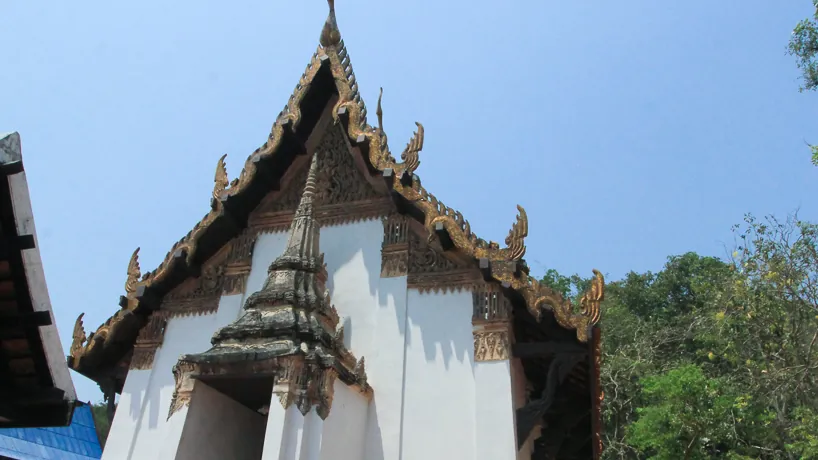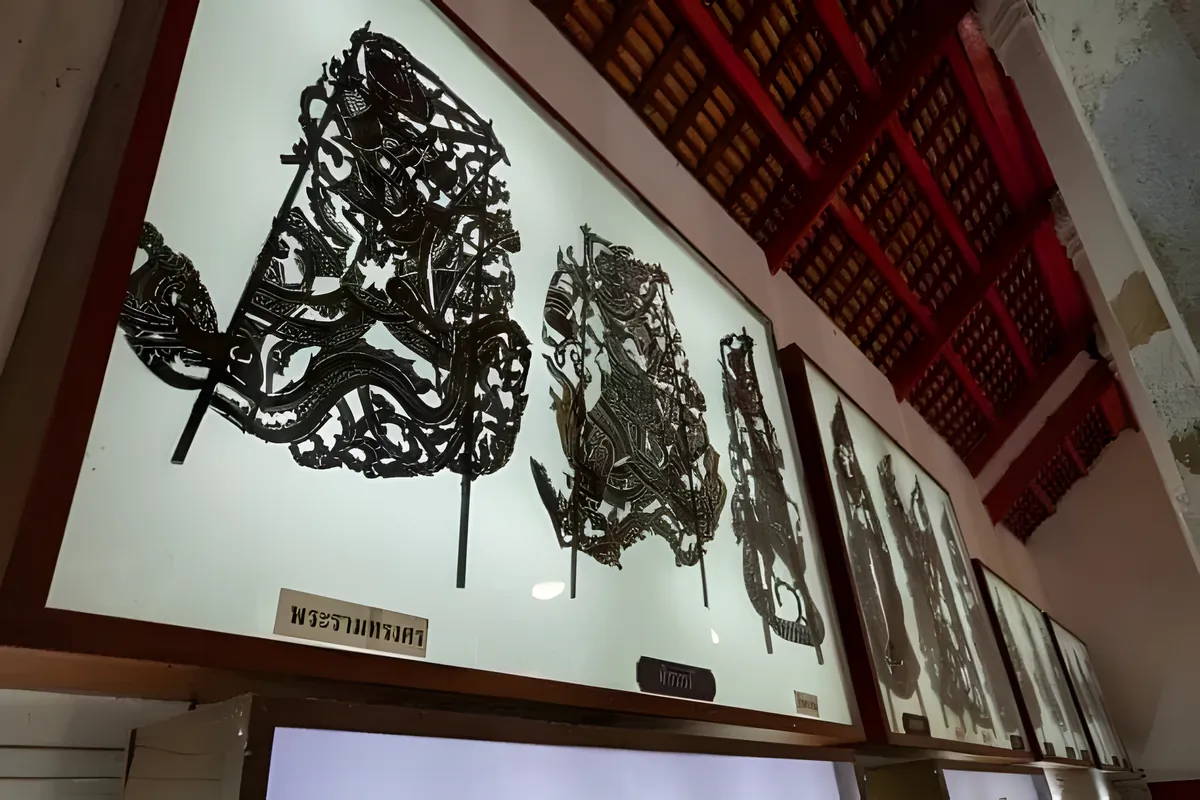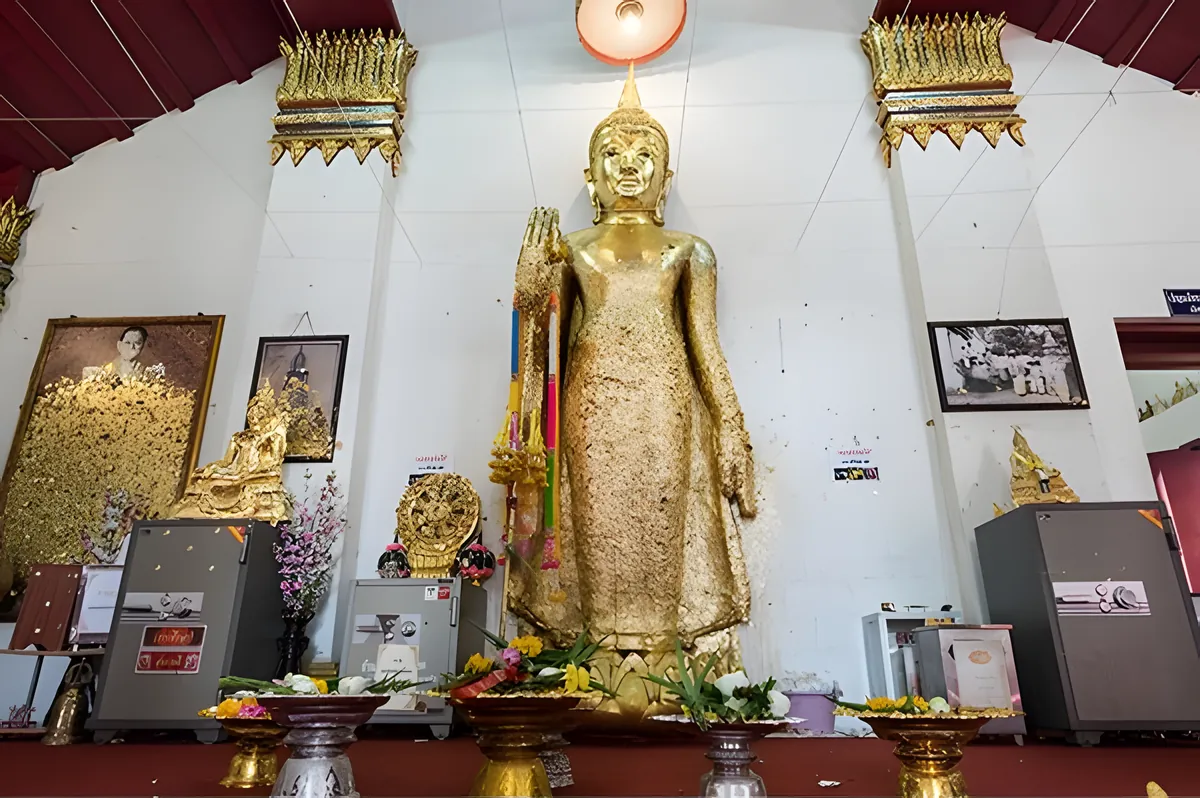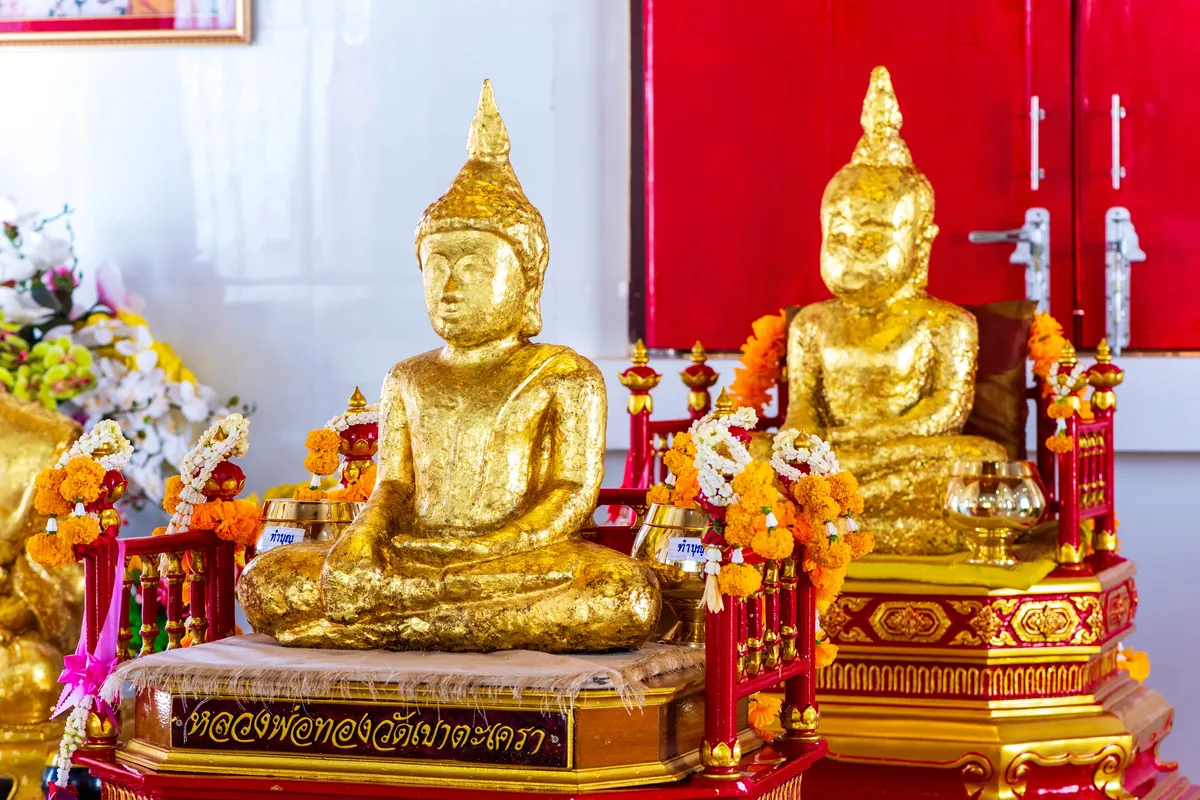





Wat Kuti’s claim to fame is its ordination hall: a rare all-teak structure on a plastered masonry base, in a district where most temple buildings are brick and stucco. Set in Moo 5, Bang Khem subdistrict of Khao Yoi district, Phetchaburi, the temple traces its founding to the Ayutthaya period, and Thailand’s Fine Arts Department registered it as a national ancient monument on 21 July 1975 — a formal recognition that few village temples in the province carry.
What sets the hall apart is the carving that wraps its exterior walls in a continuous run, rather than the murals or stucco relief typical of temples in the region. The panels tell the thirteen chapters of the Vessantara Jataka (the “Great Birth” story of the Buddha’s second-to-last incarnation) alongside the Ten Birth Stories — Prince Temiya, Bhuridatta, Suvannasama, and the rest of the Dasajati cycle. Woven into the same sequence of panels are scenes from Journey to the West, the Chinese literary classic, a detail that points to the trading contact and craft exchange that shaped temple art across central Thailand’s river towns during the period. Alongside the ordination hall, the compound holds a wooden sermon hall (sala karnprian) and monks’ quarters (kuti) built in the same all-timber style — the temple’s name comes from these dwellings.
As a working monastery rather than a tourist site, Wat Kuti sees a handful of local visitors on any given day, mostly residents of Bang Khem coming to make merit. There’s no ticket booth and no formal tour — you look at the carvings yourself, at your own pace.
It’s one of several understated village temples worth seeking out around Phetchaburi — Wat Khoi by Phra Nakhon Khiri Historical Park and Wat Nai Klang in Ban Laem make a similar quiet contrast to the province’s bigger-name sites.
Insider Tip: Circle the ordination hall’s exterior slowly before going inside — the carved panels run continuously around all four walls, and it’s easy to miss whole story sequences by only glancing at the front.
Watch out: The wooden carving is the protected historic asset here, so don’t touch the panels, and keep flash photography away from the older, more weathered sections.
- Entry: Free
- Location: Moo 5, Bang Khem subdistrict, Khao Yoi district, Phetchaburi
- Protected status: Registered national ancient monument, 21 July 1975
- Standout feature: All-teak ordination hall carved with Jataka tales and Journey to the West scenes
- Getting there: Local transport from Khao Yoi town centre; own vehicle gives more flexibility
Location & Directions
Moo 5, Bang Khem, Khao Yoi
Phetchaburi, Thailand
Show your taxi or Grab driver
วัดกุฏิ
Frequently Asked Questions
What makes Wat Kuti's ordination hall unusual?
What do the carvings depict?
Is Wat Kuti a protected historic site?
Is Wat Kuti free to visit?
Spotted something out of date or incorrect? Let us know
Stay Near Wat Kuti
Compare places to stay in Phetchaburi, or open the map for options closest to the attraction.