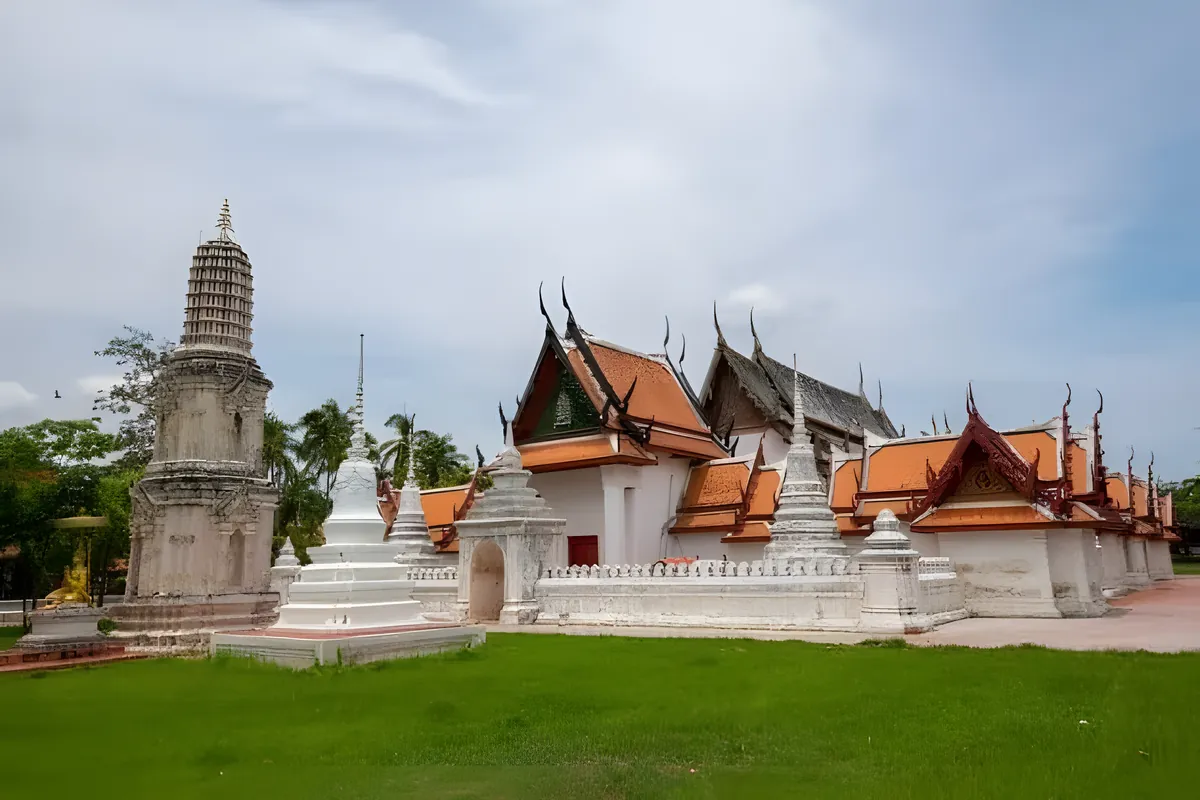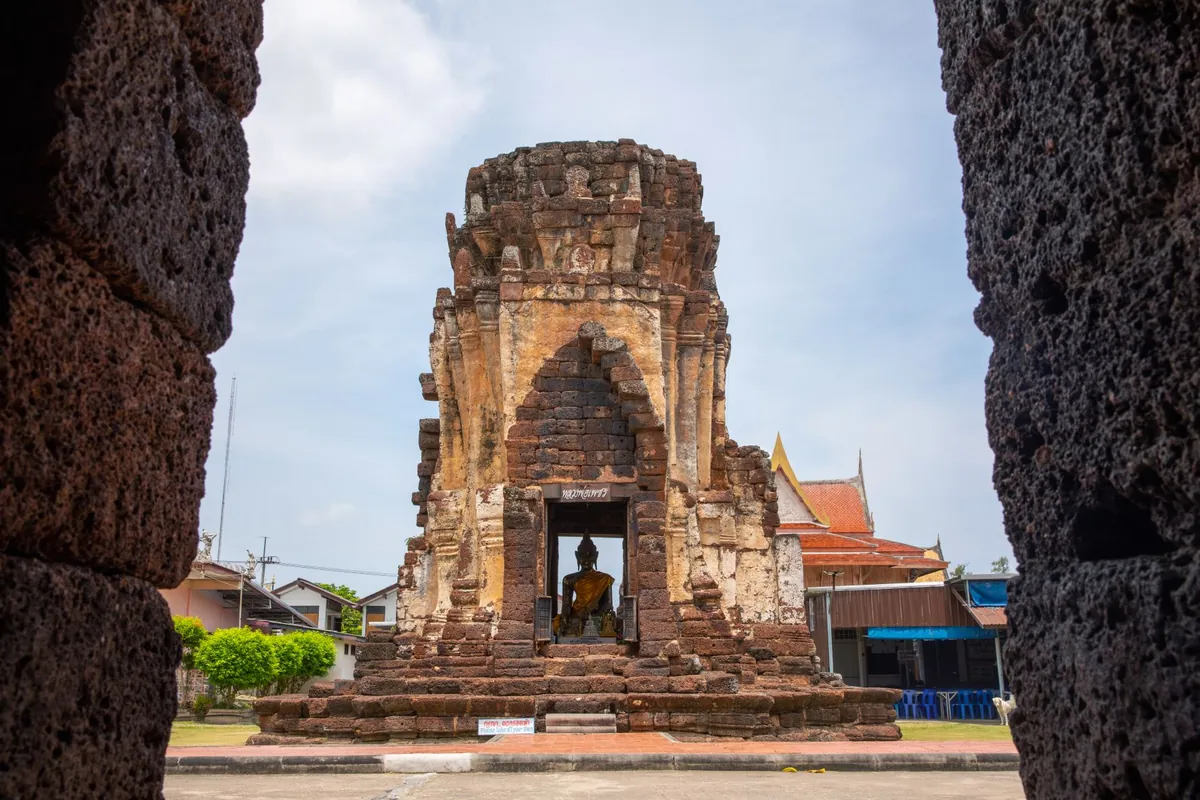





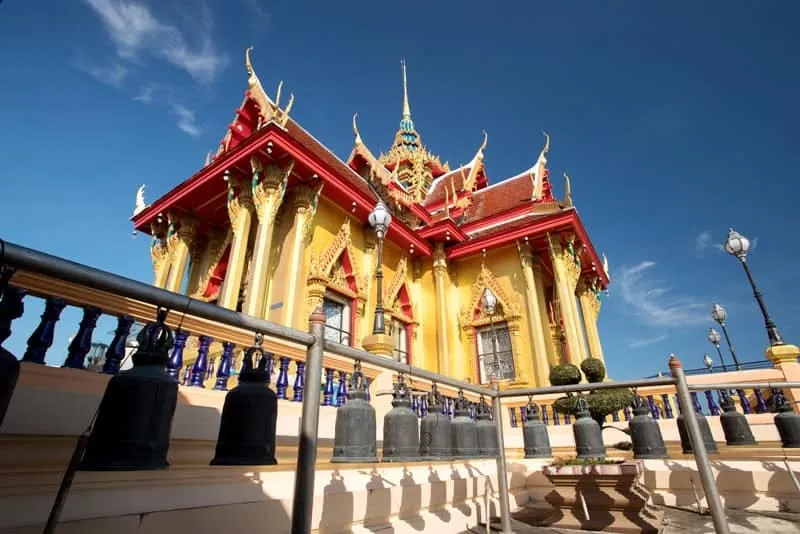
Wat Nai Klang sits in Ban Laem district on Phetchaburi’s coastal flats, a temple with a specific royal story behind it: local history credits King Taksin the Great with founding it as a merit offering to his mother, who came from Ban Laem. That puts its origins in the Thonburi period, making the temple well over 200 years old — one of only a handful of sites in the province with a direct Taksin connection rather than a generic Ayutthaya-era founding. The compound follows late-Ayutthaya architectural conventions throughout: a Maha-ut style ordination hall (windowless, lit only through the doors, a design meant to keep the interior dim and contemplative), a chedi, monks’ quarters, and a bell tower.
The building most worth seeing is the sala karnprian, the sermon hall, built entirely of teak. It underwent a full disassembly-and-rebuild restoration — every timber piece removed, repaired, and put back in its original position — a level of conservation effort unusual for a temple this size. The murals inside date to that restoration: a water-pattern design commissioned to the abbot’s own vision, and, above the doorway, a depiction of Buddhist cosmology worked in a style that draws visibly on Tibetan iconography rather than the standard central-Thai palette. It’s a detail worth stopping to look at closely, since it doesn’t match what you’ll see in most Phetchaburi temples.
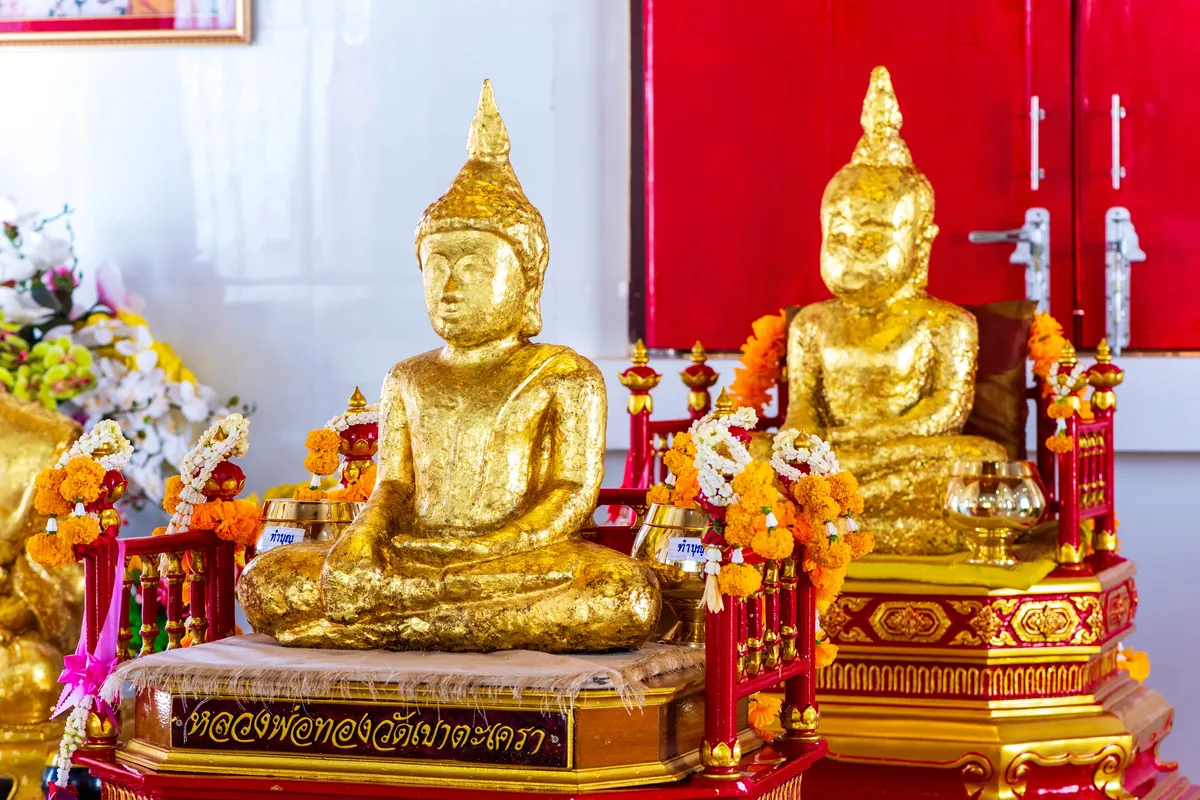
The temple’s principal Buddha image, Luang Pho Sukhothai, dates to the Sukhothai period and is shown in the Maravijaya posture — hand touching the earth, the classic “calling the earth to witness” gesture. Ban Laem residents treat it as the temple’s most important object of veneration, and it’s typically where visiting locals make their first stop.
Ban Laem sits a short drive from central Phetchaburi, close enough to pair with other village temples like Wat Khoi near Phra Nakhon Khiri Historical Park or Wat Kuti in Khao Yoi if you’re spending a day away from the coast.
Insider Tip: Ask a monk or temple caretaker to point out the Tibetan-influenced cosmology mural above the sermon hall doorway — it’s easy to walk past without noticing, but it’s the temple’s most distinctive artistic detail.
- Entry: Free
- Hours: Daily, roughly 08:00-17:00
- Location: 217 Moo 3, Ban Laem subdistrict and district, Phetchaburi
- Founded: Thonburi era, credited to King Taksin the Great
- Standout feature: Fully restored all-teak sermon hall with Tibetan-influenced cosmology mural
Location & Directions
217 Moo 3, Sukhaphiban Road
Phetchaburi, Thailand
Show your taxi or Grab driver
วัดในกลาง
Within Walking Distance


Frequently Asked Questions
Why is Wat Nai Klang connected to King Taksin?
What's the significance of the sermon hall?
What Buddha image does the temple enshrine?
Is Wat Nai Klang free to visit?
Spotted something out of date or incorrect? Let us know
Stay Near Wat Nai Klang
Compare places to stay in Phetchaburi, or open the map for options closest to the attraction.