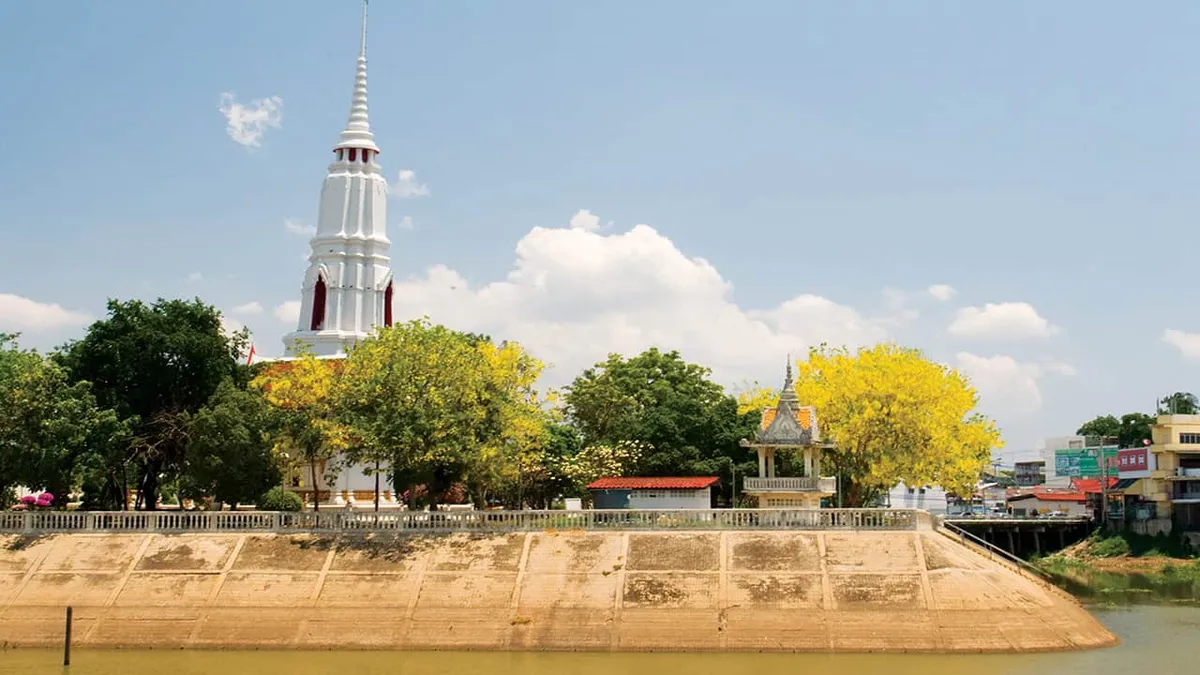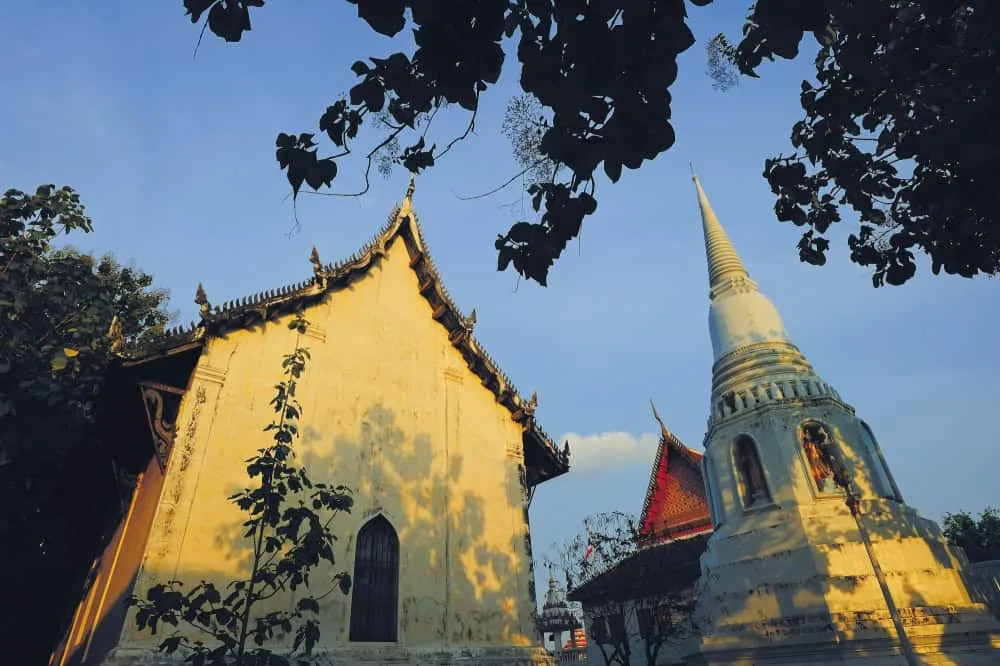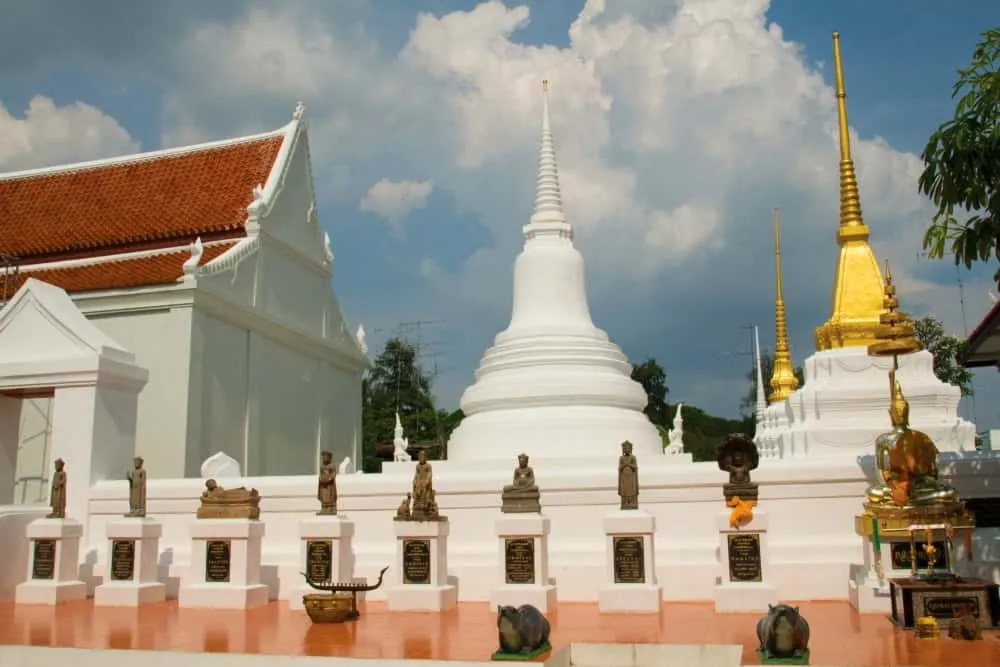



Wat Lai sits on the bank of the Bang Kham River in Khao Samo Khon subdistrict, Tha Wung district — a genuinely old temple, not the crumbling ruin an earlier version of this page described. Local tradition traces the founding to the Sukhothai period, roughly 750 years ago, though most of what survives above ground — the viharn, the stucco work, the chedis — dates from later Ayutthaya-era rebuilding. King Borommakot’s reign (1733-1758) is credited with a major renovation, and during King Rama V’s reign a fire damaged the hall housing the temple’s most revered image; the king had it brought to Bangkok for restoration before it was returned to Wat Lai.
That image is Phra Sri Ariya Metrai — the Maitreya Buddha, the Buddha of the future age in Theravada tradition — and it’s the reason people travel here rather than to any of Lop Buri’s better-known ruins. Once a year, in the sixth lunar month (typically May), the temple hosts a procession carrying the image through the community, drawing crowds far beyond what the rest of the calendar sees. Outside festival dates, Wat Lai functions as a normal working monastery — monks in residence, morning alms rounds, regular merit-making — not an abandoned archaeological site.
The building most worth slowing down for is the Vihan Khao Hong, a nine-bay hall roughly 26.5 by 10.2 metres. Its outer walls carry some of the best-preserved stucco relief work of this age anywhere in the region — the east wall depicts the Ten Birth Tales (Dasajati, the Buddha’s ten major past-life stories), the west wall depicts Pathomsomphot, the narrative of the Buddha’s early life. The floral and foliage border patterns are consistent with U Thong-period craftsmanship: dense, almost lace-like plasterwork that’s survived the tropical climate far better than most exterior stucco of this age. Bring a zoom lens or binoculars if you want to study the higher panels — the detail rewards a slow look, and there’s no glass or barrier between you and the wall.
Insider Tip: Go on a weekday morning. Wat Lai draws a fraction of the crowds at Ayutthaya’s headline ruins, so you’ll often have the viharn to yourself outside the annual procession.
Watch out: As at most active temples, the interior halls with the Maitreya image and stucco reliefs may be locked outside ceremony hours or if no monk is available to open them — call the temple office (0 3648 9105) before making a special trip if interior access is the point of your visit.
The grounds call for sturdy, closed shoes — some of the older brick paving is uneven — and the usual dress code applies: covered shoulders and knees, shoes off before entering any hall. Free entry, and the temple is open daily roughly 06:00-18:00, though the interior buildings follow monastic hours rather than a fixed public schedule.
- Founded: Local tradition dates it to the Sukhothai period; surviving structures are Ayutthaya-era
- Famous for: Phra Sri Ariya Metrai (Maitreya Buddha) image and its annual procession
- Vihan Khao Hong: 26.5 x 10.2 m, U Thong-style stucco reliefs of the Ten Birth Tales and Pathomsomphot
- Annual festival: Procession in the sixth lunar month (around May)
- Entry: Free, daily roughly 06:00-18:00
Location & Directions
1 Moo 10
Lop Buri, Thailand
Show your taxi or Grab driver
วัดไลย์
Within Walking Distance

Frequently Asked Questions
Is Wat Lai a ruin or an active temple?
What is Wat Lai famous for?
When is the best time to visit?
Is there an entry fee?
Can I see the stucco reliefs and the Maitreya image?
Spotted something out of date or incorrect? Let us know
Stay Near Wat Lai
Compare places to stay in Lop Buri, or open the map for options closest to the attraction.