

Wat Mae Nang Pleum
วัดแม่นางปลื้ม
Wat Mae Nang Pleum sits where Khlong Hua Ro meets Khlong Mueang, just outside the moated city island in Ayutthaya. Thai tradition dates its founding to the reign of King Borommaracha I (Khun Luang Phangua), the third Ayutthaya king, though no inscription confirms the exact year — what’s certain is that the temple carries one of the kingdom’s better-known local legends and one of its more unusual surviving chedis.
The story goes that King Naresuan was caught in a storm while travelling the river by boat and took shelter, unrecognised, at the riverside house of an elderly widow named Pleum. She gave the cold, wet stranger a drink and a place to sleep, praising the great King Naresuan to his face without realising who he was. At dawn the king returned to the palace; not long after, he sent a royal barge back to reward her kindness. When Pleum later died, Naresuan arranged her funeral and had a temple built and named in her honour — Wat Mae Nang Pleum, “Mother Pleum’s Temple.”
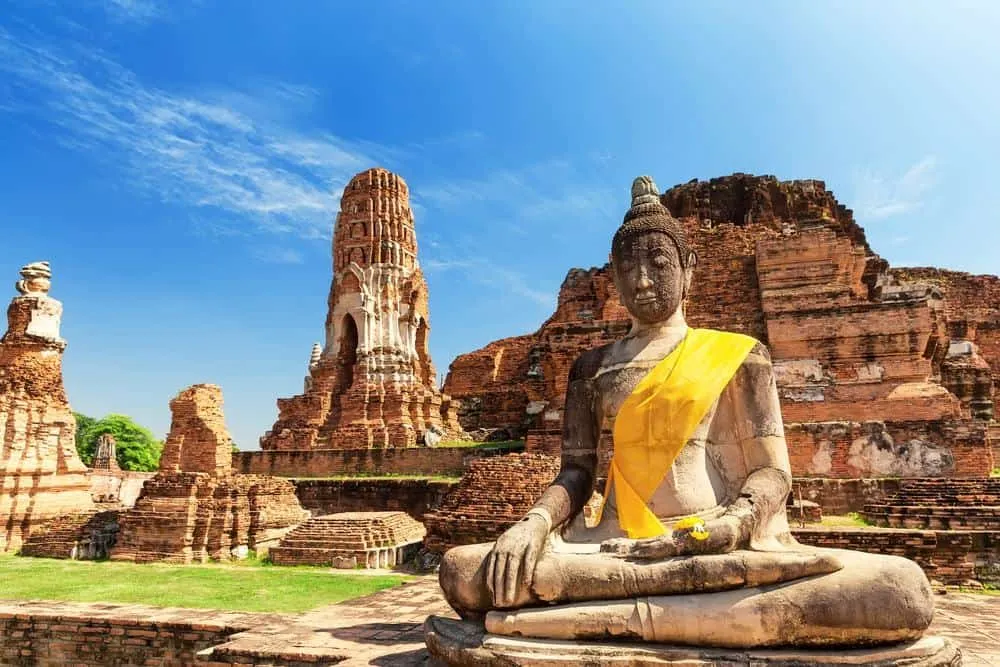
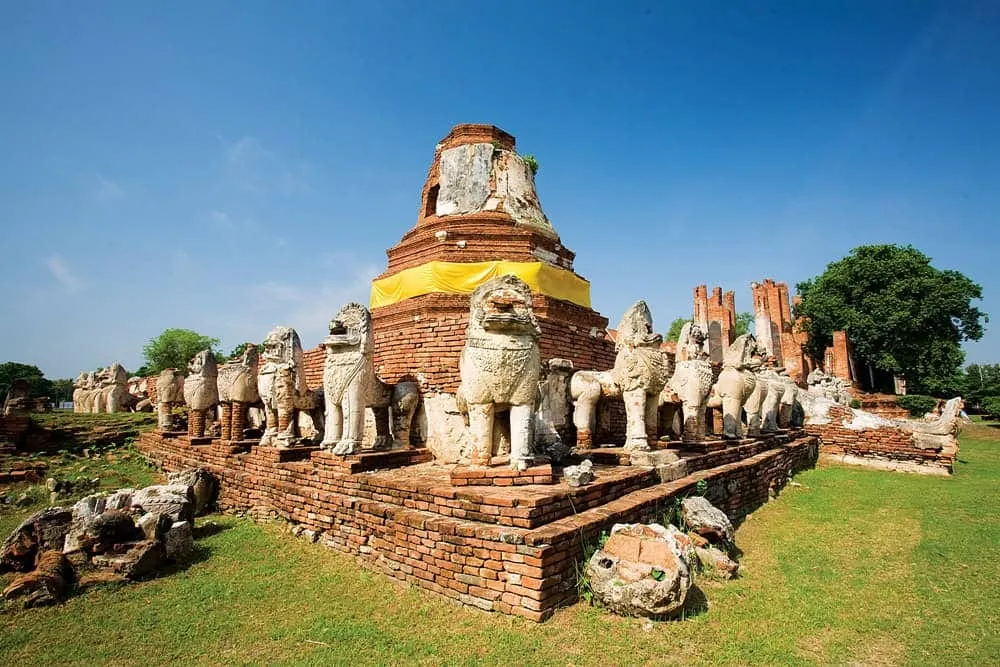
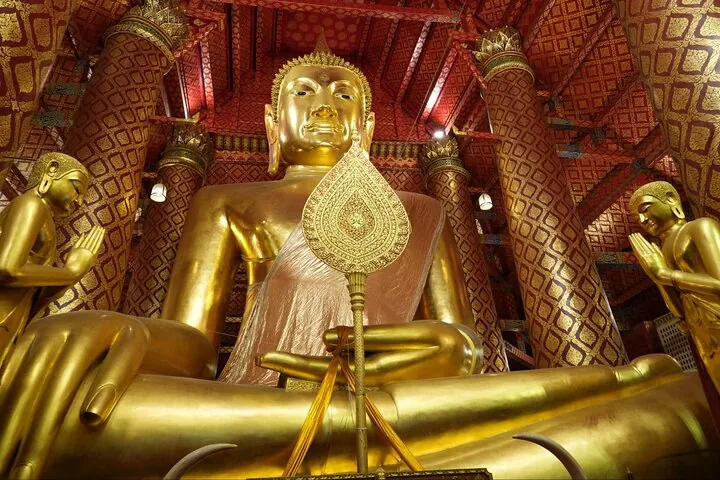
The temple’s main chedi is the real draw for anyone interested in Ayutthaya-period architecture: a large Sri Lankan-style bell chedi raised on a square platform and ringed by 36 stucco lion figures, one of only two lion-base chedis known to survive in the old capital. The principal Buddha image, known locally as Luang Pho Khao (“the White Buddha”), is housed in the old vihara and remains an active object of worship for the surrounding community rather than a museum piece behind glass.
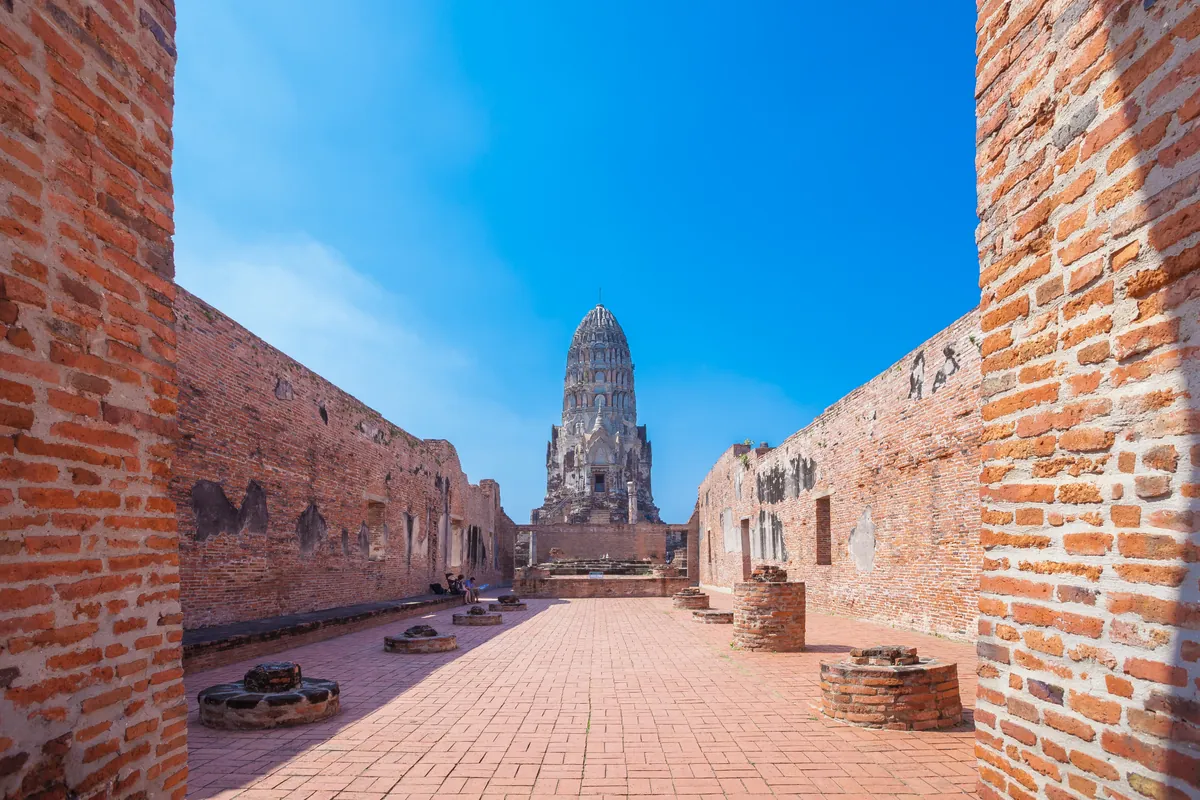
Insider Tip: Look for the temple’s old brick gateway — passing through it feels like stepping between eras, since the chedi and platform behind it have kept their original form far better than most Ayutthaya-period ruins.
Part of the reason the site is so well preserved traces back to the second fall of Ayutthaya in 1767: Burmese forces used the temple grounds as a base to fire cannon into the city walls rather than burning it down, which spared Wat Mae Nang Pleum the wholesale destruction inflicted on many nearby monasteries during the siege.
Watch out: This is a working temple with resident monks, not a fenced monument — dress modestly (shoulders and knees covered), and keep an eye out for ongoing merit-making ceremonies rather than treating it purely as a photo stop.
- Legend: Named for Mae Pleum, honoured by King Naresuan after sheltering him from a storm
- Chedi: Sri Lankan-style, 36 stucco lions — one of only two lion-base chedis in Ayutthaya
- Main Buddha image: Luang Pho Khao (“the White Buddha”)
- Entry: Free — a working temple, not part of the paid historical park
- Location: Confluence of Khlong Hua Ro and Khlong Mueang, Hua Ro subdistrict
Pair it with Wat Na Phra Men, another temple the Burmese used as a military camp and one of the very few in Ayutthaya to escape 1767 almost undamaged, or the ruined grandeur of Wat Ratchaburana back on the city island.
Location & Directions
Phra Nakhon Si Ayutthaya, Phra Nakhon Si Ayutthaya
Ayutthaya, Thailand
Show your taxi or Grab driver
วัดแม่นางปลื้ม
Frequently Asked Questions
What's the legend behind Wat Mae Nang Pleum's name?
Is Wat Mae Nang Pleum free to enter?
What makes the chedi here unusual?
Why did the temple survive the 1767 fall of Ayutthaya relatively intact?
What's the main Buddha image called?
Spotted something out of date or incorrect? Let us know
Popular tours in Ayutthaya




Stay Near Wat Mae Nang Pleum
Live prices for places closest to Wat Mae Nang Pleum — tap a pin to compare.