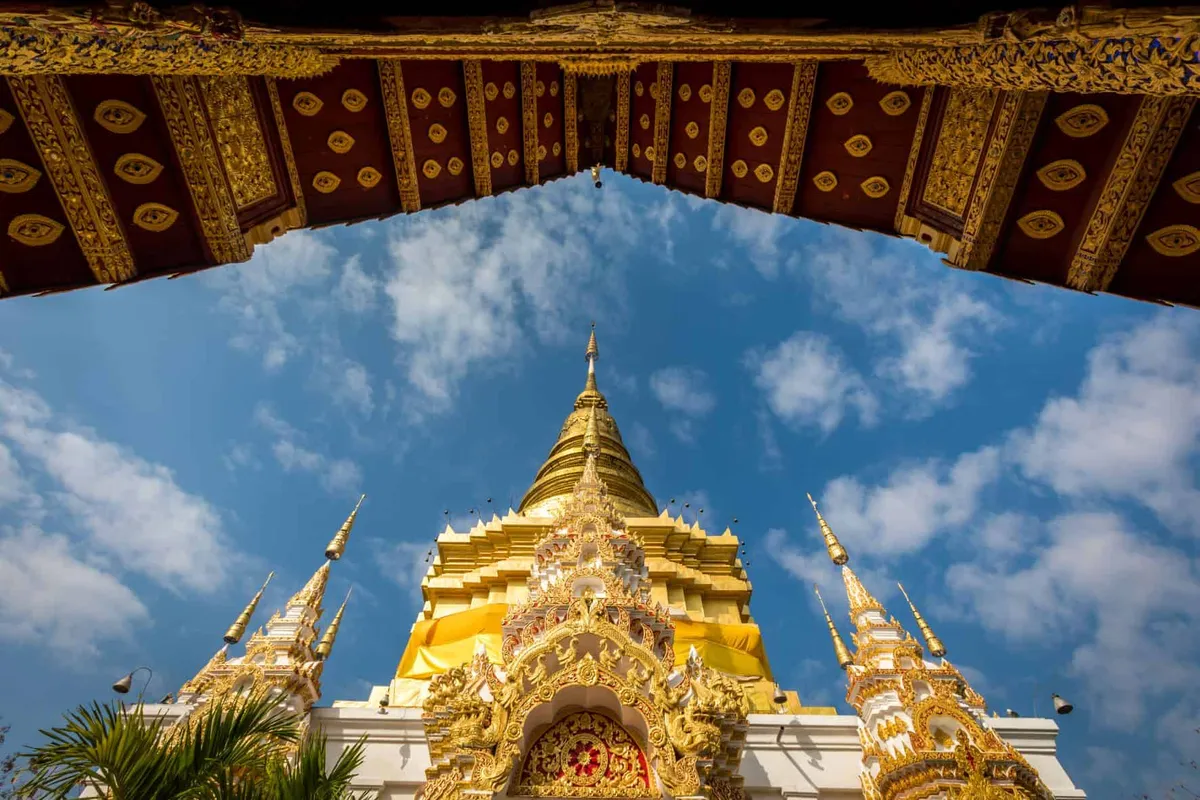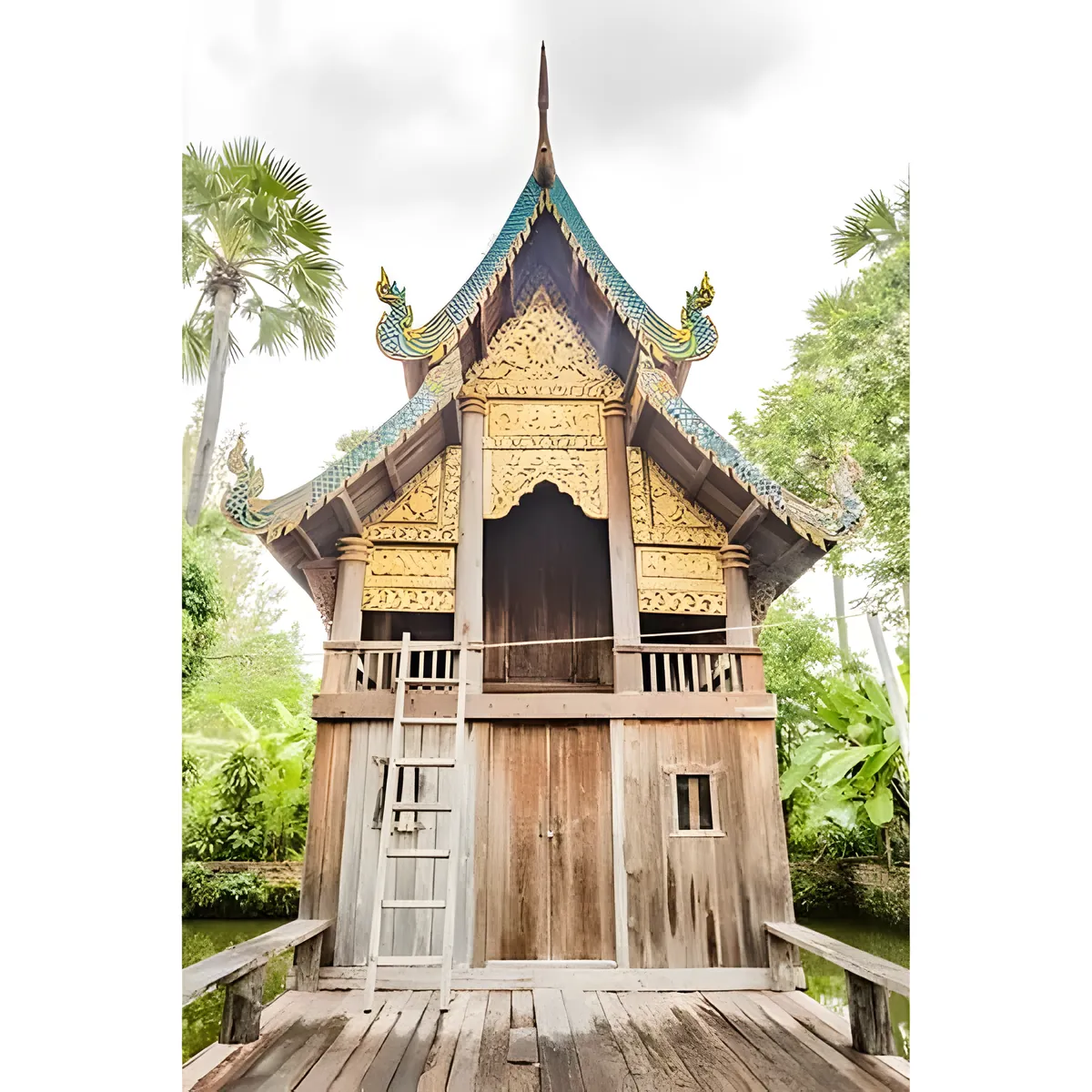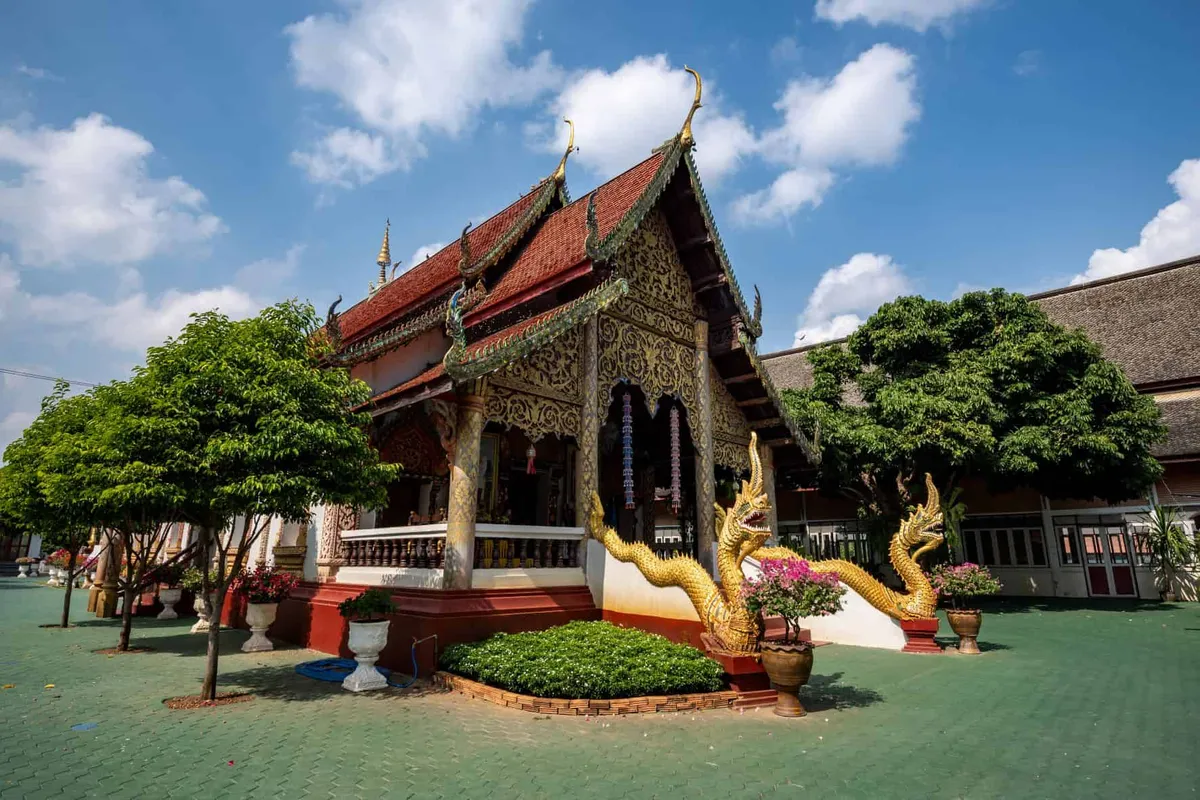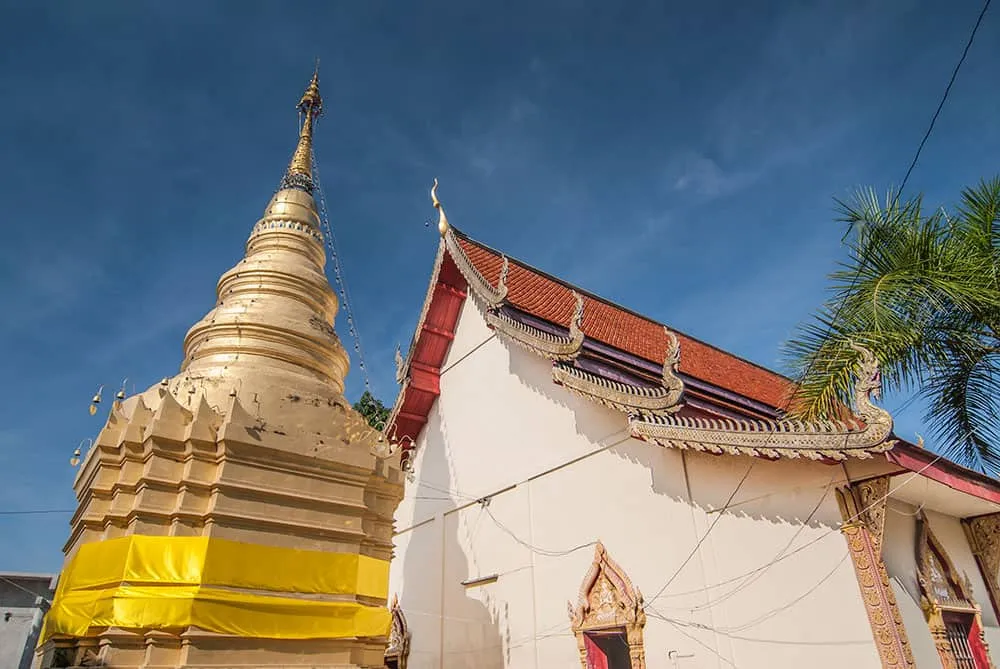






Wat Moo Perng’s reputation rests on two structures most visitors have never heard of: a Lanna-style ceremonial gateway with soft-stucco plaster carving, and a wooden scripture library built around 1917 that’s one of the few half-wood, half-concrete “ho trai” buildings recorded in Lamphun province. The gateway’s decorative motifs echo the stucco work found on classic Lanna stupas elsewhere in the region, while the ho trai’s double-tiered roof carries carved finials, foliage patterns, and mythical bird figures under a mix of colored glass mosaic — detail you won’t find on a standard village temple.
The temple also holds a place in Lanna zodiac tradition as the designated wat for people born in the Year of the Goat (referred to locally as the Year of the Elephant, one of the twelve Lanna zodiac years each assigned its own pilgrimage temple across the north). Locals born under that sign travel here specifically to make merit, which gives the place a steady trickle of visitors with a genuine reason to be there rather than a tour-bus stop. The Fine Arts Department recognised the site as a Lamphun provincial heritage monument in 1961, largely on the strength of the gateway and library rather than any single Buddha image.
Beyond those two structures, Wat Moo Perng functions as an ordinary working temple: a main prayer hall, monks’ living quarters, and the everyday rhythm of a village wat rather than a curated tourist circuit. Insider Tip: Ask whoever’s around — a monk, a temple caretaker — to point out the ho trai specifically, since it sits slightly apart from the main hall and is easy to miss if you only walk the obvious path past the ordination hall.
Watch out: This is a functioning place of worship, not a museum with opening staff on hand to explain the history — there’s no interpretive signage in English, so knowing what you’re looking at (the gateway, the scripture library, the zodiac association) before you arrive gets you more out of a short visit than wandering in cold.
- Standout features: 1917 wooden scripture library (ho trai), Lanna stucco gateway
- Zodiac significance: Designated temple for those born in the Year of the Goat
- Heritage status: Registered Lamphun provincial heritage site since 1961
- Entry: Free, donation-based
- Dress code: Shoulders and knees covered, shoes off indoors
The temple sits in Tambon Mueang Chi on the edge of Lamphun town, an easy add-on if you’re already touring the district’s other Lanna temples — Wat Phra That Hariphunchai for the province’s most important chedi, or Wat Cham Thewi for the older Dvaravati-style stepped chedi that the Wat Moo Perng library’s decorative style ultimately descends from. A taxi or songthaew from central Lamphun covers the short distance easily; there’s no need to rent your own transport just for this stop.
Location & Directions
83 Moo 9 Tha Chak-Mae Tha Road
Lamphun, Thailand
Show your taxi or Grab driver
วัดหมูเปิ้ง
Frequently Asked Questions
What makes Wat Moo Perng different from other Lamphun temples?
Is Wat Moo Perng a zodiac temple?
When was Wat Moo Perng recognised as a heritage site?
Is it free to visit and are there dress rules?
Spotted something out of date or incorrect? Let us know
Stay Near Wat Moo Perng
Compare places to stay in Lamphun, or open the map for options closest to the attraction.