




Wat Na Phra That
วัดหน้าพระธาตุ
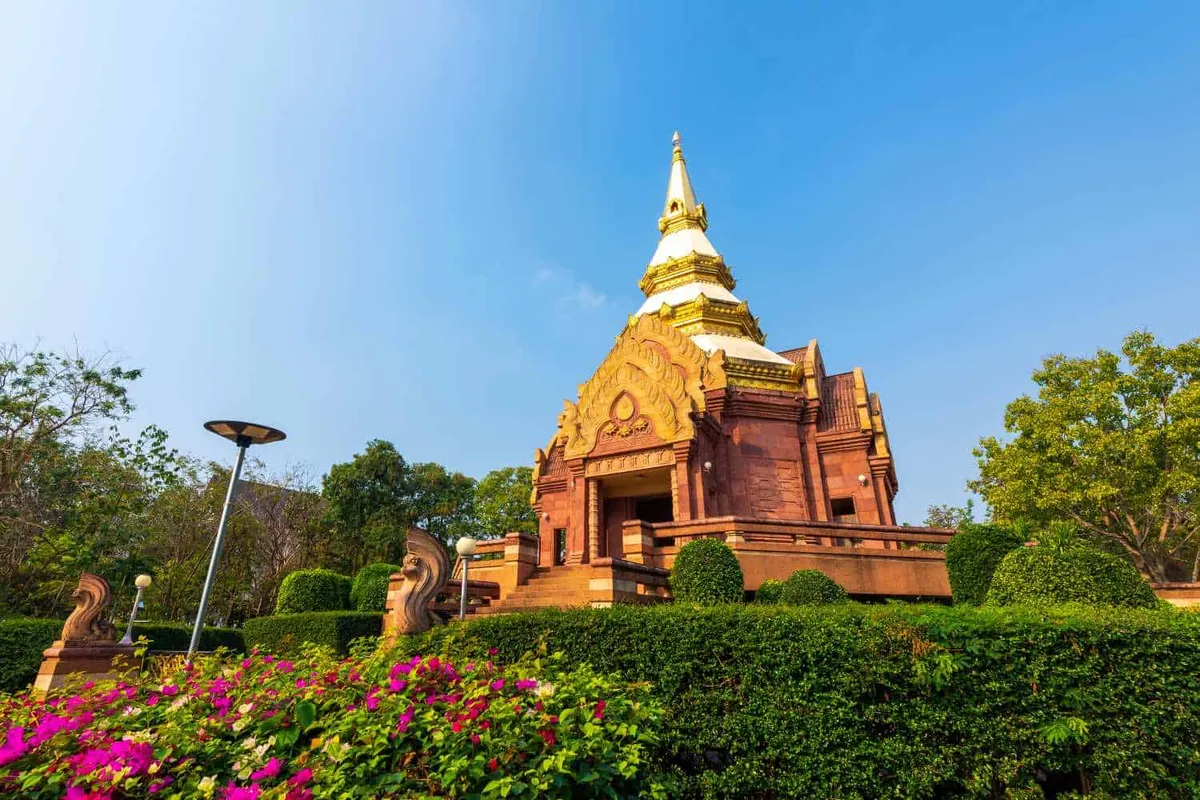
Wat Na Phra That sits on flat ground a few kilometres from Pak Thong Chai — the district town 25 km south of Korat better known for its silk-weaving workshops than its temples. The compound dates to 1787, and its two standout structures, a plain-roofed ordination hall and a Lao-style chedi, are unusual enough that they’re worth the detour even though the site sees few foreign visitors. Entry is free, and the grounds are open daily from 08:00 to 18:00.
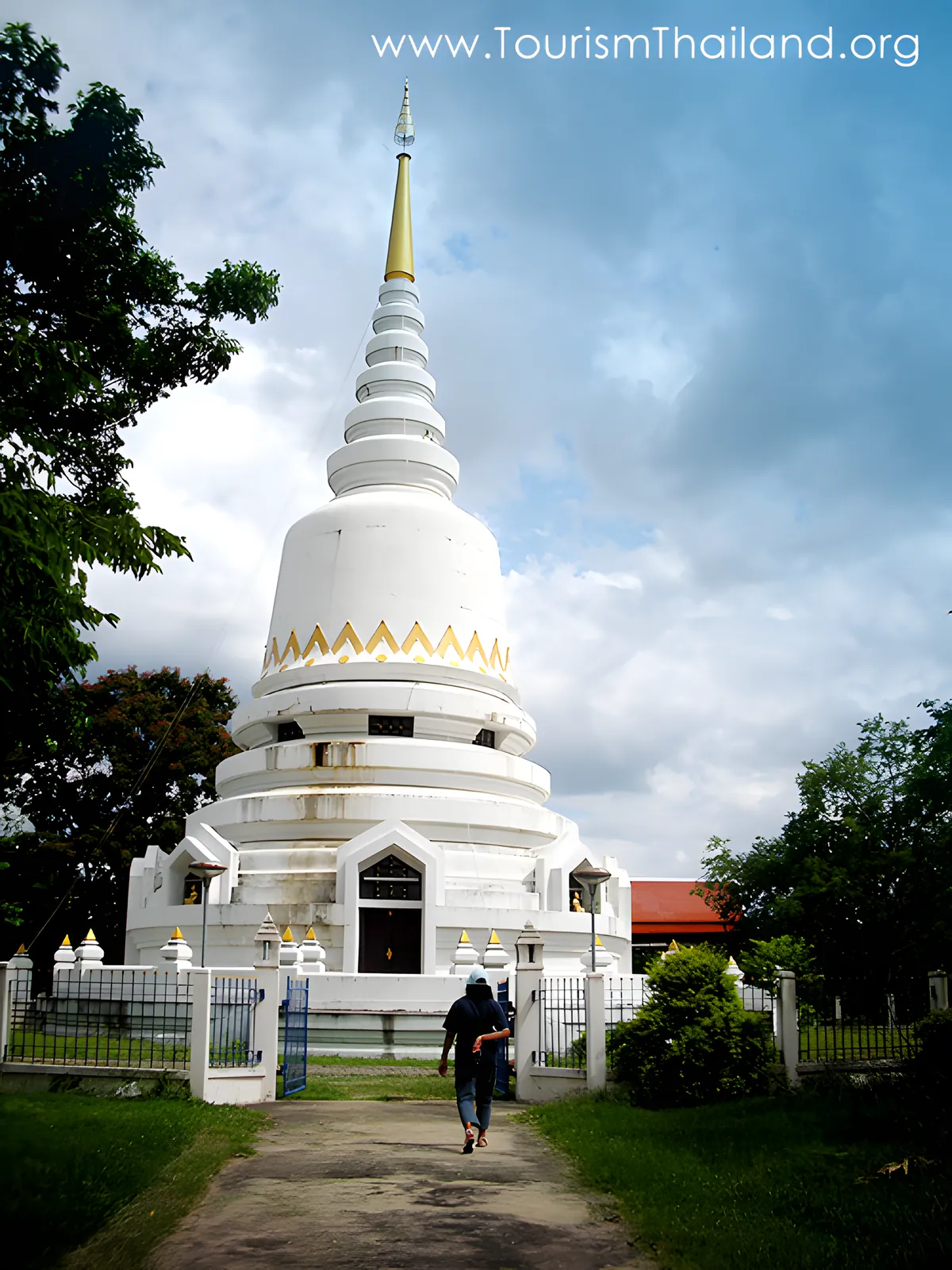
The old ubosot is the temple’s most distinctive building: it has no chofah (roof finial) or bai raka (roof-edge blades), the ornaments that top nearly every other Thai ordination hall. Local accounts tie the plain roofline to the reign of Rama III (1824-1851), when unadorned, boat-shaped rooflines were the fashion at court-favoured temples — a style you’ll rarely see outside central Thailand, let alone in a district temple this far from Bangkok. A short walk away, the Phra That itself is a square-based chedi with a tapering spire that resembles a square lotus bud, an architectural cue borrowed from Lao temple design rather than the bell-shaped chedis common elsewhere in Isan.
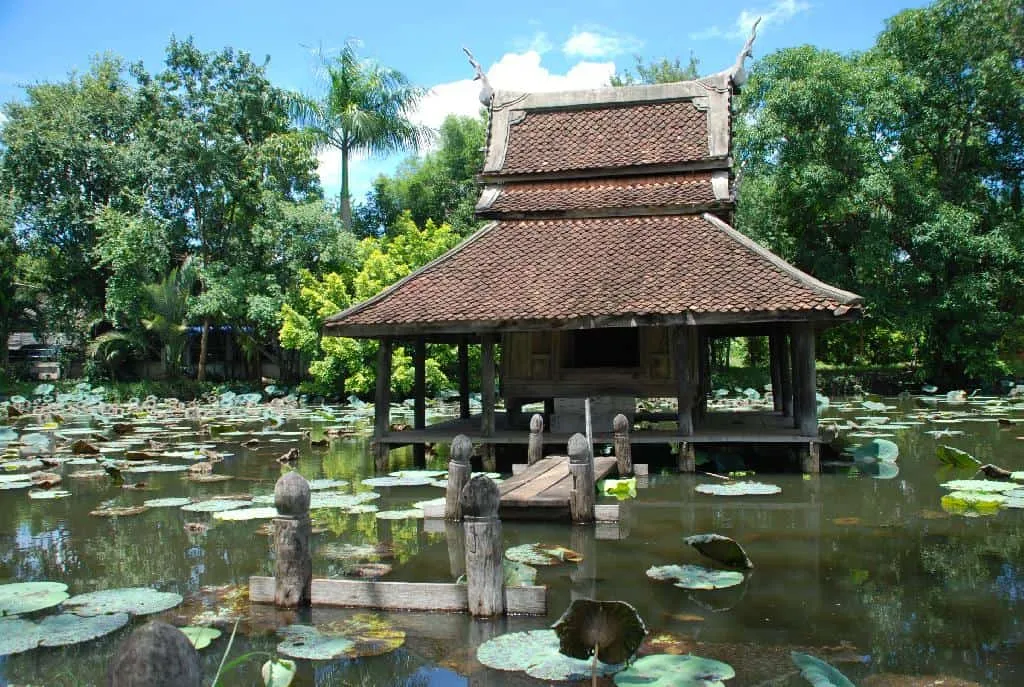
The temple pond adds a third element you won’t find at most Isan wats: the Ho Trai Klang Nam, a raised wooden library built on stilts in the middle of the water. Monasteries built scripture libraries over water on purpose — insects that would otherwise eat through palm-leaf manuscripts can’t easily cross open water to reach them. This one keeps its gilded black-lacquer doors, though some of the exterior murals on both buildings have faded with age and haven’t been restored.
Pak Thong Chai’s tourism identity is built almost entirely around silk — the district has been Thailand’s best-known silk-weaving centre since the 1970s, with family-run looms and workshops lining the roads into town — so a 1787 temple with a chofah-less roof and a stilted library barely registers on most itineraries. That’s part of the appeal if you’re after sites without a ticket queue: on an average weekday you’re likely to have the pond and both buildings to yourself, aside from a monk or two going about the temple’s routine upkeep.
Insider Tip: Don’t come expecting a hillside walk or forest views — despite what older write-ups of this temple sometimes claim, the site is flat and centred on the pond, closer to a quiet countryside monastery than a scenic viewpoint. Dress modestly (covered shoulders and knees), remove your shoes before entering either building, and keep your feet pointed away from any Buddha image while seated. There’s no public transport to the gate — a car or motorbike from Pak Thong Chai town is the only realistic way in.
- Founded: 1787
- Entry fee: Free
- Hours: Daily 08:00-18:00
- Notable features: Chofah-less ubosot (Rama III style), Lao-style Phra That chedi, Ho Trai Klang Nam scripture library on stilts
- Location: Takhu subdistrict, Pak Thong Chai district, ~25 km south of Korat city
Location & Directions
Moo 1
Korat (Nakhon Ratchasima), Thailand
Show your taxi or Grab driver
วัดหน้าพระธาตุ
Frequently Asked Questions
Is Wat Na Phra That on a hill?
What's unusual about the ubosot?
What is the Ho Trai Klang Nam?
Is there an entry fee?
How far is it from Pak Thong Chai or Korat city?
Spotted something out of date or incorrect? Let us know
Stay Near Wat Na Phra That
Compare places to stay in Korat (Nakhon Ratchasima), or open the map for options closest to the attraction.