





Wat Phan Tao
วัดพันเตา
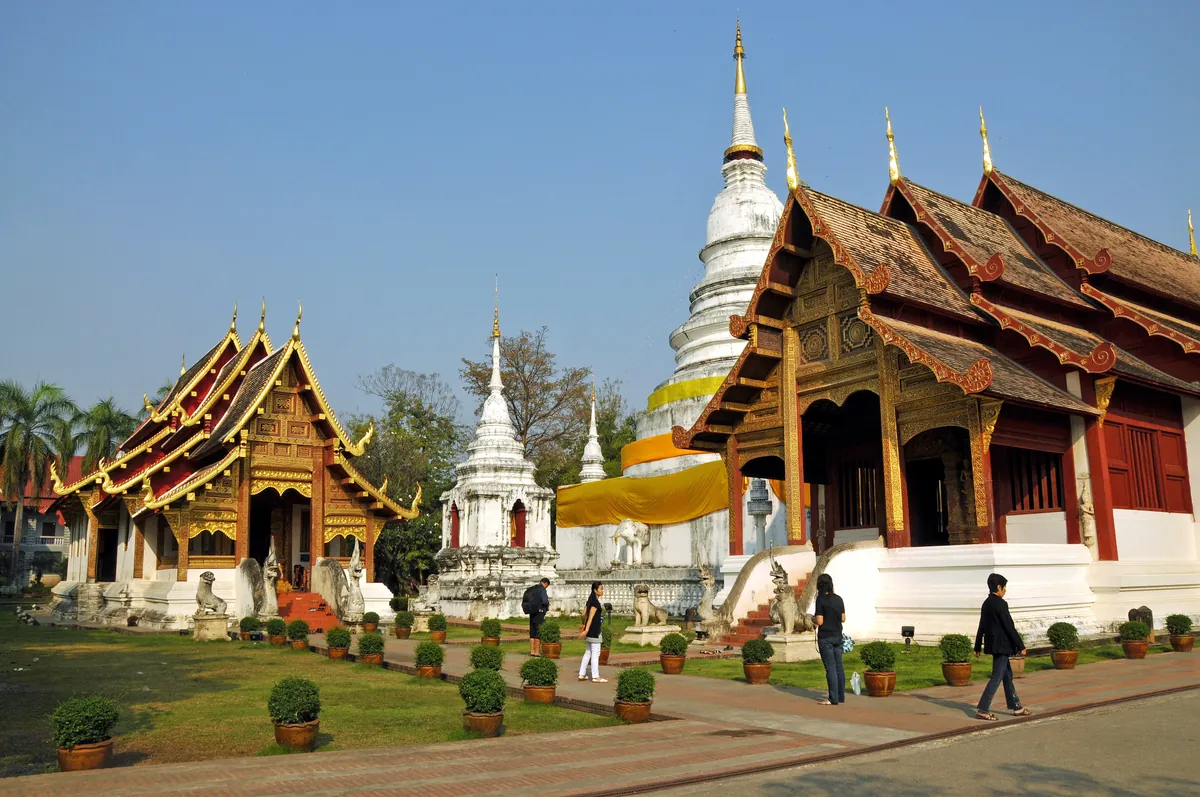
Wat Phan Tao sits inside Chiang Mai’s old city walls, immediately next to Wat Chedi Luang, and is built almost entirely from golden teak rather than the stone and stucco used at most Lanna temples. Entry is free, the grounds are open daily from 08:00 to 17:00, and the main hall — the actual reason to visit — is a 19th-century royal residence, not a purpose-built temple viharn.
The site itself is old: records place a temple here from around 1391, when it formed part of the monastic grounds of Wat Chotikaram, the temple now known as Wat Chedi Luang next door. Two stories explain the name. One holds that a wealthy resident called Setthi Phan Tao once lived here. The more commonly repeated version says the site once held a thousand furnaces used to cast the bronze Phra Atthahat, the large standing Buddha image that still stands in Wat Chedi Luang’s main viharn today — once the casting was finished, the community built a temple where the furnaces (tao) had stood and called it Wat Phan Tao, the Temple of a Thousand Kilns.
The teak building you actually walk into isn’t original to this address, and that’s the more interesting history. It was built as a ho kham — a royal residence and audience hall — for Chao Mahotara Prathet after his elevation to ruler of Chiang Mai in 1846. Three decades later, in 1876, the seventh ruler of Chiang Mai, Chao Inthawichayanon, decided a former royal hall belonged inside a temple rather than a palace compound, and had it dismantled, moved, and rebuilt at Wat Phan Tao — 28 teak pillars carrying a hall roughly 21 metres long and 14 metres high, still standing on the same site nearly 150 years later.
Insider Tip: Look up at the roof structure rather than just the Buddha image at the altar. The joinery — a royal hall’s carpentry, built without a single nail — is the actual craftsmanship on display here, more than any single decorative feature.
Inside, sunlight filters through latticed windows onto polished teak floors, and the hall stays noticeably cooler and quieter than the open-air chedi courtyards nearby. A small pond sits in front of the building, framed by Bodhi trees, and it’s this combination — teak, water, and reflected light — that makes the temple one of Chiang Mai’s most photographed during the Yi Peng lantern festival around November’s full moon, when paper khom fai lanterns are strung around the hall and its reflection glows gold against the night sky.
Watch out: the reflection-pond photo everyone shares online is a narrow window around dusk during Yi Peng — arrive early if that’s what you’re after, because it gets crowded fast. Outside festival dates, the pond is a much quieter, ordinary feature of the grounds.
The temple sits within walking distance of Wat Chedi Luang and Wat Phra Singh, making it easy to fold into an old-city temple walk. Dress modestly with shoulders and knees covered, and remove your shoes before entering the hall — standard practice made easier here since there’s no admission fee or gate to navigate first. Wat Chiang Man, Chiang Mai’s oldest temple, is a further ten-minute walk north if you want to extend the route.
- Entry: Free
- Hours: Daily 08:00-17:00
- Built from: Teak; the main hall was originally a royal residential hall (ho kham), moved here in 1876
- Best known for: The Yi Peng lantern festival photo beside the temple’s reflecting pond
- Location: Old city, next to Wat Chedi Luang, on Phra Pokklao Road
Location & Directions
105 Phra Pokklao Road
Chiang Mai, Thailand
Show your taxi or Grab driver
วัดพันเตา
Frequently Asked Questions
Is Wat Phan Tao free to visit?
Why is the main hall made of teak?
What does the name Wat Phan Tao mean?
Is Wat Phan Tao connected to Wat Chedi Luang?
When is the best time to photograph Wat Phan Tao?
Spotted something out of date or incorrect? Let us know
Tours visiting Wat Phan Tao

Stay Near Wat Phan Tao
Live prices for places closest to Wat Phan Tao — tap a pin to compare.