Wat Chiang Man
วัดเชียงมั่น
Chiang Mai’s oldest temple predates the city walls around it. A stone stele inscribed in 1581 and still standing in front of the ubosot records April 12, 1296 as Chiang Mai’s founding date — and names this ground as King Mangrai’s own residence while his new capital was being built. Entry is free.
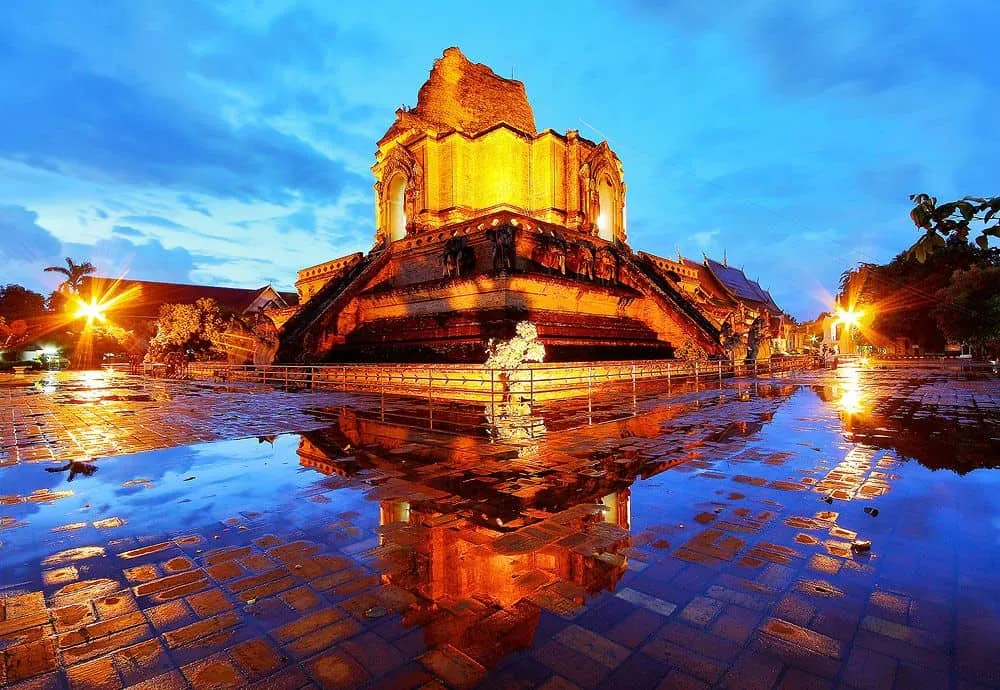
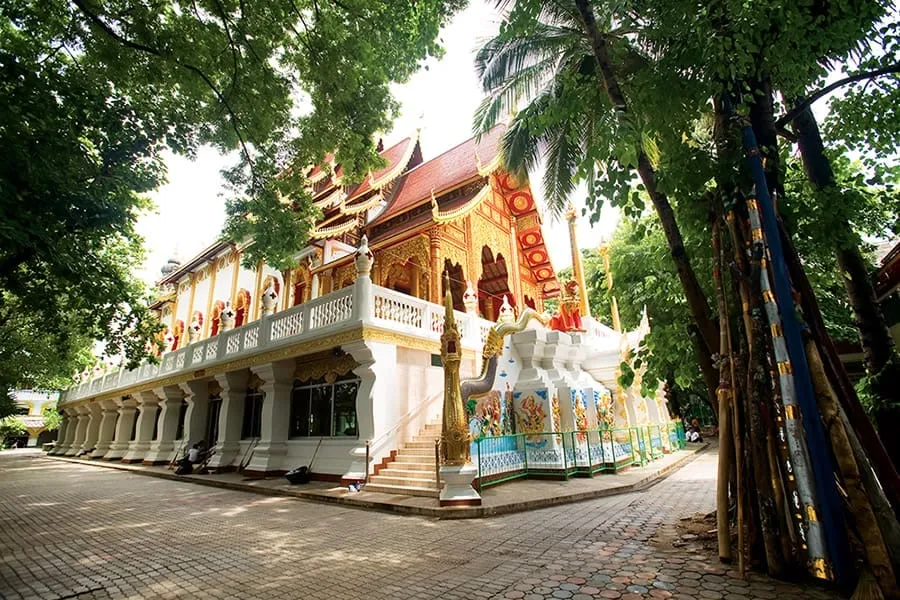
The site’s best-known feature is Chedi Chang Lom, the Elephant Chedi: a 15th-century gilded stupa on a square base, its second tier ringed by 15 sculpted elephants that look as though they’re holding the whole structure on their backs. The design blends Lanna and Sri Lankan influences, and it’s the oldest structure still standing on the grounds. The main viharn nearby houses the oldest known Lanna-cast Buddha image, dated 1465 by an inscription on its base — sizeable, gilded, and on view daily.
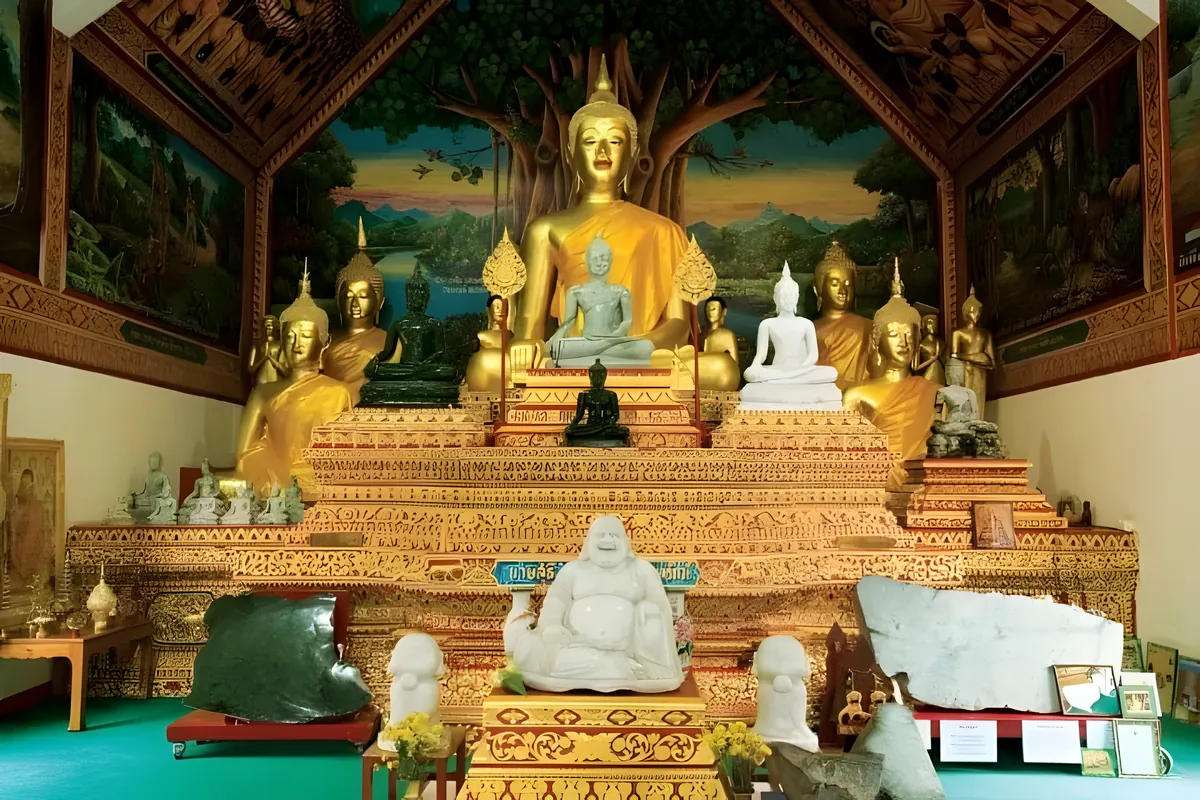
The temple’s two most sacred images are harder to see. Phra Sae Tang Khamani, the Crystal Buddha — a small quartz-crystal figure said to date back over a millennium and once belonging to Queen Chamathewi of Lamphun — and Phra Sila, a bas-relief marble Buddha believed carved in Sri Lanka more than a thousand years ago, are both kept in the smaller viharn to the right as you enter. That hall is usually locked. It opens for specific ceremonies rather than daily viewing, so don’t plan a visit around seeing them; treat it as a bonus if the doors happen to be open.
Insider Tip: Go before 8 AM. Monks are already moving between the halls, the old city hasn’t woken up yet, and you’ll likely have the elephant chedi to yourself for photos — a rare thing this close to the moat.
Wat Chiang Man sits in the northeast corner of the old city on Ratchaphakinai Road, an easy walk, bike ride, or short songthaew hop from most old-city accommodation. It’s quieter than Wat Phra Singh or Wat Chedi Luang a few streets over, and rarely appears on the big group-tour circuit despite its age and standing as the city’s first royal temple. Locals come for merit-making rather than photos, so keep voices down and mind where you point a camera during prayer.
Watch out: The ubosot (ordination hall) is normally closed to visitors, and so is the small viharn with the two guardian Buddha images. Neither closure means the temple is shut — the grounds, the elephant chedi, and the main viharn stay open daily.
- Entry: Free (donations welcome)
- Hours: Daily, roughly 06:00-17:00
- Founded: 1296, by King Mangrai — Chiang Mai’s first temple
- Dress code: Shoulders and knees covered, shoes off indoors
- Getting there: Old city, northeast corner near the moat — walk, bike, or songthaew from most old-city hotels
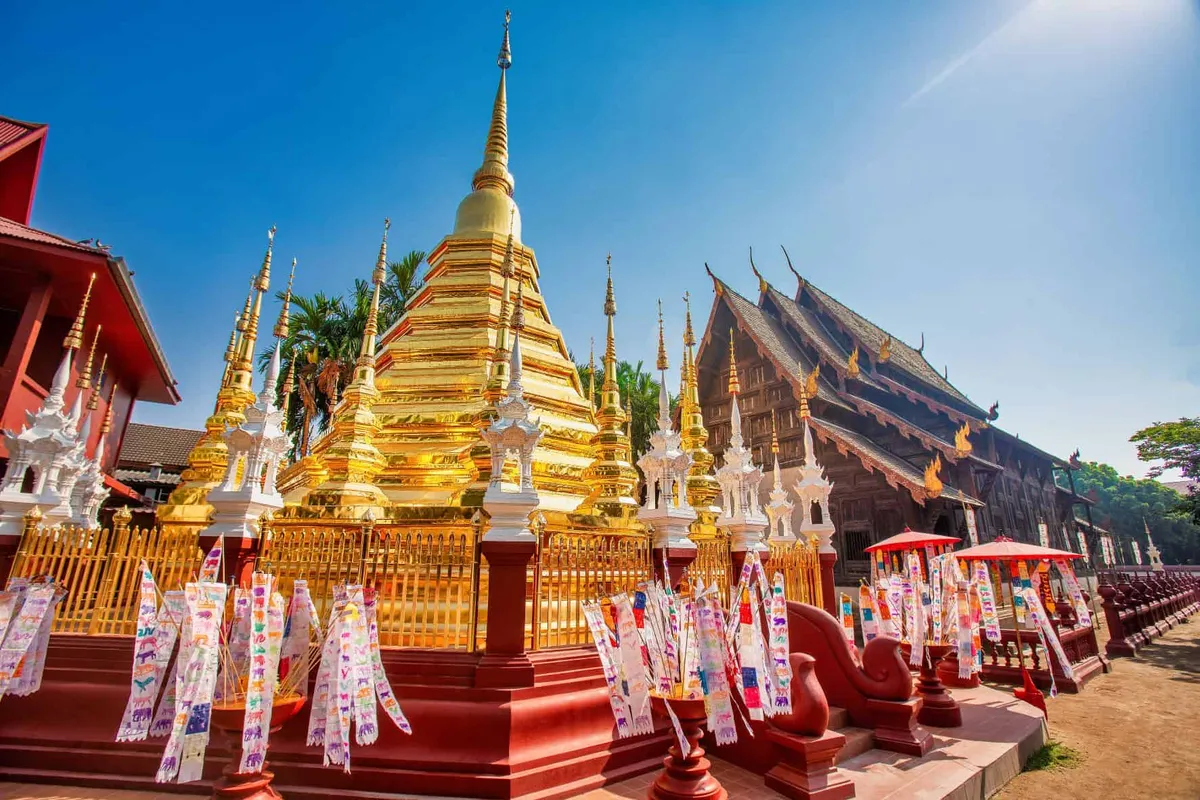
A visit pairs easily with a wider loop of nearby old-city wats — Wat Phan Tao is a short walk south and worth the extra half hour for its teak viharn.
Location & Directions
Mueang Chiang Mai, Chiang Mai
Chiang Mai, Thailand
Show your taxi or Grab driver
วัดเชียงมั่น
Frequently Asked Questions
Is Wat Chiang Man free to enter?
Can I see the Crystal Buddha and the Phra Sila Buddha?
Why is Wat Chiang Man considered Chiang Mai's oldest temple?
What's the elephant chedi at Wat Chiang Man?
What should I wear to visit?
Spotted something out of date or incorrect? Let us know
Popular tours in Chiang Mai





Stay Near Wat Chiang Man
Live prices for places closest to Wat Chiang Man — tap a pin to compare.