



Wat Chedi Jed Yord
วัดเจดีย์เจ็ดยอด
Wat Chedi Jed Yord’s seven brick spires copy the Mahabodhi Temple in Bodh Gaya, India, where the Buddha reached enlightenment, one of only a handful of temples in Thailand built directly on that design. King Tilokaraj commissioned it in 1455, and in 1477 it hosted the Eighth World Buddhist Council, where monks revised the Pali Canon that Theravada Buddhism still uses today. Entry is free, daily 08:00-17:00, on Superhighway Road (Chiang Mai-Lampang) northwest of the old city.
The central chedi is a squat, windowless rectangular block rather than the bell-shaped stupa typical of Lanna temples, a deliberate copy of the Bodh Gaya original. One large stepped pyramidal spire rises from the centre of the roof, ringed by four smaller matching spires, with two bell-shaped chedis capping the building’s two side annexes: seven points in total, which gives the temple its name (chet yod, “seven spires”). Roughly 70 stucco reliefs of thewada (celestial beings) run along the exterior walls, their faces worn soft by more than five centuries of monsoon rain; local tradition holds several were modelled on King Tilokaraj’s own relatives.
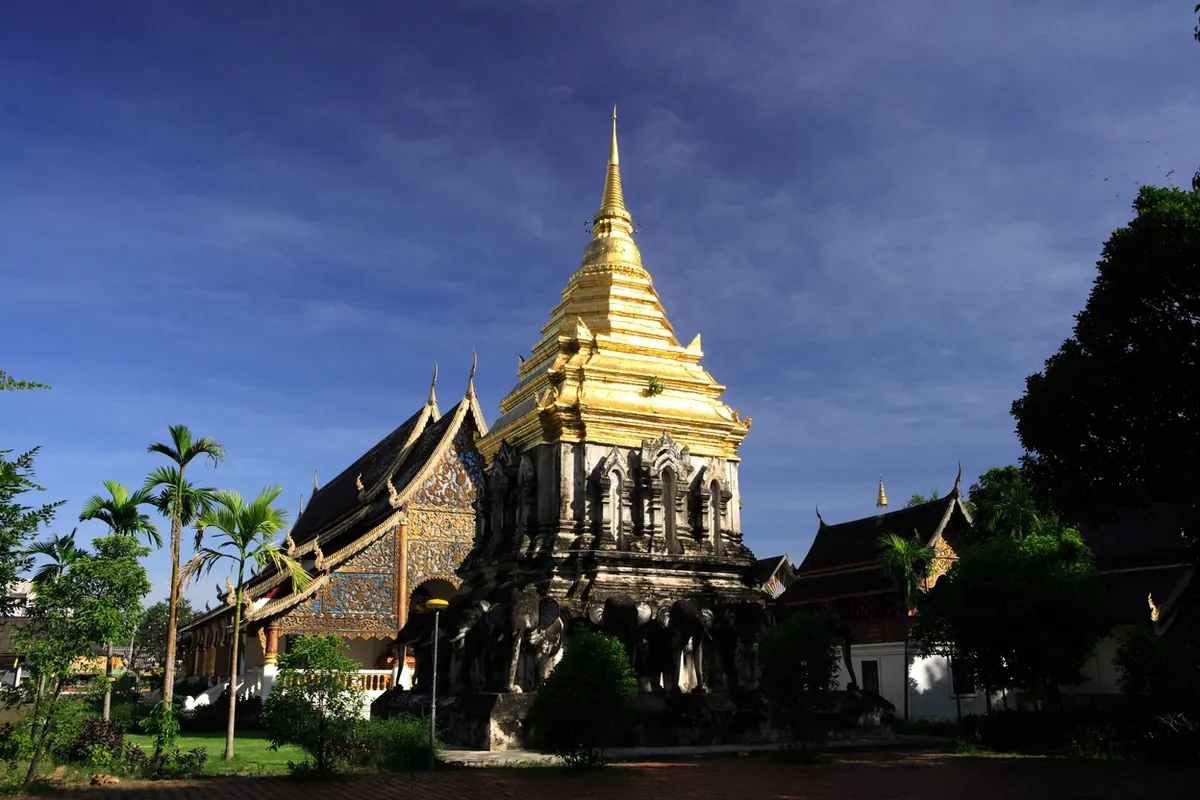
Tilokaraj sent an envoy to Bodh Gaya to record the original stupa’s measurements in 1455, then used the finished temple as the venue for the Eighth World Buddhist Council twenty-two years later, a gathering of senior monks who revised and standardised the Tripitaka. Tilokaraj’s reign brought monks from Sri Lanka to Chiang Mai to strengthen Buddhist scholarship, and this temple, more than any other in the city, was built to project that ambition. The largest chedi on site, built in 1487, holds Tilokaraj’s ashes, and the temple is still a pilgrimage stop for Thais born in the Year of the Snake, tied to a bodhi tree on the grounds that devotees believe descends from a cutting of the original tree at Bodh Gaya.
Wat Chedi Jed Yord sees a fraction of the foreign visitors who queue at Wat Phra Singh or Wat Chedi Luang inside the old city walls. Most people here are Thai, lighting incense at the chedi base or resting under the shade trees between the ruins. The grounds are large enough for a slow 45-minute walk around all seven structures without crowding anyone. A taxi or Grab from the old city takes about 10 minutes; songthaew drivers heading north on the Superhighway will also drop passengers at the gate for a shared fare. Cover shoulders and knees before entering, and expect the stucco figures to photograph best in the flat light of late afternoon, once the midday glare has passed.
Insider Tip: The Chiang Mai National Museum sits directly across Superhighway Road: a 5-minute walk. Its Lanna Buddha images and artefacts fill in the temple’s back story, so pair the two into one stop.
- Official name: Wat Photharam Maha Vihara (also Wat Chet Yod / Wat Jed Yod)
- Built: 1455, commissioned by King Tilokaraj
- Hosted: the Eighth World Buddhist Council, 1477
- Entry: free, daily 08:00-17:00
- Address: 90 Super Highway Road (Chiang Mai-Lampang), Chang Phueak
Location & Directions
90 Super Highway Road (Chiang Mai-Lampang)
Chiang Mai, Thailand
Show your taxi or Grab driver
วัดเจดีย์เจ็ดยอด
Frequently Asked Questions
Is this the same temple as other seven-spired chedis in Thailand?
What does chet yod mean, and why does the temple have seven spires?
Is Wat Chedi Jed Yord free to visit, and what are the hours?
What is the historical significance of Wat Chedi Jed Yord?
How do I get to Wat Chedi Jed Yord, and how long should I plan for a visit?
Spotted something out of date or incorrect? Let us know
Popular tours in Chiang Mai





Stay Near Wat Chedi Jed Yord
Live prices for places closest to Wat Chedi Jed Yord: tap a pin to compare.