





Wat Phra Phutthabat Ratchaworamahawihan
วัดพระพุทธบาทราชวรมหาวิหาร
A mondop on a low hill in Phra Phutthabat district shelters what Thai Buddhists regard as one of the kingdom’s holiest relics: a depression in the rock said to be the Buddha’s footprint, roughly 53 cm wide, 152 cm long and 28 cm deep. King Songtham of Ayutthaya had the temple built around it in 1624, after a hunter named Phran Bun stumbled on the mark on Suwan Banphot Hill and monks judged it to carry all 108 auspicious signs of the Buddha. Entry to the temple grounds is free, daily from 08:30 to 16:30.
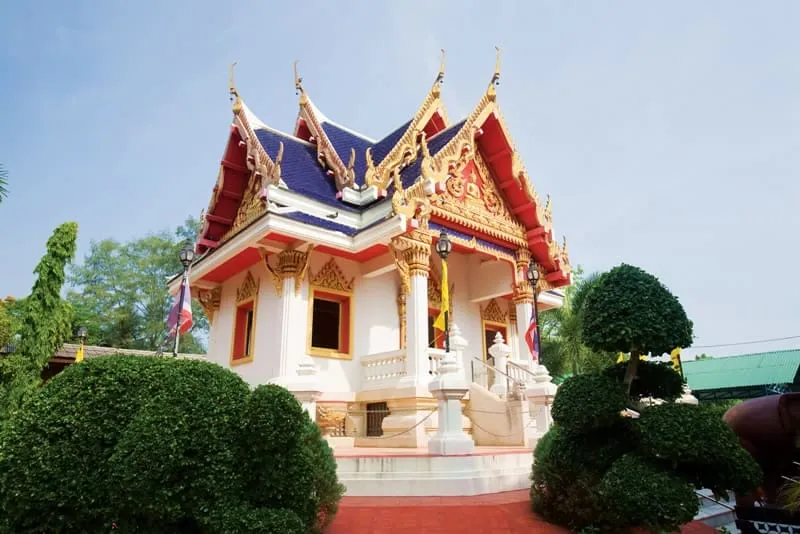
The mondop itself is the reason to make the drive out from Saraburi town. A square pavilion with a seven-tiered prasat roof, each tier laid with green glazed tiles and studded with miniature gables, it’s held up by red-lacquered pillars gilded and inlaid with coloured glass. Inside, the footprint sits under a gold cover so thick with gold leaf and banknotes from generations of pilgrims that its original stone edge is barely visible. Mother-of-pearl inlay panels, gilded murals, and a set of bronze temple bells fill out the interior — the kind of dense, layered decoration that rewards slowing down rather than a quick circuit.
- Entry fee: Free (temple grounds); small charge for the museum during fair days only
- Hours: Daily 08:30–16:30
- Founded: 1624, King Songtham of Ayutthaya
- Distance from Saraburi town: ~28 km, Phra Phutthabat district
- Best time: Weekday mornings for fewer pilgrims; fair days (Feb/Mar) for atmosphere but heavy crowds
Insider Tip: Skip the souvenir stalls near the car park and walk the covered stairway up to the mondop slowly — the incense smoke and prayer-bell sound carry further than the crowds at the base suggest, and the upper terrace has a clear view over the surrounding hills.
The temple compound also holds the Phra Phutthabat National Museum, built to display artefacts and artwork from King Songtham’s era, but it’s kept locked outside the Phra Phutthabat Fair — held twice yearly on the lunar calendar, from the eighth day of the waxing moon to the first day of the waning moon in the third and fourth lunar months (roughly February and March). Those weeks bring the temple its biggest crowds of the year: food vendors line the approach road, and the museum’s one annual opening draws collectors and history-minded visitors specifically for it.
Watch out: Fair days mean packed parking and a slow queue up to the mondop — arrive before 8 AM if you want to see the footprint without shuffling past it in a line. Outside fair season, the temple is calm enough for an unhurried visit any weekday.
Later kings kept returning here. Henri Mouhot, the French naturalist, sketched the temple during King Mongkut’s (Rama IV) reign, evidence of how long the site has drawn official and foreign attention alike. Comfortable shoes help on the stairway, and a sarong isn’t necessary — shoulders and knees covered is enough. Pair the visit with Khao Phra Phutthabat Noi, a smaller footprint shrine nearby, or Tham Krabok Monastery, both easy additions to a Saraburi day trip built around the temple.
Location & Directions
Mu 8
Saraburi, Thailand
Show your taxi or Grab driver
วัดพระพุทธบาทราชวรมหาวิหาร
Frequently Asked Questions
Is Wat Phra Phutthabat free to enter?
What exactly is the Buddha's footprint here?
When is the Phra Phutthabat Fair?
How do I get to the temple from Saraburi town?
Is there a dress code?
Spotted something out of date or incorrect? Let us know
Stay Near Wat Phra Phutthabat Ratchaworamahawihan
Live prices for places closest to Wat Phra Phutthabat Ratchaworamahawihan — tap a pin to compare.