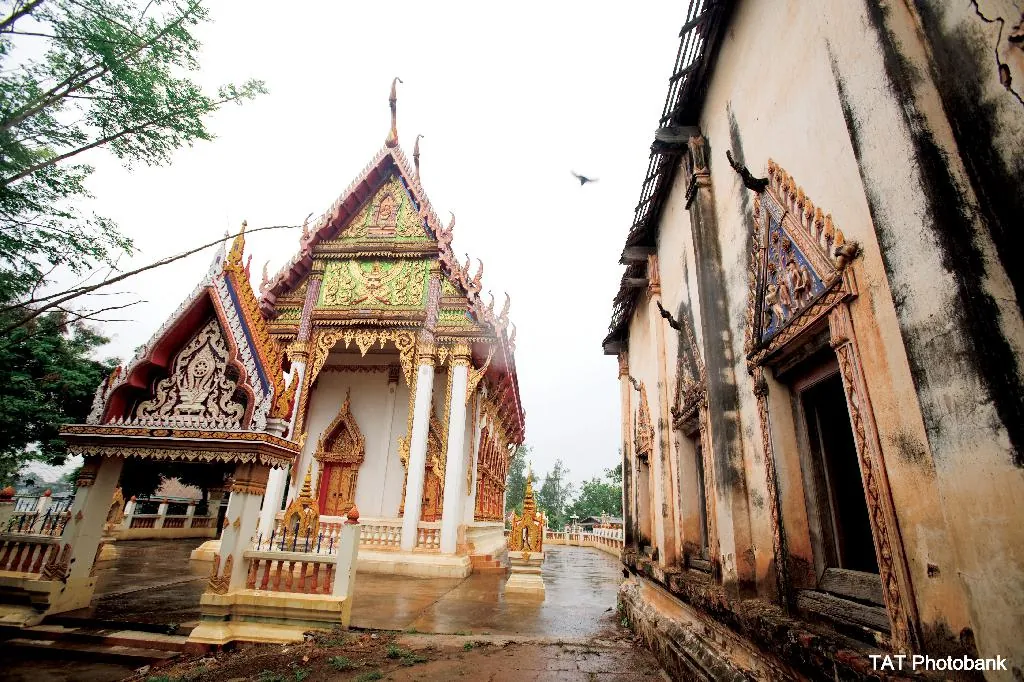



Wat Pho Tub Chang marks the birthplace of one of Ayutthaya’s most colourful kings. Local history holds that a royal consort of King Narai went into labour on the road to worship the Phra Phuttha Chinnarat image, giving birth beside a bodhi tree on this spot to the future King Suriyenthrathibodi — known to history as Khun Luang Sorasak, or Phra Chao Suea, the Tiger King, who reigned over Ayutthaya in the early 1700s. The temple’s name reflects the story: pho for the bodhi tree, prathap chang roughly meaning where the elephant [procession] halted.
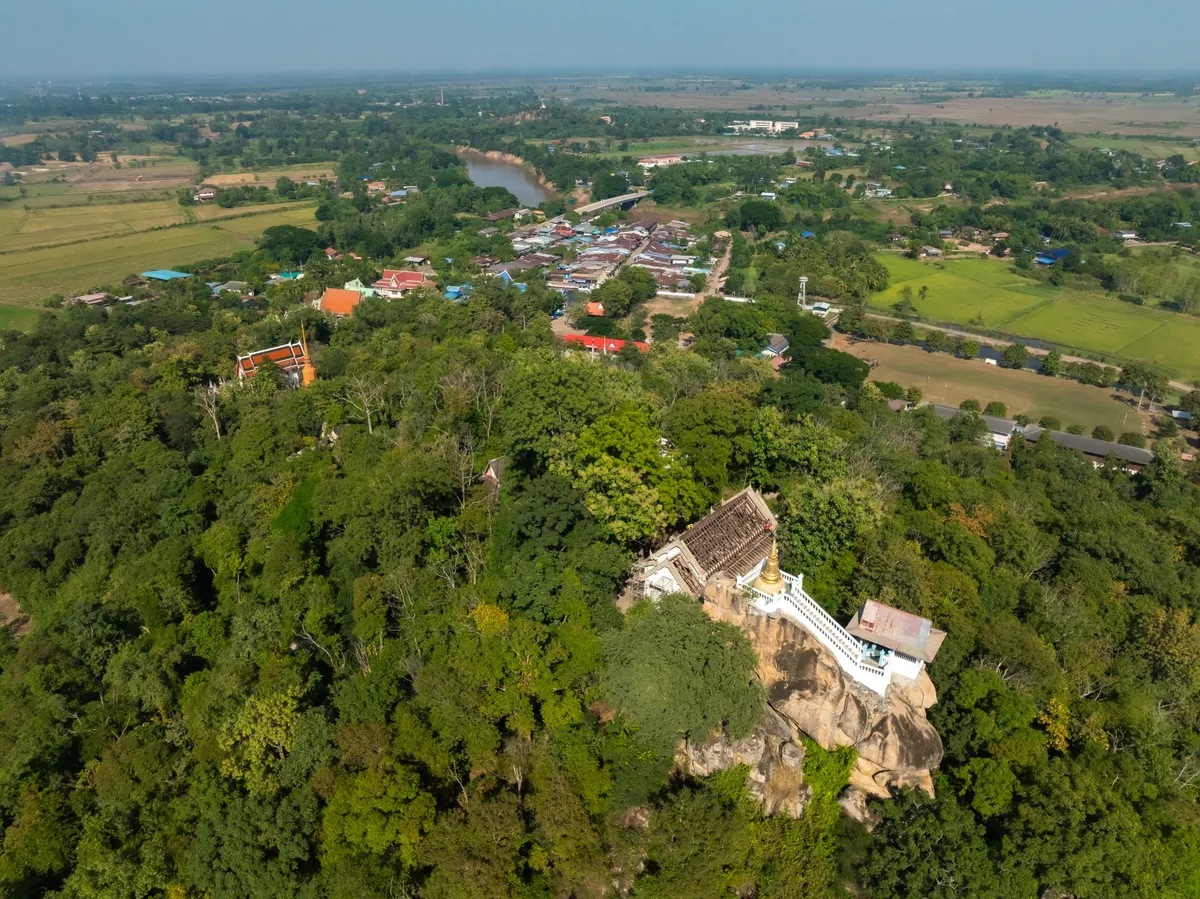
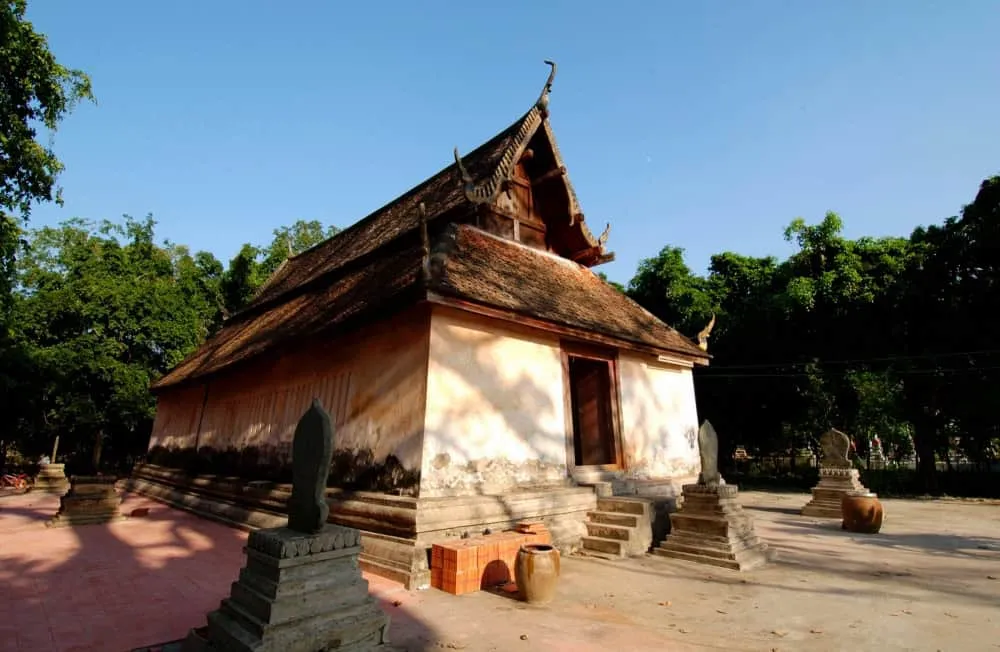
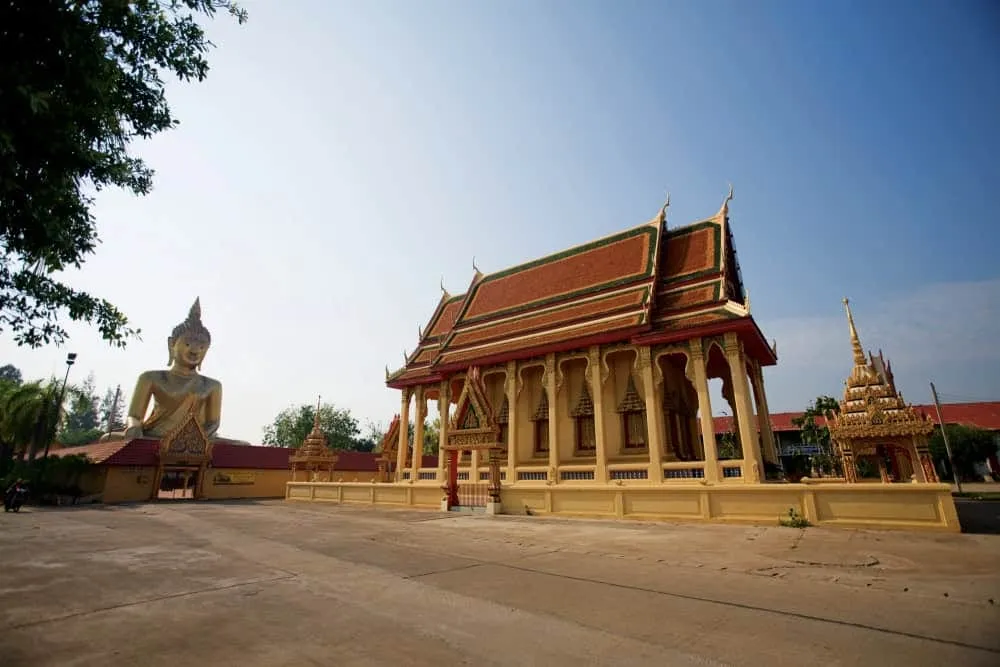
The current temple was built on the site around 1701, the same era as Wat Khao Roob Chang, a hilltop temple about 15 km away that shares this founding period under King Suea. A shrine to the king, San Somdet Phra Chao Suea, holds a revered image of him and draws visitors from across Phichit province, particularly since it featured in the popular Thai historical drama Phrom Likhit. The main ordination hall houses the temple’s principal Buddha image, Luang Pho To — also called Luang Pho Yim, the Smiling Buddha — a stucco statue in the Ayutthaya style roughly 300 years old. The Fine Arts Department has registered the temple grounds as a national archaeological site, and the surviving Ayutthaya-period brickwork and layout are protected alongside the more recent devotional buildings.
- Entry: Free
- Hours: Daily, 08:00-17:00
- Location: Pho Prathap Chang district, about 20 km southwest of Phichit town
- Founded: Around 1701, on the birthplace of King Suea (Phra Chao Suea)
- Main image: Luang Pho To (Luang Pho Yim), an Ayutthaya-era stucco Buddha
Insider Tip: Pay respects at the San Somdet Phra Chao Suea shrine before the main hall — it’s the reason most Thai visitors make the trip, and the temple staff can point out the birthplace marker if you ask.
Cover shoulders and knees, and remove your shoes before entering any hall. There’s no direct public bus to the temple, so a car or motorbike from Phichit town or nearby Chainat is the practical way in. If you’re building a day around Phichit’s Ayutthaya-era history, pair this with Wat Khao Roob Chang for its elephant-shaped hill and gold chedi, or Wat Tha Luang, Phra Aram Luang inside Phichit town itself.
Location & Directions
Pho Prathap Chang, Phichit
Phichit, Thailand
Show your taxi or Grab driver
วัดโพธิ์ประทับช้าง
Frequently Asked Questions
Why is Wat Pho Tub Chang linked to King Suea, the Tiger King?
What does the temple's name mean?
What is the main Buddha image at Wat Pho Tub Chang?
Is Wat Pho Tub Chang connected to Wat Khao Roob Chang?
Is entry free?
Spotted something out of date or incorrect? Let us know
Stay Near Wat Pho Tub Chang
Compare places to stay in Phichit, or open the map for options closest to the attraction.