


Phichit
พิจิตร
The Nan River province where a legendary crocodile king lurks beneath a freshwater lake, and Ayutthaya-era temples outnumber tourists.
Recommended by us
Bueng Si Fai
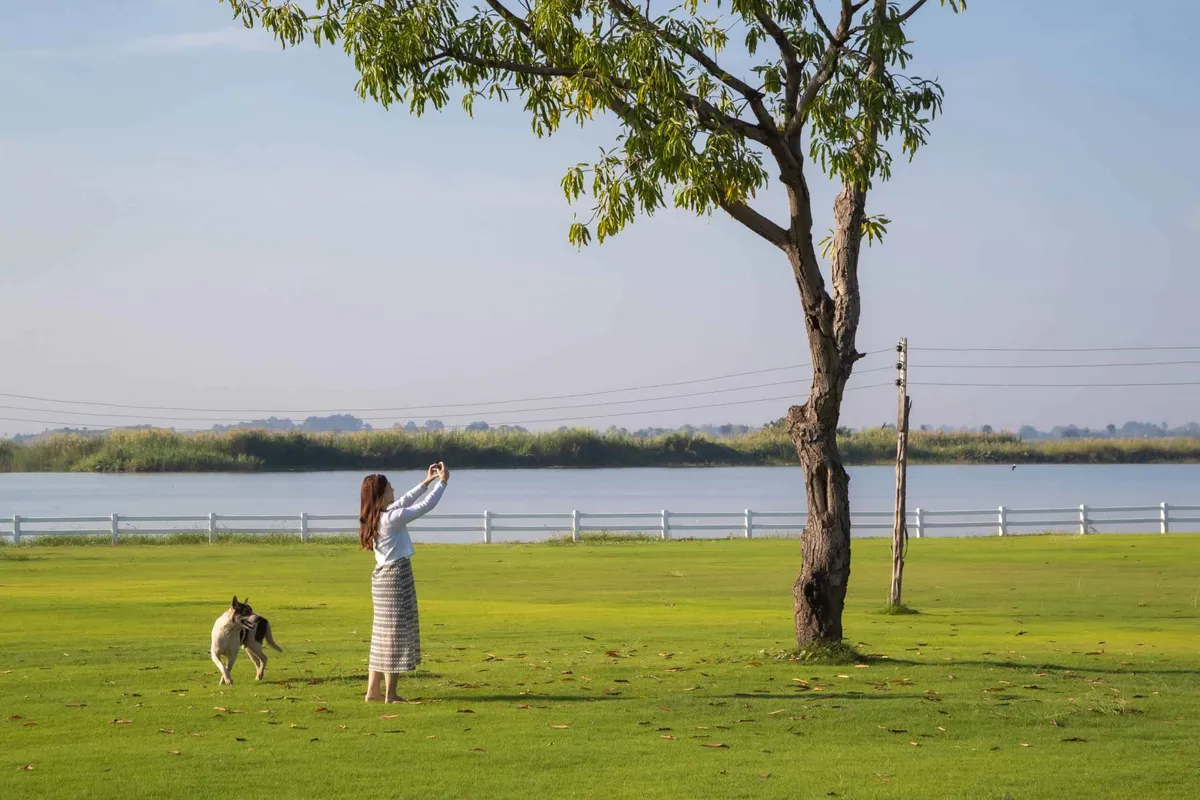
A large freshwater lake at the heart of Phichit — the local legend says a giant crocodile king lives in the depths. Longtail boat tours go out at dawn when the birds are most active; the floating restaurant on the north bank is worth a meal.

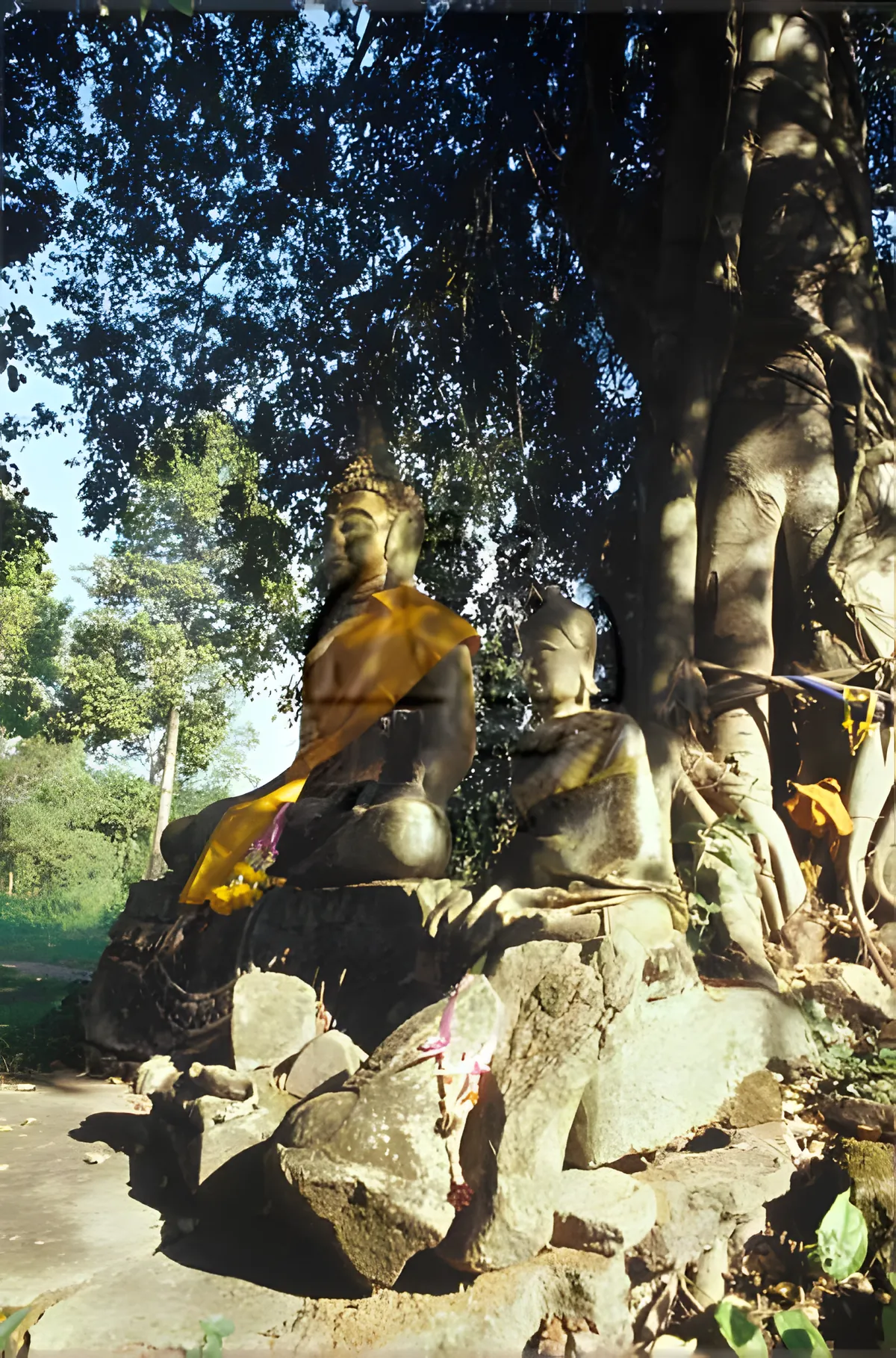
The Old City Park
The moated remnants of old Phichit, with an ancient chedi and shaded grounds that are quiet on weekdays. A good introduction to the town before exploring its Ayutthaya-era temples.

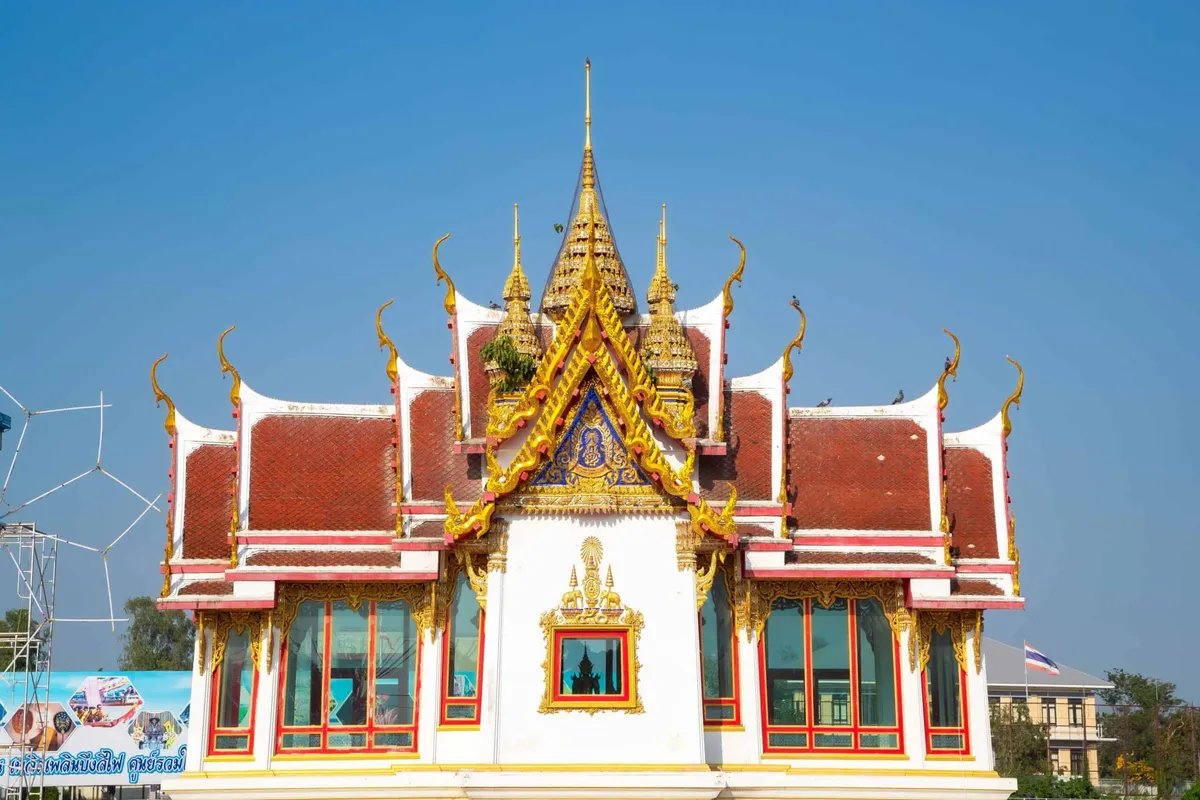
Wat Tha Luang, Phra Aram Luang
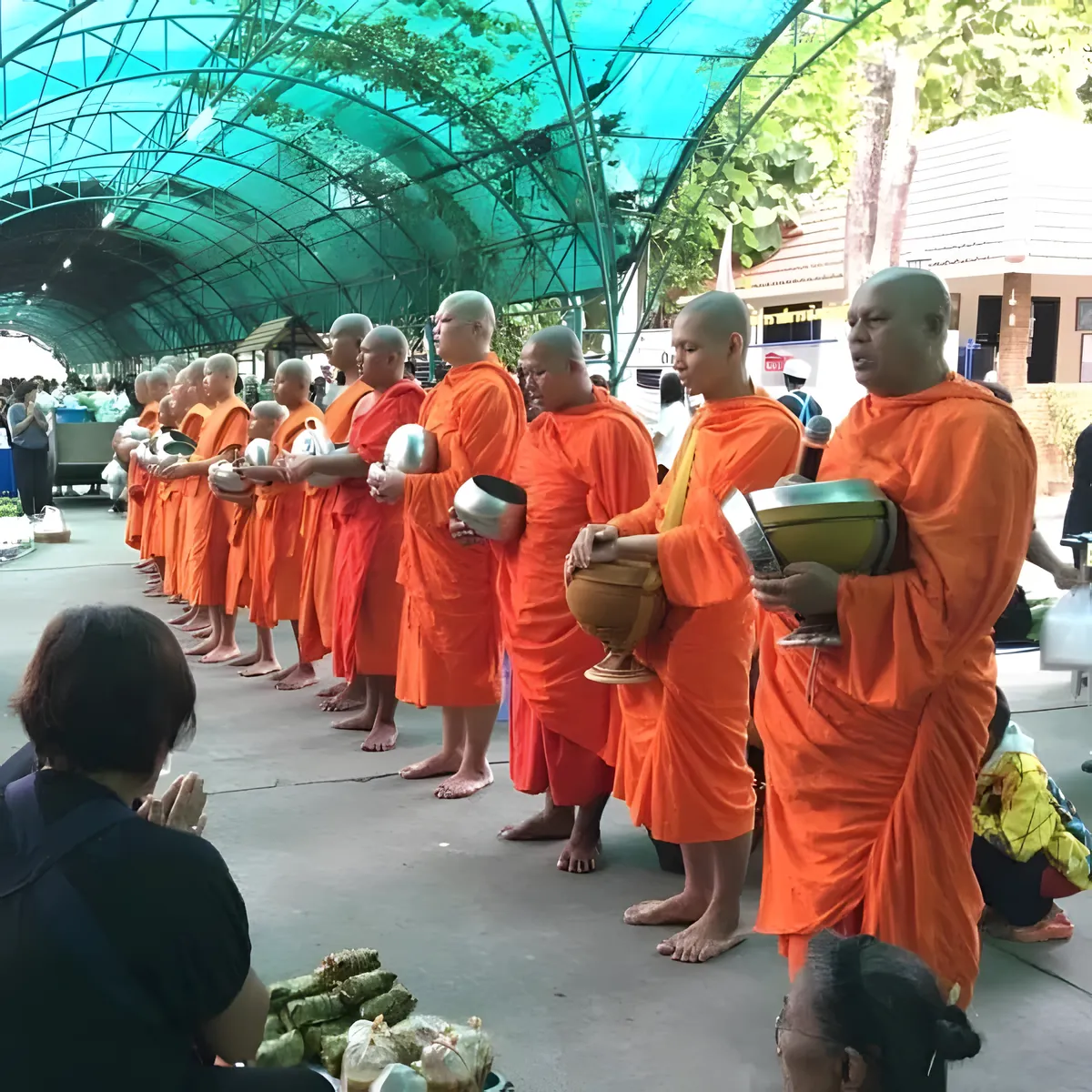
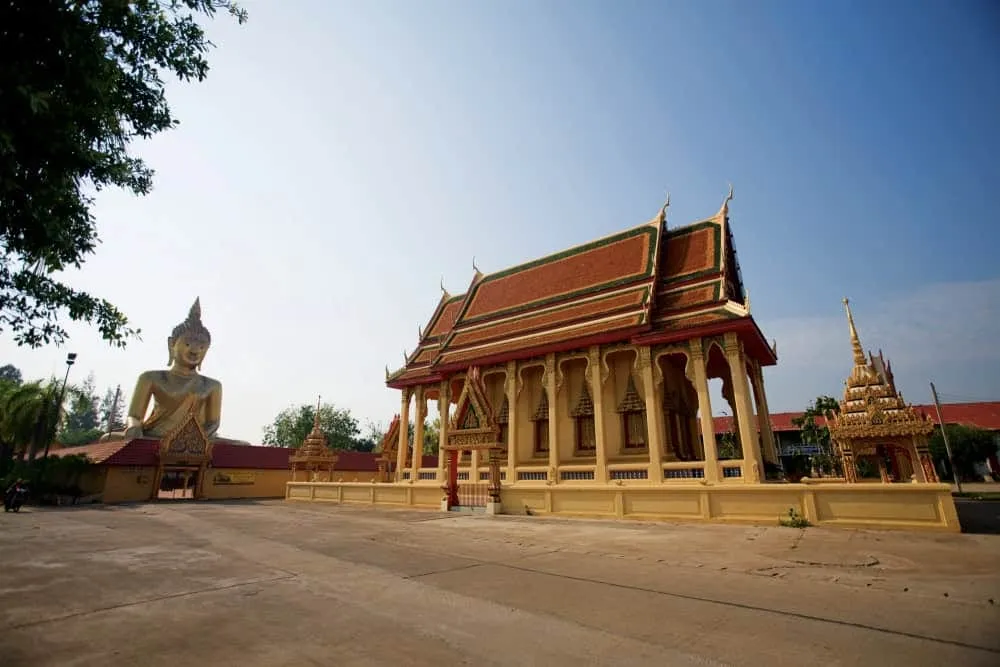
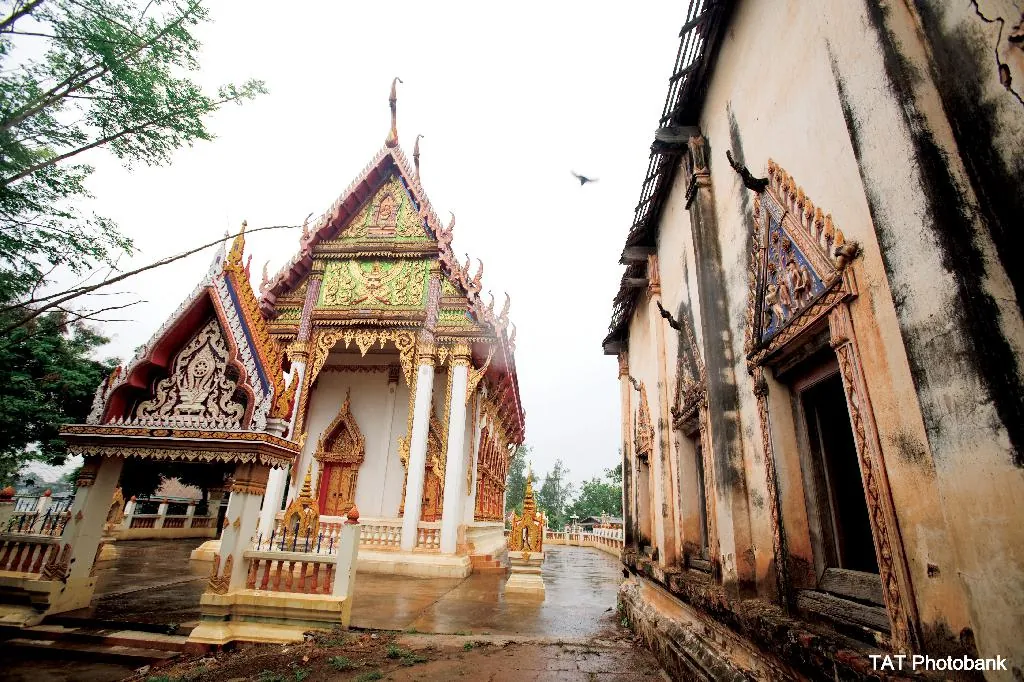
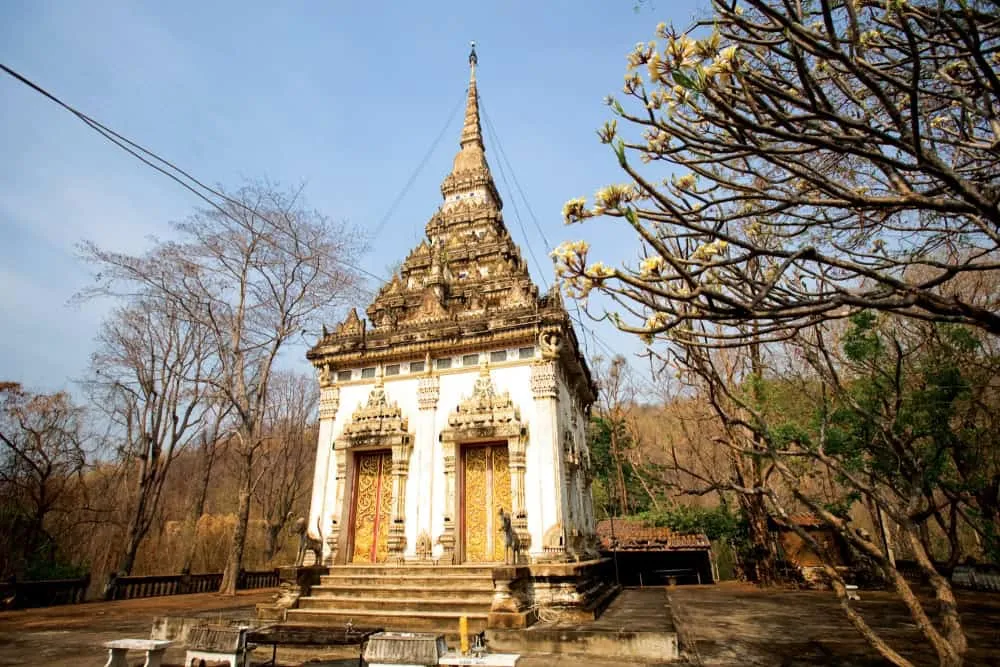
The town's principal royal-grade temple on the Nan River, with a graceful ordination hall and riverside setting. Active monastery — dress modestly and visit before noon when monks are about.

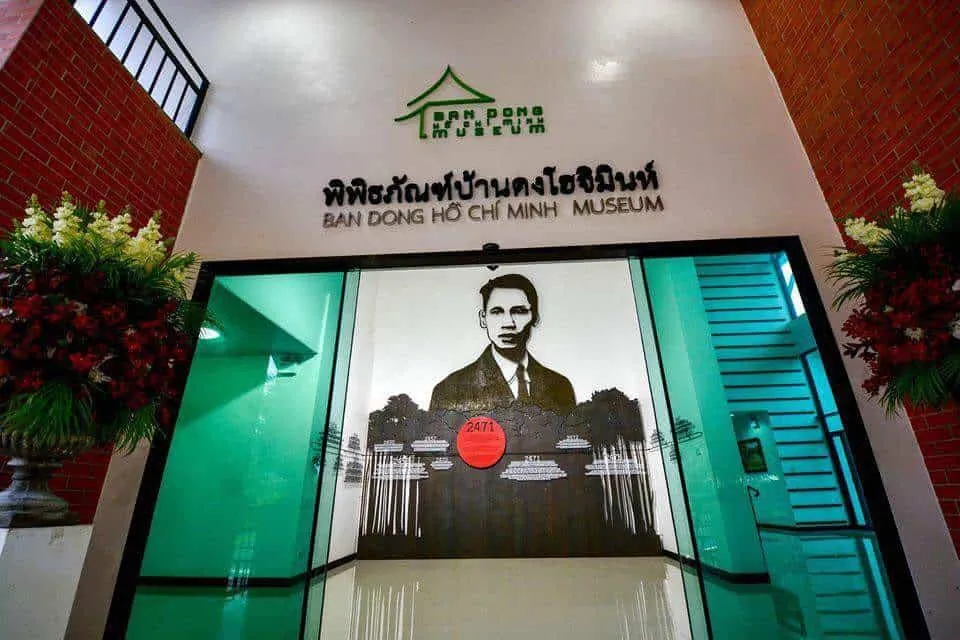
Ban Dong Ho Chi Minh Museum
A small but genuine museum in the house where Ho Chi Minh is believed to have stayed during his years in Thailand — an unexpected piece of 20th-century history in a rural province.
Get to Phichit
Around 4 hours by train from Bangkok — Phichit has its own stop on the northern mainline, making it an easy stopper between Bangkok and Phitsanulok.

eSIM for Thailand
Land with data already working and skip the airport SIM queue. We tested six plans — code THAIHOLIDAY saves 10%.

Travel insurance
Sort cover before you go — the standard Thailand policy is all you need for a river and temple town like Phichit.
Top sights & experiences
Things to do in Phichit












Things to do on the map
Tap a pin for details — 23 places in Phichit plotted.
When to go
Nov–Feb Cool and dry — the most comfortable window for cycling around the old city moat, visiting temples, and watching migratory birds at Bueng Si Fai. Long boat racing on the Nan River falls in early September, just before conditions improve.
Mar–Apr Hot season on the lower northern plains — April peaks at around 39°C. Temple visits are best before 10am. Songkran in mid-April draws domestic crowds to the town.
May–Oct Monsoon season, with July through September the wettest months. The Nan River swells enough to make the annual boat races possible. Temples and the lake remain accessible between the afternoon downpours, but rural roads can flood in heavy years.
About Phichit
Last updated September 2026
Overview
Phichit sits in the lower northern region of Thailand, about 326 kilometres north of Bangkok, where the Nan and Yom rivers cross a flat agricultural plain before joining to form the Chao Phraya. Rice fields, pomelo orchards, and sugar cane surround the provincial capital — there are no mountains, no beaches, and no resorts. What the province has instead is one of Thailand’s most compelling pieces of folklore, a significant freshwater lake, a clutch of Ayutthaya-era temples that see almost no foreign visitors, and a long-standing tradition of river racing that fills the Nan every September.
Phichit calls itself the “City of Crocodiles” — not because the reptiles still roam freely, but because the Krai Thong folktale is set here. The legend of Chalawan, a shape-shifting crocodile lord who rules an underwater cave beneath what is now Bueng Si Fai lake, is woven into the visual culture of the province. Giant crocodile statues appear at the lake, at temples, and in shop signs. The story is well-known across Thailand, and Phichit takes obvious pride in being where it happened.
The provincial capital is a small, unhurried market town on the Nan River’s west bank. The old city area retains traces of ancient moat and wall, and the riverside Wat Tha Luang — the province’s most revered temple — has hosted long boat races on the Nan since at least 1907. A Thai traveller passing through might describe the town as having “dee kwang khwang” (อากาศดีกว้างขวาง) — good air, open space. For those coming from busier parts of Thailand, that is accurate.
The province is a natural stopping point on the Northern Railway Line between Nakhon Sawan to the south and Phitsanulok to the north, and it pairs well with either.
Top Things to Do
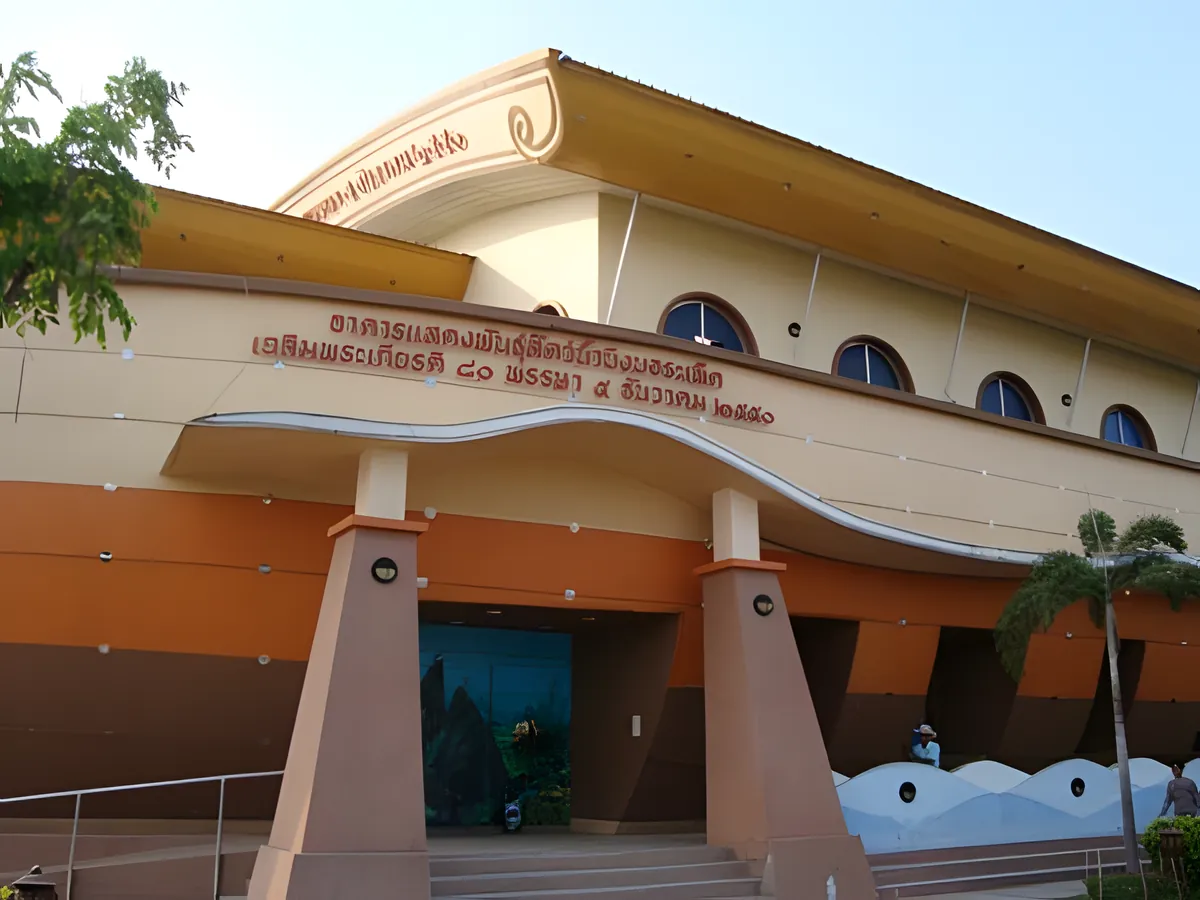
Bueng Si Fai is the province’s most visited site — a shallow freshwater lake of around 21.6 square kilometres (5,390 rai), one of Thailand’s largest freshwater lakes, that functions as the centrepiece of a public park on the edge of town. The main draw for most visitors is the giant crocodile statue at the lake’s edge, mouth agape, which represents Chalawan from the Krai Thong legend and serves as the de facto symbol of Phichit province. The surrounding Princess Mother’s Garden (170 rai of public parkland honouring Princess Srinagarindra) is well-maintained and good for an early morning walk. The Chalerm Prakiat Aquarium nearby displays native freshwater species in a distinctive nine-sided building — it is more interesting than its exterior suggests, with preserved specimens of giant freshwater stingrays and other large native fish. The lake is also a productive spot for watching waterbirds, particularly from November to February when migratory species are present.
The Old City Park (Muang Kao Phichit) preserves the ruins of the original Phichit settlement, believed to date from around 1058 AD. The site contains overgrown earthwork walls, the remains of chedis, a moat, and — in local telling — the entrance to Chalawan’s cave. It is low-key in terms of visitor infrastructure, but the combination of ancient ruins and folktale resonance makes it a more atmospheric place than a quick look at the photographs suggests. A large crocodile sculpture marking the legendary cave adds to the story.
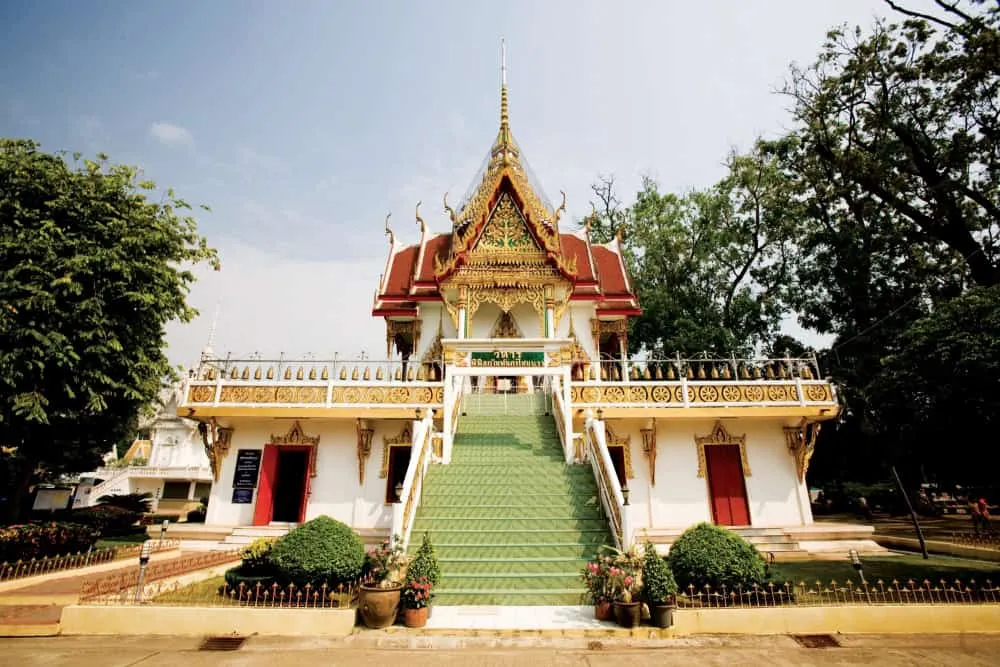
Wat Tha Luang on the Nan River’s west bank, near the Provincial Hall, is the most important temple in the province — a third-class royal monastery since 1986, built during the reign of Rama III. The principal image is Luang Pho Phet, a Chiang Saen-style bronze Buddha in the subduing-Mara posture, which is widely venerated across the region and draws a steady stream of Thai pilgrims. The temple grounds open onto the Nan River and are the venue each September for the King’s Cup long boat races — 40 ornate racing boats, crewed by teams ranging from fewer than 30 to over 55 paddlers, compete in front of large crowds. The event has been running in some form since 1907 and remains the province’s biggest annual celebration.
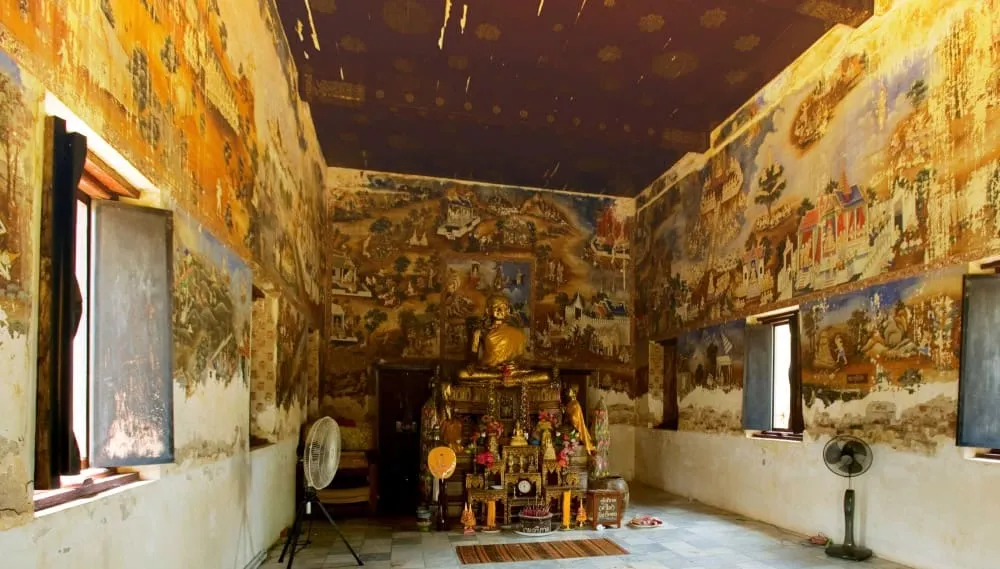
Wat Pho Prathap Chang is about 35 kilometres south of the provincial capital in Pho Prathap Chang district. The temple is traditionally dated to 1701 and was built by Phra Chao Suea — the Ayutthaya king whose regnal name was Sanphet VIII, though history records him more vividly by his popular name, “the Tiger King.” The site is regarded as his birthplace. The temple’s Ayutthaya-style architecture is well-preserved, registered by the Fine Arts Department as an archaeological site since 1935. The principal Buddha image, Luang Pho To (also known as “the Smiling Buddha”), fills the central viharn. The compound is active and receives Thai visitors on religious days but sees very few foreign tourists.
The town market and evening bazaar are worth a couple of hours. Phichit has a reputation for fresh pomelo — the Tha Khoi variety is a GI-registered product of the province, with a thinner rind and sweeter flesh than most other Thai pomelos. Look for it at market stalls from November through February. The evening street market near the town centre is where locals eat, and the food is cheap and good.
Wat Nakhon Chum and other riverside temples in the town area are worth threading into a morning walk. Several of the town’s wats have crocodile sculptures responding to the Chalawan legend — Wat Mai Plai Huai has a particularly unusual “hell garden” with didactic sculpture, and Wat Sri Sattharam has a large white crocodile form that visitors can walk through.
Where to Stay
Accommodation in Phichit is functional rather than resort-grade. Small local hotels and family-run guesthouses dominate the town centre, with enough options for a comfortable overnight. The town is compact enough that most places are within easy walking or cycling distance of the main sights. There are no international chains and no luxury properties. If you are spending serious time in the province — particularly for the September boat races — book ahead, as room supply is limited.
Phitsanulok, about 50 kilometres north, offers a wider range of mid-range hotels and is a practical alternative base for day-tripping into Phichit.
Getting There
Phichit is on the Northern Railway Line, 347 kilometres and four to six hours by train from Krung Thep Aphiwat Central Terminal in Bangkok. The station is a ten-minute walk from most of the town sights. Trains continue north to Phitsanulok (around an hour further). Buses from Bangkok’s Mo Chit Northern Bus Terminal take about five hours. By car from Bangkok, the drive north via Highway 1 (Phahonyothin Road) or Highway 117 covers about 326 kilometres — allow five hours in reasonable traffic.
Within the province, the town is small enough to walk or cycle. A motorbike or hired driver is necessary for reaching Wat Pho Prathap Chang and sights in the outer districts.
Best Time to Visit
Phichit has a lower-north/central plains climate: the wet season runs May through October, with the heaviest rain falling in July, August, and September, and the cool dry season spans November through February. April is the hottest month, with temperatures reaching 39°C. The November-to-February window is the most comfortable for sightseeing — cool mornings, manageable afternoons, and good conditions for birdwatching at Bueng Si Fai.
The exception to the cool-season preference is the September long boat races at Wat Tha Luang, which are worth the humid weather if you can plan around them. The races require the Nan to be running high, so they are deliberately scheduled for the wet season. Expect crowds, noise, and a level of provincial festivity that Phichit rarely sees at any other time.
Frequently Asked Questions about Phichit
How do I get to Phichit from Bangkok?
What is the best time to visit Phichit?
How long does Phichit need?
Is public transport enough to get around Phichit?
What is the Chalawan legend and why does it matter here?
Spotted something out of date or incorrect? Let us know
Plan your
Phichit trip