

Wat Pracharat Bamrung (Wat Rang Man)
วัดประชาราษฎร์บำรุง (วัดรางหมัน)
Wat Pracharat Bamrung — known to almost everyone locally as Wat Rang Man — is a Kamphaeng Saen temple built around a white stucco viharn and, until his death in December 2025, the home of Luang Pu Paew Pavaro, one of Thailand’s most widely followed amulet monks. Entry is free, daily 06:00-18:00.
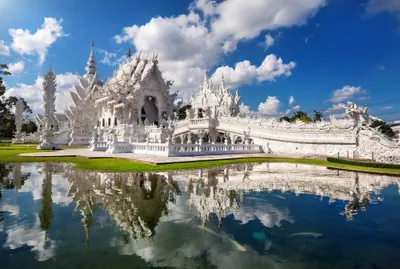
The temple was formally established in 1951 by Phra Khru Sukit Thammasorn (Luang Pho Wang), then abbot of Wat Kamphaeng Saen and head of the Thung Khwang subdistrict sangha. Its older, still-common name comes from the site itself: a drainage channel (rang) once lined with mun trees, which villagers used as a shorthand long before the formal name stuck. The viharn is the temple’s visual centrepiece — white stucco reliefs of angels, naga serpents and dragons cover the walls and supporting pillars, a level of decorative detail unusual for a rural district temple of this size.
The temple’s modern significance, though, comes from a person rather than the architecture. Luang Pu Paew Pavaro (full monastic title Phra Ratchamongkhon Wachirakhom) moved here in 2008 and remained the temple’s senior resident monk until he died in December 2025 at the age of 103, revered across the region as “the deity of Kamphaeng Saen.” A statue of him stands in front of the viharn alongside one of Phra Sivali, and his former kuti draws a steady stream of devotees paying respects and seeking blessings — expect more foot traffic and merit-making activity here than the temple’s modest size would suggest.
Insider Tip: Weekday mornings are noticeably quieter than weekends, when Bangkok visitors make the drive out specifically to pay respects at Luang Pu Paew’s kuti.
Older amulets and photographs of Luang Pu Paew circulate widely among collectors nationally, so don’t be surprised if some visitors you meet on site are there for that reason as much as for the temple itself. The stucco work on the viharn is worth a slow look regardless — the naga and dragon figures wrap continuously around the pillar bases rather than appearing as isolated decorative panels, a more labour-intensive technique than the applied-relief stucco common at newer temples.
Dress modestly (shoulders and knees covered) and remove shoes before entering the viharn. The temple has a large car park, unusual for a rural site this size, plus food and souvenir stalls that get busier around religious holidays. It’s in Nakhon Pathom province’s Kamphaeng Saen district, about 30-40 minutes by car from Nakhon Pathom town.
- Entry fee: Free
- Hours: Daily 06:00-18:00
- Established: 1951, originally known as Wat Rang Man
- Notable resident: Luang Pu Paew Pavaro, senior monk 2008 until his death in December 2025
- Standout feature: White stucco viharn with angel, naga and dragon reliefs
Location & Directions
Kamphaeng Saen, Nakhon Pathom
Nakhon Pathom, Thailand
Show your taxi or Grab driver
วัดประชาราษฎร์บำรุง (วัดรางหมัน)
Frequently Asked Questions
Is Wat Pracharat Bamrung (Wat Rang Man) free to visit?
Who was Luang Pu Paew Pavaro?
Why does the temple have two names?
What's the main thing to see at the temple?
How far is it from Bangkok or Nakhon Pathom town?
Spotted something out of date or incorrect? Let us know
Stay Near Wat Pracharat Bamrung (Wat Rang Man)
Live prices for places closest to Wat Pracharat Bamrung (Wat Rang Man) — tap a pin to compare.