



Wat Pratu San
วัดประตูสาร
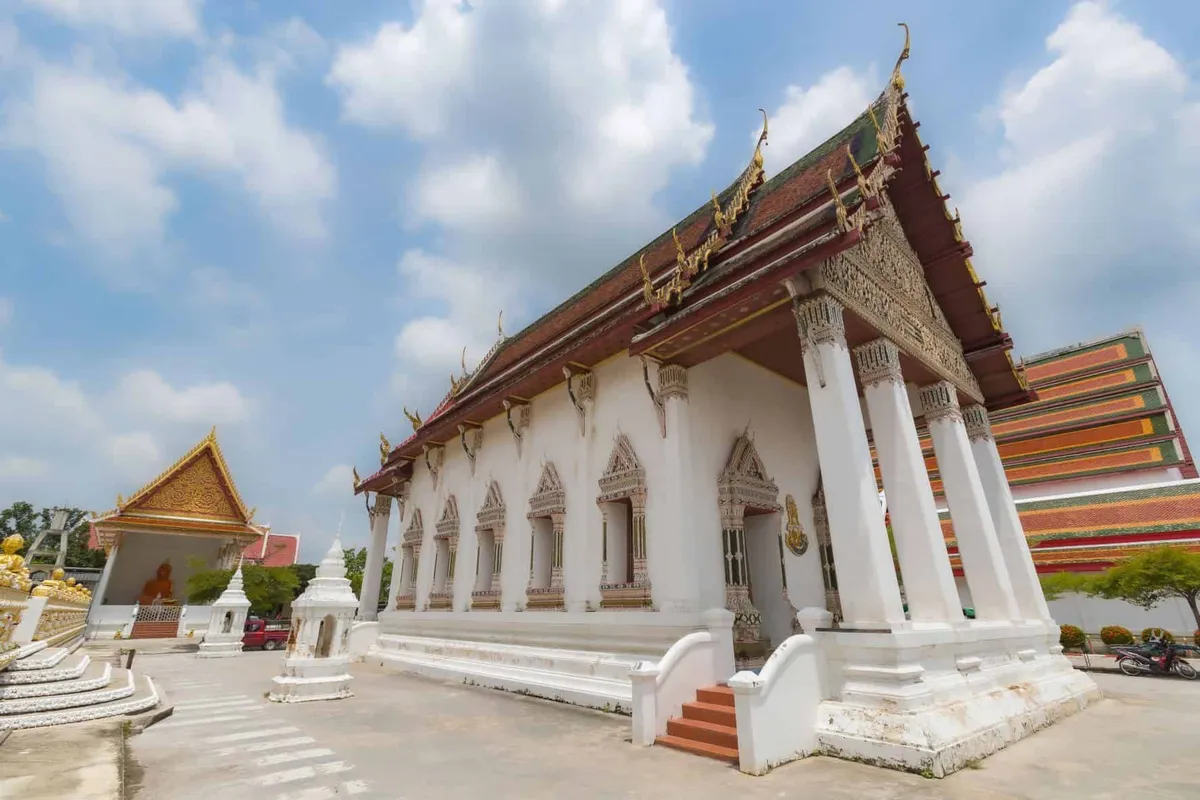
Wat Pratu San (วัดประตูสาร) sits on the west bank of the Tha Chin River along Khun Chang Road in Suphanburi town. The temple is said to have been founded around 1680 CE, during the middle period of the Ayutthaya kingdom, though no architectural remains from that era have survived to the present day.
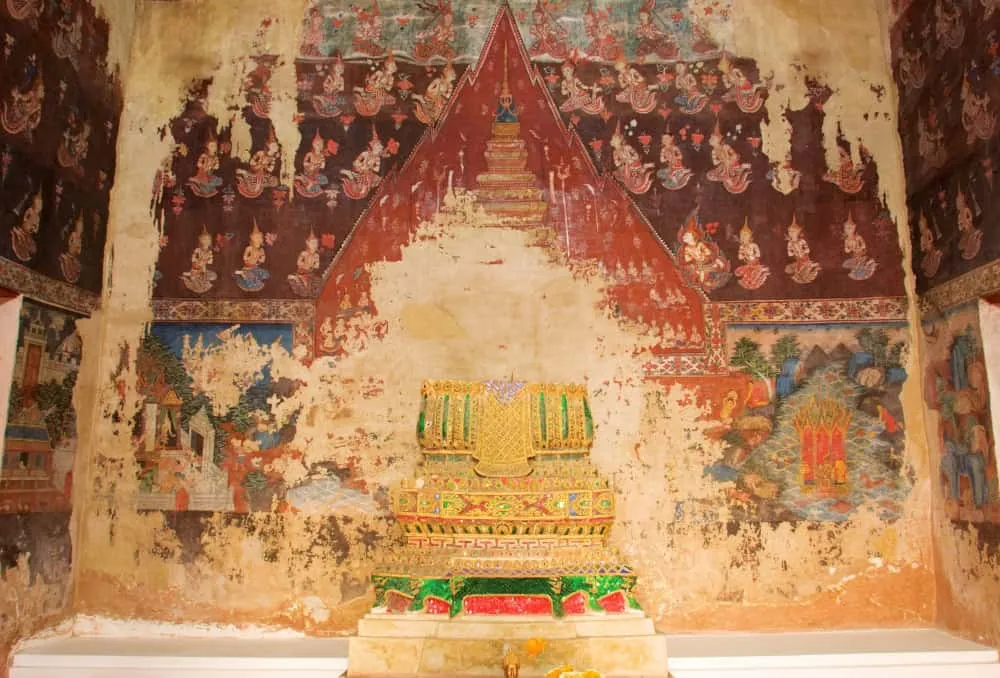
The temple’s principal draw is its ubosot (ordination hall) murals, painted in 1848 by a Lao artist named Kham. Originally from Vientiane, Kham had entered Siam in 1826 following the collapse of the Lao court after King Anouvong’s failed rebellion. He eventually settled in Suphanburi upon discovering that siblings he had been separated from during the migration were living there, and he subsequently volunteered to paint the interior of the ubosot. Working alongside another painter, he produced detailed murals covering the entire inner wall of the hall. The paintings depict episodes from the life of the Buddha and the five Buddhas. A corresponding series of paintings on wooden panels, appearing to replicate the mural compositions, is preserved in the temple’s image hall.
The murals are regarded as one of the more significant examples of early Rattanakosin-period religious painting outside Bangkok, and their Lao artistic influence is noted by scholars of Thai art history. The temple is an active place of worship and sees little tourist traffic, which means the murals can be viewed without disturbance.
- Entry fee: Free
- Hours: Daily 08:00-17:00
- Highlight: 1848 ubosot murals by the Lao painter Kham
- Getting there: Tuk-tuk or songthaew from Suphanburi town centre
- Dress code: Covered shoulders and knees; shoes off inside the ubosot
Insider Tip: Ask a monk or temple caretaker to point out the wooden-panel copies of the murals in the image hall next door — they replicate the ubosot compositions and are easy to miss if you only look inside the main hall.
Dress modestly when visiting — covered shoulders and knees are required — and remove footwear before entering any building. The temple is easily reached by tuk-tuk or songthaew from Suphanburi town centre, an easy stop alongside Wat Phra Rup and Wat Phra Non, Suphanburi’s other town-centre temples, if you’re spending a morning on foot.
Location & Directions
Khun Chang Road
Suphan Buri, Thailand
Show your taxi or Grab driver
วัดประตูสาร
Frequently Asked Questions
Is there an entrance fee for Wat Pratu San?
What makes the murals at Wat Pratu San significant?
Can visitors go inside to see the murals?
What should I wear to visit?
How do I get to Wat Pratu San from Suphanburi town centre?
Spotted something out of date or incorrect? Let us know
Stay Near Wat Pratu San
Live prices for places closest to Wat Pratu San — tap a pin to compare.