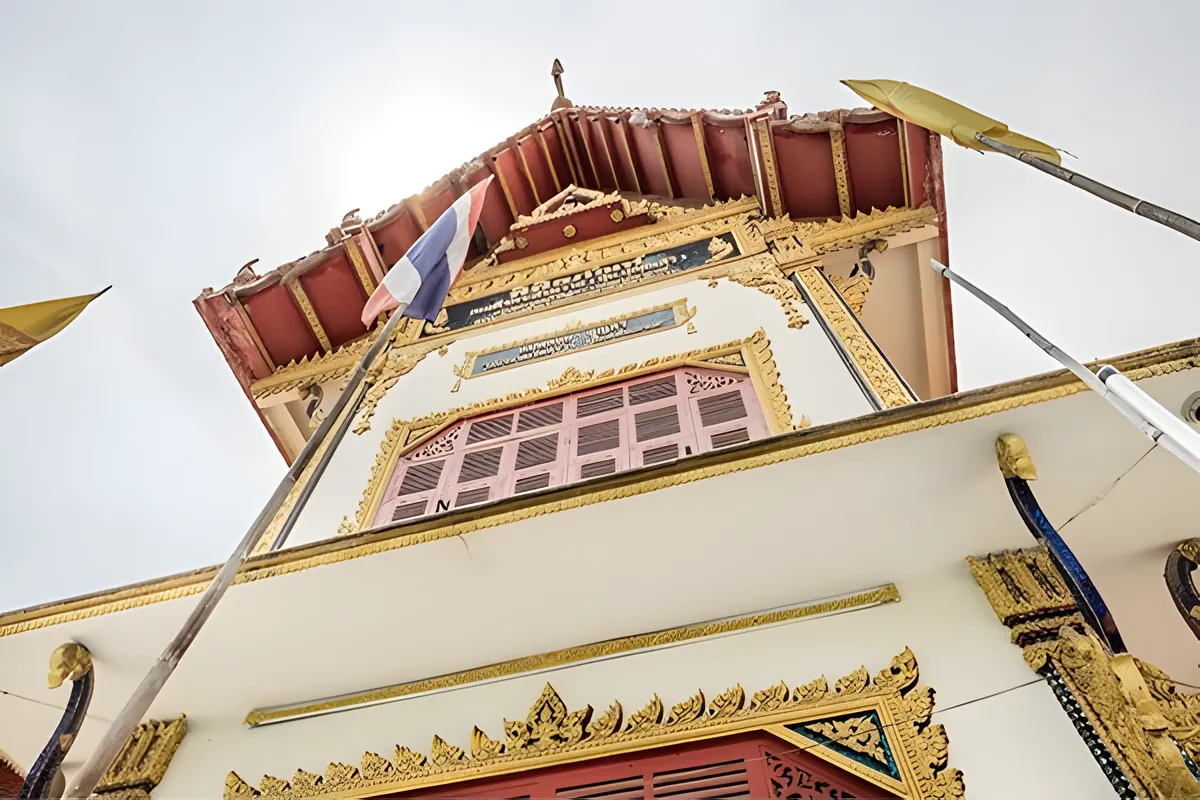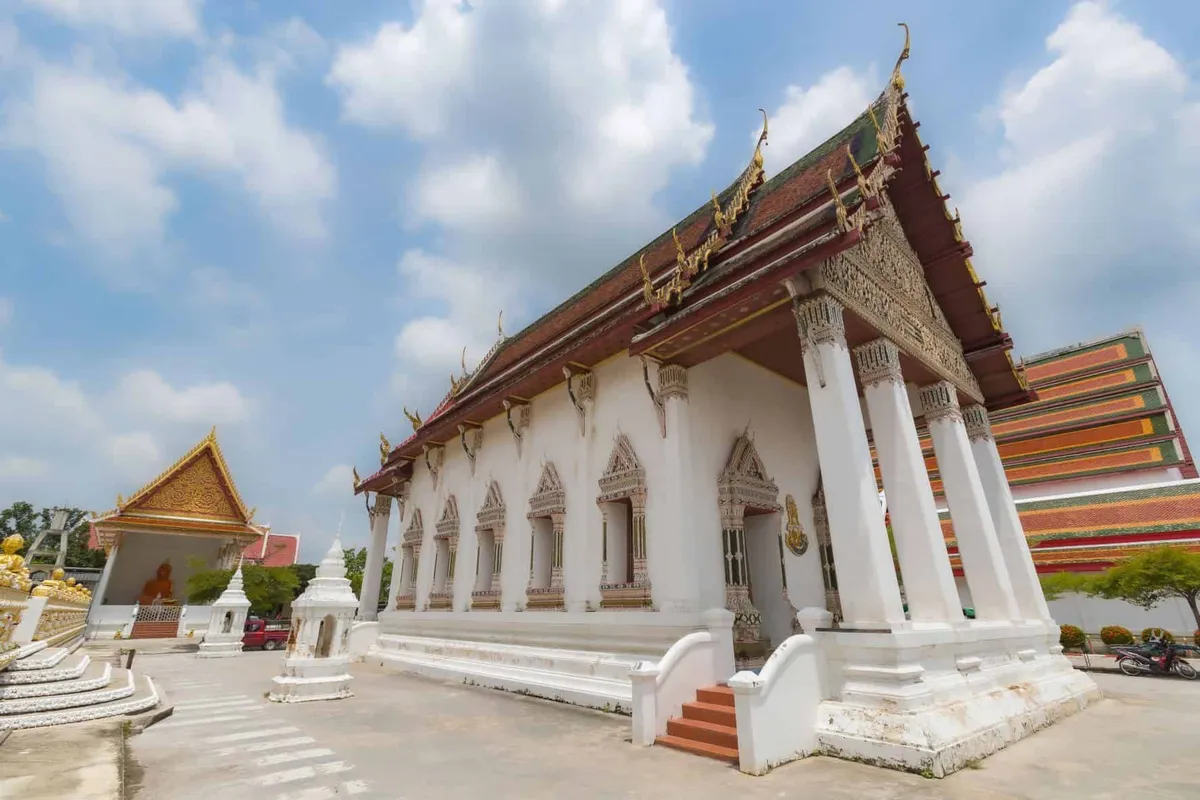




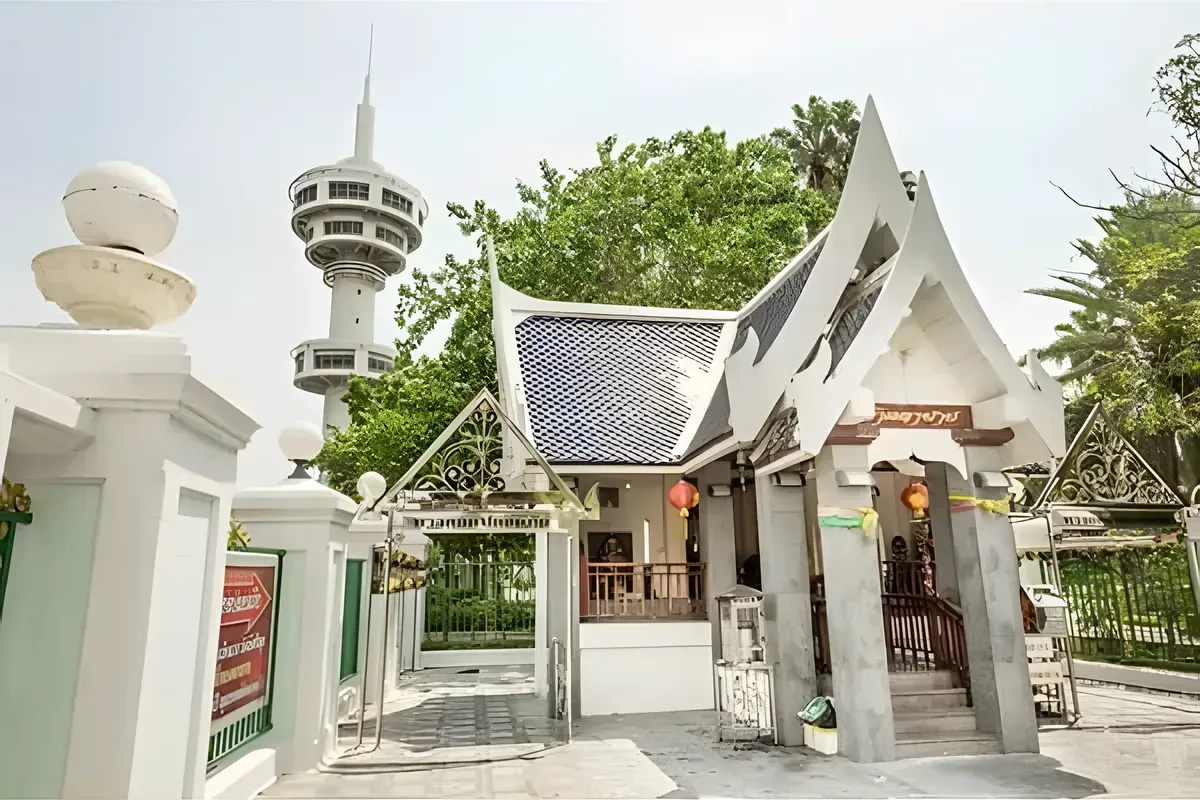
Wat Phra Rup holds two things you won’t find together anywhere else in Thailand: a 13-metre reclining Buddha with a face locals reckon is the most serene in the province, and a Buddha footprint carved entirely from wood. The temple sits on the Tha Chin River’s west bank in Suphan Buri’s Tha Phi Liang subdistrict, older than the city’s better-known temples and considerably quieter.
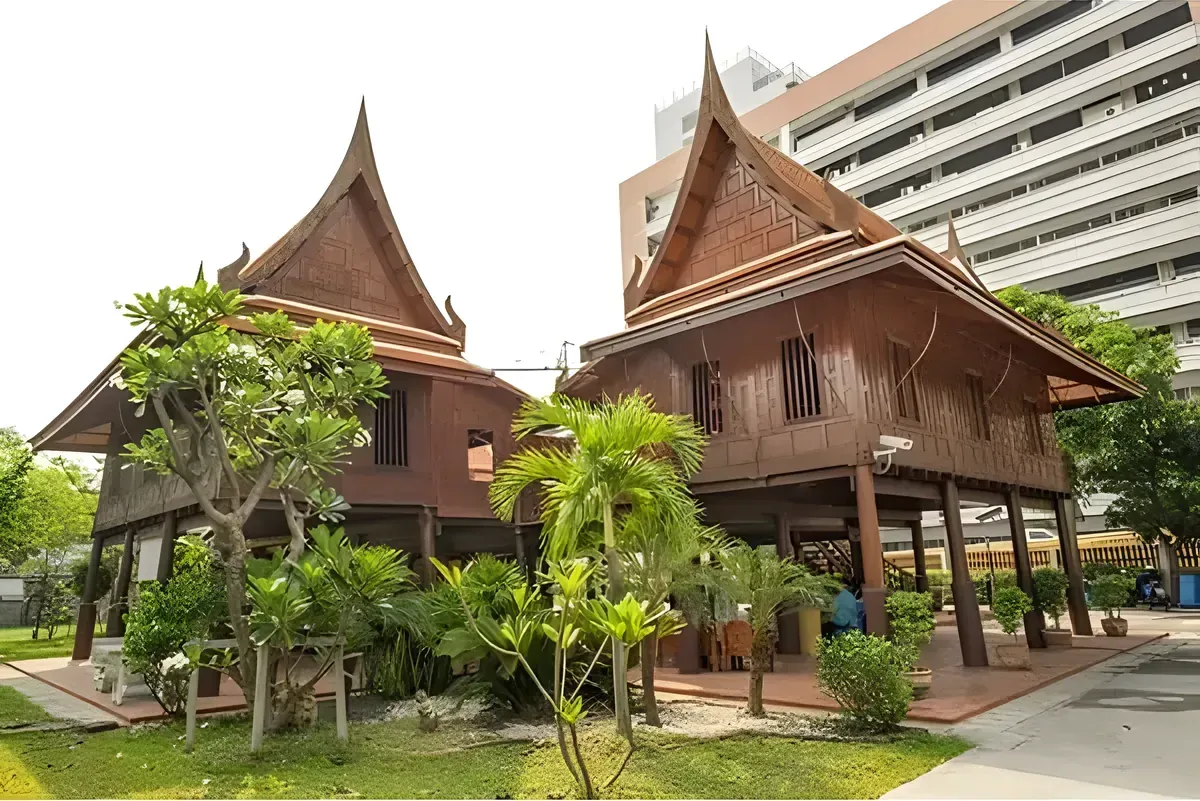
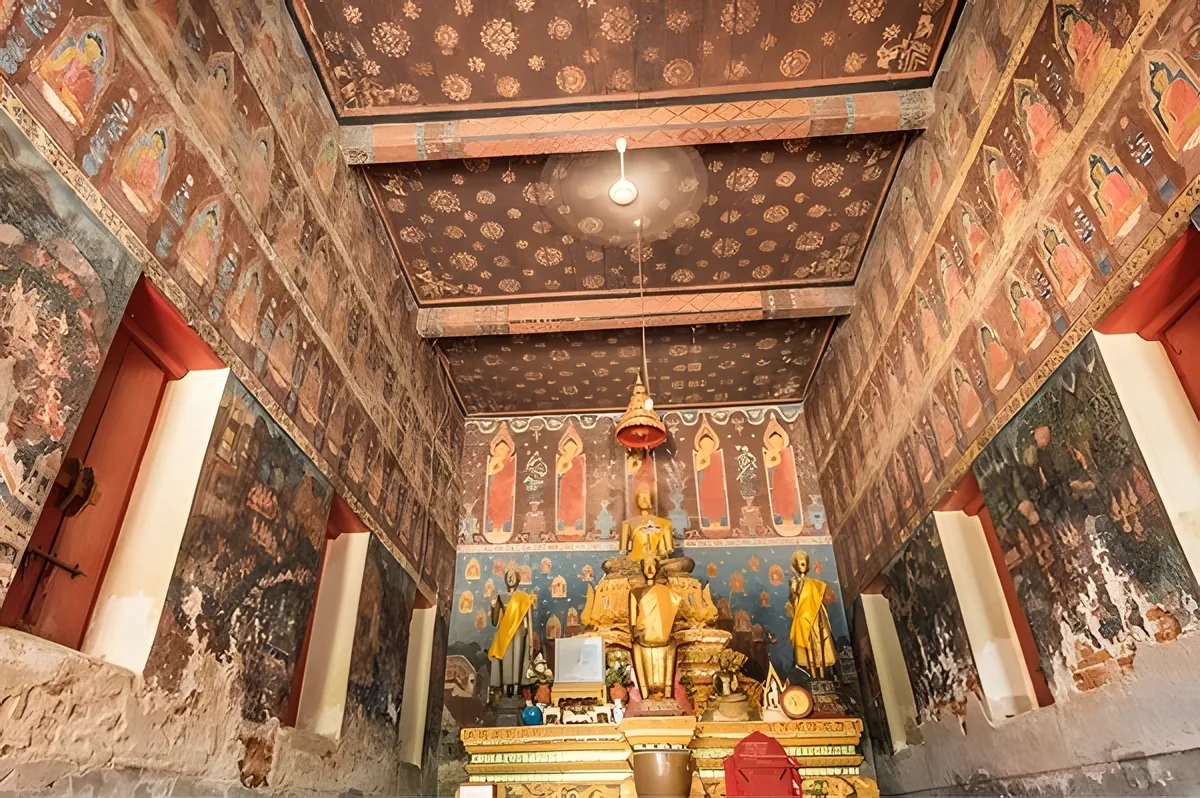
The reclining Buddha faces east inside the main hall — 13 metres long, 3 metres high, dated by art historians to the late U Thong period, roughly the mid-13th century. Behind it stands an octagonal chedi with a rounded bell-shaped spire in the Suphannaphum style, evidence the site predates Ayutthaya as the regional capital. But the real rarity is upstairs in the temple’s small museum: a Buddha footprint carved from pradu (Burma padauk) hardwood, 221.5 cm long, 74 cm wide and 10 cm thick, cut on both faces — 108 auspicious symbols ringed around the sole and the Four Great Kings on the front, a Mara-conquest scene on the back. Local tradition holds it was originally kept at Wat Khao Din and floated downriver during a Thai-Burmese war, saved by a monk who feared it would be destroyed if it stayed. The museum itself opened in 1990, built on the initiative of the temple’s former abbot Phra Khru Sunthon Suwannakit — known locally as Luang Pho Dee — and displays the footprint alongside everyday objects donated by the surrounding community.
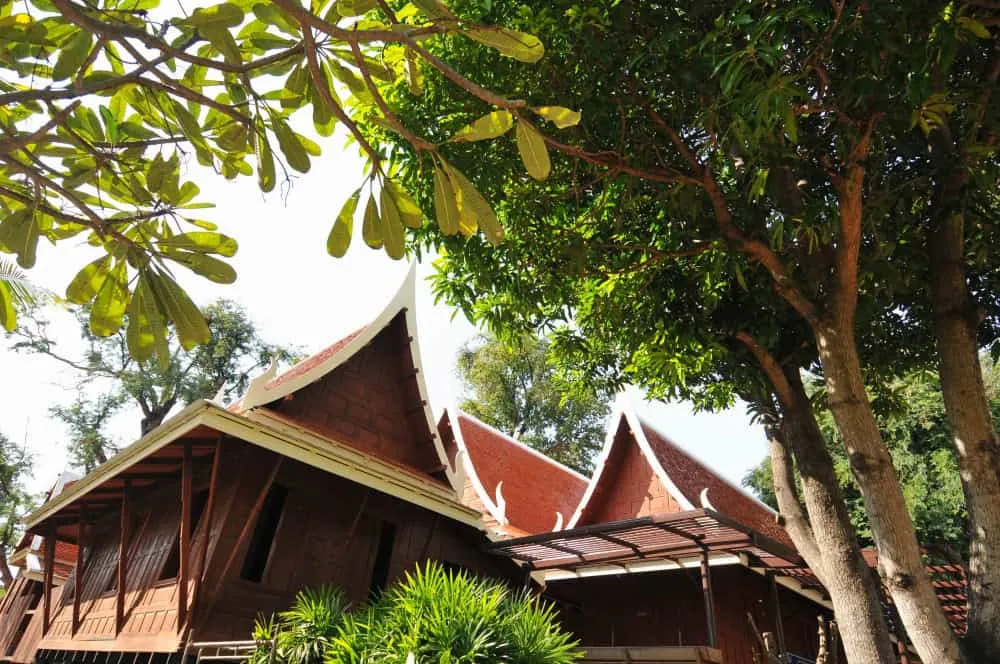
Morning is when the temple feels most alive: worshippers arrive to light incense and make merit before the reclining Buddha, and the wooden halls carry the smell of old teak and joss smoke rather than the polish of a restored monument. There’s little in the way of souvenir stalls or tour buses here — Wat Phra Rup functions as a neighbourhood temple first, an attraction second.
Insider Tip: The museum keeps looser hours than the temple grounds since it’s minded by volunteers rather than staffed daily — call ahead on 0 3552 2031 if the wooden footprint is your main reason for the trip, rather than assume it’ll be open.
Dress modestly (covered shoulders and knees) and remove your shoes before entering any hall with a Buddha image. The temple is a short songthaew or tuk-tuk ride from central Suphan Buri; combine it with Wat Phra Non a few kilometres north (Suphan Buri’s other major reclining Buddha, for comparison), the National Museum Suphan Buri for provincial history, or Sam Chuk Old Market for a half-day riverside trip.
- Entry: Free, daily 06:00–17:00
- Reclining Buddha: 13 m long, 3 m high, late U Thong period (~13th century)
- Wooden footprint: Pradu wood, 221.5 x 74 x 10 cm — the only one of its kind recorded in Thailand
- Museum: Opened 1990, upper floor of a two-storey building on the temple grounds
- Getting there: Khun Chang Road, west bank of the Tha Chin River, Tha Phi Liang
Location & Directions
Khun Chang Road
Suphan Buri, Thailand
Show your taxi or Grab driver
วัดพระรูป
Within Walking Distance




Frequently Asked Questions
Is Wat Phra Rup free to visit?
What is the wooden Buddha footprint at Wat Phra Rup?
How old is the reclining Buddha at Wat Phra Rup?
How do you get to Wat Phra Rup from central Suphan Buri?
Is there a museum at Wat Phra Rup?
Spotted something out of date or incorrect? Let us know
Stay Near Wat Phra Rup
Compare places to stay in Suphan Buri, or open the map for options closest to the attraction.