Wat Prayurawongsawat Worawihan
วัดประยุรวงศาวาส วรวิหาร
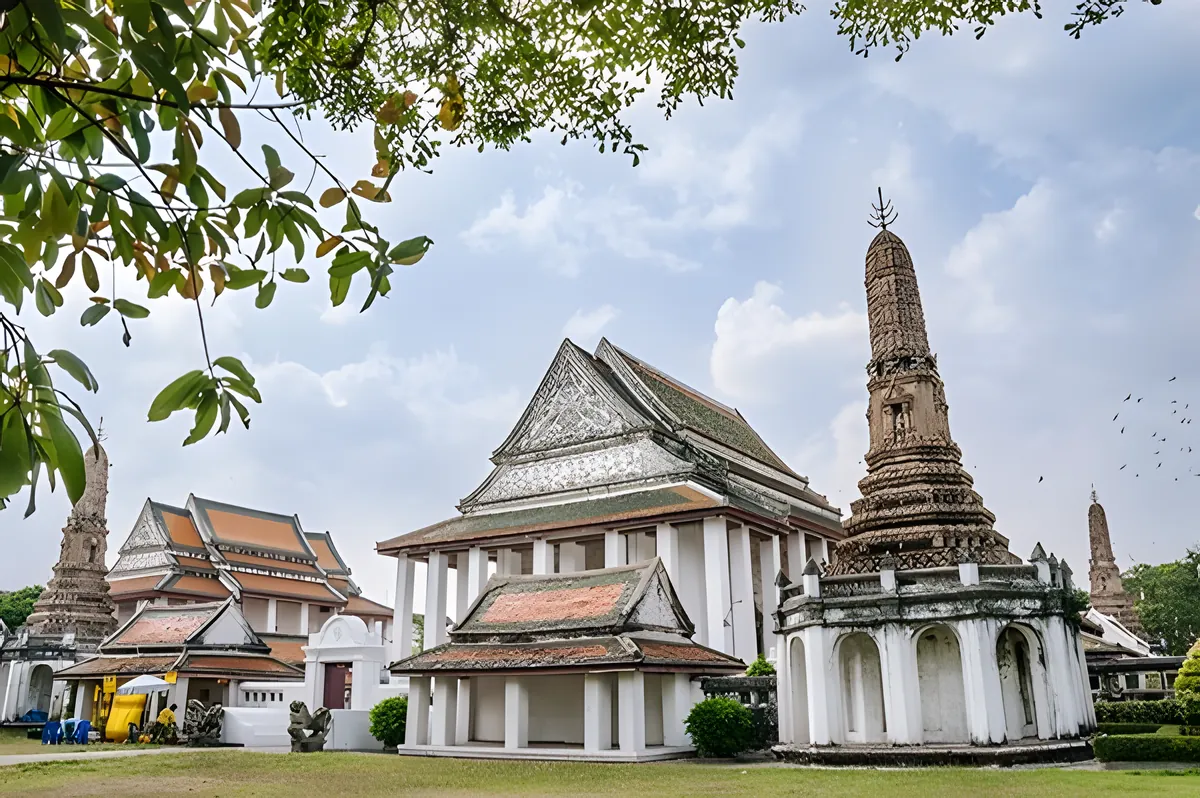
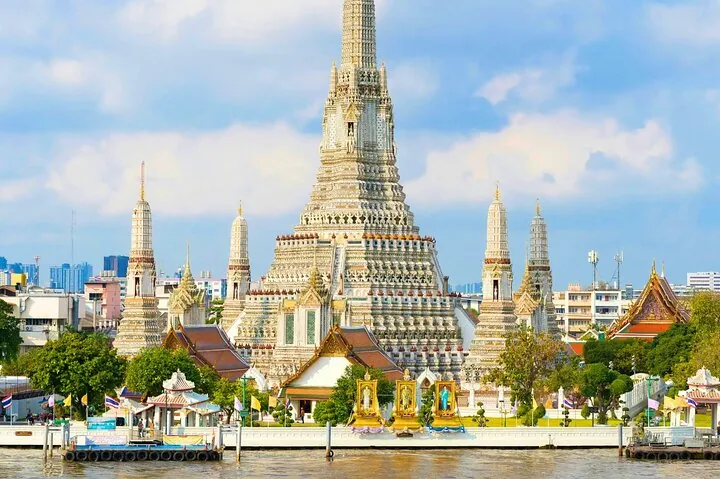
A 60.5-metre white chedi rises over the Chao Phraya’s Thon Buri bank at Wat Prayurawongsawat Worawihan, its restoration winning a UNESCO Asia-Pacific Heritage Award of Excellence in 2013. Entry is free, open daily 08:00-17:00, and the chedi’s interior — reached by a narrow stairway — is open to visitors.
Somdet Chao Phraya Borom Maha Prayurawongse (Dit Bunnag), a senior Rattanakosin-era noble, donated the land — a former coffee plantation — to found the temple in 1828 under King Rama III. It took eight years to build, finishing in 1836, and now ranks as a second-class royal temple of the Worawihan grade. The Phra Borommathat Maha Chedi, its centrepiece, is 50 metres in diameter with an 162-metre circumference and is ringed by 18 smaller bell-shaped stupas. By 2006, engineers from King Mongkut’s Institute of Technology Ladkrabang found the entire structure leaning toward the river by roughly 1.2 metres from ground subsidence. The abbot at the time, Phra Brahmapundit, launched a restoration of the chedi and the adjoining Pharin Pariyattithammasala hall that UNESCO recognised with its Award of Excellence in 2013 for both technical achievement and the project’s impact on the surrounding riverside community.
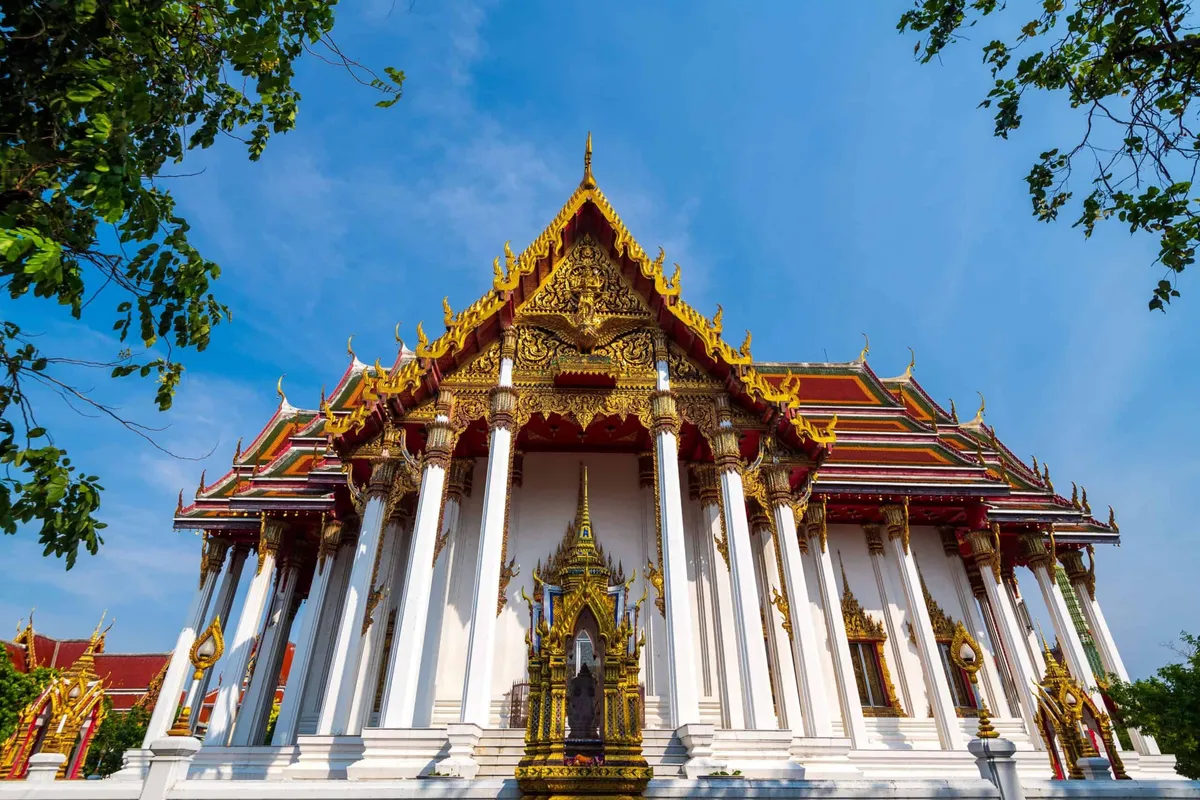
Climbing the stairway inside the chedi’s base takes you past a museum built from what turned up during that 2006 work: more than 270 Buddha images and thousands of amulets, sealed inside the structure for generations. The stairway continues to an upper terrace with river views before doubling back down. At ground level, the ubosot is a double-roofed Thai hall with a gilded cotton-rose flower gable and a glazed-tile roof; inside sits Phra Phutthatama Wichettha Satsada, a two-metre-wide seated image in the subduing-Mara pose that Japanese craftsmen were brought in to lacquer and gild.
Khao Mo, the temple’s other signature feature, is a rock-garden pond built as a miniature Mount Meru — over 180 years old and registered as an ancient monument in 1979. Turtles and soft-shelled turtles live in the water around its miniature pavilions and mock ruins, and feeding them for a small fee is a popular break between the ubosot and the chedi.
Insider Tip: Combine the visit with Wat Kalayanamit Woramahawihan, a five-minute walk along the riverside soi, and the Kudi Chin community, Bangkok’s old Portuguese-Thai Catholic enclave — all three sit within the same short stretch of the Thon Buri riverbank.
Watch out: The stairway inside the chedi is steep, narrow, and un-air-conditioned. It’s not a good fit for anyone with mobility issues, and the climb can feel close and hot at midday — go earlier or later in the opening hours.
- Entry: Free, daily 08:00-17:00
- Chedi: 60.5m high, 50m diameter, ringed by 18 smaller stupas; interior museum open to visitors
- UNESCO Award: Asia-Pacific Heritage Award of Excellence, 2013, for the chedi restoration
- Getting there: Chao Phraya Express Boat to Memorial Bridge (Saphan Phut) pier, Thon Buri side
- Nearby: Wat Kalayanamit and the Kudi Chin community, both a short walk away
Dress modestly — shoulders and knees covered — and expect quieter crowds than the Rattanakosin-island temples across the river, even though the site and its award are just as significant.
Location & Directions
Thon Buri, Bangkok
Bangkok, Thailand
Show your taxi or Grab driver
วัดประยุรวงศาวาส วรวิหาร
Frequently Asked Questions
Can you go inside the chedi at Wat Prayurawongsawat?
What did the temple win the UNESCO award for?
What is Khao Mo?
Is Wat Prayurawongsawat free to enter?
How do I get to Wat Prayurawongsawat?
Spotted something out of date or incorrect? Let us know
Popular tours in Bangkok




Stay Near Wat Prayurawongsawat Worawihan
Live prices for places closest to Wat Prayurawongsawat Worawihan — tap a pin to compare.