




Wat Protket Chettharam
วัดโปรดเกศเชษฐาราม
Wat Protket Chettharam is the odd one out in Phra Pradaeng: the only Thai-Buddhist temple in a district of Samut Prakan that Rama II resettled with Mon refugees from Burma in the early 1800s, which is why every other temple nearby follows Mon-Buddhist tradition and this one doesn’t. It was built around 1822, originally under the name Wat Pak Khlong, sponsored by Phraya Petchpichai (Ket), the same official responsible for laying out Nakhon Khuean Khan, Phra Pradaeng’s original walled town centre.
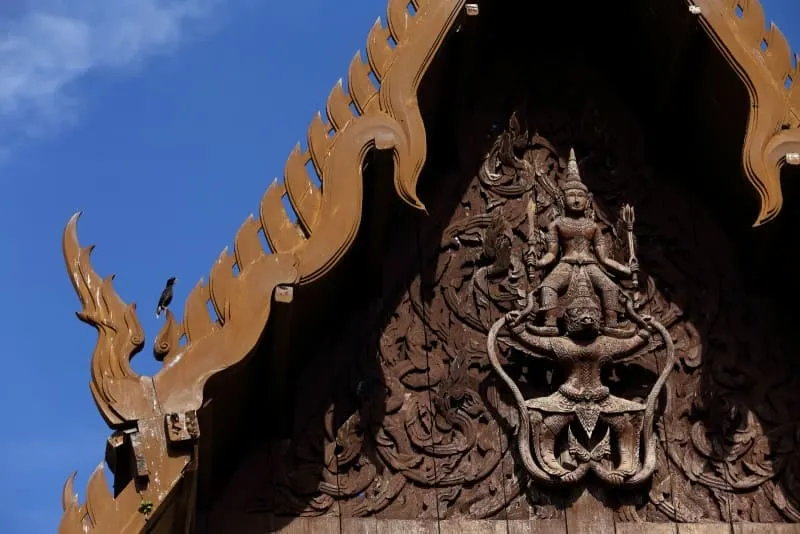
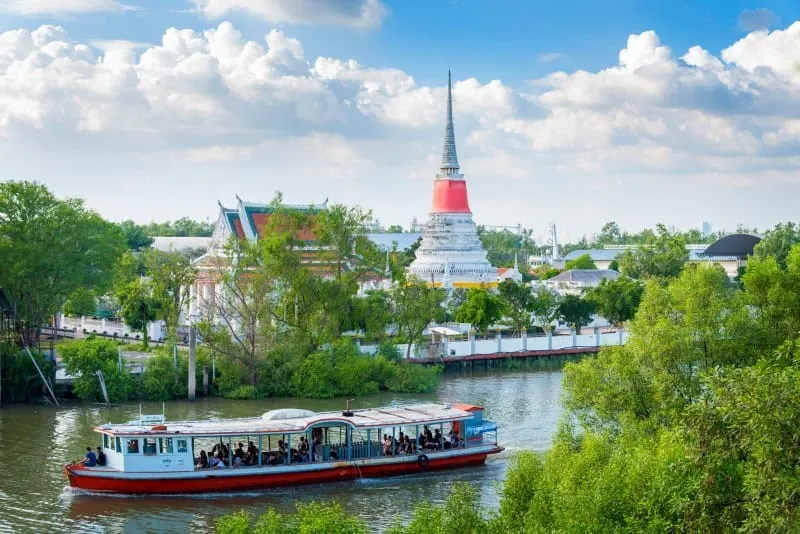
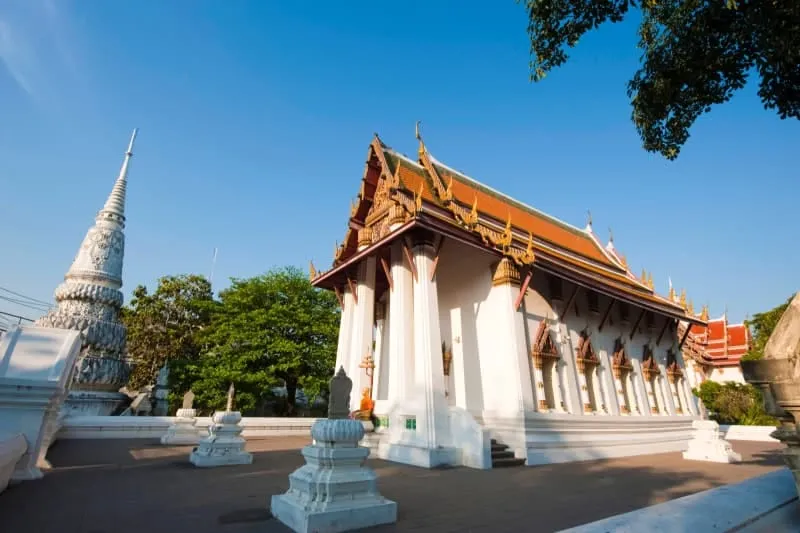
The architecture reflects that mixed heritage directly rather than through any single “Lanna” or “central Thai” formula. The ordination hall (ubosot) is built in Chinese style, a design choice that became fashionable in Rattanakosin temples once Chinese trade money started funding religious construction in the early 19th century. A short walk away, a Singhalese-style chedi rises in the familiar bell-shaped Sri Lankan form seen across Ayutthaya-lineage temples, and a Thai-style mondop (scripture hall) sits in the middle of an ornamental pond, housing a replica of the Buddha’s footprint. Three building styles, one small compound.
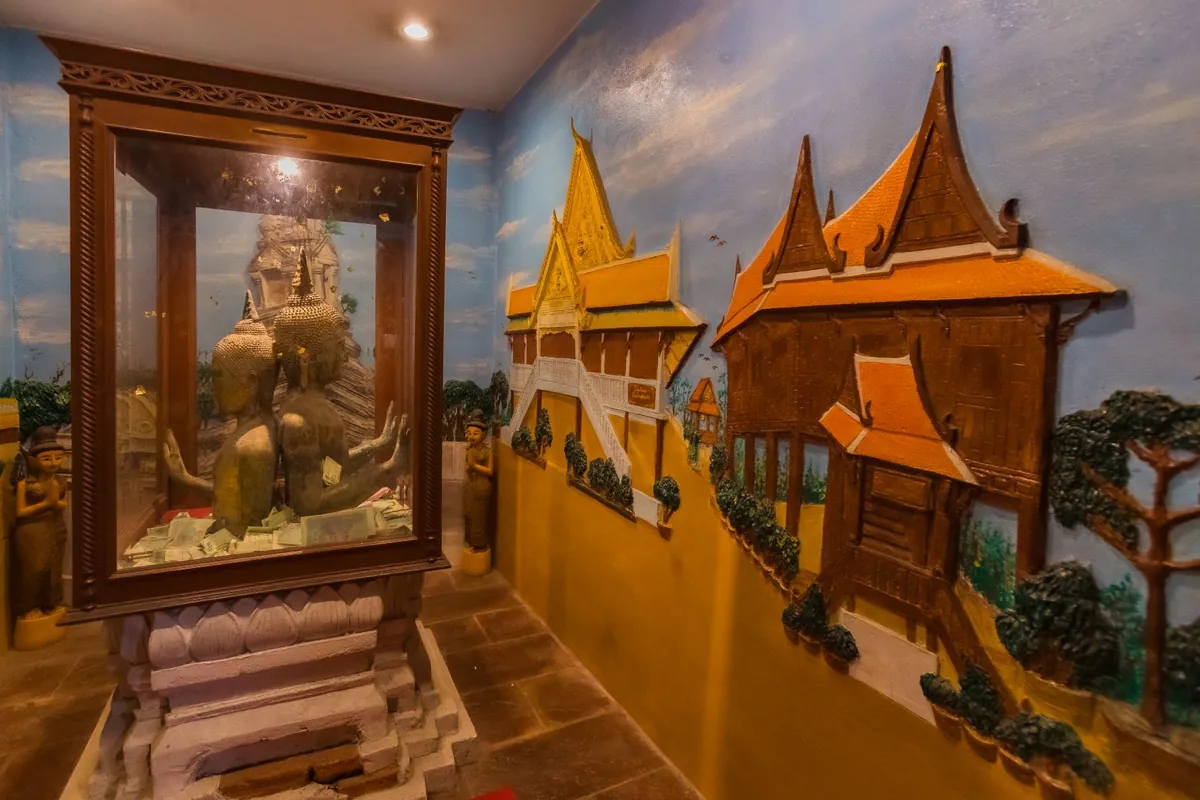
The murals are the real reason to seek this place out. Both the ubosot and the vihara, which also holds a reclining Buddha image, are painted in the Khrua In Khong school, a mid-19th-century Thai style that borrowed Western perspective and shading techniques rather than the flat, symbolic compositions of earlier temple art. Look closely at the arches above the doors and windows: the monk figures painted there include some depicted as women, an unusual detail worth pointing your phone camera at. Elsewhere the murals show altar-table still lifes and elephant scenes rendered with the same illusionistic depth.
Insider Tip: Bring good lighting or a phone with a strong camera flash: the murals are inside dim halls with limited natural light, and the detail in the Khrua In Khong brushwork is easy to miss at a glance.
Wat Protket Chettharam functions as a working monastery day to day rather than a museum piece, so expect ordinary temple activity (morning almsgiving, local devotees making merit, monks going about routine duties) alongside the historical architecture. It’s not staged for visitors, and there’s rarely a crowd.
Watch out: Phra Pradaeng sits across the Chao Phraya from central Bangkok with no bridge directly serving this side. The practical route from the city is the Klong Toey-Phra Pradaeng car ferry or a longer road loop south. Budget extra time for the crossing.
The temple is on Songtham Road in Song Khanong subdistrict, open daily from 08:00 to 16:30, and entry is free. Dress modestly (covered shoulders and knees) and remove shoes before entering the ubosot, vihara, or mondop.
- Entry fee: Free
- Hours: Daily 08:00-16:30
- Built: Circa 1822, under King Rama II, originally named Wat Pak Khlong
- Signature feature: Khrua In Khong-school murals with Western-style perspective, plus a Chinese-style ubosot, Singhalese chedi, and pond-set mondop
- Getting there: Songtham Road, Song Khanong, Phra Pradaeng, via the Klong Toey-Phra Pradaeng car ferry from Bangkok
Location & Directions
45/11 Songtham Road
Samut Prakan, Thailand
Show your taxi or Grab driver
วัดโปรดเกศเชษฐาราม
Frequently Asked Questions
Why is Wat Protket Chettharam different from other temples in Phra Pradaeng?
What are the Khrua In Khong murals?
How do I get to Wat Protket Chettharam from Bangkok?
Is there an entry fee?
When was Wat Protket Chettharam built?
Spotted something out of date or incorrect? Let us know
Stay Near Wat Protket Chettharam
Live prices for places closest to Wat Protket Chettharam: tap a pin to compare.