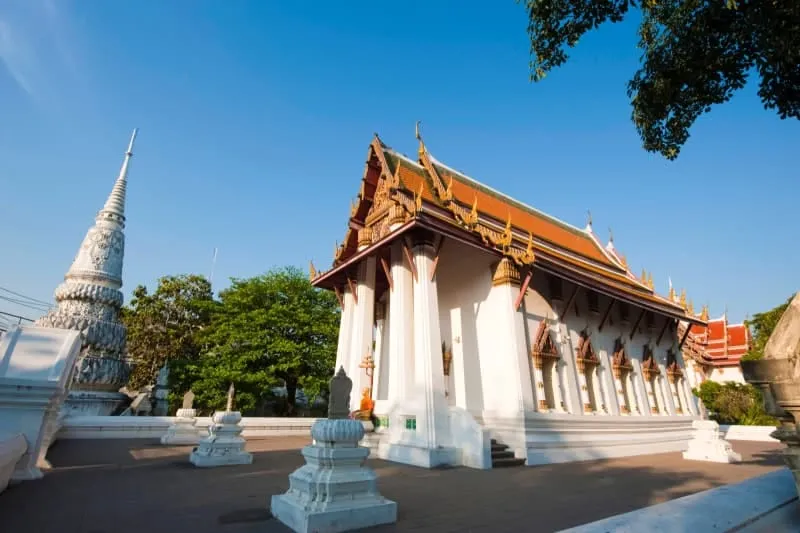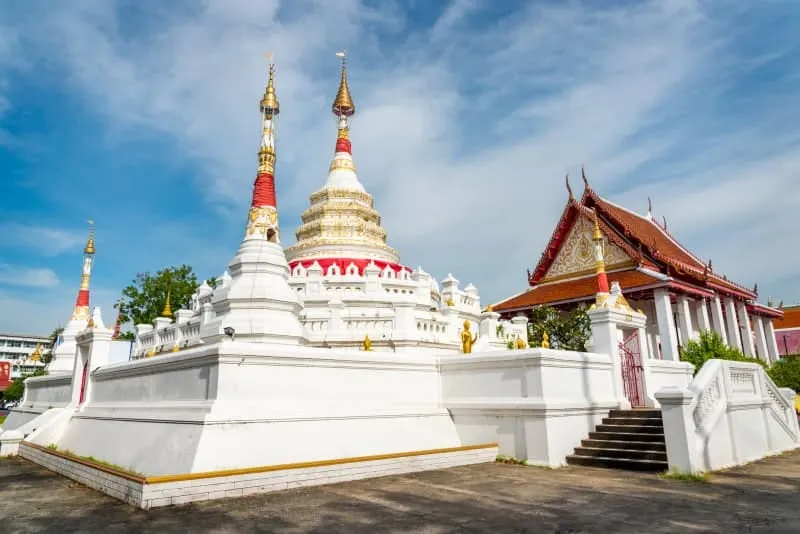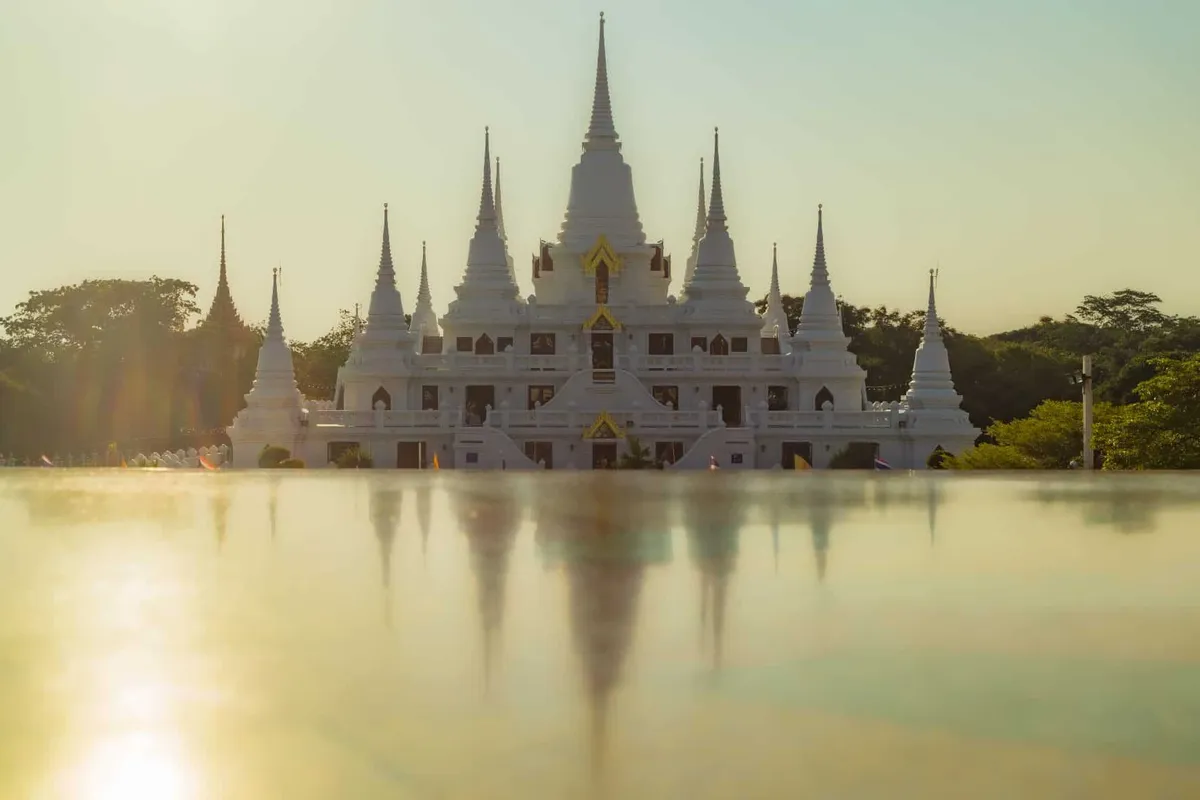




An 18th-century prang leans visibly toward the Sakhla canal at Wat Sa Khla in Samut Prakan, tilted by ground subsidence more than a hundred years ago and still standing. Entry is free, open daily roughly 08:00-17:00.
The temple takes its name from the village around it, Ban Sakhla, and the story behind that name is the more interesting history here. It was originally Ban Sao Kla — “brave women’s village” — from the Nine Armies War during King Rama I’s reign, when most of the men from the community were conscripted as soldiers. The women and elderly who stayed behind fought off a Burmese raiding party and held the settlement, and the name eventually shortened to Sa Khla. The temple itself was founded in 1782 (BE 2325), reportedly with the local community helping to build it, and received its formal Wisungkamsima ordination charter around 1832 (BE 2375).
Inside the viharn, the principal Buddha image dates to the Ayutthaya-period U Thong style, seated in the Mara Vijaya pose, subduing Mara. The ubosot is ringed by carved stone boundary markers set on naga bases, some reportedly excavated from beneath the building itself along with brick foundations, and the grounds also hold a standing image of Phra Sangkatchai and a pair of Buddha images set back-to-back in a protective pose. A small on-site museum displays Hindu-deity artifacts and other pieces turned up locally over the years. Visitors also come to walk beneath the ordination hall, a local ritual believed to clear away bad luck for the year ahead.
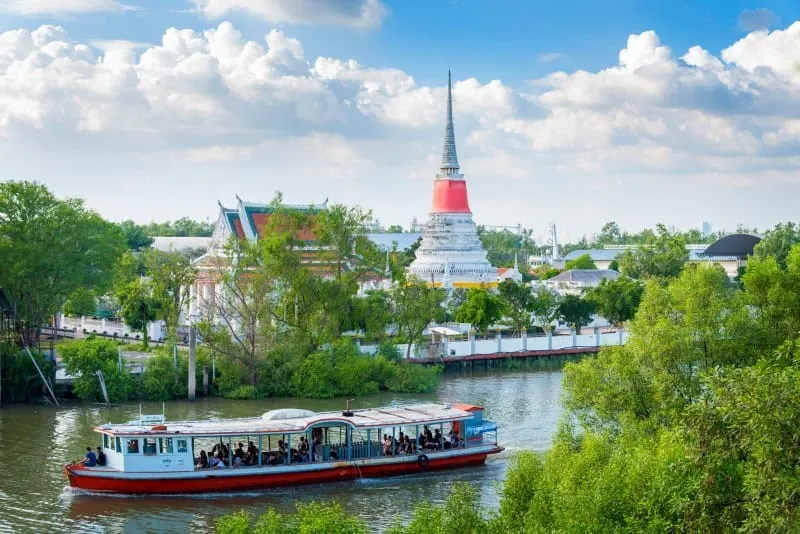
Wat Sa Khla sits in Na Kluea subdistrict, Phra Samut Chedi district — the same district as Phra Samut Chedi, the landmark riverside stupa the district is named for, though the two sites are roughly 11 km apart and not a combined stop. The temple is closer to the Chao Phraya’s mouth and the old fishing settlement of Ban Sakhla, where mangrove and canal-side life still shape the area more than any temple crowd.
Insider Tip: Time a visit for a weekday morning — Wat Sa Khla is a working village temple, not a tour-bus stop, and the leaning prang photographs best in the soft early light before the sun is directly overhead on the water.
Watch out: Don’t plan this as a quick add-on to a Phra Samut Chedi trip — the 11 km between them means a separate drive, not a five-minute detour.
- Entry: Free, daily roughly 08:00-17:00
- Founded: 1782 (BE 2325); Wisungkamsima charter c. 1832 (BE 2375)
- Highlight: Leaning 18th-century prang beside the Sakhla canal
- Location: Ban Sakhla, Na Kluea subdistrict, Phra Samut Chedi district, Samut Prakan
Dress modestly, shoulders and knees covered, and remove your shoes before entering the viharn or ubosot. A small donation toward the temple’s upkeep is customary rather than expected.
Location & Directions
Phra Samut Chedi, Samut Prakan
Samut Prakan, Thailand
Show your taxi or Grab driver
วัดสาขลา
Frequently Asked Questions
Why is the prang at Wat Sa Khla leaning?
Where does the name Sa Khla come from?
How old is Wat Sa Khla?
Is Wat Sa Khla close to Phra Samut Chedi?
Is there an entrance fee?
Spotted something out of date or incorrect? Let us know
Stay Near Wat Sa Khla
Live prices for places closest to Wat Sa Khla — tap a pin to compare.