


Wat Ratchabophit Sathitmahasimaram
วัดราชบพิธสถิตมหาสีมาราม
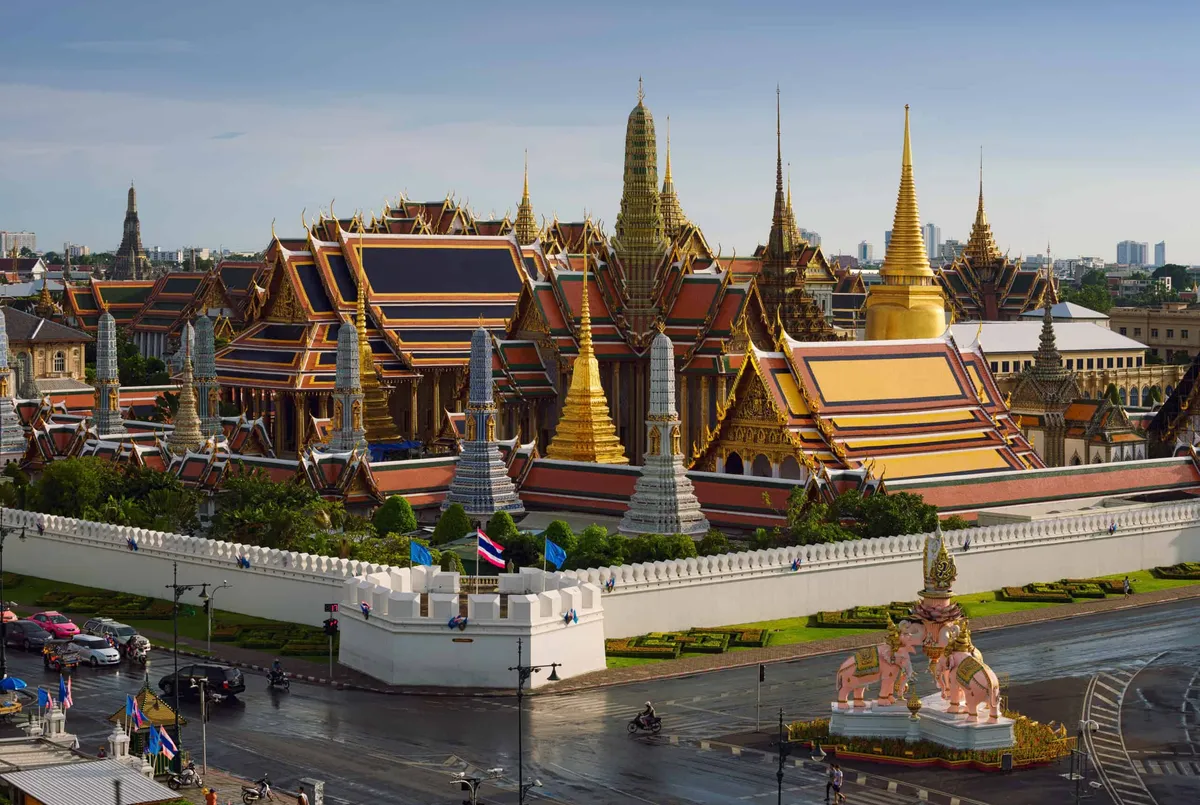
Wat Ratchabophit Sathitmahasimaram is built on a layout that has no real precedent elsewhere in Thailand: a wihan and ubosot standing at opposite ends of the compound, connected by a circular cloister that encircles a central courtyard and a single gilded chedi. King Chulalongkorn — Rama V — commissioned the temple in 1869, early in his reign, continuing the tradition by which each Thai monarch establishes a temple of his own. Entry is free, and the grounds are open daily 09:00-17:00, an easy walk from the Grand Palace.
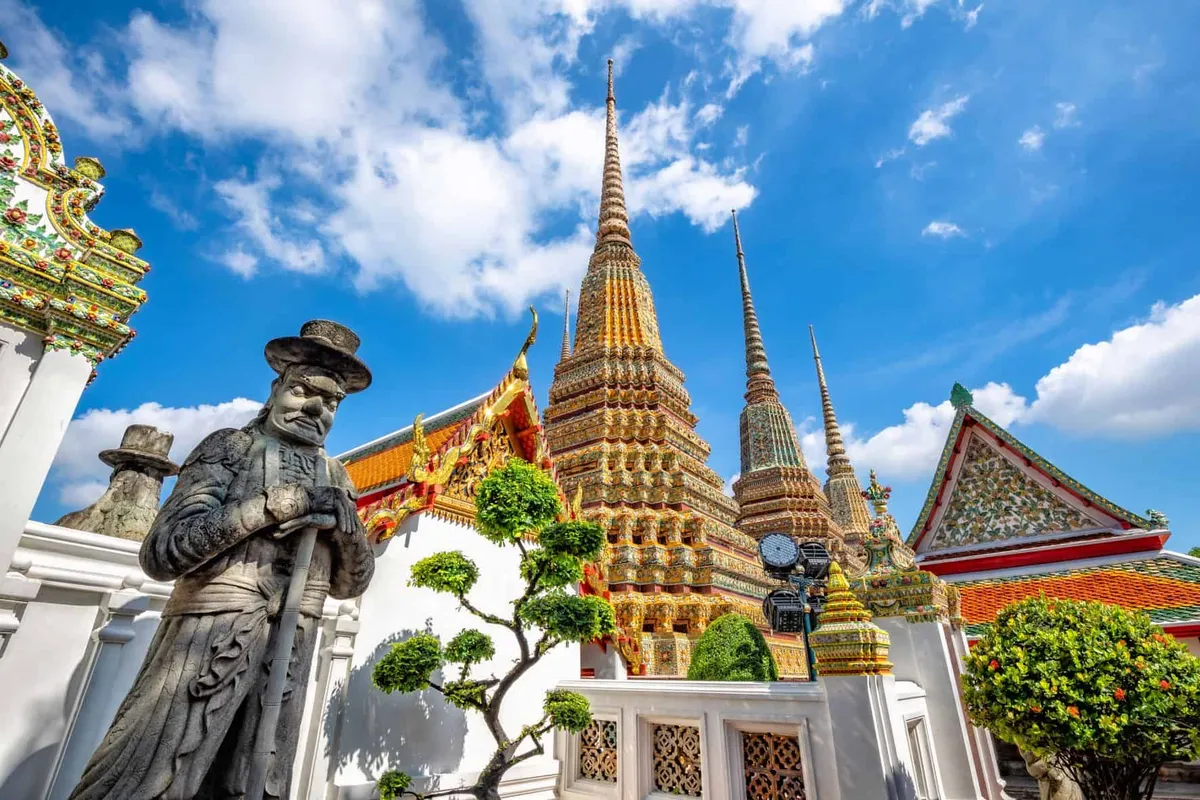
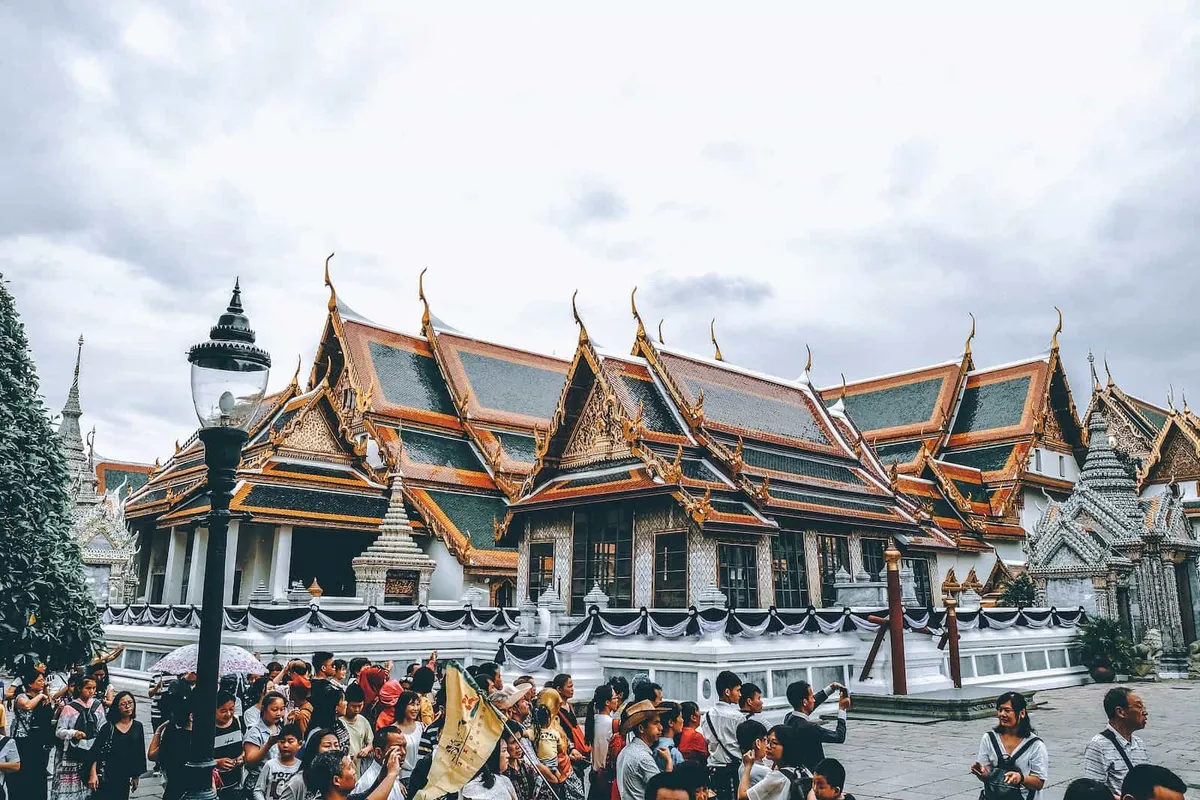
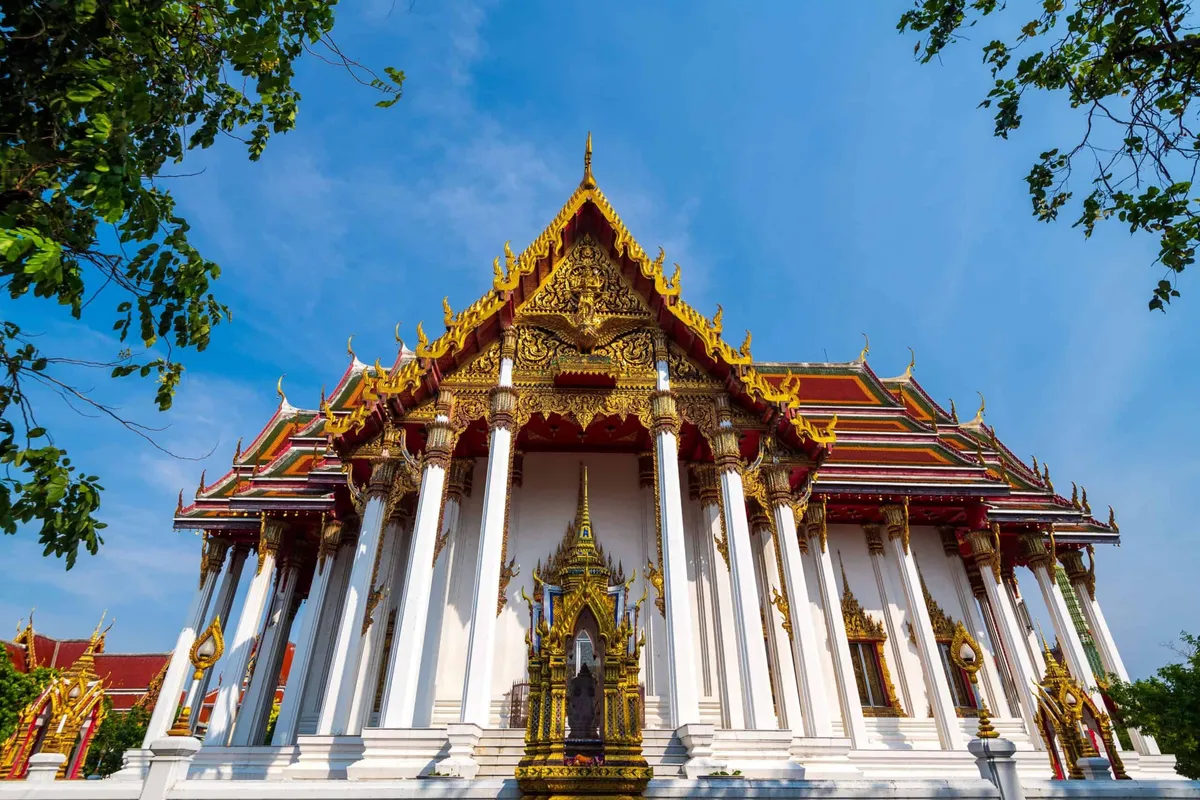
The layout is Thai. The interior is not. Rama V had recently toured Europe when construction began, and the ubosot and wihan interiors were finished in a Gothic Revival style — ribbed vaults, pointed arches, and a restrained, almost ecclesiastical palette that has no equivalent in any other Bangkok temple. The doors and windows carry the temple’s most celebrated detail: 10 door panels and 28 window panels in gilded black lacquer, inlaid with mother-of-pearl depicting Thai royal decorations and insignia. Step outside and the building reverts to recognisably Thai form — tiered roofs, gilded finials, the exterior ornamentation any Bangkok temple visitor would expect. It’s the contrast between the two, rather than either style alone, that makes the building worth the detour from the Grand Palace crowds.
Wat Ratchabophit isn’t only architecturally significant — it carries real weight in Thailand’s Buddhist hierarchy today. Somdet Phra Ariyavongsagatanana, the 20th and current Supreme Patriarch of Thailand, was appointed abbot here in 2008 and was later named Supreme Patriarch by King Vajiralongkorn. The temple functions as his residence, which makes it a living centre of Thai Buddhism rather than a purely historical site.
At the western end of the compound, inside the cloister walls, lies the Royal Cemetery — the resting place for the ashes of numerous royals from Rama V’s era, including his queens, consorts, and descendants up to the rank of chao fa. Four white memorial buildings, one for each of Rama V’s four principal wives, stand among the monuments here.
Insider Tip: Visit the cloister and cemetery grounds on a quiet weekday morning — the mother-of-pearl door and window panels catch the best light before midday, and the compound gets a fraction of the Grand Palace’s foot traffic even at peak season.
Watch out: as a working temple that also serves as the Supreme Patriarch’s residence, parts of the ubosot may be closed to visitors during religious ceremonies. Dress modestly (covered shoulders, long trousers) and remove shoes before entering any building; photography inside the ordination hall may be restricted depending on what’s taking place that day.
- Built: 1869-1870, commissioned by King Chulalongkorn (Rama V)
- Layout: wihan and ubosot linked by a circular cloister — unique among Thai temples
- Interior style: Gothic Revival — ribbed vaults, pointed arches, mother-of-pearl inlaid doors and windows
- Current significance: residence of the 20th Supreme Patriarch of Thailand
- Entry: Free, daily 09:00-17:00
Combine a visit with the Grand Palace next door, or with Wat Pho and Wat Suthat — both a short ride away — for a fuller sweep of Bangkok’s old-city temples.
Location & Directions
2 Fueang Nakhon Road
Bangkok, Thailand
Show your taxi or Grab driver
วัดราชบพิธสถิตมหาสีมาราม
Frequently Asked Questions
What makes Wat Ratchabophit's layout unusual?
Why does the interior look European?
Is Wat Ratchabophit connected to Thailand's current Supreme Patriarch?
What is the Royal Cemetery at Wat Ratchabophit?
Is Wat Ratchabophit free to visit?
Spotted something out of date or incorrect? Let us know
Popular tours in Bangkok




Stay Near Wat Ratchabophit Sathitmahasimaram
Live prices for places closest to Wat Ratchabophit Sathitmahasimaram — tap a pin to compare.