

Wat Suthat (Giant Swing Temple)
วัดสุทัศนเทพวรารามราชวรมหาวิหาร
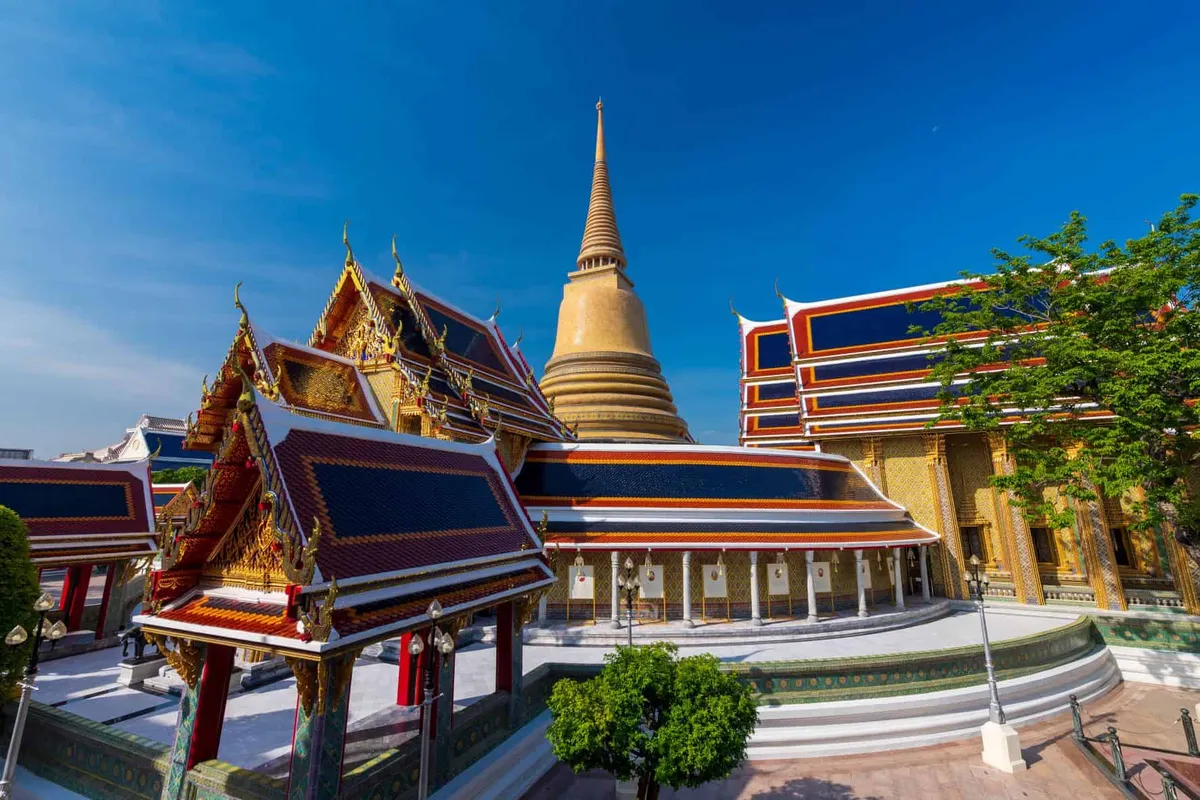
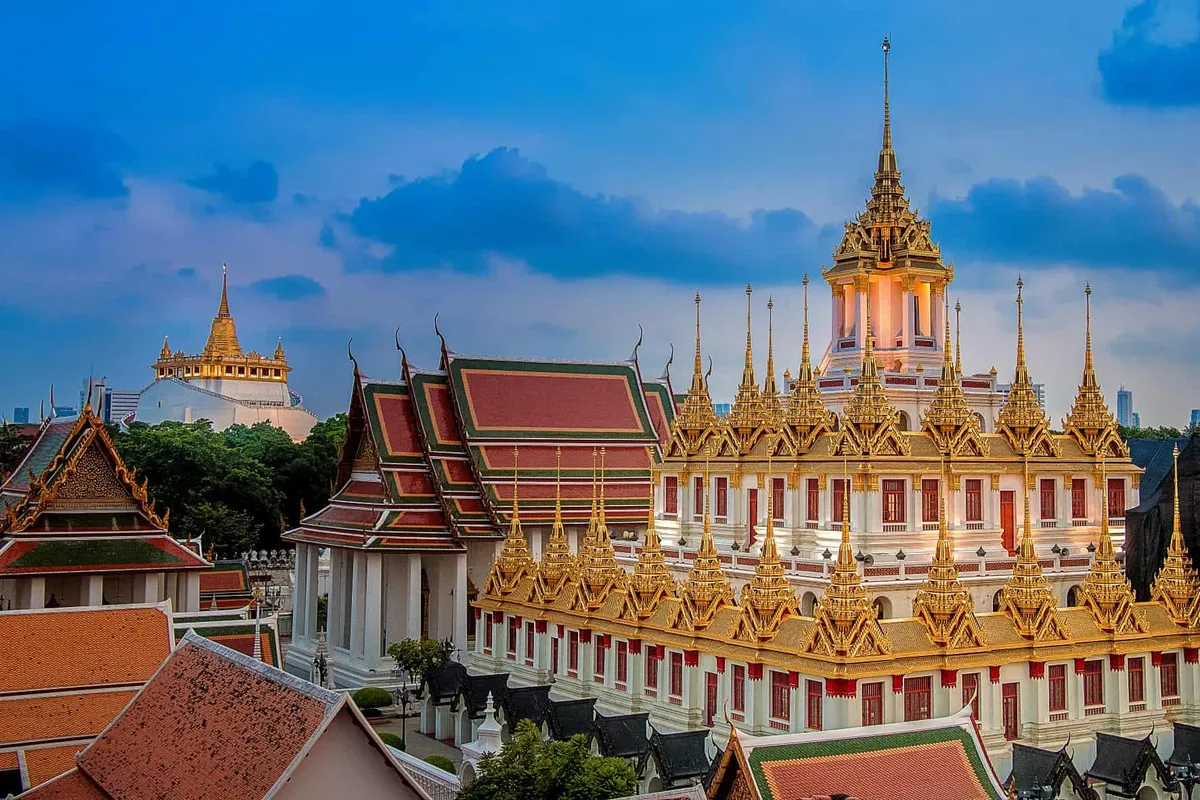
Bangkok’s Wat Suthat is one of only six temples in Thailand ranked as a first-class royal temple (Ratchaworamahawihan), founded by Rama I in 1807 and finished under Rama III in 1847. Its main hall holds Phra Si Sakyamuni, an 8-metre bronze Buddha cast in Sukhothai roughly 700 years ago and later moved to Bangkok by river. Entry is 100 THB for foreign visitors (free for Thai nationals), daily 08:30-21:00. The Giant Swing outside the gates is a separate free landmark, not part of the ticketed grounds.
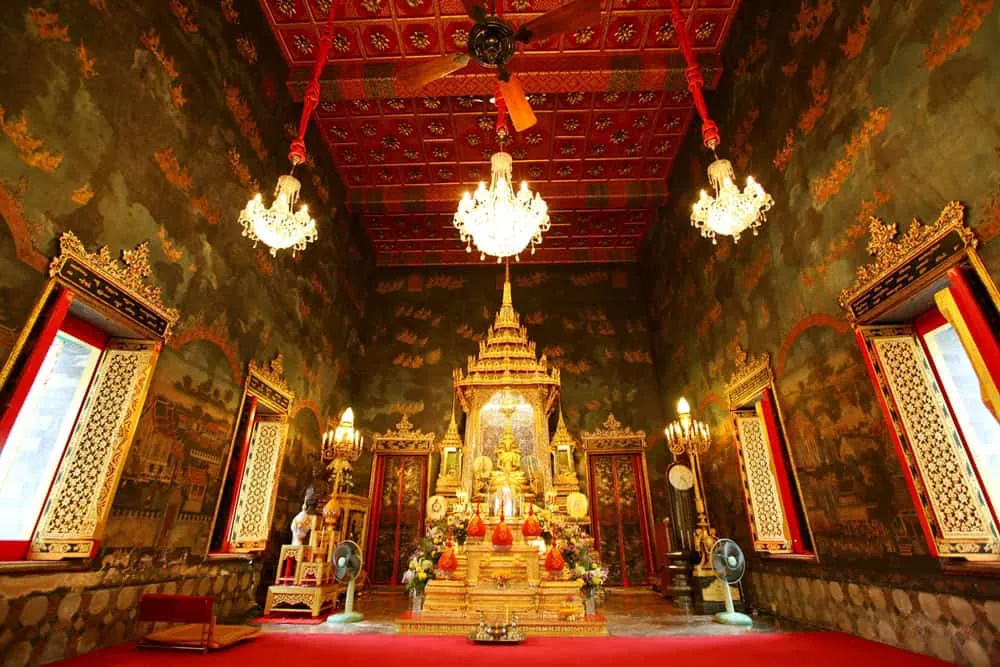
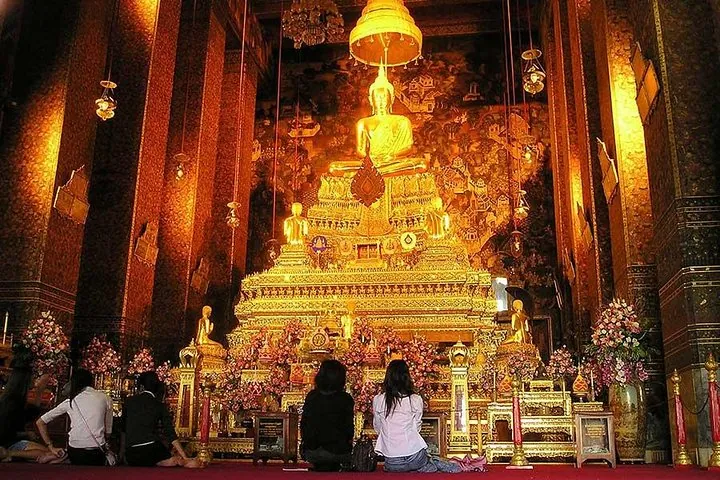
Inside the viharn, the Phra Si Sakyamuni Buddha sits beneath a ceiling and wall cycle of murals depicting the Buddha’s past lives, painted during the reigns of Rama II and Rama III. The ordination hall (bot) behind it is the longest in Thailand and holds its own set of Buddha images and mural work. Rama II, a skilled woodcarver as well as a king, is credited with carving some of the temple’s original wooden doors himself, and cloisters lined with gilded Buddha statues run around the main courtyard. A former abbot of Wat Suthat went on to serve as Supreme Patriarch of Thai Buddhism, and his former residence within the compound is now a small museum, open Friday to Sunday only.
Compared with Wat Pho or the Grand Palace ten minutes’ walk away, Wat Suthat sees a fraction of the tour groups, so the courtyards stay quiet enough to hear temple bells and monks chanting from the residential quarters. Early morning, shortly after the 08:30 opening, is the best window before the heat and any day-trip groups arrive; the temple’s late 21:00 closing also makes it one of the few major Bangkok temples open into the evening.
Insider Tip: Walk out through the front gate to photograph the Giant Swing (Sao Ching-Cha) from the road. It’s free, takes two minutes, and most visitors skip it because they assume it needs the temple ticket.
- Entry fee: 100 THB (foreigners); free for Thai nationals
- Hours: Daily 08:30-21:00
- Highlight: Phra Si Sakyamuni, an 8-metre bronze Buddha brought from Sukhothai
- Giant Swing: Free to view outside the temple on Bamrung Mueang Road, separate from the paid grounds
- Getting there: MRT Sam Yot, about a 10-minute walk
Getting there is easiest via MRT Sam Yot station, a short walk along Bamrung Mueang Road, or on foot from Wat Pho and the Grand Palace area. Combine it with Wat Arun across the river for a fuller old-city temple route. Both are far less crowded than the Grand Palace itself. Cover shoulders and knees before entering the main hall, remove shoes at the door, and carry small bills for the entrance fee and any donations.
Good to Know
Good for
Things to do
On site
Location & Directions
146 Bamrung Mueang Road
Bangkok, Thailand
Show your taxi or Grab driver
วัดสุทัศนเทพวรารามราชวรมหาวิหาร
Frequently Asked Questions
Is the Giant Swing part of the Wat Suthat ticket?
How much does it cost to visit Wat Suthat?
What is the main Buddha statue at Wat Suthat?
How do I get to Wat Suthat?
What's the dress code?
Spotted something out of date or incorrect? Let us know
Tours visiting Wat Suthat (Giant Swing Temple)




Stay Near Wat Suthat (Giant Swing Temple)
Live prices for places closest to Wat Suthat (Giant Swing Temple): tap a pin to compare.