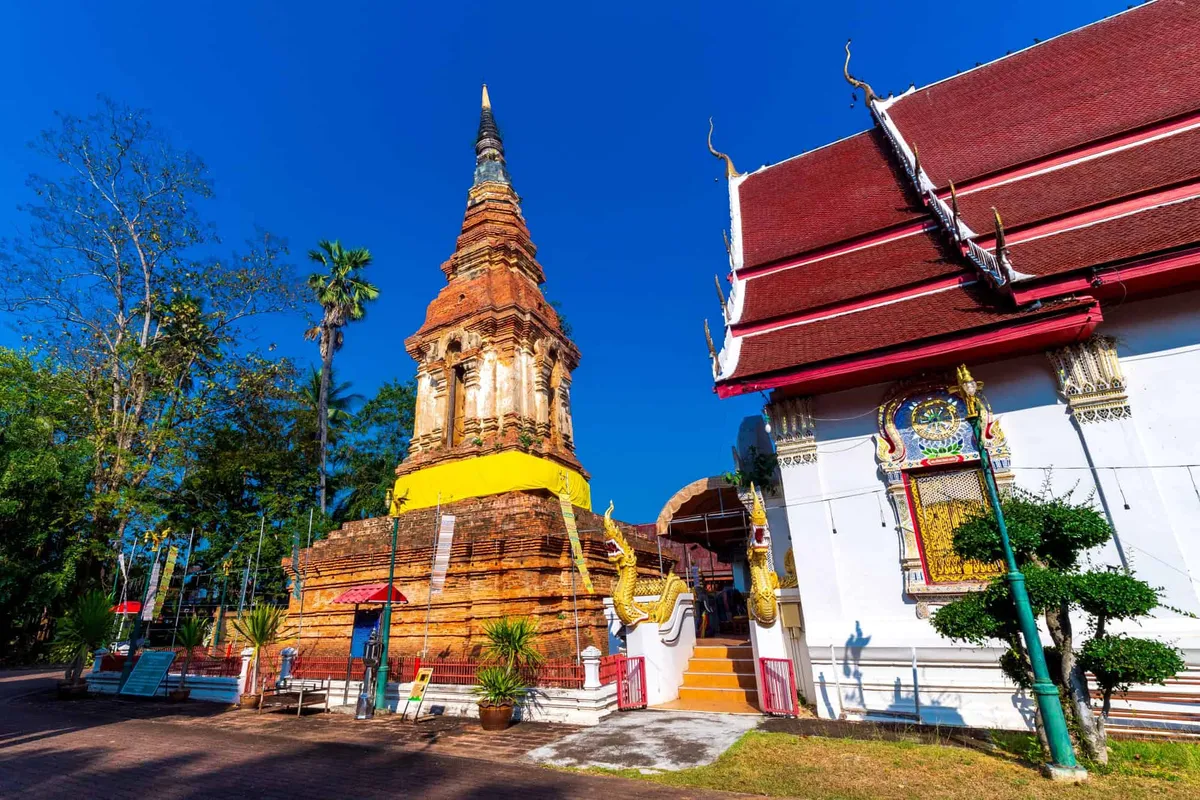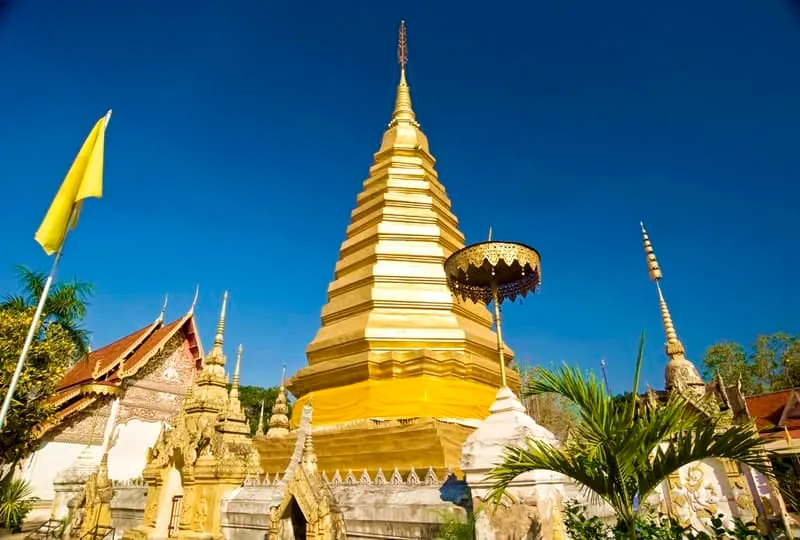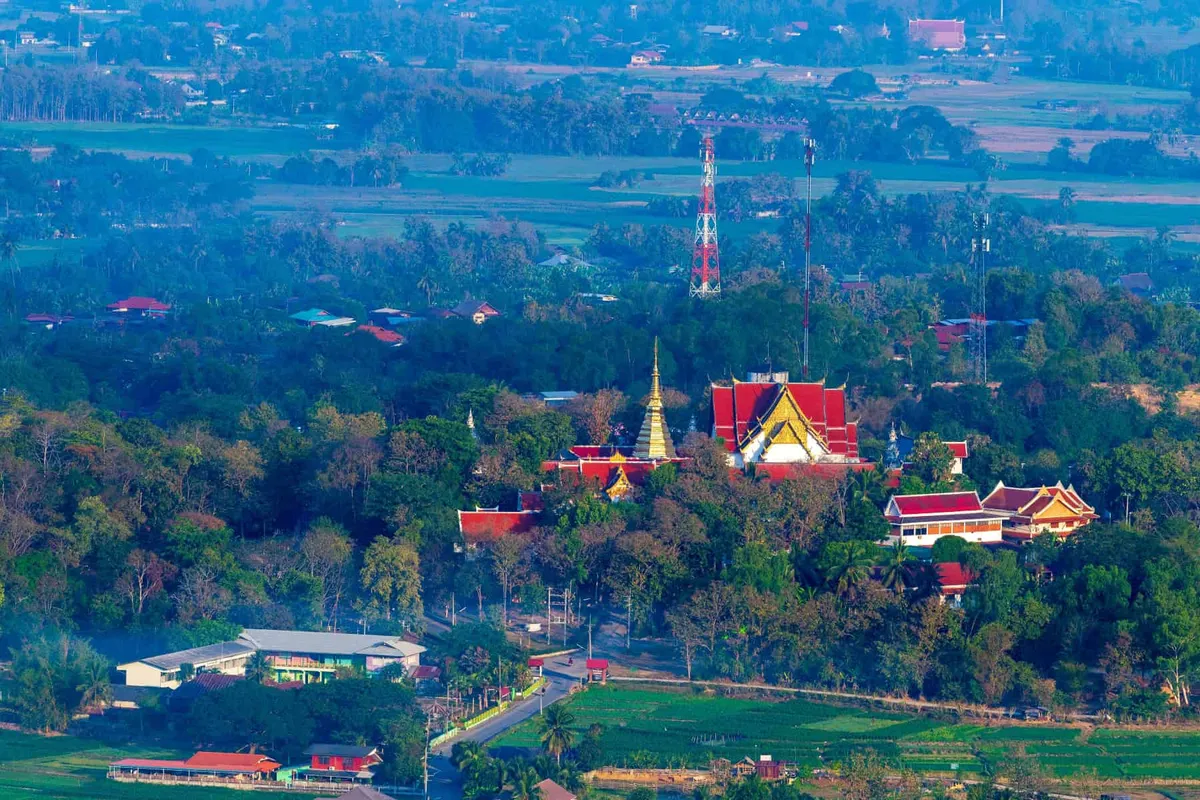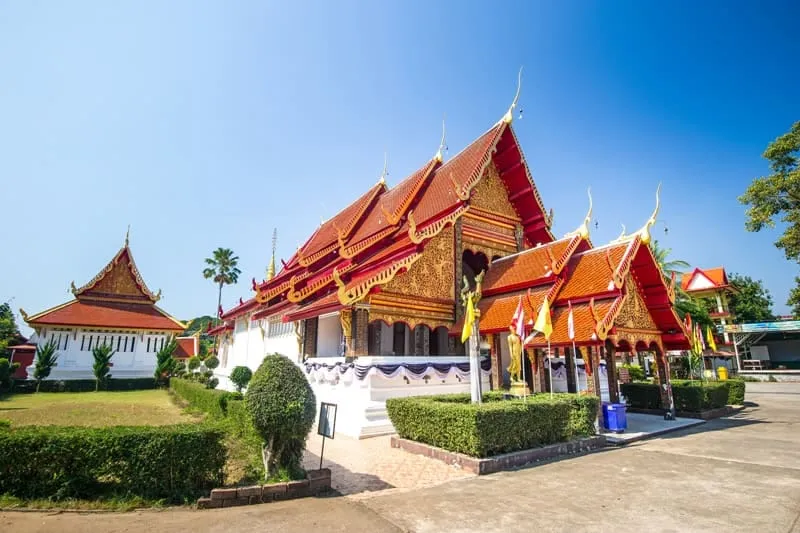





Wat Si Dok sits in Hua Fai subdistrict, Sung Men district, a short drive south of central Phrae — and it’s worth being precise about that, since “Sung Men” and similarly named temples turn up in neighbouring Lampang province too. Local records place its founding around 1672, making it one of the oldest working temples in the district, though nothing survives in writing from before then. Entry is free.
The temple’s real distinction is its principal Buddha image, which sits directly on the floor of the ordination hall rather than on a raised pedestal — earning it the popular name Wat Phra Chao Nang Din, “the temple of the Buddha who sits on the ground.” Only one other Buddha image in Thailand is said to be seated this way, which makes this a genuine rarity rather than a marketing line. Local legend ties the name to a story of the Buddha resting under a Bodhi tree here before his enlightenment; fishermen who saw him, the story goes, mistook his size for a giant’s and fled. That same tree — now over 200 years old, with a crown shaped unusually like a palm rather than the typical spreading Bodhi canopy — still stands on the grounds, and villagers have been known to prop up its older branches to keep it alive.
- Entry fee: Free
- Founded: Around 1672 (local record, unwritten before then)
- Landmark image: A ground-seated Buddha, one of only two known in Thailand
- Location: Hua Fai subdistrict, Sung Men district, Phrae — south of central Phrae town
- On site: A 200-year-old Bodhi tree linked to the temple’s founding legend
Insider Tip: Ask a resident monk about the ground-seated Buddha before you look for it — it’s easy to walk past assuming it’s a normal image on a low platform if you don’t know what you’re looking at.
Watch out: This is a working village temple with no visitor infrastructure — no gift shop, no signage in English. Go with the expectation of a quiet local site, not a polished tourist stop.
Dress modestly, remove your shoes before entering the ordination hall, and keep your feet pointed away from Buddha images if you sit. For more of Sung Men and Phrae’s temple circuit, Wat Phra That Cho Hae is the province’s best-known pilgrimage site, and Wat Luang in the old town is an easy add-on if you’re touring temples for the day.
Location & Directions
Sung Men, Phrae
Phrae, Thailand
Show your taxi or Grab driver
วัดศรีดอก
Frequently Asked Questions
Why is Wat Si Dok also called Wat Phra Chao Nang Din?
How old is the temple?
What's the legend behind the temple's name?
Is Wat Si Dok free to visit?
Where is Wat Si Dok in relation to Phrae town?
Spotted something out of date or incorrect? Let us know
Stay Near Wat Si Dok
Live prices for places closest to Wat Si Dok — tap a pin to compare.