



Wat Phra Luang That Nerng
วัดพระหลวง (วัดพระธาตุเนิ้ง)
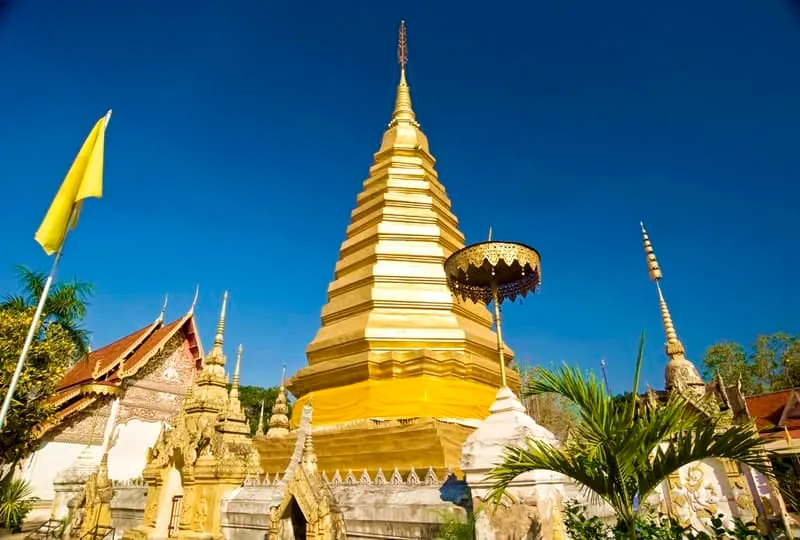
Wat Phra Luang That Nerng centres on a chedi that leans — deliberately named for it. “Nerng” is Northern Thai/Tai Lue dialect for “leaning,” and Phra That Nerng, the temple’s sacred stupa, has tilted for as long as local memory records. According to temple history, the structure was originally raised over what folklore describes as the burial mound of a giant snake, killed after it attacked merchants’ pack animals passing through the forest that once covered this site — the kind of founding legend common to older Tai Lue and Mon-influenced temples across the north.
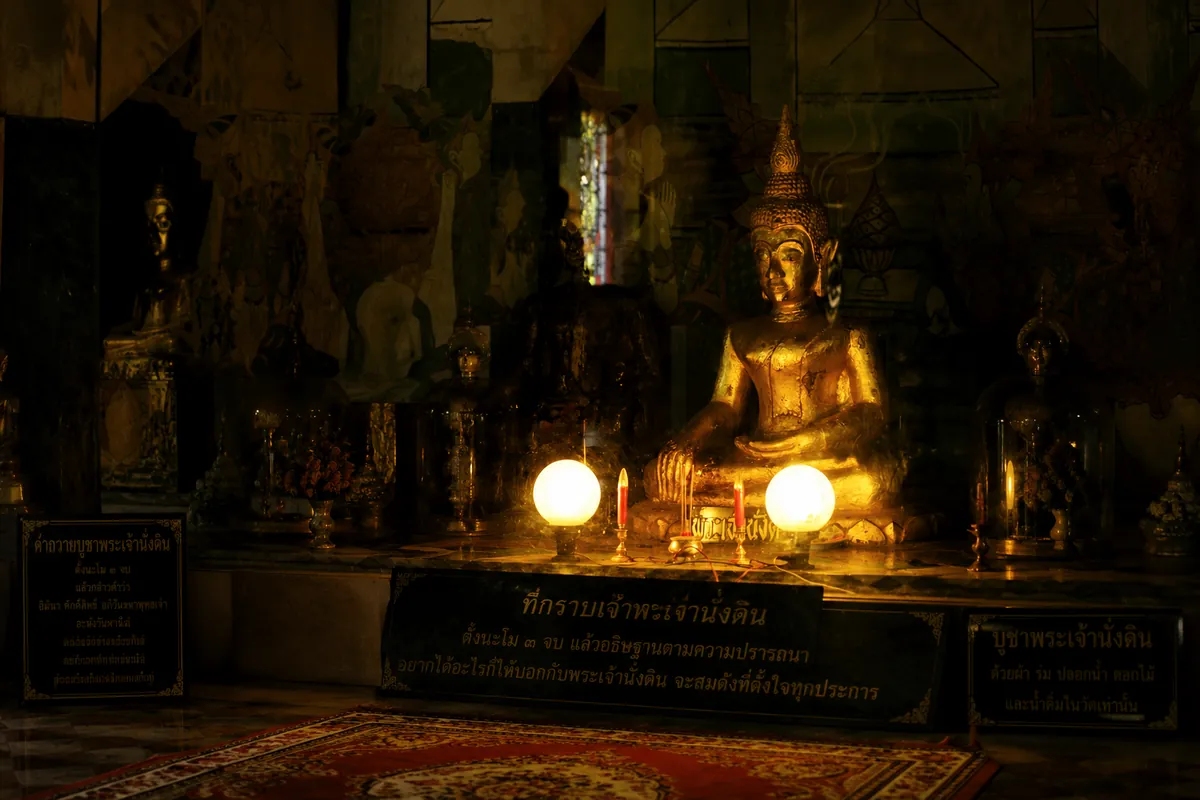
The temple as it stands today dates to 1787 (BE 2330), when Tai Lue people migrating south from Chiang Saen, in what’s now Chiang Rai province, resettled this stretch of the Yom River valley and restored an abandoned temple compound they found here. They renamed it Wat Phra Luang — “Great Buddha Temple” — after its large principal Buddha image, and the settlement grew into the three villages, each anchored by its own temple, that still make up Phra Luang subdistrict. In 2012, Phrae’s provincial authorities formally recognised the compound as a provincial heritage site, and the community maintains the chedi, an ordination hall, and a bell tower as an active place of worship rather than a fenced-off ruin.
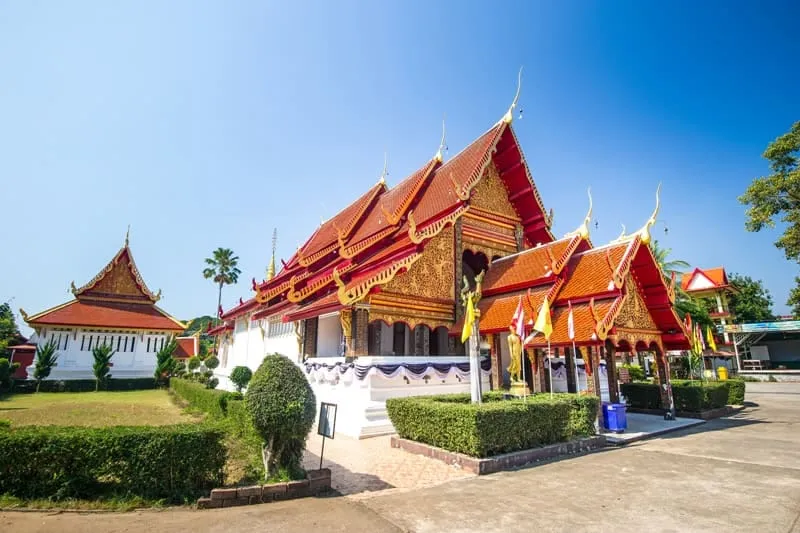
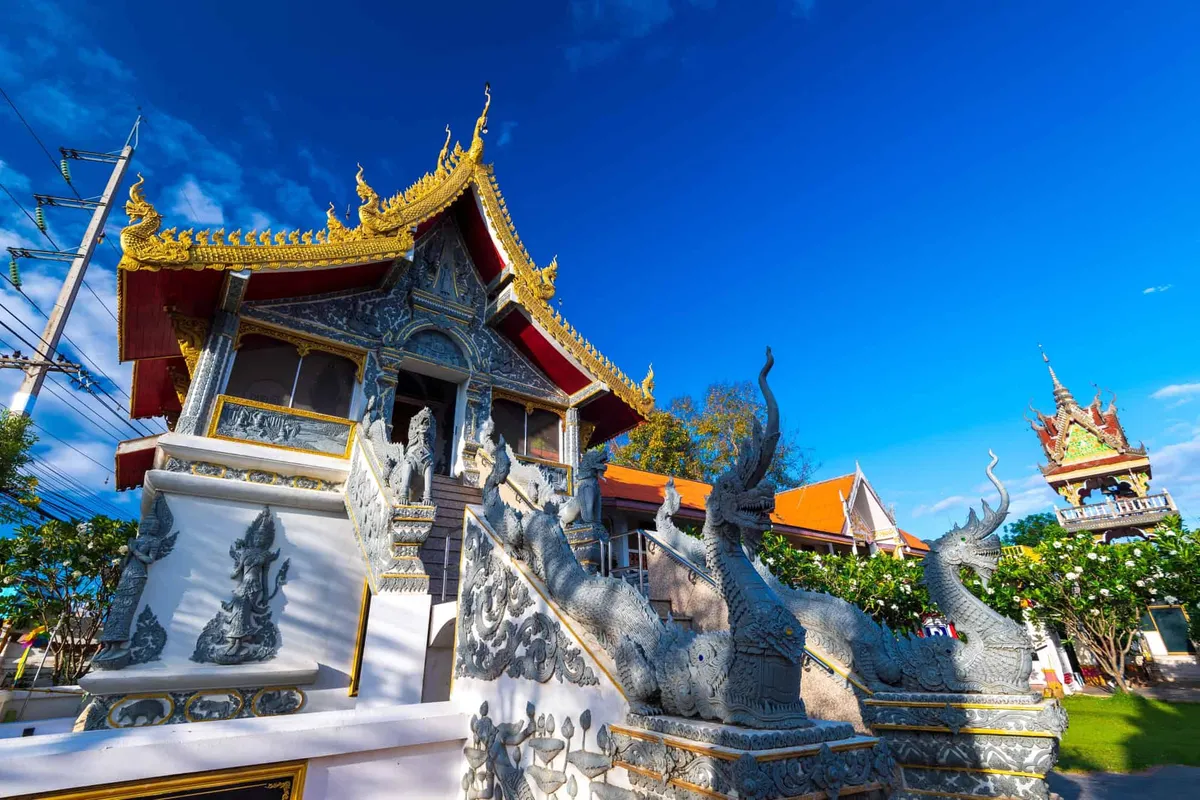
Multi-tiered roofs, carved wood eaves, and Lanna-style murals mark the halls surrounding the leaning chedi — standard for Phrae’s temple architecture, which sits firmly within the old Lanna cultural sphere of the north (unlike temples further south and east in Thailand). Sai sin (sacred cotton thread) wrapped around old trees in the compound and offering bowls thick with incense ash are signs of steady daily use rather than a museum piece.
Insider Tip: Come in early March if your dates allow — the annual homage festival for Phra That Nerng fills the grounds with pilgrims from across Phrae province, and it’s the one time of year the usually quiet compound gets genuinely busy.
Watch out: The chedi’s lean is structural and centuries old, not damage from a recent event — a 2025 earthquake felt across northern Thailand left it undamaged, according to the provincial information office, so don’t mistake the tilt for storm or quake damage.
Dress modestly (shoulders and knees covered) and remove shoes before entering the ordination hall. The temple sits at 177 Mu 5, Phra Luang subdistrict, Sung Men district — about 20-30 minutes’ drive south of Phrae town, and easy to combine with other Sung Men-district stops on a half-day loop.
- Entry fee: Free
- Hours: Daily, approximately 08:00-17:00
- Centrepiece: Phra That Nerng, a leaning chedi with a founding legend tied to the site
- Restored: 1787 (BE 2330) by Tai Lue settlers from Chiang Saen, Chiang Rai
- Heritage status: Declared a Phrae provincial heritage site in 2012
Location & Directions
177 Mu 5
Phrae, Thailand
Show your taxi or Grab driver
วัดพระหลวง (วัดพระธาตุเนิ้ง)
Within Walking Distance


Frequently Asked Questions
What does 'Nerng' mean in the temple's name?
Who built Wat Phra Luang?
Is there a festival here?
Is entry free?
How far is it from Phrae town?
Spotted something out of date or incorrect? Let us know
Stay Near Wat Phra Luang That Nerng
Compare places to stay in Phrae, or open the map for options closest to the attraction.