

Wat Suwan Dararam Ratchaworawihan
วัดสุวรรณดารารามราชวรวิหาร
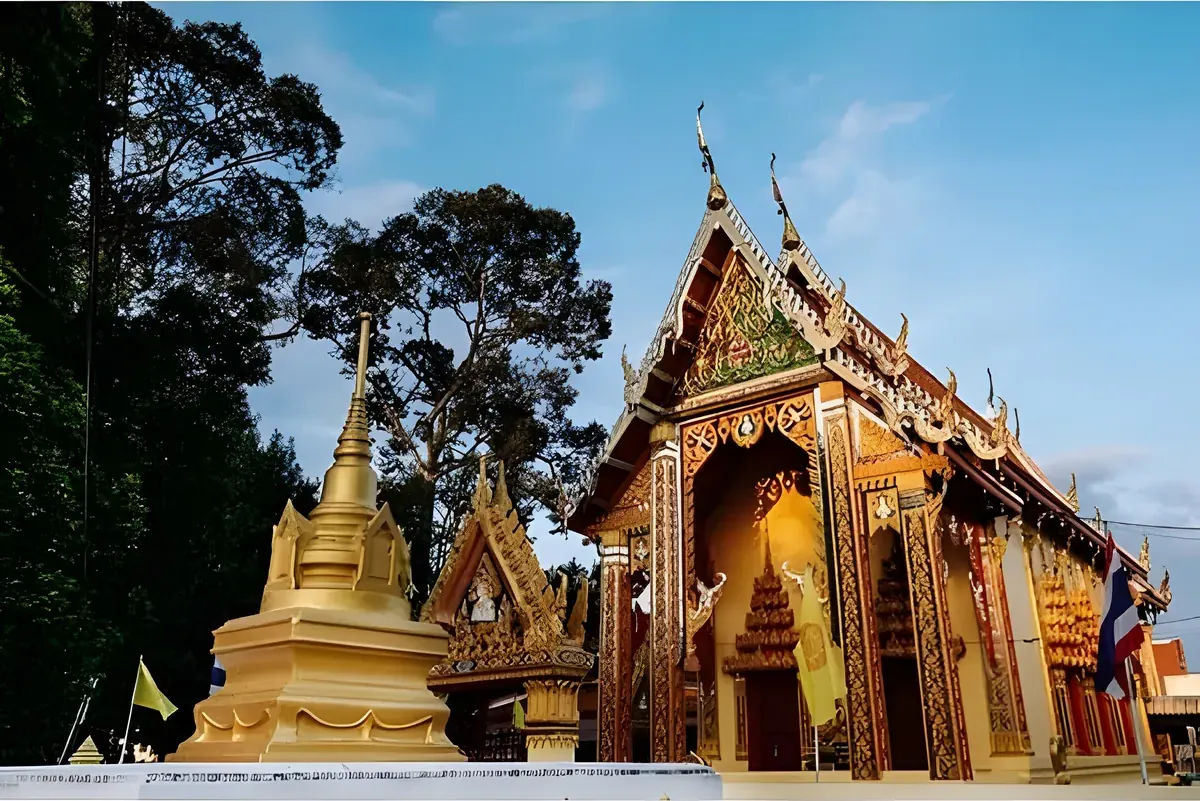
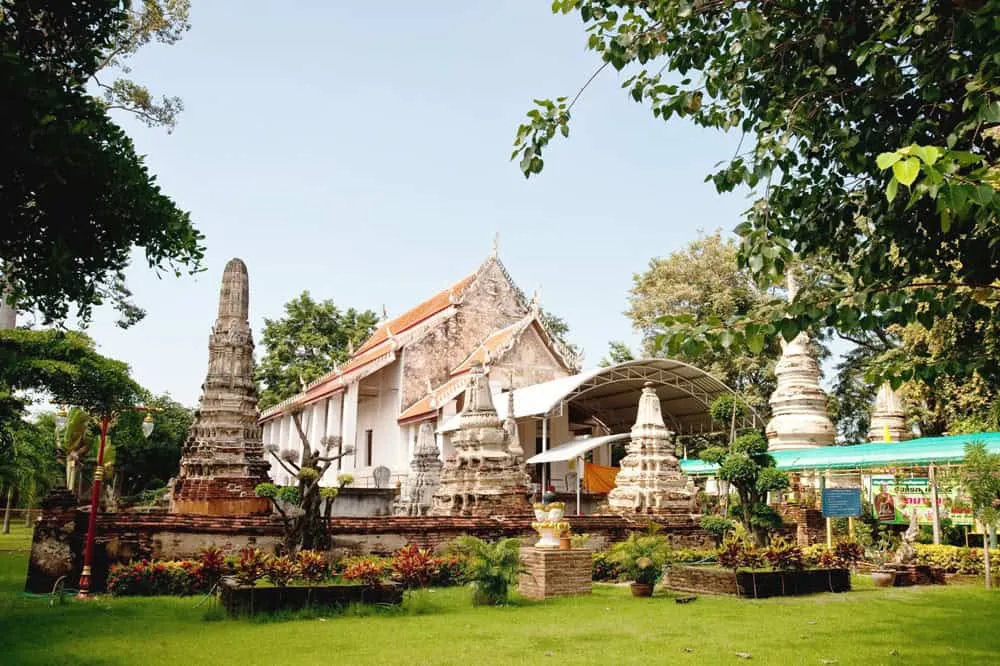
Wat Suwan Dararam Ratchaworawihan is a working royal temple inside Ayutthaya’s old city walls, its Naresuan murals ranking among the most historically important temple paintings in the country. It’s free to enter, open daily 08:00-18:00, and unlike the roofless ruins that define much of Ayutthaya’s tourist trail, this is a functioning, actively used wat — expect monks, worshippers, and a working ordination hall alongside the history.
The temple dates to the late Ayutthaya period, when it was built by King Rama I’s grandfather and known as Wat Thong (“Golden Temple”). After Rama I founded the Chakri dynasty in 1782, he had the temple re-established and renamed it Wat Suwan Dararam — “suwan” being the Sanskrit-rooted word for gold, a direct echo of the original name, chosen in part to honour his parents. That direct royal lineage is why it still carries “Ratchaworawihan” (a third-class royal temple designation) in its name today.
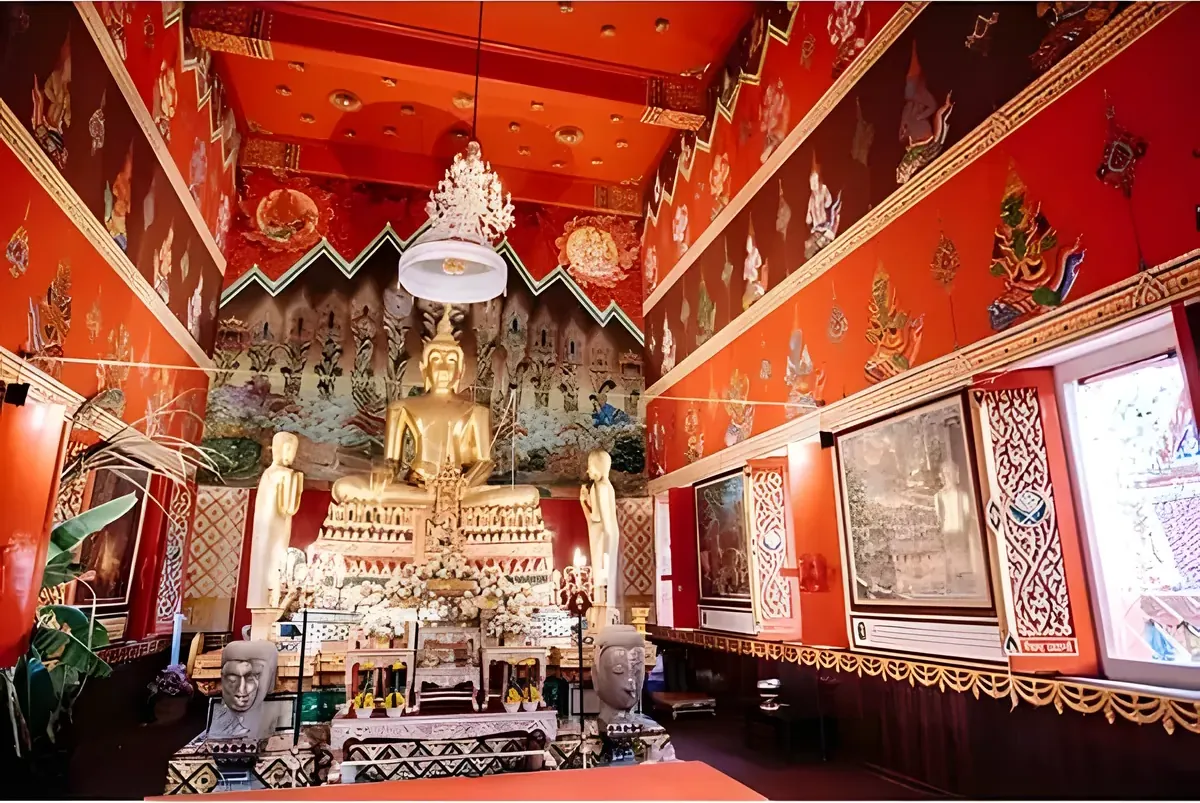
The ubosot (ordination hall) is the architectural standout: a late-Ayutthaya-style hall set on a distinctive curved, boat-shaped foundation — sometimes called a “junk belly” base — a design believed to help the structure withstand the low-lying delta ground the old capital was built on. Its gable carries a carving of Vishnu riding Garuda, and inside, murals split into registers: celestial beings (thep chumnum) along the upper walls, Jataka tale scenes below, and on the front wall facing the principal Buddha image, a depiction of the Buddha Subduing Mara with the earth goddess Thorani at the centre.
Insider Tip: The ubosot murals are quieter and less crowded than the viharn’s — most visitors head straight for the Naresuan cycle and miss the older paintings entirely. Ask a caretaker to unlock the ubosot if it’s closed; it isn’t always open on the same schedule as the rest of the grounds.
The viharn, built later under King Rama II, holds the temple’s most famous artwork: a sweeping mural cycle depicting the life of King Naresuan the Great, painted by court artist Phraya Anusat Chitrakorn during King Rama VII’s reign and completed in 1931. Spread across the hall’s walls, the scenes trace Naresuan’s declaration of independence from Burmese overlordship through to his legendary elephant-back duel with the Burmese crown prince — one of the defining images of Thai national history, and painted here with a degree of Western-influenced perspective that was still unusual for temple murals at the time.
Watch out: Photography inside both halls is generally permitted but flash is not — the murals are original 1930s-era paintings on plaster and are sensitive to light and handling. Keep a respectful distance and don’t touch the walls.
A restored Western-style brick belfry, two storeys and square in plan with a concave lower door, stands elsewhere on the grounds — likely built during King Rama IV’s reign, when Thai temple architecture first began absorbing colonial-era European elements. The temple sits inside the city wall southeast of the town island, near the former Pom Phet fort — a short trip from Chanthara Kasem National Museum on U Thong Road, then a turn at the T-junction for about a kilometre.
- Entry fee: Free
- Hours: Daily 08:00-18:00
- Founded: Late Ayutthaya period as Wat Thong; renamed by Rama I after 1782
- Highlight: King Naresuan mural cycle (viharn, completed 1931, Rama VII era)
- Location: Old city walls, southeast of the island near Pom Phet, off U Thong Road
Location & Directions
Moo 1 U Thong Road
Ayutthaya, Thailand
Show your taxi or Grab driver
วัดสุวรรณดารารามราชวรวิหาร
Frequently Asked Questions
Why is Wat Suwan Dararam called a royal temple?
What do the murals inside depict?
Is Wat Suwan Dararam free to visit?
Where exactly is it in Ayutthaya?
Why does the ubosot have a curved, boat-shaped foundation?
Spotted something out of date or incorrect? Let us know
Popular tours in Ayutthaya




Stay Near Wat Suwan Dararam Ratchaworawihan
Live prices for places closest to Wat Suwan Dararam Ratchaworawihan — tap a pin to compare.