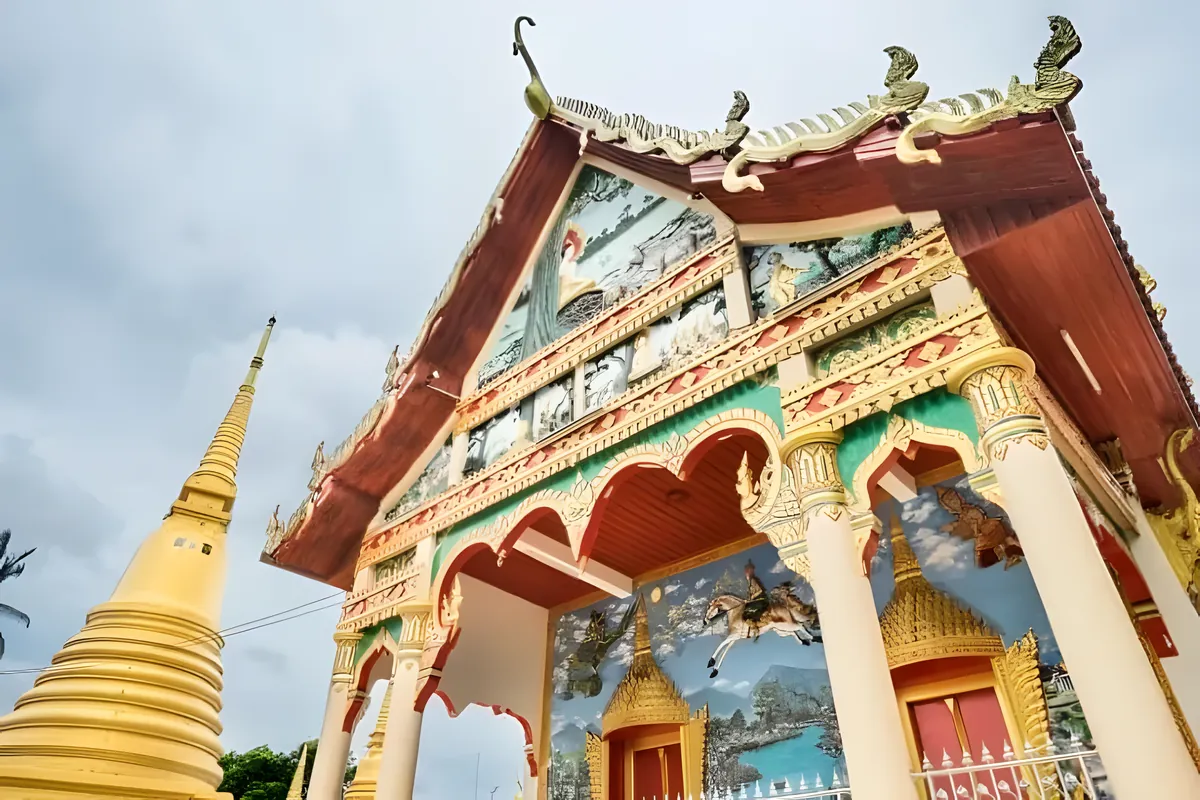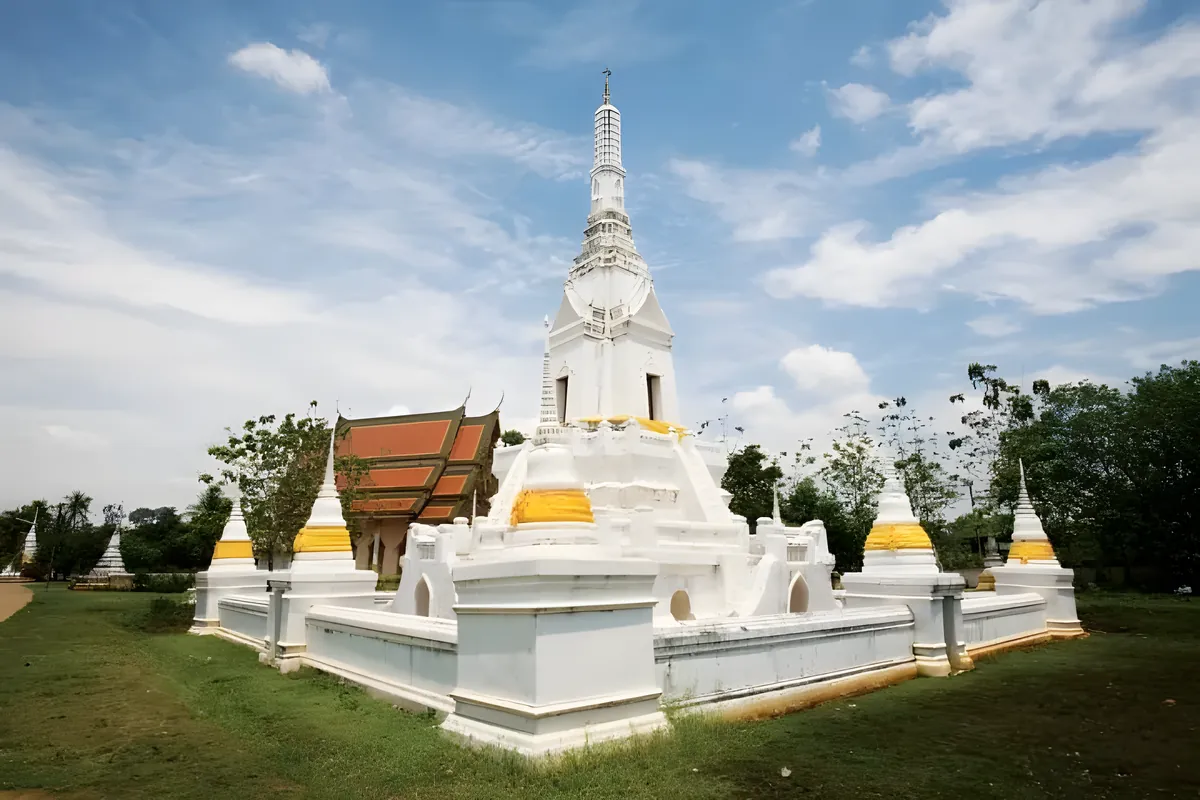





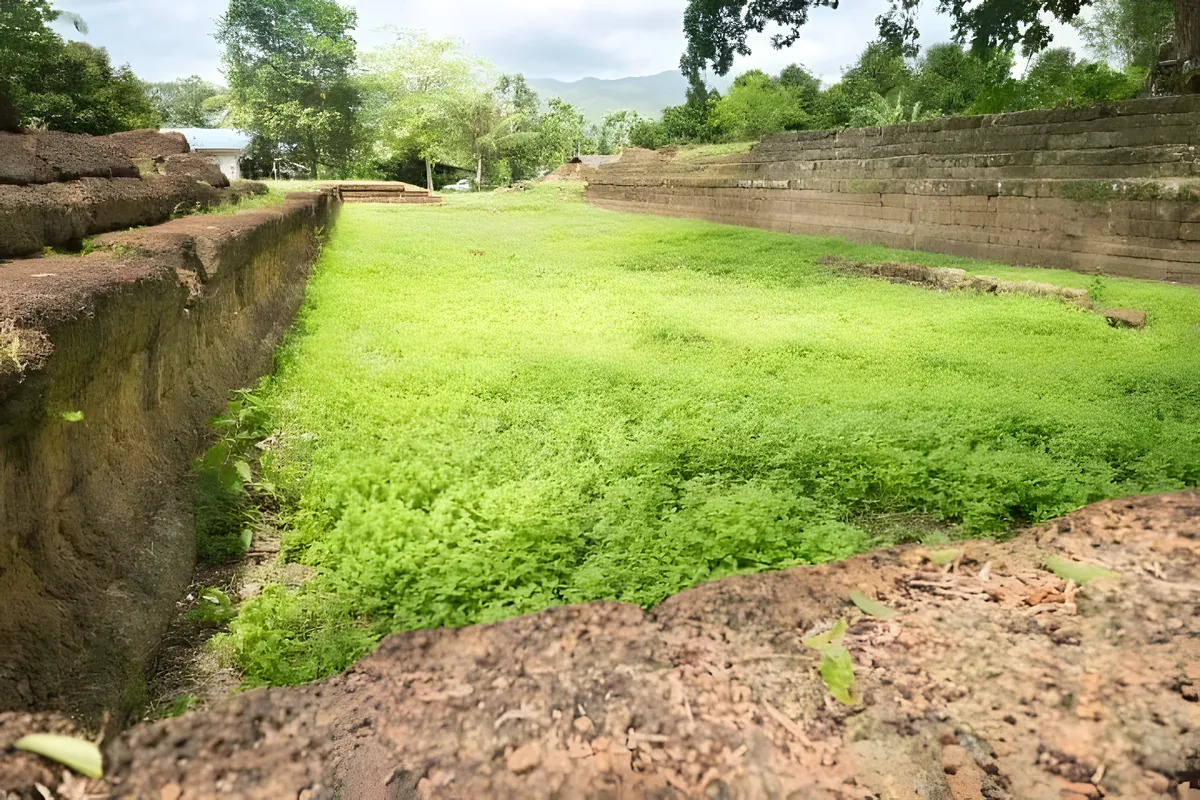
Wat Thong Thua sits on top of an older story: the temple grounds overlap the ruins of Muang Phaniat, a Khmer-era walled city whose earthworks are still visible nearby, and the Fine Arts Department has registered the site as a national archaeological monument. The current temple — established in 1867 and granted its royal charter (wisungkhamsima) in 1875 — was built over that older sanctuary, which is why its collection of stone carvings looks older than the temple itself.
The standout piece is a red sandstone lion, about 90cm tall, carved as a guardian figure at the eastern entrance — a Dvaravati-period sculpture predating the current Buddhist temple by centuries. Nearby, carved lintel and tympanum stones show the same Dvaravati-influenced style, worked into stone that would originally have topped doorways at the Khmer sanctuary. A small onsite museum, run alongside the temple, displays additional artifacts recovered from the Muang Phaniat excavations — pottery, stone fragments, and carved pieces that tell the story of Chanthaburi’s pre-Ayutthaya settlement more directly than the temple’s active prayer halls do.
That layering — Khmer sanctuary stones repurposed into the grounds of a working Buddhist temple — is why the Fine Arts Department treats the whole plot as one registered site rather than separating “archaeology” from “active wat.” Walk the grounds slowly and you’ll see the seam: modern temple buildings, then centuries-older carved stone set into walls and gateways around them, evidence of a settlement here long before the current temple’s 1867 founding.
Insider Tip: Ask a temple caretaker to point you to the museum building — it’s easy to miss if you only walk the main temple grounds, and it’s where the actual Dvaravati carvings are explained rather than just displayed.
The active side of the temple functions as an ordinary neighbourhood wat: locals arrive through the day to make merit, and monks keep to a normal daily routine rather than performing for visitors. Dress modestly, remove shoes before entering any hall, and expect a quiet, low-key visit rather than a major tourist stop — Chanthaburi’s gem trade and old town draw far more attention than this site does. Free entry makes it an easy add-on if you’re already exploring the area east of the provincial centre.
- Entry: Free
- Registered: National archaeological site (Fine Arts Department)
- Established: 1867; royal charter (wisungkhamsima) 1875
- Notable artifact: Red sandstone guardian lion, ~90cm, Dvaravati period, east entrance
- Location: Khlong Narai subdistrict, ~4-5km east of central Chanthaburi
Location & Directions
Mueang Chanthaburi, Chanthaburi
Chanthaburi, Thailand
Show your taxi or Grab driver
วัดทองทั่ว
Within Walking Distance

Frequently Asked Questions
What is Muang Phaniat?
What's the sandstone lion at Wat Thong Thua?
Is there a museum at Wat Thong Thua?
When was Wat Thong Thua established?
Is entry free?
Spotted something out of date or incorrect? Let us know
Stay Near Wat Thong Thua
Compare places to stay in Chanthaburi, or open the map for options closest to the attraction.