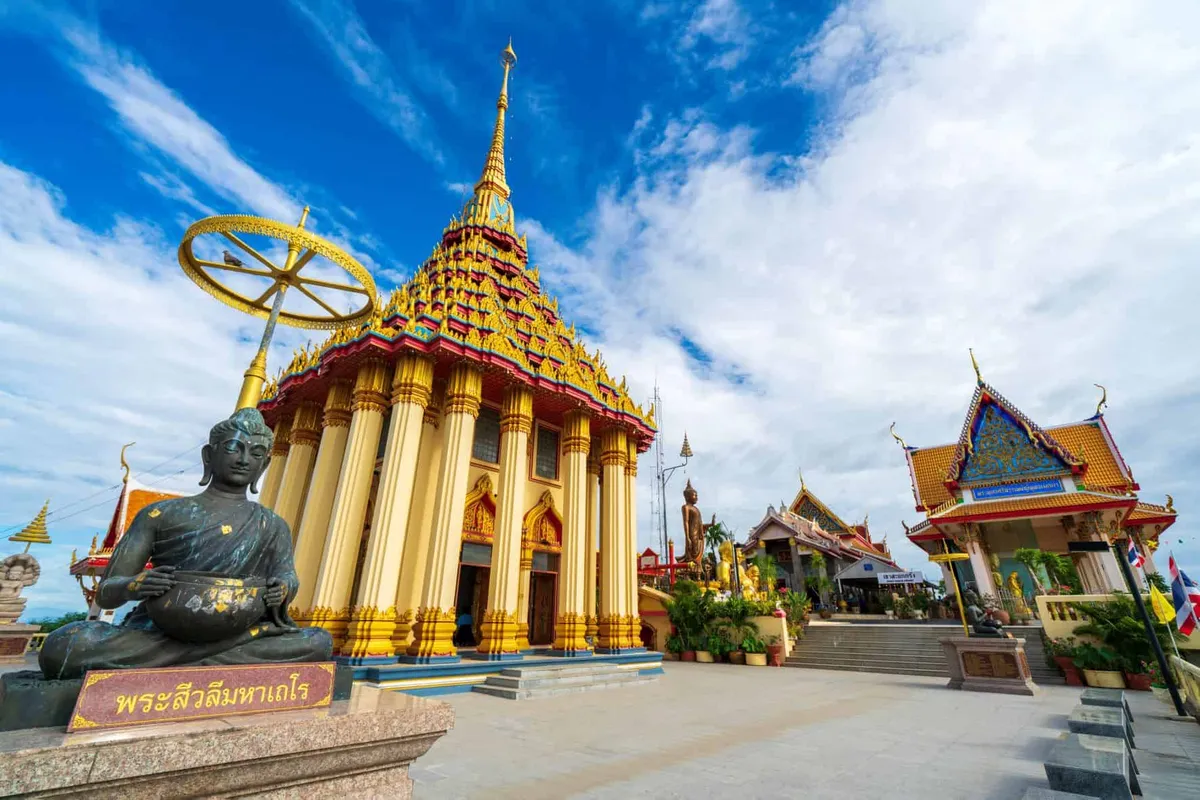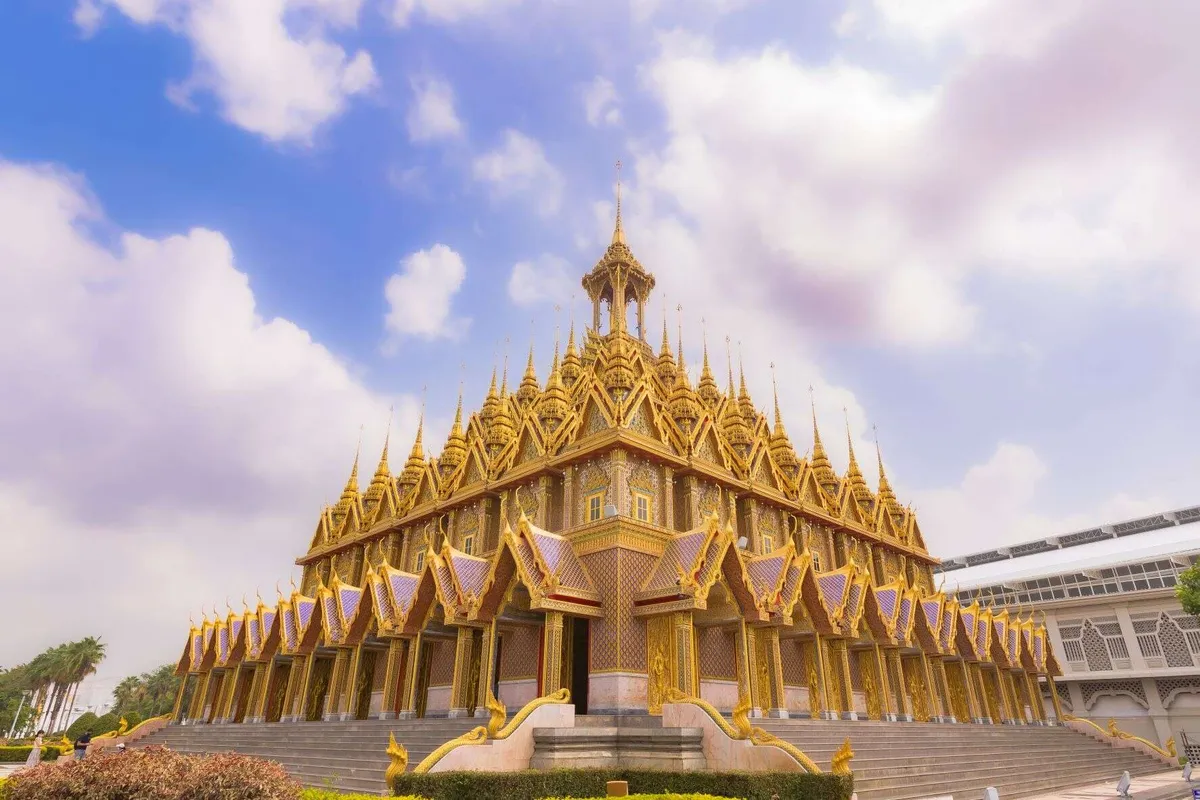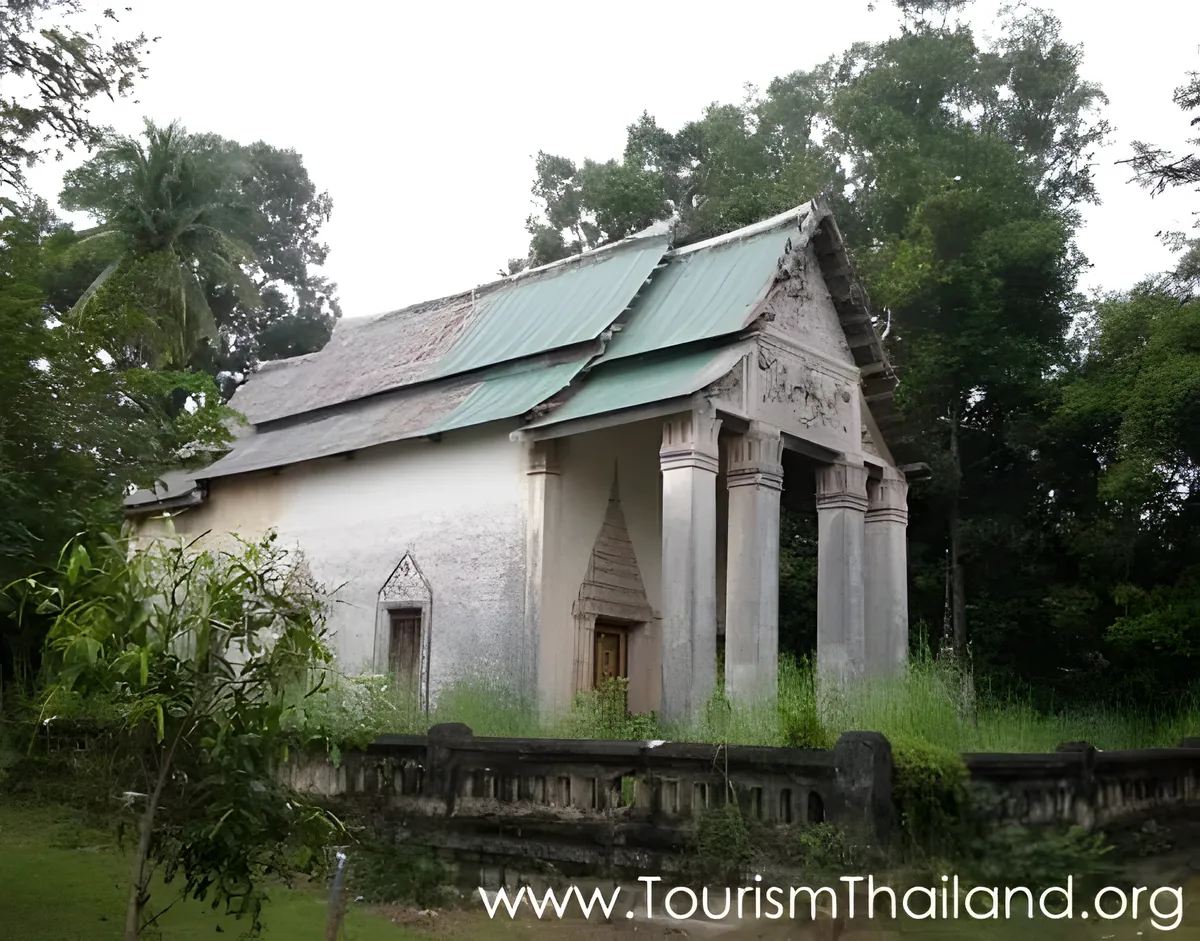


Wat Uposatharam sits on the bank of the Sakae Krang River in central Uthai Thani, built in 1781 by Phra Sunthorn Muni, the province’s second former Sangha leader, and granted its royal land charter in 1882. Locals call it Wat Bosot for short. The Fine Arts Department registered the complex as a national ancient monument in 1993, and it remains free to enter, open daily from 08:00 to 18:00.
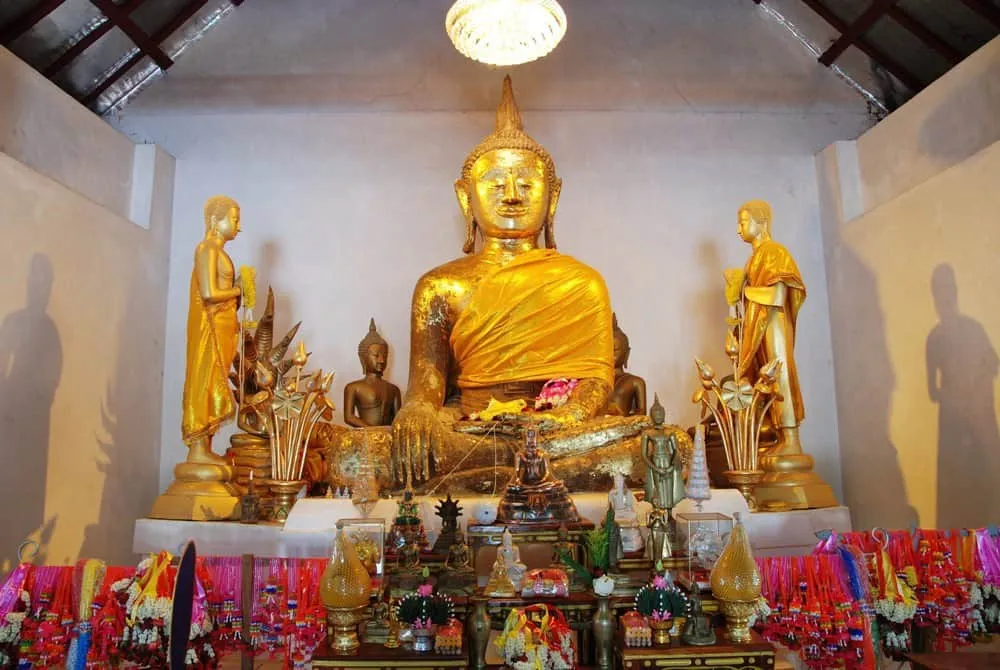
The ordination hall (ubosot) is the temple’s core building — brick construction finished in lime plaster, housing a Buddha image in the subduing-Mara posture. Its interior walls carry murals painted during the reign of King Rama III, narrating the Buddha’s biography from birth through enlightenment in the flowing, narrative style typical of early Rattanakosin temple art. The adjoining wihan (main hall) takes a different narrative angle: its front-wall murals depict the Buddha’s funeral rites alongside scenes of everyday early-Rattanakosin life, while the hall’s standing Buddha image — shown in the posture of persuading feuding relatives to make peace — is flanked by smaller images illustrating stories from the Phra Malai and Phra Asupha Kammathan traditions.
Insider Tip: The octagonal mondop on the riverside is easy to walk past as just another decorative structure, but its backstory is the most interesting thing on the grounds — it was built around 1899 as living quarters for the temple’s abbot, who died before construction finished, so it became his memorial shrine instead. Look for the stucco climbing-vine reliefs around the window frames, an unusual blend of Thai and Western decorative styles for a temple building of this period.
Behind the wihan, three pagodas of different styles stand in a row: a bell-shaped Ayutthaya-style chedi, a square-based Rattanakosin-style chedi with a 12-cornered indented pillar, and a third that fuses both traditions. Temple tradition holds they were built together during the early Rattanakosin period, though as with most temple-founding legends of this age, the exact dating rests more on oral record than documentary proof.
Because it sits on the riverbank in the town centre, Wat Uposatharam pairs naturally with a walk along the Sakae Krang River itself and the floating community further downstream — Uthai Thani’s old town is compact enough to cover both in a single unhurried afternoon.
Watch out: The murals inside the ubosot and wihan are two centuries old and light-sensitive — flash photography is generally discouraged even where it isn’t explicitly signed, so switch it off before shooting.
Dress modestly — covered shoulders and knees — and remove your shoes before entering either hall. Parking is available on site if you’re driving in from elsewhere in Uthai Thani.
- Entry fee: Free
- Hours: Daily 08:00-18:00
- Status: Registered national ancient monument (Fine Arts Department, 1993); founded 1781
- Highlights: Rama III-era murals in the ubosot, the riverside octagonal mondop, three pagodas in mixed Ayutthaya/Rattanakosin styles
- Location: Sakae Krang riverbank, central Uthai Thani town
Good to Know
Good for
Things to do
On site
Location & Directions
34 Mu 1
Uthai Thani, Thailand
Show your taxi or Grab driver
วัดอุโปสถาราม
Frequently Asked Questions
Is Wat Uposatharam free to enter?
What's the history behind the temple?
What should I look for inside the ordination hall (ubosot)?
What's the octagonal mondop on the riverbank?
How do I get to Wat Uposatharam?
Spotted something out of date or incorrect? Let us know
Stay Near Wat Uposatharam
Live prices for places closest to Wat Uposatharam — tap a pin to compare.