

Wat Worachetha Ram
วัดวรเชษฐาราม
King Ekathotsarot ordered this chedi built around 1605, according to Fine Arts Department records, as a crematorium and memorial for his elder brother, King Naresuan, who died leading an army against Burma. The result is one of Ayutthaya’s more historically specific ruins — not just an anonymous foundation, but a site with a named royal patron and a stated reason for existing, on the city island in Pratu Chai subdistrict.
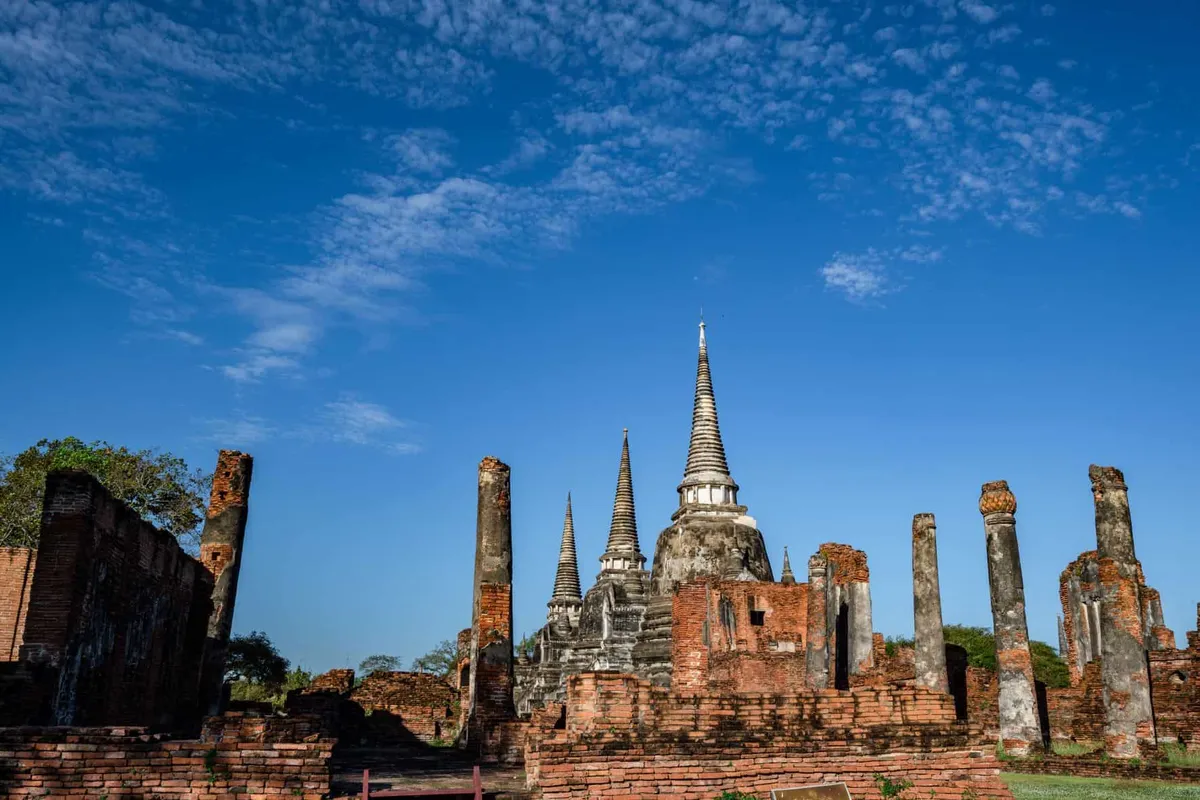
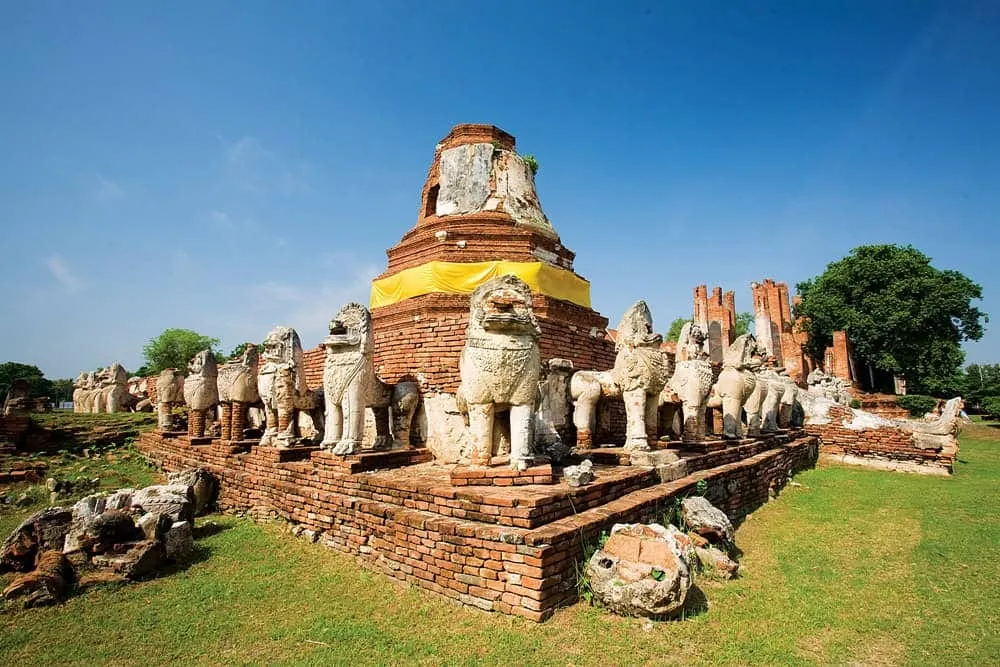
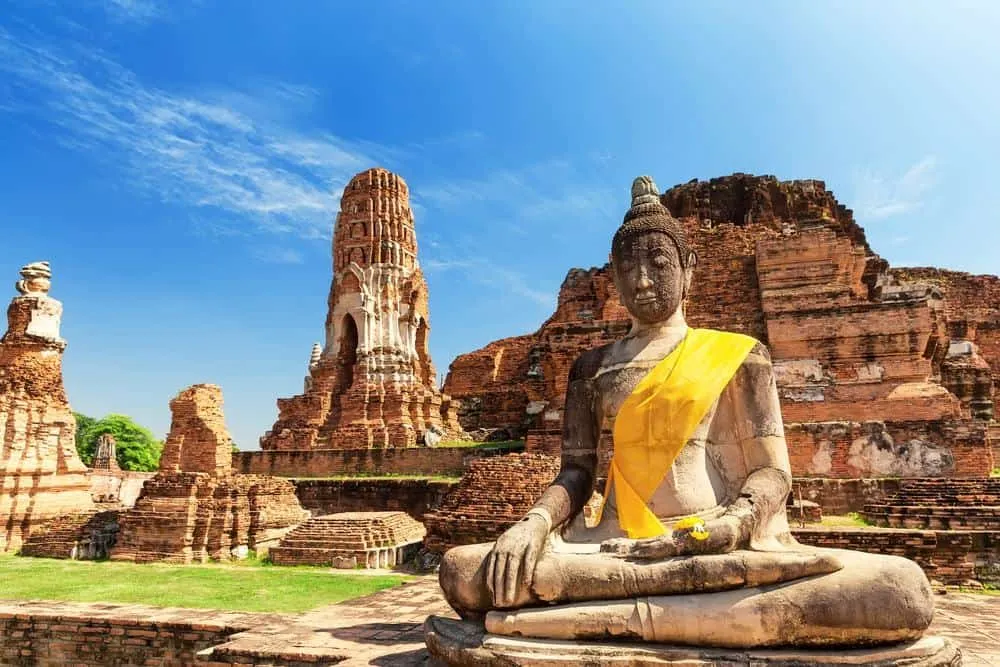
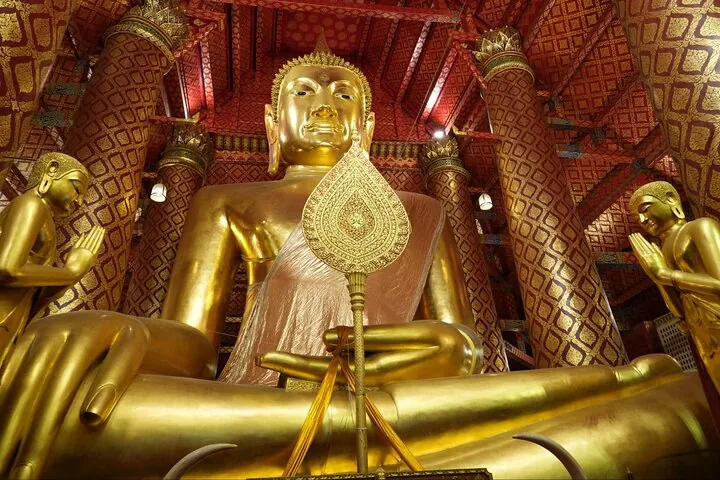
What survives is a large bell-shaped brick-and-mortar chedi in mid-Ayutthaya style, with around 25 decorative rings still legible on the spire and an intact harmika at its base — the square element that would once have supported a ceremonial parasol. Around it, a roofless but otherwise complete ordination hall stands alongside a sermon hall, and several Buddha images in the Taming Mara (subduing Mara) pose remain in place on the altars. Satellite chedis nearby show later, Late Ayutthaya-period features, suggesting the site was added to over time rather than built in a single phase. Trees have grown up through parts of the ruin, and the site gets no daily maintenance crew — it looks like what it is, a genuine unstaffed ruin rather than a curated exhibit.
Insider Tip: Look for small ceramic rooster figurines left at the base of the chedi. It’s a modern devotional custom tied to King Naresuan, who Thai folklore remembers for cockfighting during his years as a hostage prince in Burma — visitors leave the figurines as an offering connected to that story.
Unlike Wat Phra Si Sanphet or Wat Mahathat a short ride away, there’s no ticket booth, no gate, and often nobody else around. That makes it one of the quieter spots to sit with the history rather than move through it in a queue, but it also means no signage translating what you’re looking at — worth reading up beforehand if the architectural detail matters to you.
- Built: Circa 1605, by King Ekathotsarot, as a memorial to King Naresuan
- Main structure: Bell-shaped chedi, mid-Ayutthaya style, ~25 rings, intact harmika
- Fee: Free — an unstaffed ruin, not part of the paid Historical Park ticket zone
- Condition: Roofless ordination hall, sermon hall, Taming Mara Buddha images in situ
- Location: City island, Pratu Chai subdistrict, near Wat Lokkayasutharam and Wat Phra Si Sanphet
Watch out: Ground is uneven brick rubble in places and there’s minimal shade outside the tree-covered sections — sun protection and closed shoes matter more here than at the manicured park sites.
A bicycle or tuk-tuk from central Ayutthaya covers the short distance easily, and pairing it with Wat Lokkayasutharam and Wat Phra Si Sanphet makes an efficient loop of this side of the city island. Cover shoulders and knees as at any Buddhist site, and bring water — there are no facilities on site.
Location & Directions
Phra Nakhon Si Ayutthaya, Phra Nakhon Si Ayutthaya
Ayutthaya, Thailand
Show your taxi or Grab driver
วัดวรเชษฐาราม
Frequently Asked Questions
Who built Wat Worachetha Ram and why?
Is there an entrance fee?
What's actually left to see?
Why do people leave ceramic roosters at the chedi?
How do I get there from central Ayutthaya?
Spotted something out of date or incorrect? Let us know
Popular tours in Ayutthaya




Stay Near Wat Worachetha Ram
Live prices for places closest to Wat Worachetha Ram — tap a pin to compare.