





King Mangrai built Wiang Kum Kam as his capital around 1287, several years before he founded Chiang Mai itself. He’d just defeated the Mon kingdom of Hariphunchai (modern Lamphun) and needed a base on the Ping River — but the site flooded repeatedly, and by 1296 he’d relocated a short distance away to found the walled city that still stands today. Wiang Kum Kam kept functioning as a satellite town through the early Lan Na period, then flooded badly again after Chiang Mai fell to Burmese forces in 1558. This time the city stayed buried, lost to history until the Fine Arts Department stumbled on remains near Wat Chang Kham in 1984.
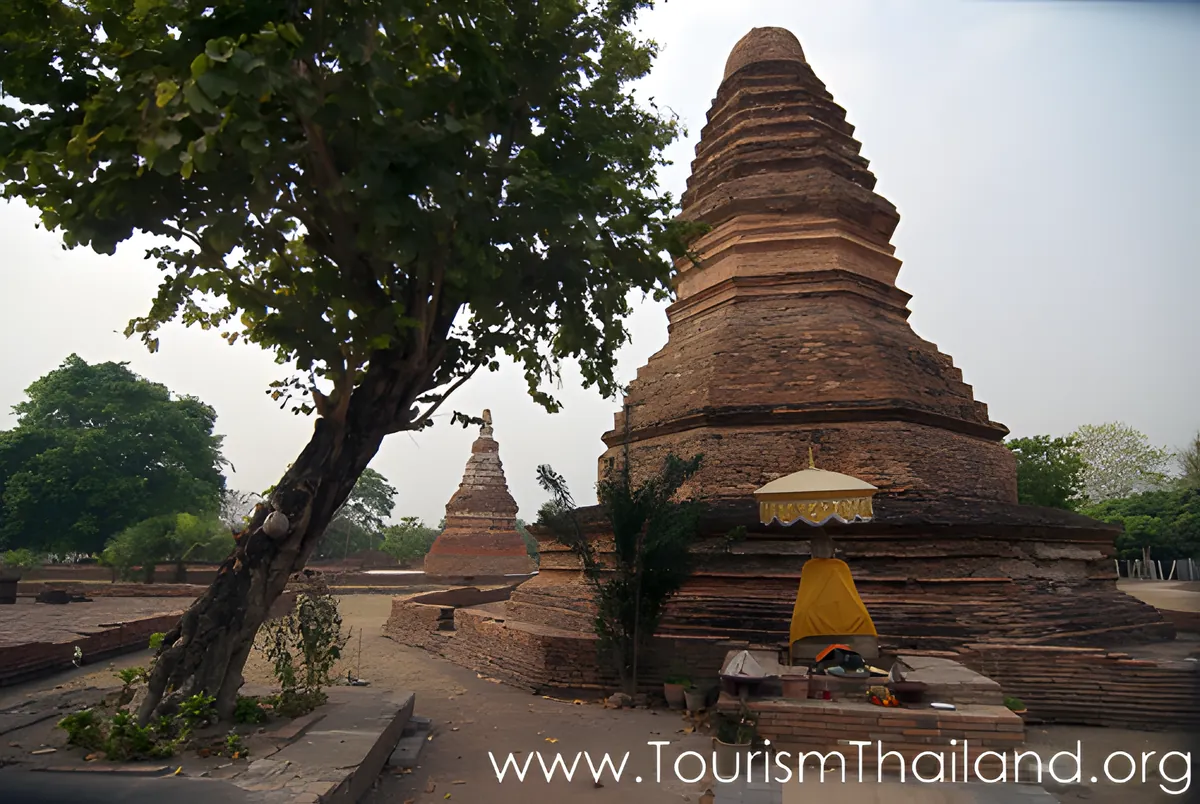
That excavation is what you’re walking through now: a scattered archaeological zone in Saraphi district, about 20 minutes by Grab south of the Old City, where roughly a dozen temple ruins sit among working rice fields and small roads. Wat Chedi Liam — originally Wat Ku Kham, built around 1287 — is the standout, and the one genuine exception to the “ruin” label: it has resident monks and functions as an active temple today, though the buildings you see are from a 1908 renovation by a Burmese trader rather than the 13th-century originals. Wat Kan Thom (also called Wat Chang Kham), built in 1290 according to the Yon chronicles, once had an 18-metre chedi on a 12-metre base; it’s one of the better-preserved ruin sites and where the rediscovery began. Beyond these two, smaller ruins — Wat E-Kang, Wat Ku Padom, Wat That Noi, Wat Nang Chang and others — are scattered across the grounds, mostly partial brick foundations and stubs of chedis rather than intact structures.
- Entry: Free to walk the ruins
- Founded: ~1287, King Mangrai’s capital before Chiang Mai
- Rediscovered: 1984, by the Fine Arts Department
- Horse cart tour: ~300 THB, 45 min-1 hr, 6-9 monuments
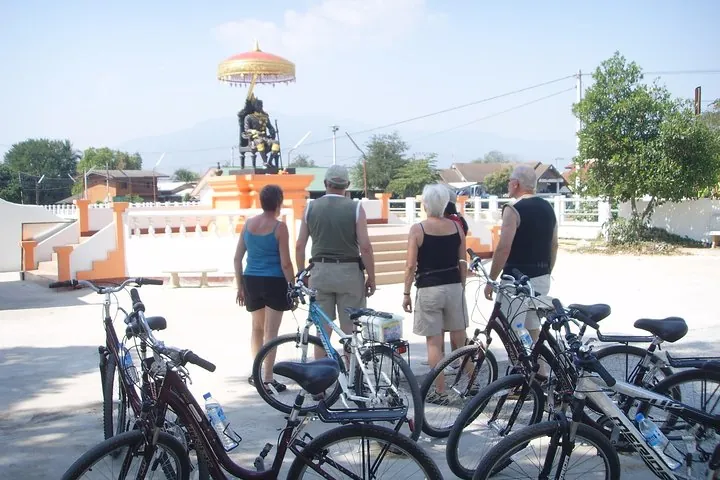
- Tram tour: ~500 THB · Bicycle rental: ~50 THB
- Getting there: ~20 min by Grab/taxi from central Chiang Mai, Saraphi district
Insider Tip: Skip the tram if you have the time — the horse cart is slower but stops longer at each site, and 300 THB split between two or three people barely costs more per head than walking-shoe fatigue is worth in the midday sun.
Watch out: The site still floods. It was inundated three times in 2005 alone when the Ping overflowed its banks — a reminder that Mangrai’s original flood problem never really went away. If you’re visiting in the rainy season (June-October), check conditions before you go; some pathways between ruins can be underwater after heavy rain.
Most of what you’re seeing is brick and stucco foundations rather than dramatic standing towers — this isn’t Ayutthaya or Sukhothai in scale. What makes it worth the trip is the setting: ancient kilns and chedi stumps sitting between rice paddies and a handful of working farms, with almost none of the vendor stalls or tour-bus crowds that surround Chiang Mai’s better-known temples. A walking loop through the main cluster of ruins takes 2-4 hours if you’re doing it on foot; with a horse cart or tram, figure closer to an hour.
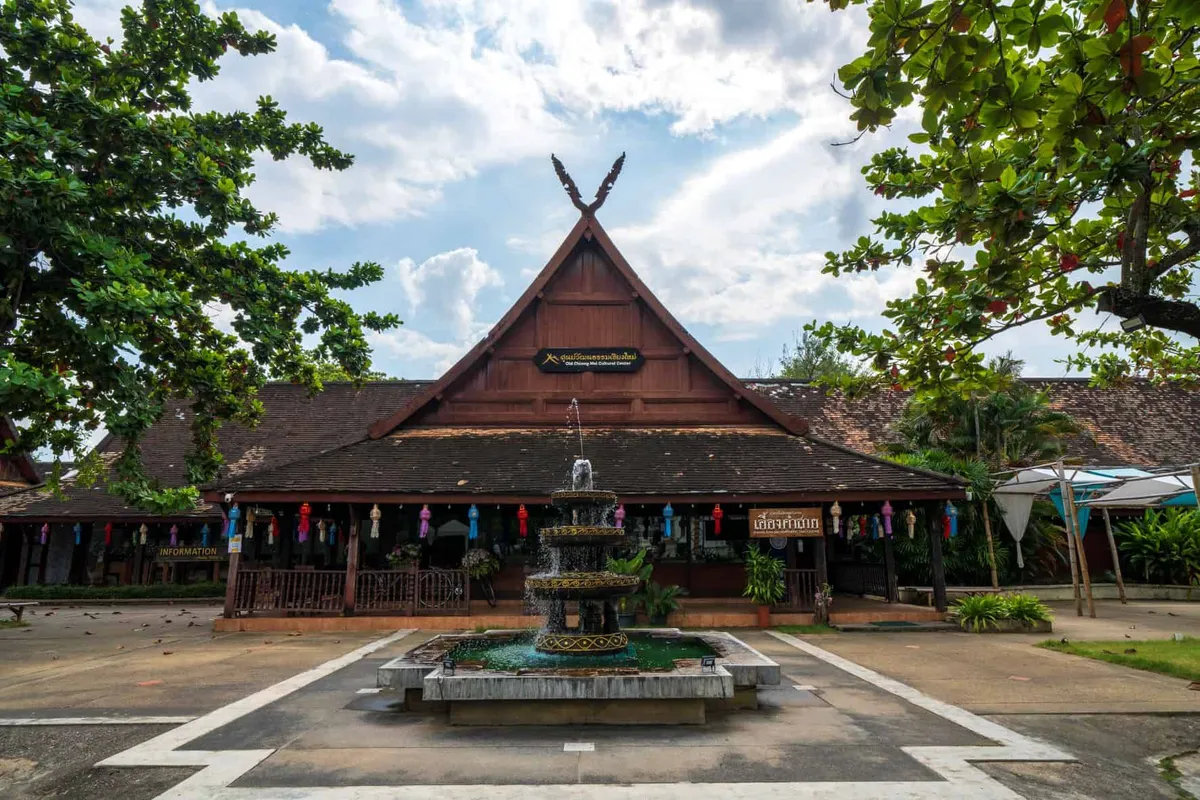
Early morning or late afternoon gives the most comfortable temperatures and the best light for photographing the brickwork — midday sun is harsh and shade is limited. Wear proper shoes; the ground between ruins is uneven and can be muddy after rain. Tickets and guides for the cart and tram tours are sold at the information center and at Wat Chedi Liam itself, so start there rather than trying to piece together a route on your own.
For more on the Lan Na period this site kicked off, the Chiang Mai National Museum in the city fills in the centuries between Wiang Kum Kam’s abandonment and the Chiang Mai you see today.
Location & Directions
Saraphi, Chiang Mai
Chiang Mai, Thailand
Show your taxi or Grab driver
เวียงกุมกาม
Frequently Asked Questions
Is Wiang Kum Kam really older than Chiang Mai?
Why did King Mangrai abandon Wiang Kum Kam for Chiang Mai?
When was Wiang Kum Kam rediscovered?
Is entry free, and how much do the horse cart and tram tours cost?
How do I get to Wiang Kum Kam from central Chiang Mai?
Is Wat Chedi Liam still a functioning temple, or is it all ruins?
Spotted something out of date or incorrect? Let us know
Tours visiting Wiang Kum Kam

Stay Near Wiang Kum Kam
Live prices for places closest to Wiang Kum Kam — tap a pin to compare.