





Wiang Tha Kan
เวียงท่ากาน
A rectangular city wall roughly 500 by 700 metres, with an earthen rampart built in two layers and a moat 7-8 metres wide, still traces three sides of Wiang Tha Kan’s perimeter through the rice paddies of San Pa Tong. Fine Arts Department records date the settlement to around the 16th Buddhist century (roughly the 11th century CE), founded as a frontier outpost of the Hariphunchai Kingdom under King Athitayathammikarat, before it passed to Lanna’s King Mangrai and later fell under Burmese occupation. It’s a genuine millennium-old walled city, not a reconstruction, on flat farmland south of Chiang Mai and closer still to Lamphun.
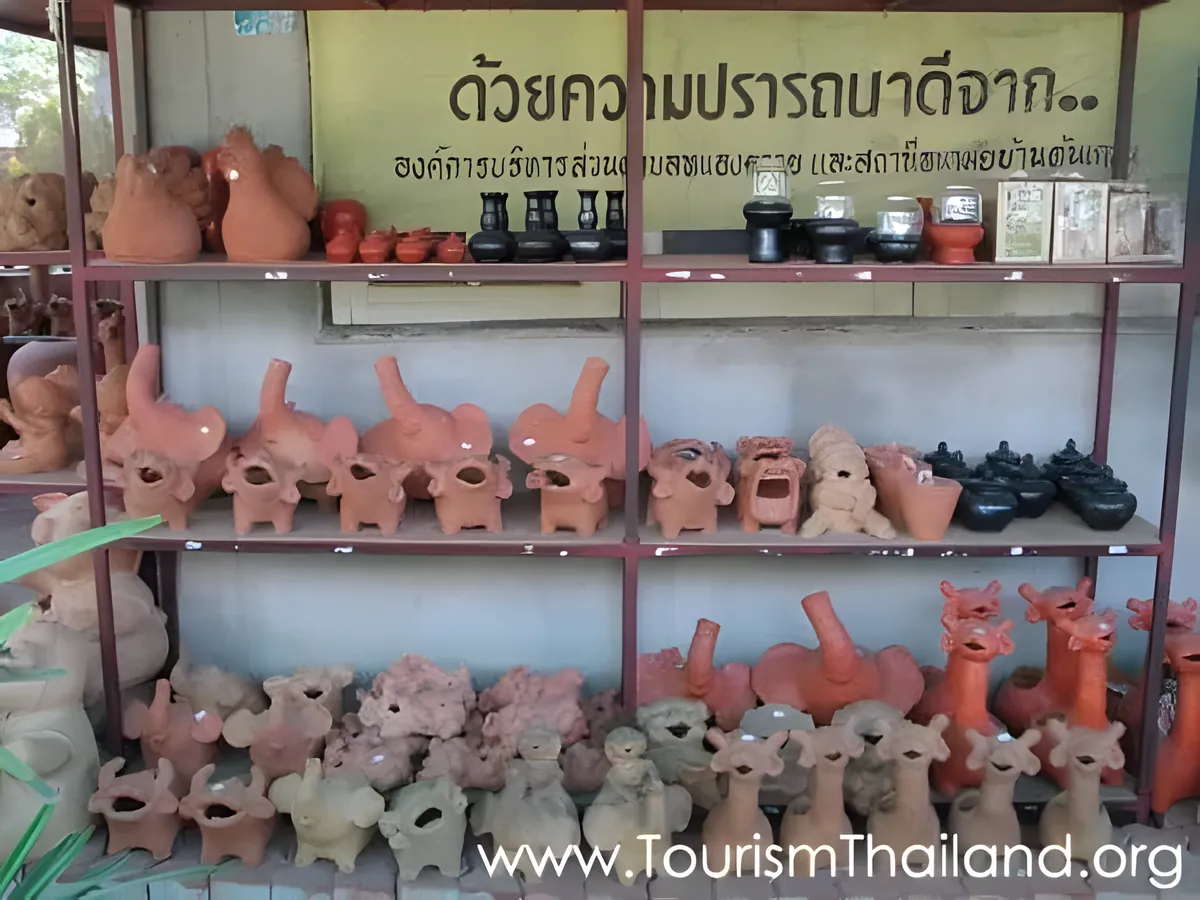
Inside the walls, several temple-ruin groups survive among the working fields, including Wat Ton Bodhi and Wat Uposot, their brick foundations outlining what were once monastery halls and stupas. An on-site museum — built with support from Thai National Artists who helped fund and design it — displays the site’s real payoff for history-minded visitors: Hariphunchai-style terracotta votive tablets (phra phim) and terracotta Buddha images pulled from the excavations, evidence of the sophisticated religious art produced here centuries before Chiang Mai existed. Farmers still work the land between the ruin groups, so the site reads as a living agricultural landscape with archaeology embedded in it rather than a fenced-off museum piece.
Insider Tip: Visit in the rainy season if you want the moat photographed at its best — it fills with water and draws waterbirds, while the dry season instead exposes more of the brick and earthwork detail underfoot.
- Era: ~16th Buddhist century (c. 11th century CE), Hariphunchai Kingdom frontier city
- Layout: Rectangular, ~500m × 700m, double earthen rampart, 7-8m moat (visible on three sides)
- On site: Wiang Tha Kan Museum — Hariphunchai terracotta votive tablets and Buddha images
- Temple ruins: Include Wat Ton Bodhi and Wat Uposot within the old city walls
- Distance: ~30km/30-40 min from Chiang Mai; ~15km from Lamphun
Watch out: Facilities are minimal outside the museum building — bring water and sun protection, and expect uneven, sometimes muddy ground between ruin groups after rain.
A motorbike or car is the practical way in from either Chiang Mai or Lamphun; there’s no direct public transport to the site itself. Give it an hour or so to see the main wall sections and museum properly. If you’ve already visited Wiang Kum Kam, Chiang Mai’s better-known ancient walled city, Wiang Tha Kan makes a good quieter counterpart — same general era of Lanna-region urban planning, far fewer visitors.
Location & Directions
San Pa Tong, Chiang Mai
Chiang Mai, Thailand
Show your taxi or Grab driver
เวียงท่ากาน
Frequently Asked Questions
How old is Wiang Tha Kan and who built it?
What can you actually see on site today?
Is there a museum?
How does it compare to Wiang Kum Kam near Chiang Mai city?
How far is it from Chiang Mai and Lamphun?
Spotted something out of date or incorrect? Let us know
Popular tours in Chiang Mai





Stay Near Wiang Tha Kan
Live prices for places closest to Wiang Tha Kan — tap a pin to compare.