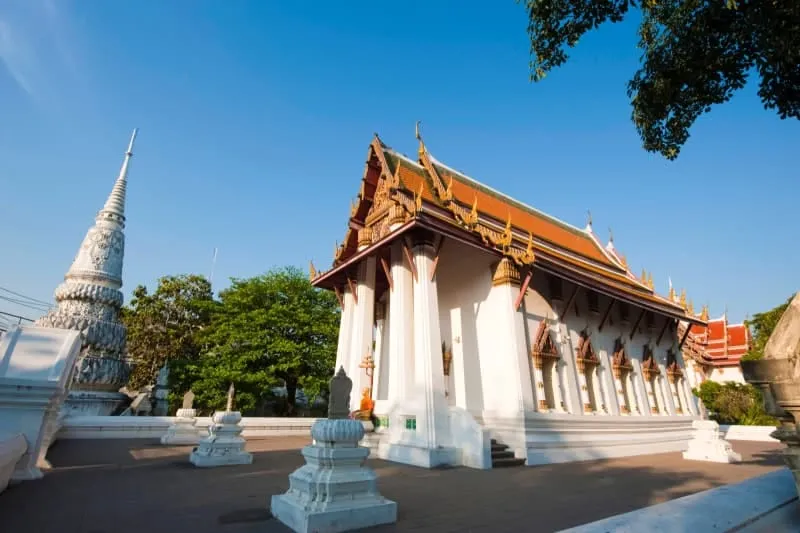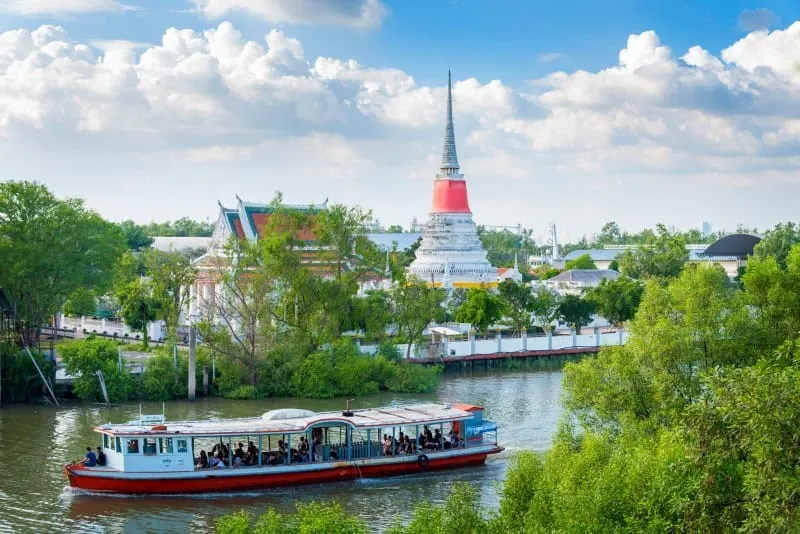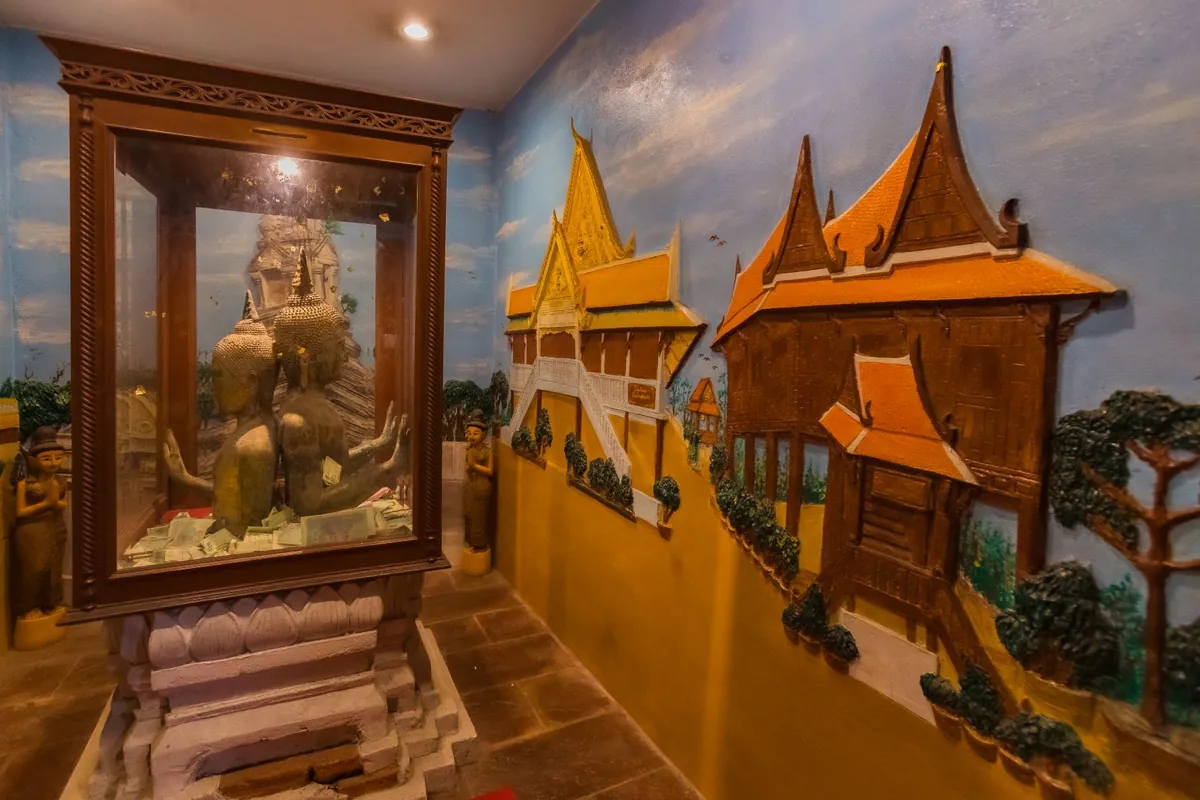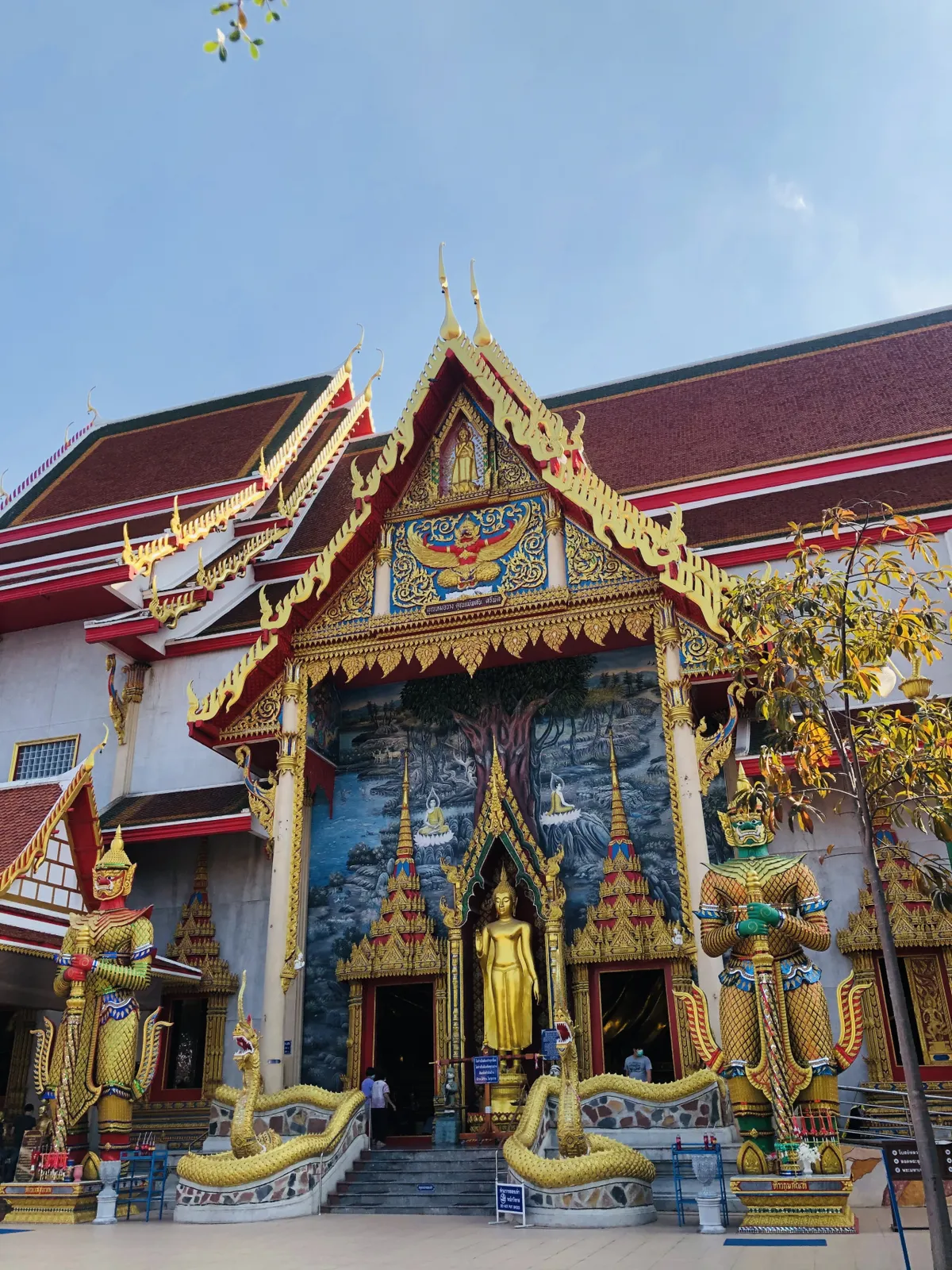




Wat Asokaram is a forest-tradition monastery in Samut Prakan, the province directly south of Bangkok, founded in 1954 by Ajahn Lee Dhammadharo, a direct student of the influential forest master Ajahn Mun Bhuridatta. Lee’s remains are kept in the temple’s main hall, and the monastery he built still runs as a working meditation centre rather than a sightseeing-only temple.
The temple’s defining structure is the Phra Dhutanga Chedi, a cluster of thirteen spires arranged on three tiers: four spires to a level, with a central spire on top standing about 26 metres tall. Each spire represents one of the thirteen dhutanga, the ascetic practices central to the forest tradition Lee taught, from eating only what’s collected on almsround to living at the foot of a tree. It’s a more austere, geometric structure than the gilded, mural-heavy temples common in central Bangkok, in keeping with the forest tradition’s plainer aesthetic.
Wat Asokaram actively hosts meditation retreats, and foreigners are welcome alongside Thai lay practitioners. This isn’t a temple that merely tolerates visitors, it’s built around accommodating them. Retreat participants observe the Eight Precepts rather than the standard five, and stay in separate kuti (individual huts) split by gender. There’s no fixed retreat fee; donations are accepted but not required.
Insider Tip: If you want to sit a retreat rather than just visit, contact the temple in advance through its website. Walk-in arrivals are less reliable for securing a kuti during busier periods.
Watch out: This is an active monastery, not a tourist site. Dress modestly (shoulders and knees covered), keep voices down near the meditation halls, and avoid wandering into monks’ or retreatants’ living quarters uninvited.
- Founder: Ajahn Lee Dhammadharo, 1954
- Landmark: Phra Dhutanga Chedi, 13 spires representing the 13 dhutanga practices
- Entry fee: Free, daily 08:00-16:30
- Retreats: Open to foreigners and Thai lay practitioners, Eight Precepts, no fixed fee
- Getting there: BTS to Bang Na, then taxi or bus into Samut Prakan (45-60 min from central Bangkok)
Morning is the most active time, with chanting and meditation sessions underway from around 8am. Public transport doesn’t run directly to the temple gate, so a taxi for the last leg from Samut Prakan town is the practical option.
Location & Directions
Mueang Samut Prakan, Samut Prakan
Samut Prakan, Thailand
Show your taxi or Grab driver
วัดอโศการาม
Frequently Asked Questions
Who founded Wat Asokaram?
What is the 13-spired chedi?
Can foreigners join meditation retreats here?
Is entry free?
How do I get to Wat Asokaram from Bangkok?
Spotted something out of date or incorrect? Let us know
Stay Near Wat Asokaram
Live prices for places closest to Wat Asokaram: tap a pin to compare.