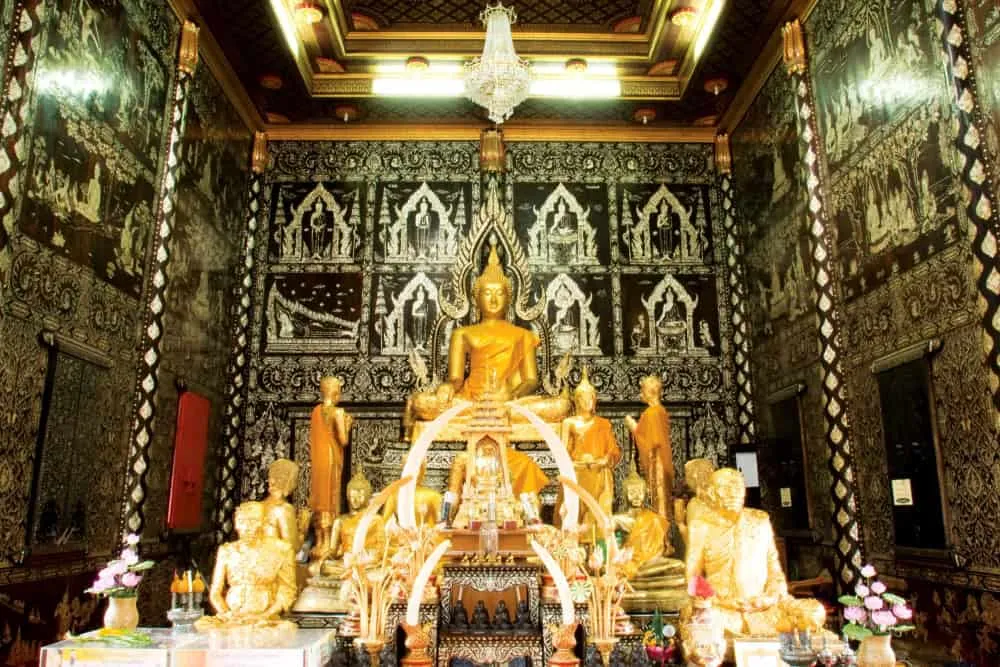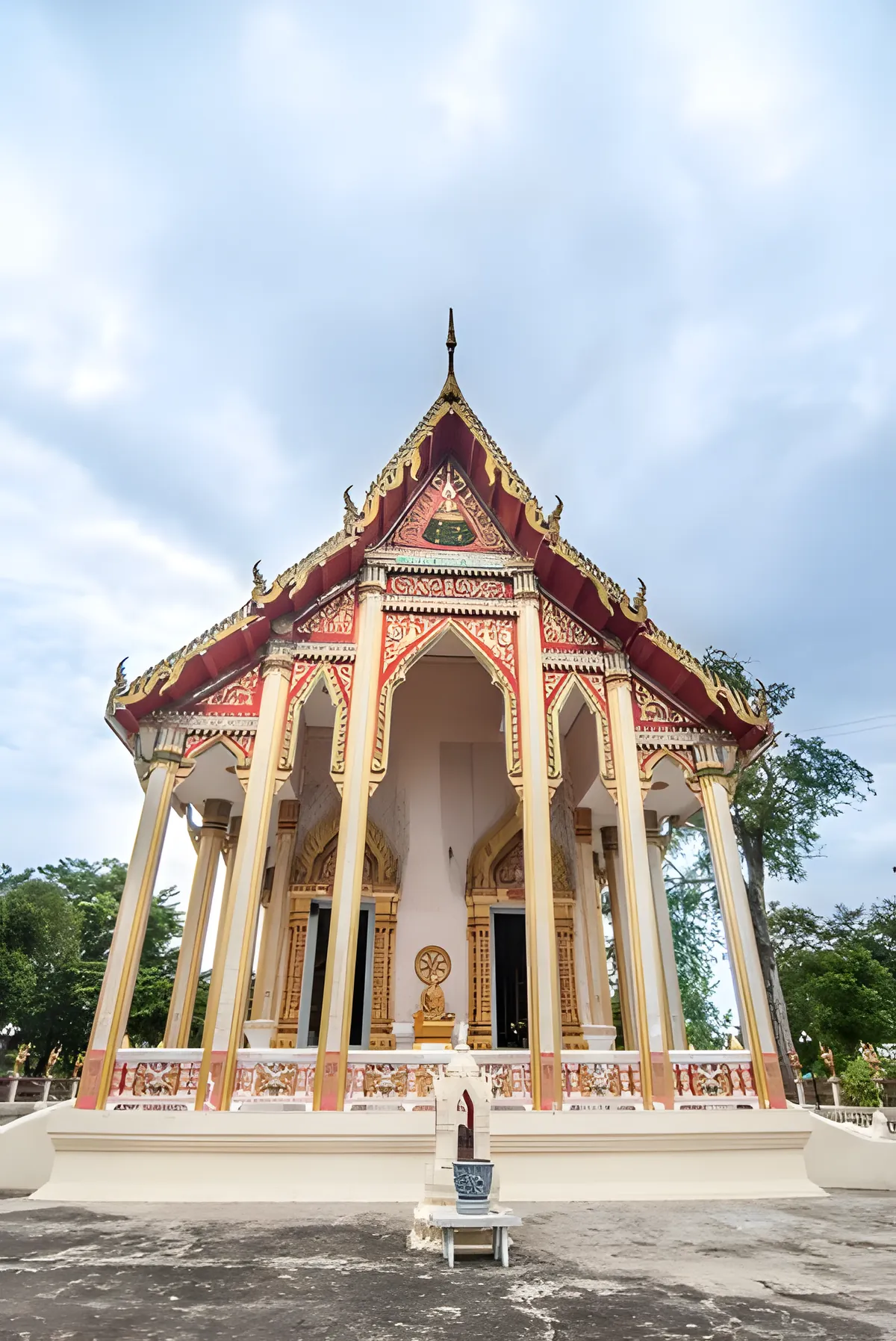

Wat Yi San occupies the top of Khao Yi San, a low hill in Yi San subdistrict on the coastal edge of Amphawa district. Also known as Wat Khao Yi San, the temple dates to the late Ayutthaya period — historians place its construction during the reign of King Suea (Phra Sanphet VIII) — and it remains a working monastery rather than a restored showpiece. Entry is free.
The main draw sits in two parts. At the base of the hill, a footprint hall houses four separate Buddha footprint impressions, framed by carved wooden doors patterned with interlocking vine motifs typical of the period. Climb the stone steps to the summit and you reach a reclining Buddha image whose carved feet measure only 9 inches — a deliberate oddity, since most reclining Buddha footprints in Thailand run to a metre or more. The ordination hall (ubosot) partway up carries fine stucco relief work on its exterior, weathered but still legible after roughly three centuries of coastal humidity.
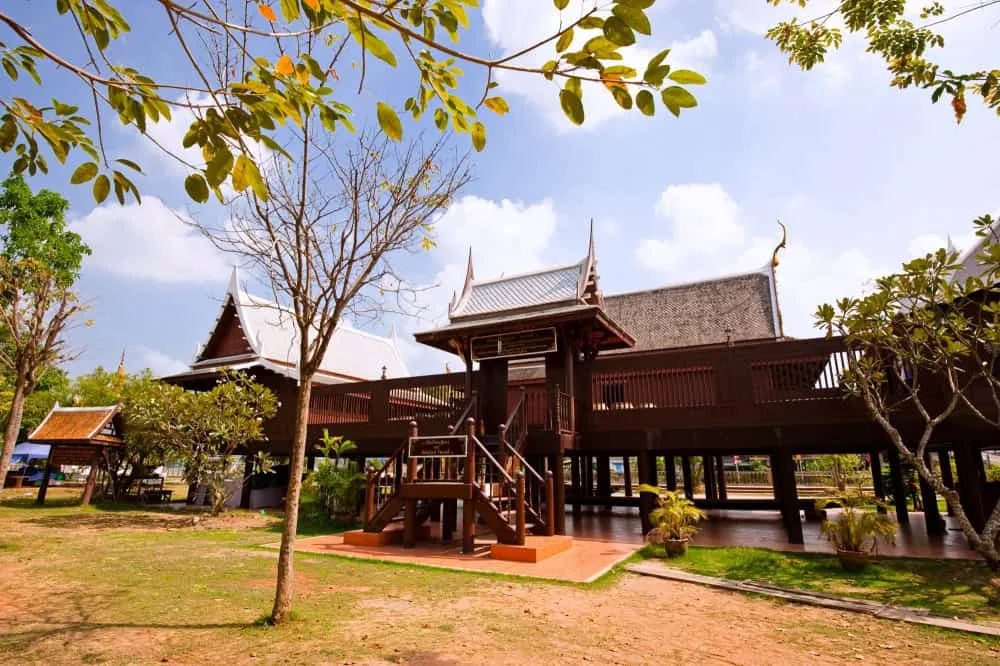
At the foot of the hill, in the temple’s old sala, Ban Khao Yi San House Museum opened in 1996 and tells a different story: the daily life of Yi San village, a community built on salt farming and fishing along the mangrove-lined coast south of Amphawa. Photographs, tools, and household objects trace how the village adapted to the tidal flats and salt pans that still ring this part of Samut Songkhram. It is a small, volunteer-run space rather than a curated exhibition — expect a caretaker rather than an information desk.
Insider Tip: Most visitors treat Wat Yi San as an afterthought to Amphawa Floating Market, but the two are not next door to each other — budget the 20-25 minute drive separately rather than trying to fit both into one rushed afternoon.
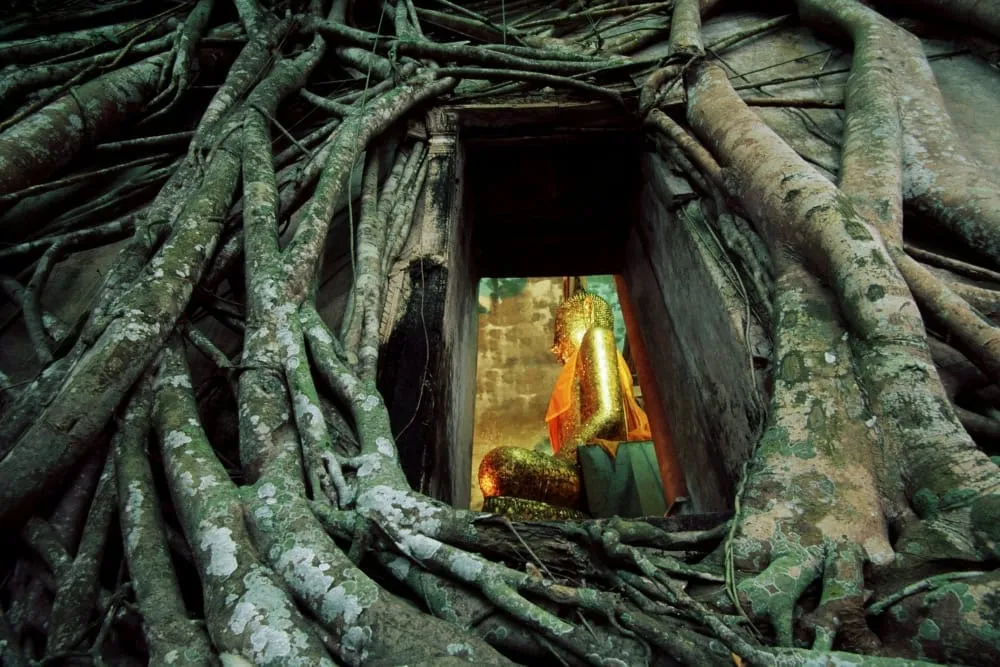
The hill sits away from the main tourist circuit, so mornings are quiet even on weekends; expect local devotees rather than tour groups. Dress modestly (covered shoulders and knees), remove shoes before entering any building, and avoid pointing your feet toward Buddha images when seated. There is no published fixed visiting-hours schedule — like most rural wats, the grounds are accessible through daylight hours, but the hilltop shrine and footprint hall can be closed without notice during merit-making events, so a repeat visit is sometimes needed if you arrive during a ceremony. Pair the trip with the tidal flats at Don Hoi Lot or the banyan-wrapped shrine at Wat Bang Kung to make a fuller day of Samut Songkhram’s back roads — both sit closer to the coast than the town-centre temples.
Watch out: The steps to the hilltop shrine are stone and can be slippery after rain — sandals are common footwear in Thailand but grip-soled shoes make the short climb easier.
- Entry fee: Free
- Built: Late Ayutthaya period, reign of King Suea (Phra Sanphet VIII)
- Highlights: Four-footprint Buddha hall, hilltop reclining Buddha with 9-inch feet, Ban Khao Yi San House Museum (est. 1996)
- Location: Yi San subdistrict, Amphawa district — about 15 km / 20-25 min drive from Amphawa Floating Market
- Getting there: Best reached by car or motorbike; a short stone stairway climbs the hill to the summit shrine
Wat Yi San is one of dozens of temples scattered across Samut Songkhram province’s canal-side towns — most travellers base themselves near Amphawa and pick a handful to visit alongside the floating markets.
Location & Directions
Amphawa, Samut Songkhram
Samut Songkhram, Thailand
Show your taxi or Grab driver
วัดเขายี่สาร
Frequently Asked Questions
Is Wat Yi San free to enter?
What makes Wat Yi San worth the detour from Amphawa?
How far is Wat Yi San from Amphawa Floating Market?
Is there anything else to see besides the temple buildings?
Do I need to climb far to reach the hilltop shrine?
Spotted something out of date or incorrect? Let us know
Stay Near Wat Yi San
Live prices for places closest to Wat Yi San — tap a pin to compare.