




Wat Chaiwatthanaram
วัดไชยวัฒนาราม
Wat Chaiwatthanaram’s 35-metre central prang has stood on the west bank of the Chao Phraya since 1630, when King Prasat Thong built it as his first temple as monarch, and as a memorial to his mother, on the site of her former residence. Entry is 80 THB for foreign visitors (10 THB for Thai nationals), open daily 08:00–17:00.
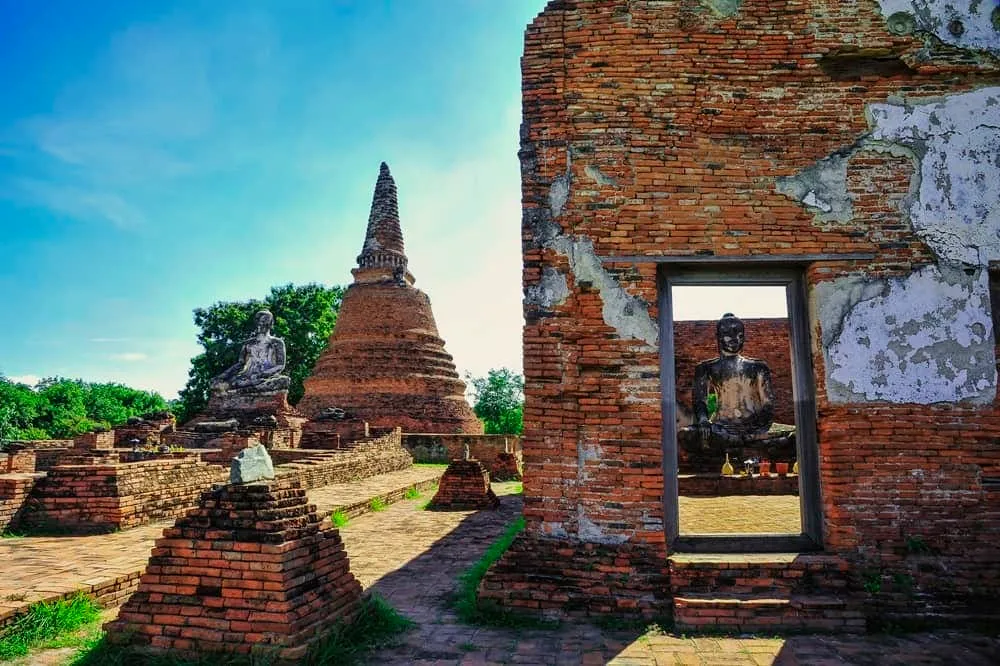
The layout is the reason architecture fans linger here longer than at most Ayutthaya ruins. Borrowing the mountain-temple concept from Khmer Angkor, the central prang represents Mount Meru, the axis of the Hindu-Buddhist universe. Eight smaller chedis (roughly 25 metres each, four set on the cardinal points and four at the corners) ring it inside a covered gallery, a deliberate cosmological map rather than a random cluster of towers. Each chedi once held Buddha images in interior niches and stucco reliefs depicting the Jataka tales; weathered as they are, several reliefs are still legible up close. The king’s mother’s ashes rest in a chedi beside the ordination hall, tying the whole complex back to its original purpose as a memorial.
Insider Tip: Climb the central prang’s steep steps for the view across the surrounding chedis and the river bend beyond. It’s the best vantage point in the complex, and far quieter than the ground-level approach where tour groups cluster.
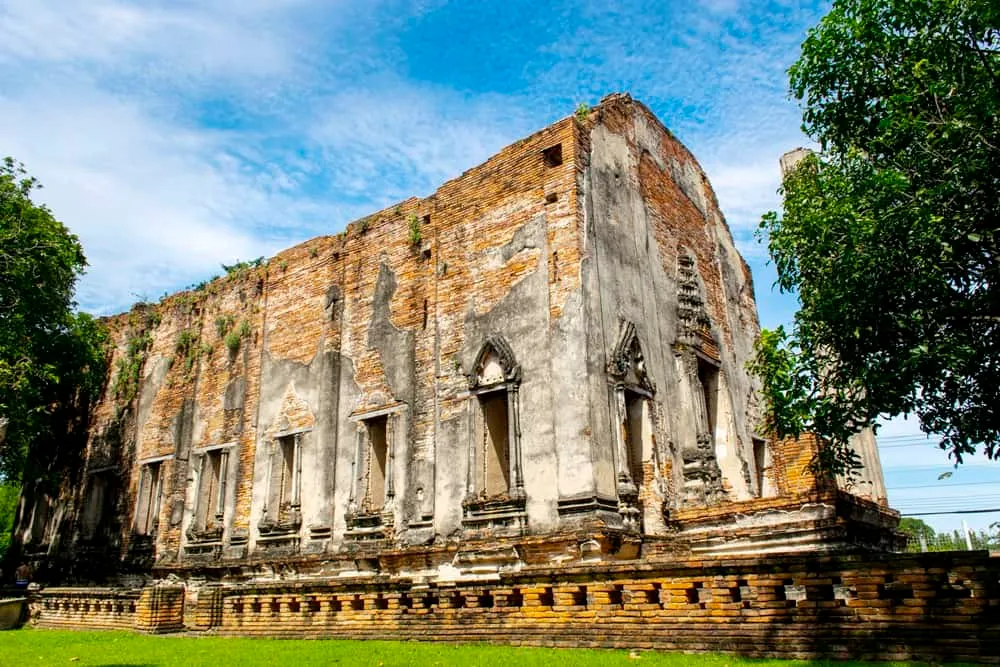
None of it survived 1767 unscathed. Invading Burmese forces looted and largely destroyed the temple when Ayutthaya fell, and it stood abandoned for more than two centuries before the Fine Arts Department restored the ruins between the late 1980s and early 1990s, the form visitors walk through today. That history gives the site a heavier, more melancholic atmosphere than some of the park’s better-preserved temples, particularly at golden hour, when the brickwork’s texture stands out against the sky. It’s also one of the temples selected for up-lighting during Ayutthaya’s night illumination periods, most notably around Loy Krathong in November, when the ruins take on a completely different character after dark.
Watch out: the steps up the central prang are steep, uneven, and unshaded. Avoid them in the midday heat, and wear shoes with grip rather than flip-flops.
Early morning, right at the 08:00 opening, is the calmest time to visit; by mid-morning the approach road fills with tour buses and the prang’s steps get crowded. The temple sits on the west bank, outside the historic island, so a bicycle, tuk-tuk, or river boat across from Ayutthaya’s old town is the normal way in. Dress modestly (covered shoulders and knees) and remove shoes before entering any shrine area.
- Entry: 80 THB (foreigners), 10 THB (Thai nationals), or the 300 THB / 40 THB six-temple combo pass
- Hours: Daily 08:00–17:00
- Built: 1630, by King Prasat Thong, as a memorial to his mother
- Highlight: 35m central prang + 8 satellite chedis representing Mount Meru
- History: Looted 1767; restored by the Fine Arts Department in the late 1980s/early 1990s
Two more of the historical park’s riverside temples are close by: Wat Phutthaisawan, about 1.5 km south, and Wat Worachetha Ram, a little further north. The Ayutthaya visit guide covers how to fit them into a single day around the historical park.
Location & Directions
Mu 9
Ayutthaya, Thailand
Show your taxi or Grab driver
วัดไชยวัฒนาราม
Frequently Asked Questions
How much does it cost to visit Wat Chaiwatthanaram?
Why did King Prasat Thong build this temple?
What does the layout of the prang and chedis represent?
Did the temple survive the fall of Ayutthaya?
Is Wat Chaiwatthanaram good for sunset photos?
How do I get there from Ayutthaya's old town?
Spotted something out of date or incorrect? Let us know
Tours visiting Wat Chaiwatthanaram


Stay Near Wat Chaiwatthanaram
Live prices for places closest to Wat Chaiwatthanaram: tap a pin to compare.