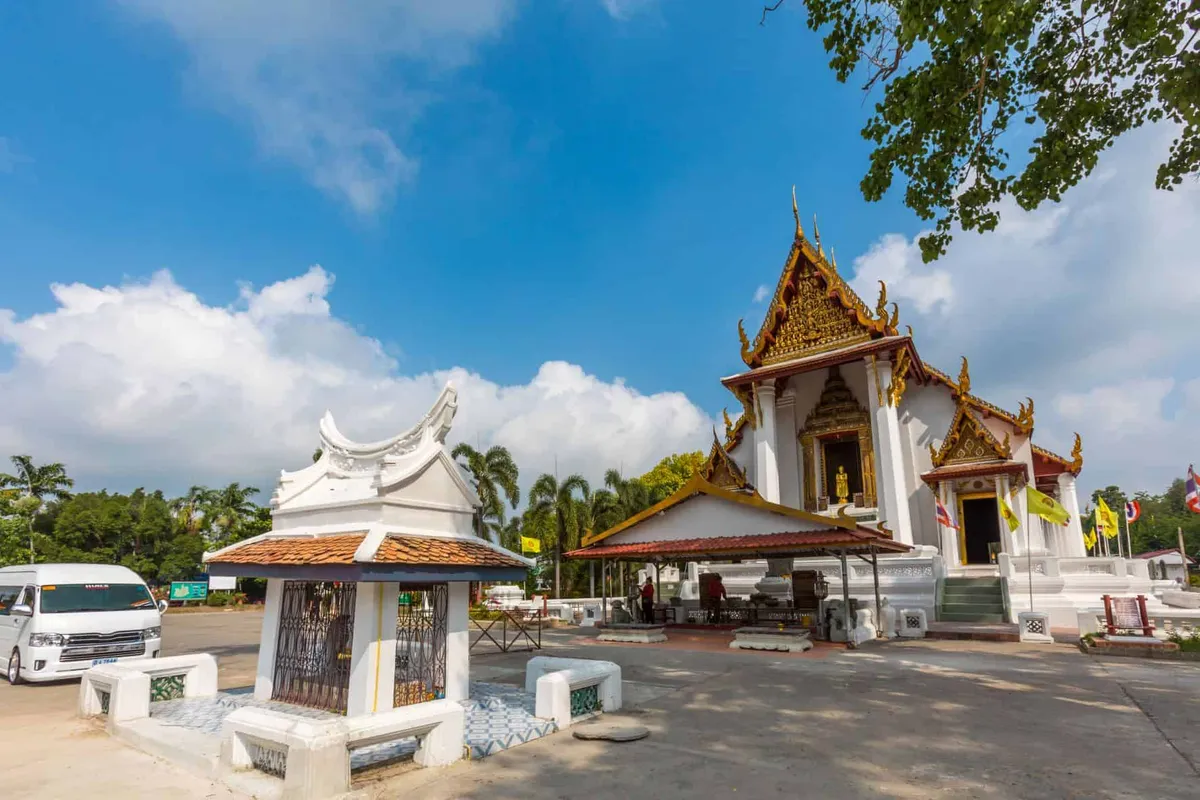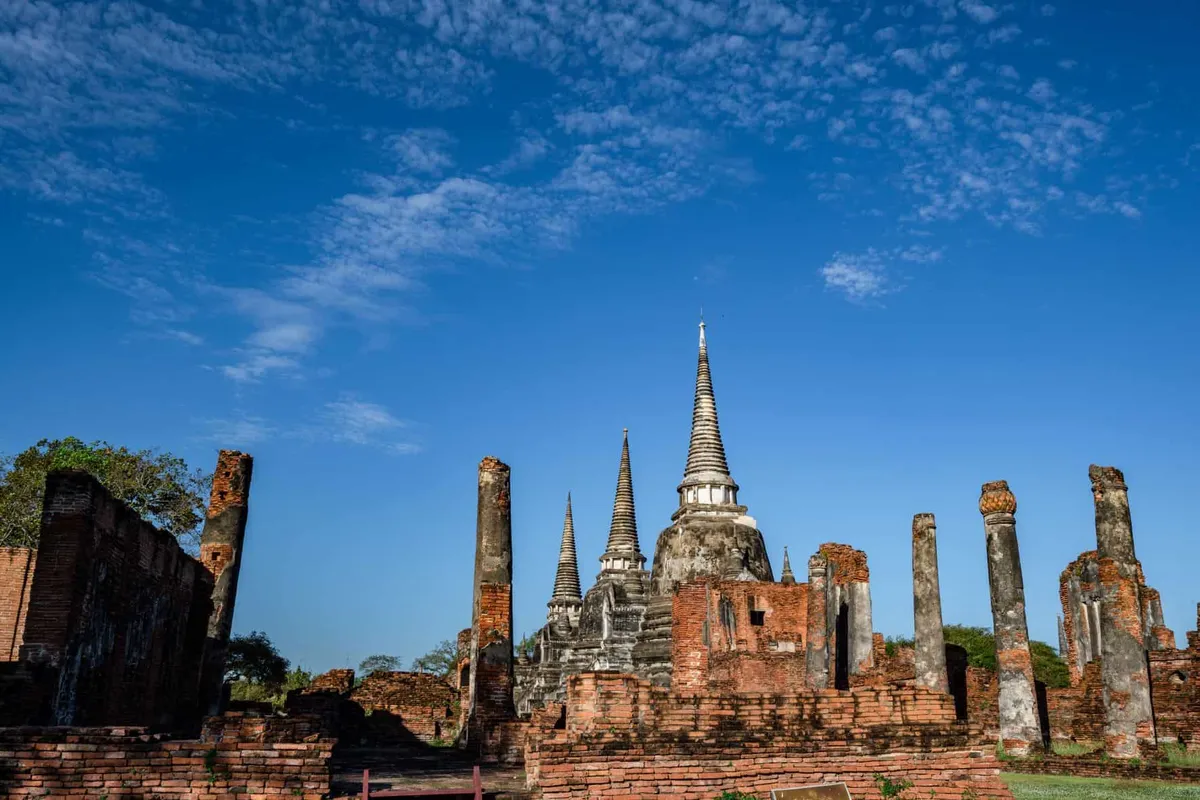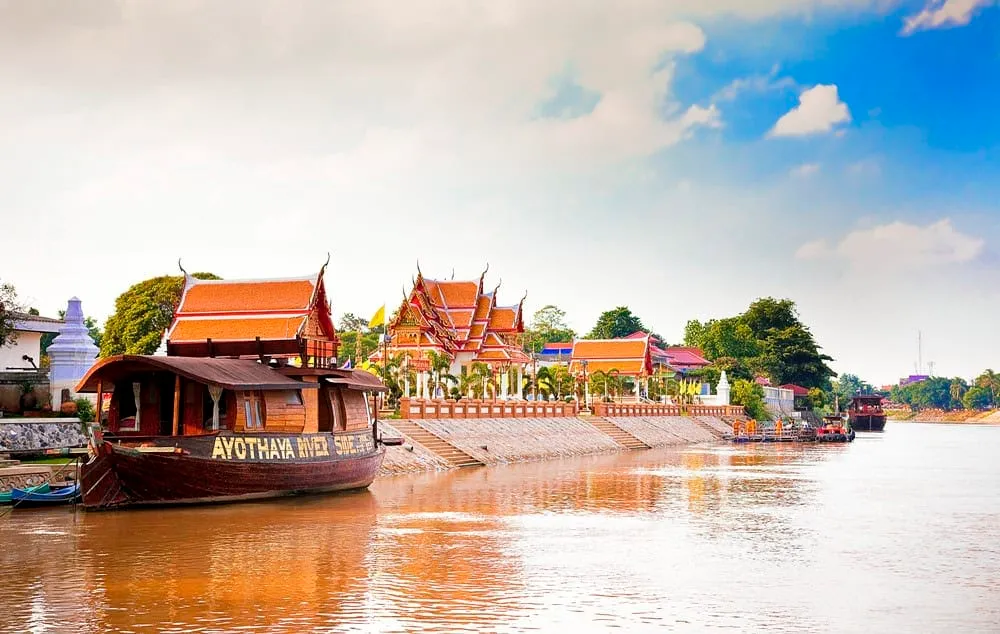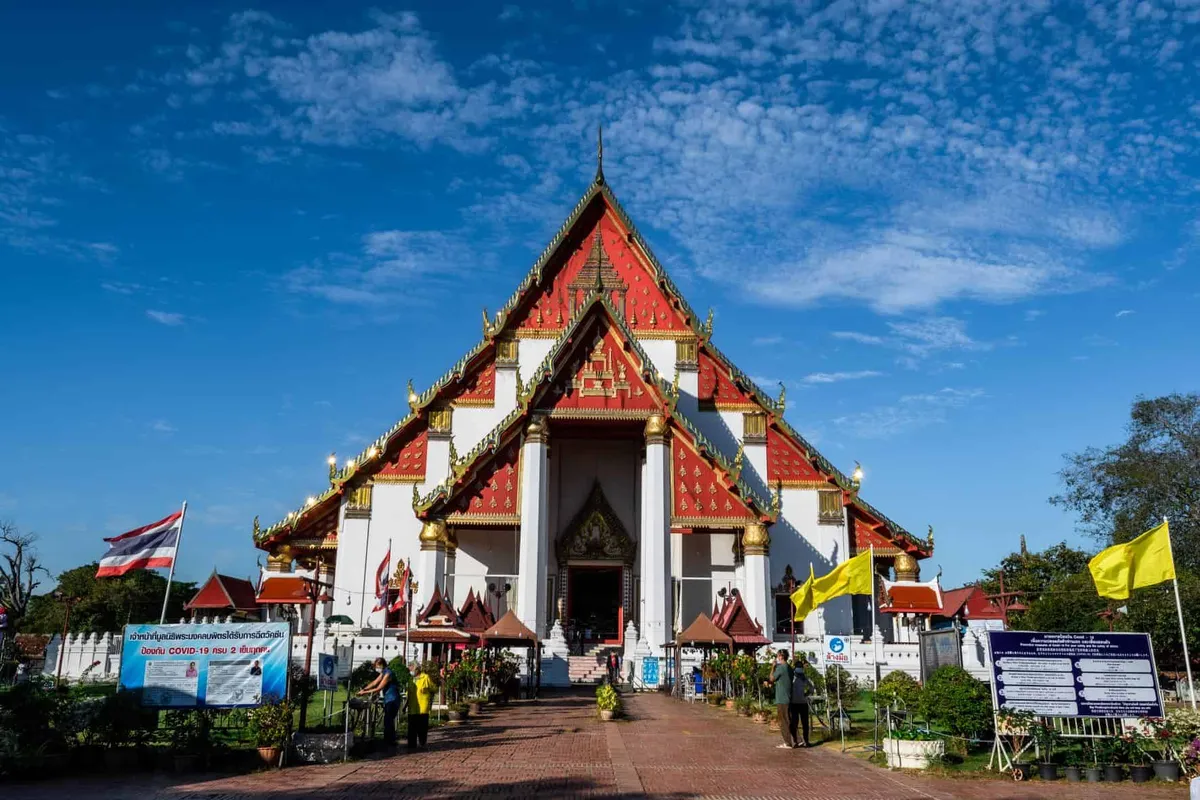

Wat Sala Pun sits off Ayutthaya’s historical island, on the north bank of Khlong Mueang, the old channel of the Lopburi River, in Tha Wasukri subdistrict. It’s easy to assume a lesser-known Ayutthaya temple this far from the main circuit is a ruin, but Wat Sala Pun isn’t one: it’s an active, functioning monastery, officially ranked as a second-class royal temple of the Worawihan grade since 1913, and it’s held that status continuously rather than falling into abandonment like so many sites the Burmese sack left behind.
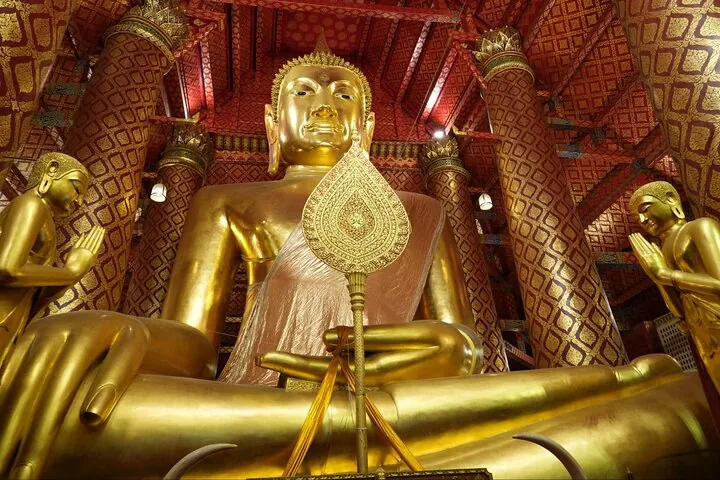
The name comes from Ban Sala Pun, the village that grew up around the temple and was historically known for producing and selling lime (pun); “Sala Pun” translates roughly as “lime pavilion.” Inside the grounds, the ordination hall follows a late-Ayutthaya design, with a three-tiered roof, two porches and a set of small rectangular windows, while a bell-shaped chedi stands behind it inside a low perimeter wall. A restored scripture library, the Ho Trai, still carries well-preserved floral stucco work on its pediment. The temple’s best-known object is a hand-carved wooden Tripitaka cabinet, used to store sacred Buddhist manuscripts, decorated with scenes from the Jataka tales, the story of Phra Malai, and episodes from the Buddha’s life. A notable Buddha image, Luang Pho Khaen Lai, sits inside; it’s a seated figure in a pre-Ayutthaya artistic style with a lap width of around 74 cm (29 inches), older than the temple building around it.
The temple’s most distinctive claim has nothing to do with architecture. Ayutthaya’s own historical sources record that the grounds once held a primary school where statesman Pridi Banomyong, the figure behind Thailand’s 1932 revolution that ended absolute monarchy, studied as a boy. His birthplace and memorial, the Phanomyong Memorial, sits a short distance away in the same Tha Wasukri subdistrict, making the pairing an easy one for anyone interested in that history rather than temple architecture alone.
- Entry: Free
- Hours: Daily, 08:30-16:30
- Status: Active monastery, 2nd-class royal temple (Worawihan rank, since 1913)
- Known for: Hand-carved Tripitaka cabinet; Pridi Banomyong’s childhood schooling here
- Location: North bank of Khlong Mueang, Tha Wasukri subdistrict
Insider Tip: Pair the visit with Phanomyong Memorial nearby. The two sites tell a connected story about Pridi Banomyong that isn’t available at any single stop in central Ayutthaya.
Some restoration work carried out in 1966 is documented as having damaged parts of the original wood carving and corbels using techniques that wouldn’t be used today; more careful restoration followed in 2016. Watch out: dress modestly and remove shoes before entering the ordination hall, as at any working temple. This isn’t an open-air ruin where those rules relax.
Wat Sala Pun sits away from Ayutthaya’s main tourist cluster, so a bicycle or motorbike from central Ayutthaya is the easiest way to reach it. Combine it with Wat Cherng Tha, another Tha Wasukri-subdistrict temple with its own river connection, for a quieter half-day away from the historical park’s crowds.
Location & Directions
Phra Nakhon Si Ayutthaya, Phra Nakhon Si Ayutthaya
Ayutthaya, Thailand
Show your taxi or Grab driver
วัดศาลาปูนวรวิหาร
Frequently Asked Questions
Is Wat Sala Pun a ruin or an active temple?
What's the connection to Pridi Banomyong?
Is entry free?
What is the temple known for?
How do you get there from central Ayutthaya?
Spotted something out of date or incorrect? Let us know
Popular tours in Ayutthaya




Stay Near Wat Sala Pun
Live prices for places closest to Wat Sala Pun: tap a pin to compare.