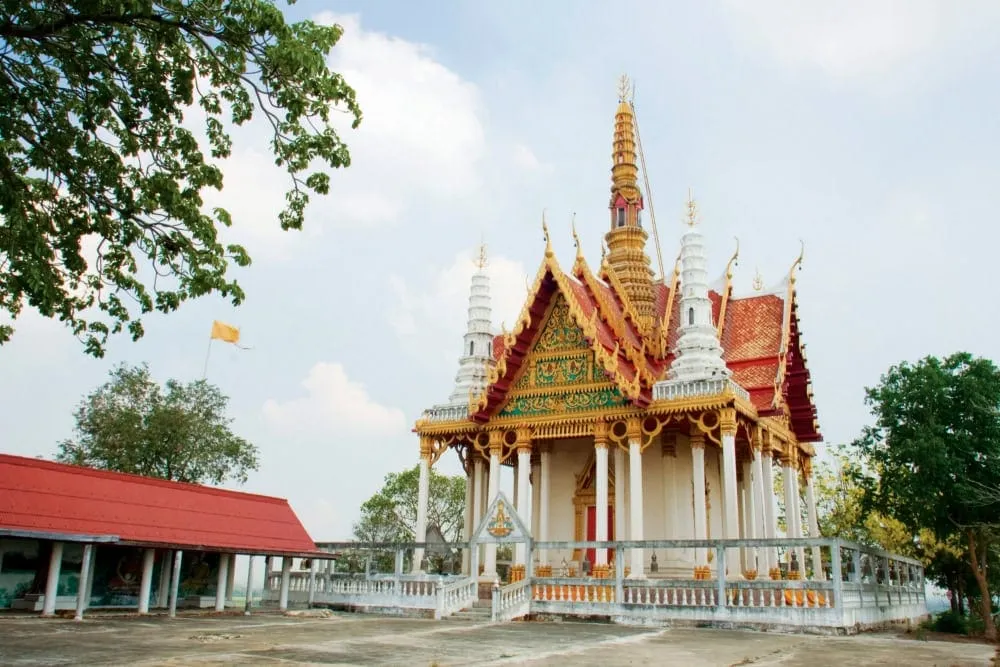


Wat Doem Bang sits on the east bank of the Tha Chin River in Doem Bang Nang Buat district, the temple after which the district takes its name. It was built in 1882, and in 1908 King Chulalongkorn (Rama V) visited in person and gave it its formal name, Wat Khongkharam — though almost everyone still calls it Wat Doem Bang, after the subdistrict.
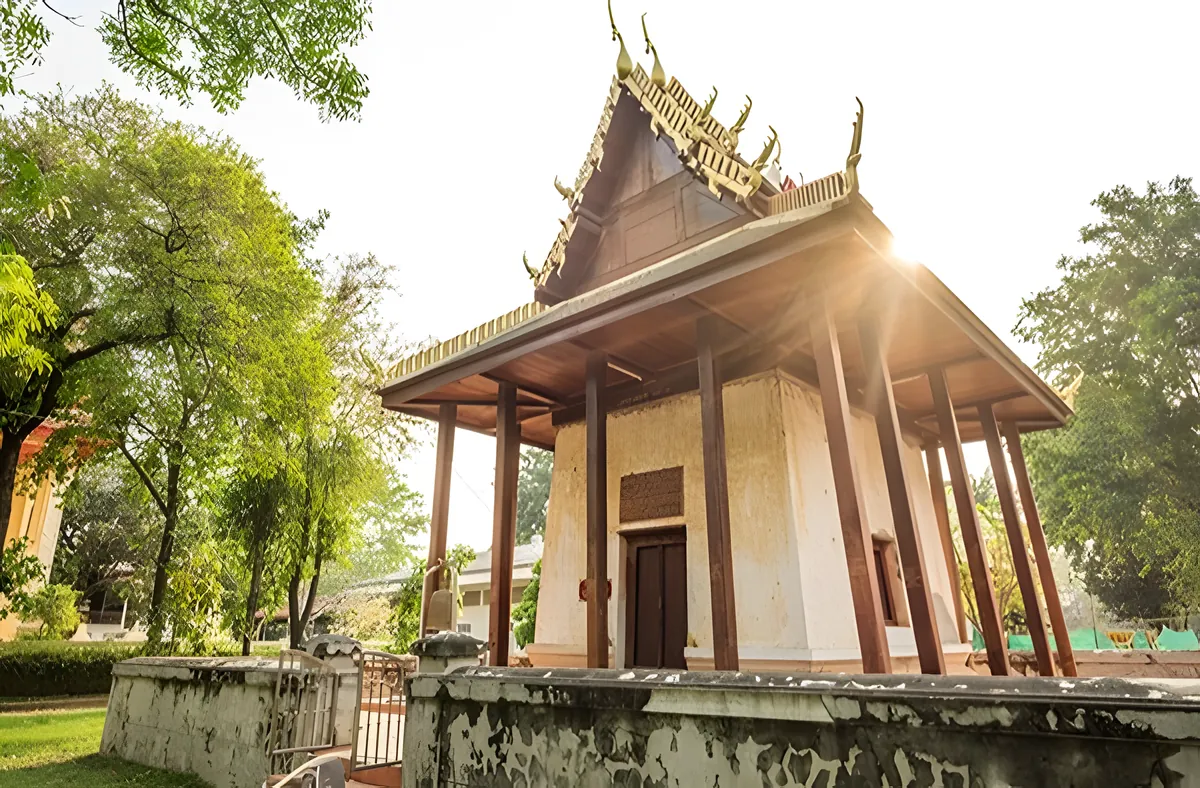
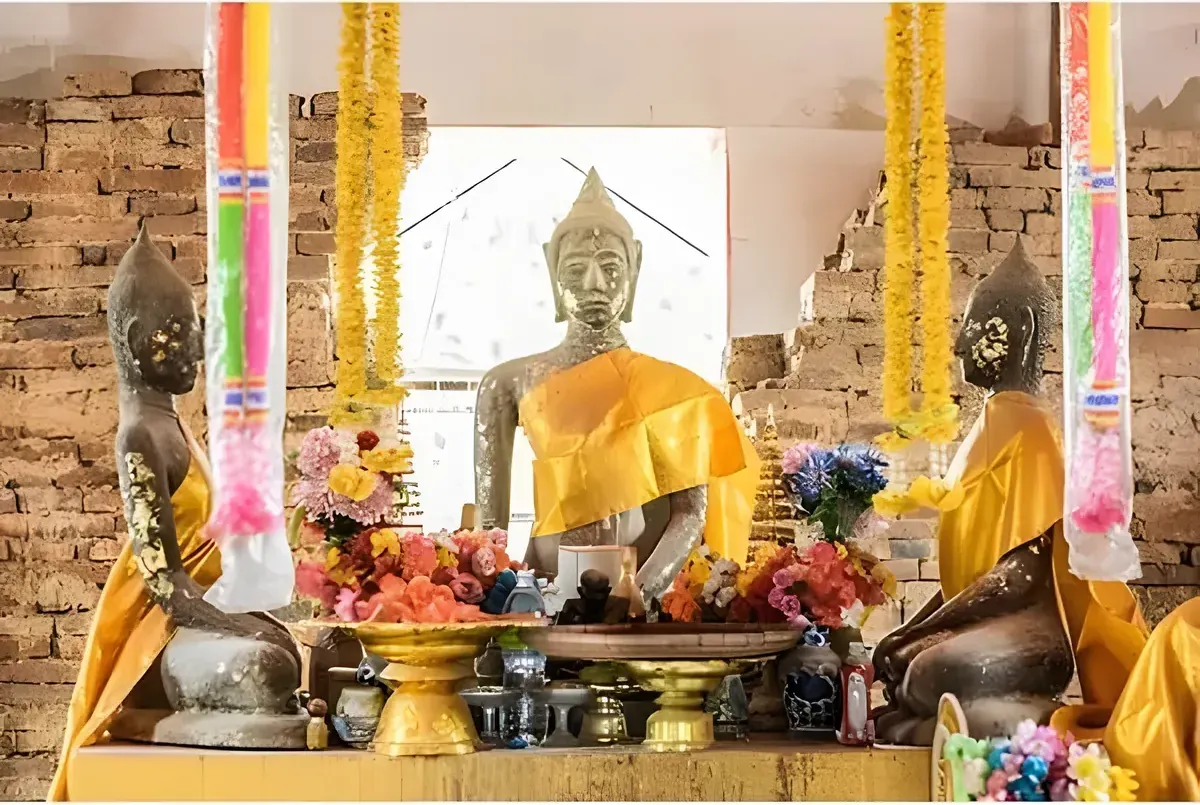
That royal visit left more than a name. The temple’s pulpit, built between 1915 and 1923, houses three objects King Rama V gave the temple that day: a pearl-inlaid alms bowl, a palm-leaf fan, and a tiffin carrier. They’re kept as some of the temple’s most treasured relics — not the “multi-tiered Lanna-style buildings” an earlier version of this page claimed, which confused northern Thai temple architecture with a central-plains temple more than 600 km from Chiang Mai.
- Entry: Free
- Hours: Daily, roughly 07:00-17:00
- Location: Doem Bang subdistrict, Doem Bang Nang Buat district, Suphan Buri — east bank of the Tha Chin River
- Founded: 1882; renamed Wat Khongkharam by King Rama V in 1908
- Known for: A golden-faced Thao Wessuwan statue and royal relics from Rama V’s 1908 visit
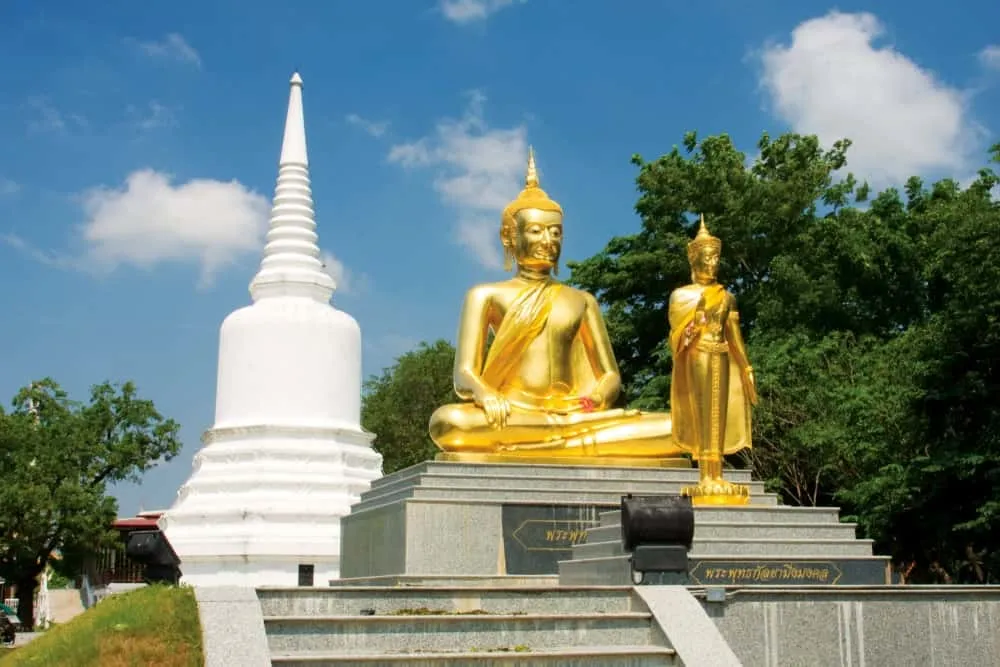
What draws most visitors today isn’t the history so much as the temple’s golden-faced Thao Wessuwan statue — a guardian deity associated with wealth and protection, and a serious pull for Thailand’s “sai mu” crowd, people who travel specifically to pray at statues believed to bring luck. Expect to see visitors making offerings and having their palms blessed by resident monks in front of it, particularly on weekends and auspicious calendar days.
Insider Tip: If you’re here for the Thao Wessuwan blessing rather than the history, go on a weekday morning — weekends and Buddhist holy days draw queues for the palm-blessing ritual that can run well past what a quick temple stop usually takes.
Watch out: Because Wat Doem Bang functions as a working pilgrimage site as much as a historic temple, the atmosphere near the Thao Wessuwan shrine can feel more transactional — donation boxes, and blessing offerings from some visitors — than a quiet heritage-focused wat. Worth knowing if you came primarily for the 1882 history and the royal relics.
Around a dozen monks live at the temple today, and the grounds keep the low-rise wooden and masonry halls typical of a central Thai riverside temple rather than anything northern in style. Dress modestly, remove your shoes before entering any hall, and bring small bills if you want to make a donation. The temple is easiest to reach by car or motorbike; there’s no direct public transport from Suphan Buri town. Combine the visit with Sam Chuk Old Market, a short drive away, or the much larger Buddha complex at Wat Phai Rong Wua if you’re spending a full day around Suphan Buri’s temples.
Location & Directions
233 Mu 1
Suphan Buri, Thailand
Show your taxi or Grab driver
วัดเดิมบาง
Within Walking Distance

Frequently Asked Questions
Is Wat Doem Bang free to visit?
Why is the district called Doem Bang Nang Buat if the temple is Wat Doem Bang?
What's the Thao Wessuwan statue, and why do people visit for it?
Is the temple connected to Thai royalty?
What are the opening hours?
Spotted something out of date or incorrect? Let us know
Stay Near Wat Doem Bang
Compare places to stay in Suphan Buri, or open the map for options closest to the attraction.