




Wat Phananchoeng
วัดพนัญเชิงวรวิหาร
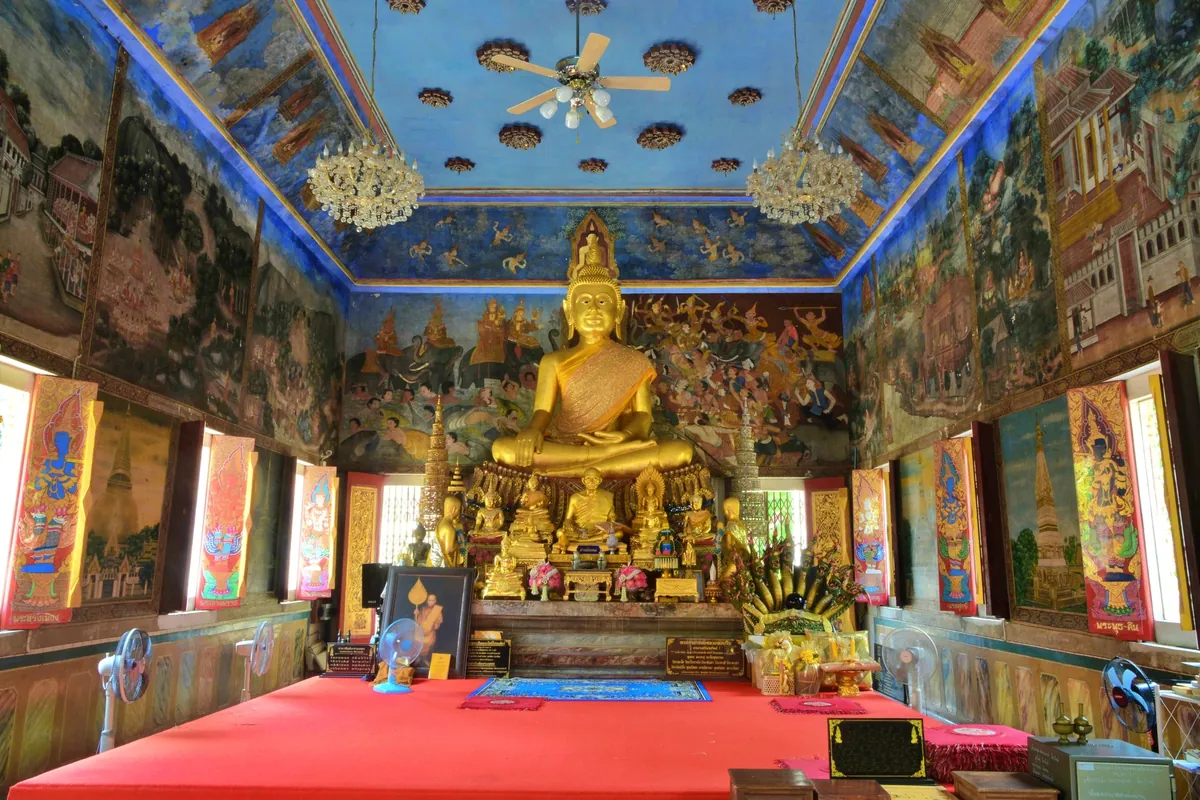
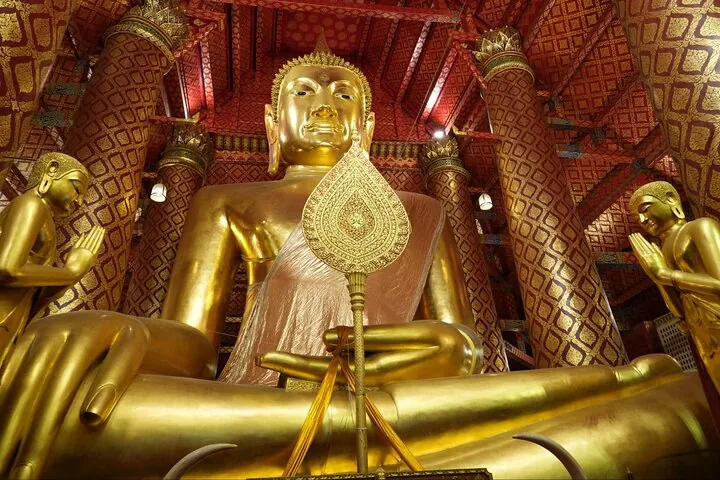
Wat Phanan Choeng sits on the south-east bank of the Pa Sak River at its confluence with the Chao Phraya, just across the water from Ayutthaya island. Temple tradition dates its founding to 1324 — a full 26 years before King Uthong established the Ayutthaya Kingdom in 1350 — and credits it to a community of Chinese refugees who settled here after the fall of the Song dynasty. Its central wihan houses Luang Pho Tho, a gilded seated Buddha completed in 1334 that stands about 19 metres tall with a lap width of roughly 14 metres, making it one of the largest indoor Buddha images in Thailand and, like the temple itself, older than the kingdom that grew up around it.
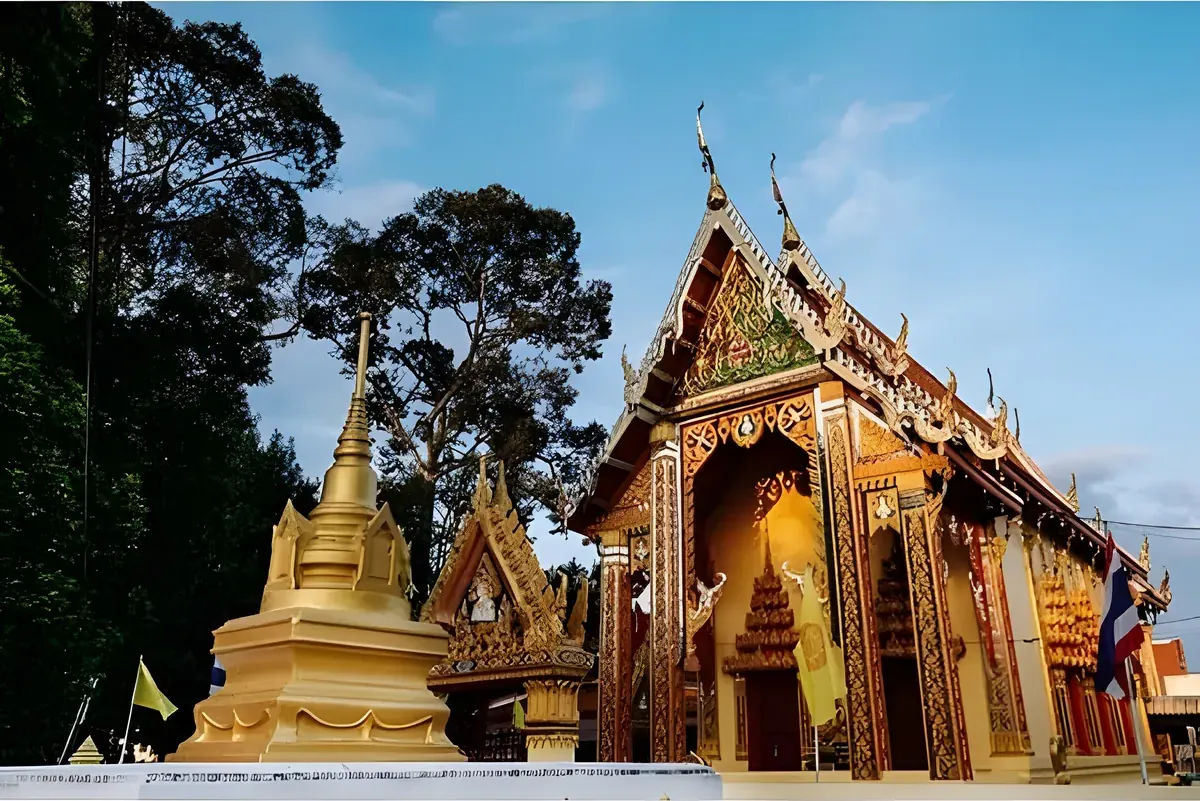
The statue carries two names that reflect its dual identity. Thais call it Luang Pho Tho; the Thai-Chinese community knows it as Sam Po Kong, a name tied to Zheng He, the Ming-dynasty admiral whose enormous “treasure fleet” is traditionally said to have called at Ayutthaya during his early-15th-century voyages. Most historians doubt Zheng He personally set foot here — he isn’t recorded as having reached Siam — but members of his delegation plausibly did, and the devotional connection has held regardless: the Buddha is venerated as a protector of seafarers, and boat crews and traders still come to ask for safe passage and good fortune. A separate two-storey Chinese shrine in the compound, dedicated to Princess Soi Dok Mak, sits closer to the river confluence — Guanyin occupies the ground floor, the princess is honoured above, and dragon and phoenix carvings cover its facade. The Jao Mae Soi Dork Mark shrine has its own legend of devoted, unrequited love and draws a different kind of visitor than the main wihan — mostly couples and Thai-Chinese devotees asking for steadfast relationships rather than general merit.
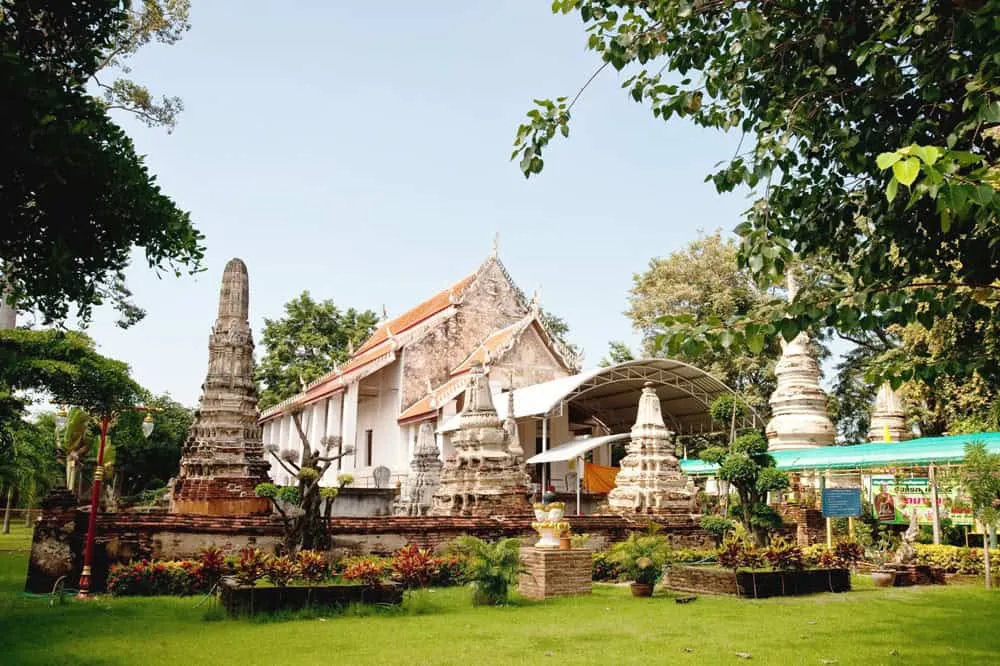
Unlike the ruined chedis and headless Buddhas that characterise most of the Ayutthaya Historical Park, this is a working temple with an active monastic community. Monks conduct morning and evening chanting, worshippers arrive steadily through the day, and the air inside the wihan is thick with incense smoke from continuous offerings. Insider Tip: arrive at or just after the 08:00 opening — by mid-morning, tour buses and Thai-Chinese pilgrimage groups fill the wihan, and it’s harder to get a clear view of Luang Pho Tho’s gilded face without a crowd in front of it.
- Entry: 20 THB (covers the wihan and the Jao Mae Soi Dork Mark shrine)
- Hours: Daily, 08:00-17:00
- Buddha dimensions: ~19m tall, ~14m lap width, completed 1334
- Founded: 1324 (temple tradition), predating the Ayutthaya Kingdom
- Getting there: ~2km from central Ayutthaya via the Rochana Road bridge, or cross-river ferry from piers near Tha Naresuan
Dress modestly — covered shoulders and knees, shoes off before the main hall — and bring small bills for the 20 THB entrance fee collected at the booth near the gate; one ticket covers the wihan and the shrine. Watch out: the wihan floor gets crowded with kneeling worshippers during merit-making hours, so move around the edges rather than through the centre of the hall.
The temple is about 2 km from Ayutthaya’s central island; the easiest approach is by road across the Rochana Road bridge, or by a short cross-river ferry from piers near Tha Naresuan for a few baht — a slower but more atmospheric way to arrive, since Wat Phanan Choeng has its own boat landing on the river. Some boat tours pair it with Wat Chaiwatthanaram further along the river, giving a contrast between this working riverside temple and one of the historical park’s grandest ruins.
Location & Directions
Phra Nakhon Si Ayutthaya, Phra Nakhon Si Ayutthaya
Ayutthaya, Thailand
Show your taxi or Grab driver
วัดพนัญเชิงวรวิหาร
Frequently Asked Questions
How old is Wat Phanan Choeng?
Why is the Buddha called both Luang Pho Tho and Sam Po Kong?
How much does it cost to enter?
How tall is the Buddha statue?
How do you get to Wat Phanan Choeng from central Ayutthaya?
Is it crowded?
Spotted something out of date or incorrect? Let us know
Tours visiting Wat Phananchoeng

Stay Near Wat Phananchoeng
Live prices for places closest to Wat Phananchoeng — tap a pin to compare.