Wat Satue sits on the Pa Sak River in Tha Ruea district, Ayutthaya province — not Saraburi, despite the district border running close by. The temple’s defining feature is a 52-metre reclining Buddha, one of the largest in Thailand, stretched along the riverbank on the south side of the grounds.
The Buddha was built in 1870, during King Rama V’s reign, by Somdet Phra Phutthacharn (Toh) Phrommarangsi — one of the most venerated monks in Thai history, better known simply as Somdet Toh. He was born in this village in 1788 and commissioned the image here decades later, after establishing himself at Wat Rakhang in Bangkok, as a way of marking the community he grew up in. The temple itself predates the Buddha image; the original village wat took its name, “Satue,” from a large sa-tue (cotton) tree that once stood on the grounds.
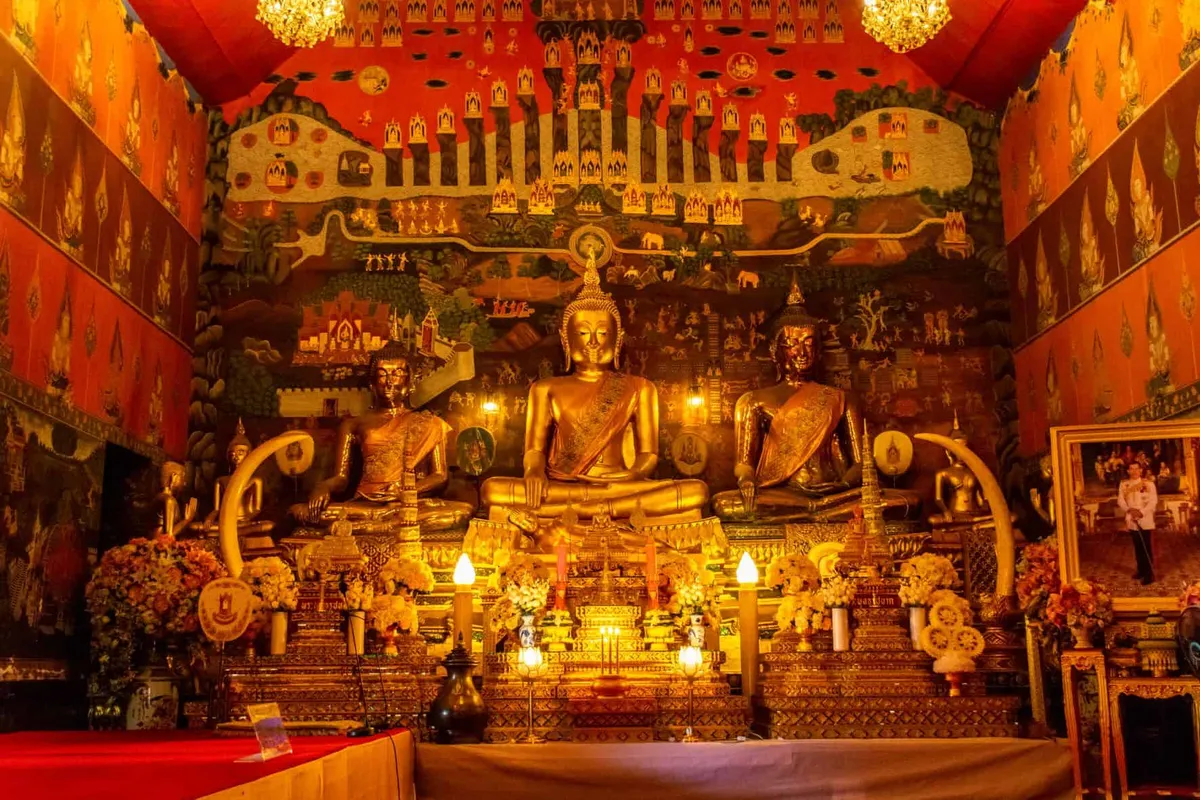
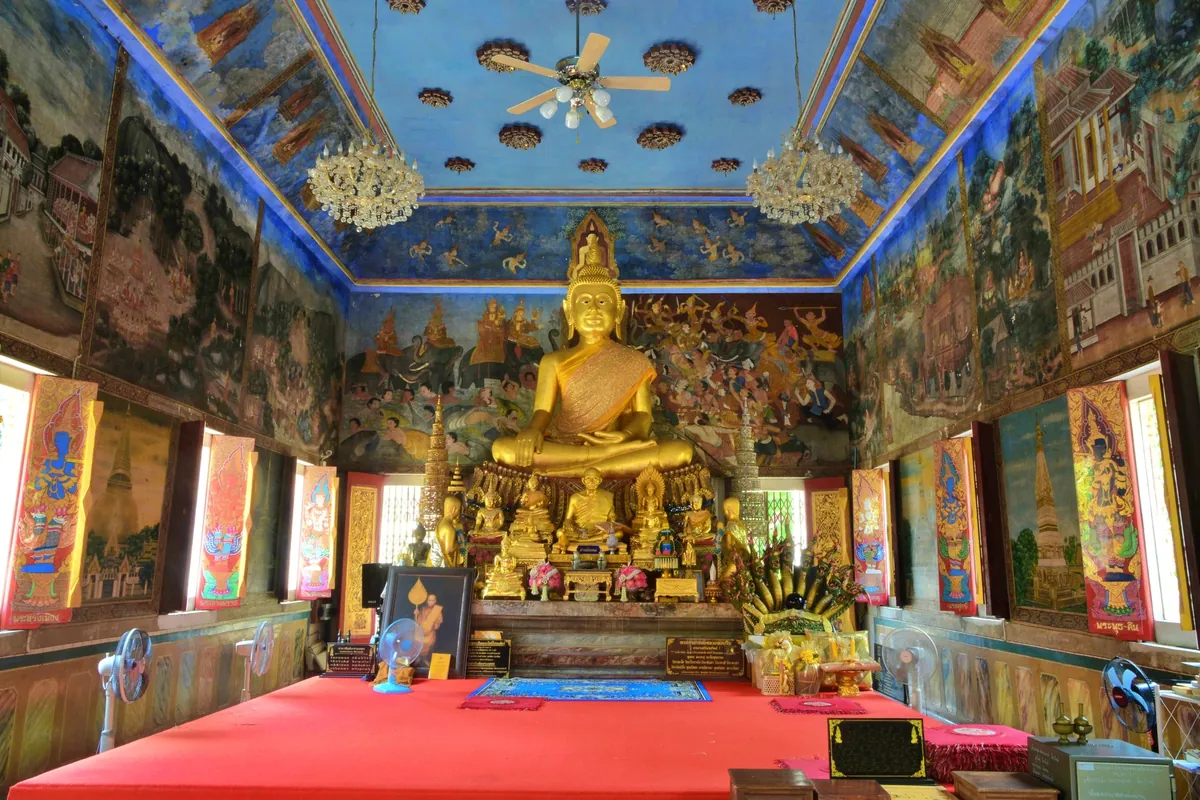
The ubosot, rebuilt in reinforced concrete, was restored under Major General Manoonkrit Roopkachorn, who spent his childhood in the area directly behind the reclining Buddha and later funded the renovation. Inside sits a Buddha image in the earth-touching (Bhumisparsha) posture. The older Phra Viharn, dating to the late Ayutthaya period, has a distinctive bowed, boat-like roofline and houses the reclining Buddha’s original head, kept aside during restoration work. Elsewhere on the grounds are a sandstone Buddha sheltered by a naga, a replica footprint over a century old, and a twelve-cornered stupa.
Insider Tip: The riverside path beside the reclining Buddha is at its most atmospheric in late afternoon, when boats on the Pa Sak River pass behind the statue’s outline — a better photo angle than the head-on view from the parking area.
- Entry fee: Free
- Hours: Daily, roughly 06:00-16:00
- Reclining Buddha: 52m long, 16m high, 9m wide — built 1870
- Built by: Somdet Phra Phutthacharn (Toh) Phrommarangsi, born in this village in 1788
- Location: Tha Ruea district, Ayutthaya (often mislabelled as Saraburi)
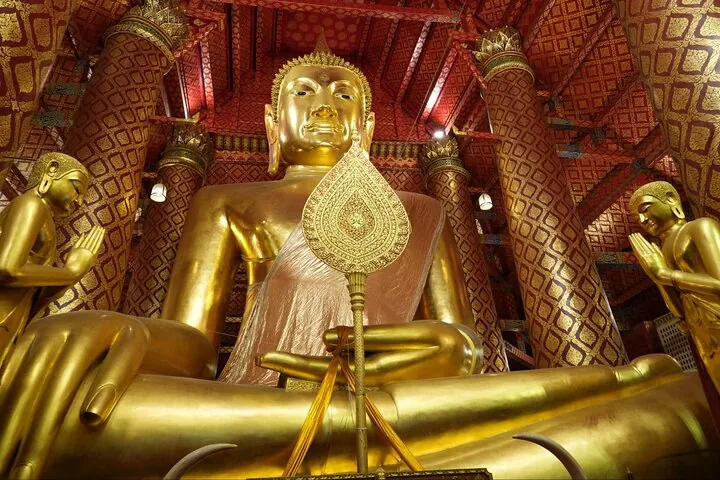
Somdet Toh commissioned a second giant Buddha at Wat Chaiyo Worawihan in neighbouring Ang Thong — a seated rather than reclining image, but built by the same monk and worth comparing if giant Buddha images are the theme of a central-plains day trip. Within Ayutthaya, Wat Phananchoeng and its own large seated Buddha make a more central-city alternative if Tha Ruea’s riverside location is out of the way.
Location & Directions
140 Moo 6, Ban Tha Ngam
Ayutthaya, Thailand
Show your taxi or Grab driver
วัดสะตือ
Frequently Asked Questions
Is Wat Satue in Saraburi or Ayutthaya province?
How big is the reclining Buddha at Wat Satue?
Who built the Buddha and why here?
Is Wat Satue free to visit?
What else is there to see at the temple?
Spotted something out of date or incorrect? Let us know
Popular tours in Ayutthaya




Stay Near Wat Satue
Live prices for places closest to Wat Satue — tap a pin to compare.