




Wat Phra That Choeng Chum
วัดพระธาตุเชิงชุมวรวิหาร
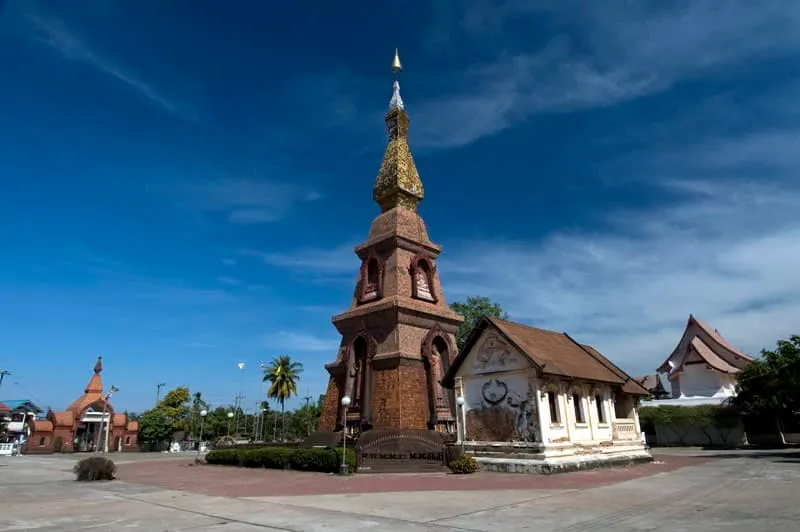
A 24-metre Lao-style chedi rises over what Sakon Nakhon’s Buddhists consider the town’s holiest ground: footprints pressed into the earth, tradition says, by four past Buddhas. Wat Phra That Choeng Chum Woraviharn sits at the intersection of Charoen Mueang and Rueang Sawat roads in the centre of Sakon Nakhon, and it’s free to visit, open daily from 06:00 to 18:00.
The site’s layered history is what makes it stand out from Isan’s other prangs and chedis. Sakon Nakhon was a provincial centre of the Khmer Empire between the 10th and 12th centuries, and the original structure here was a modest stone prang built to shelter the four footprints: those of Phra Kakusandha, Phra Konagamana, Phra Kassapa, and Phra Gautama (the current Buddha). Local belief holds that a fifth Buddha, Phra Sri Ariya Metteyya, will one day press his own footprint at the same spot. Later, during the Ayutthaya period, a much taller square-based chedi in Lao architectural style was raised directly over the Khmer prang, encasing rather than replacing it: the smaller structure is still there, buried inside the base of the one you see today. The chedi is important enough that it’s stamped on Sakon Nakhon’s provincial seal and once appeared on the reverse of Thailand’s 10-satang coin.
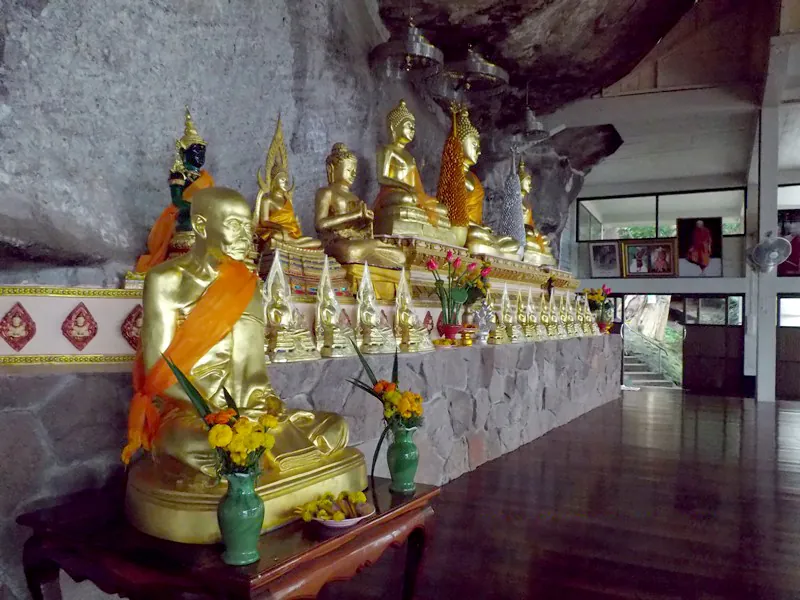
A separate viharn beside the chedi houses Luang Por Ong Saen, a bronze Buddha image cast in the Chiang Saen style and one of the most revered images in the province. Expect a steady stream of locals lighting candles and pressing gold leaf onto the glass case around it. The wider compound also holds an ubosot and a well ringed by a five-headed naga sculpture, both worth a look on the same visit since the grounds are compact enough to cover in 30-45 minutes.
Sakon Nakhon itself sits on the shore of Nong Han, Thailand’s largest natural freshwater lake, and the temple’s town-centre location means it’s an easy walk-to stop rather than a detour: most visitors combine it with a look at the lakefront promenade a few minutes away. The compound draws a mix of local devotees making merit on their way to work and Thai pilgrims travelling specifically for the footprints, which sets it apart from purely tourist-facing temples; there’s rarely a large foreign presence outside the Wax Castle Festival period, when the town’s population effectively doubles for a few days.
Time a visit for late October if you can: the temple is the focal point of Sakon Nakhon’s Wax Castle Festival, held at the end of Buddhist Lent (Ok Phansa), when local guilds parade intricately carved beeswax castles through town before installing them at the temple, alongside longboat races and cultural performances on the Nong Han lakefront nearby. Insider Tip: Outside festival season, arrive before 08:00. The compound is at its quietest then, before the day’s merit-makers and the heat both build up. Watch out: the ubosot and Luang Por Ong Saen viharn require covered shoulders and knees and bare feet at the door; the outdoor chedi courtyard doesn’t, so it’s a fine spot to linger if you’re dressed for the street rather than the temple.
- Chedi height: 24 metres, Lao architectural style, built over a 10th-12th century Khmer prang
- Buddha footprints: Four, attributed to past Buddhas Kakusandha, Konagamana, Kassapa, and Gautama
- Entry fee: Free
- Hours: Daily 06:00-18:00
- Annual event: Wax Castle Festival, end of Buddhist Lent (usually October)
Location & Directions
Charoen Mueang Road
Sakon Nakhon, Thailand
Show your taxi or Grab driver
วัดพระธาตุเชิงชุมวรวิหาร
Frequently Asked Questions
What makes the chedi at Wat Phra That Choeng Chum significant?
How old is the site?
Is there an entry fee?
What is the Wax Castle Festival?
What else is inside the temple compound?
Spotted something out of date or incorrect? Let us know
Stay Near Wat Phra That Choeng Chum
Live prices for places closest to Wat Phra That Choeng Chum: tap a pin to compare.