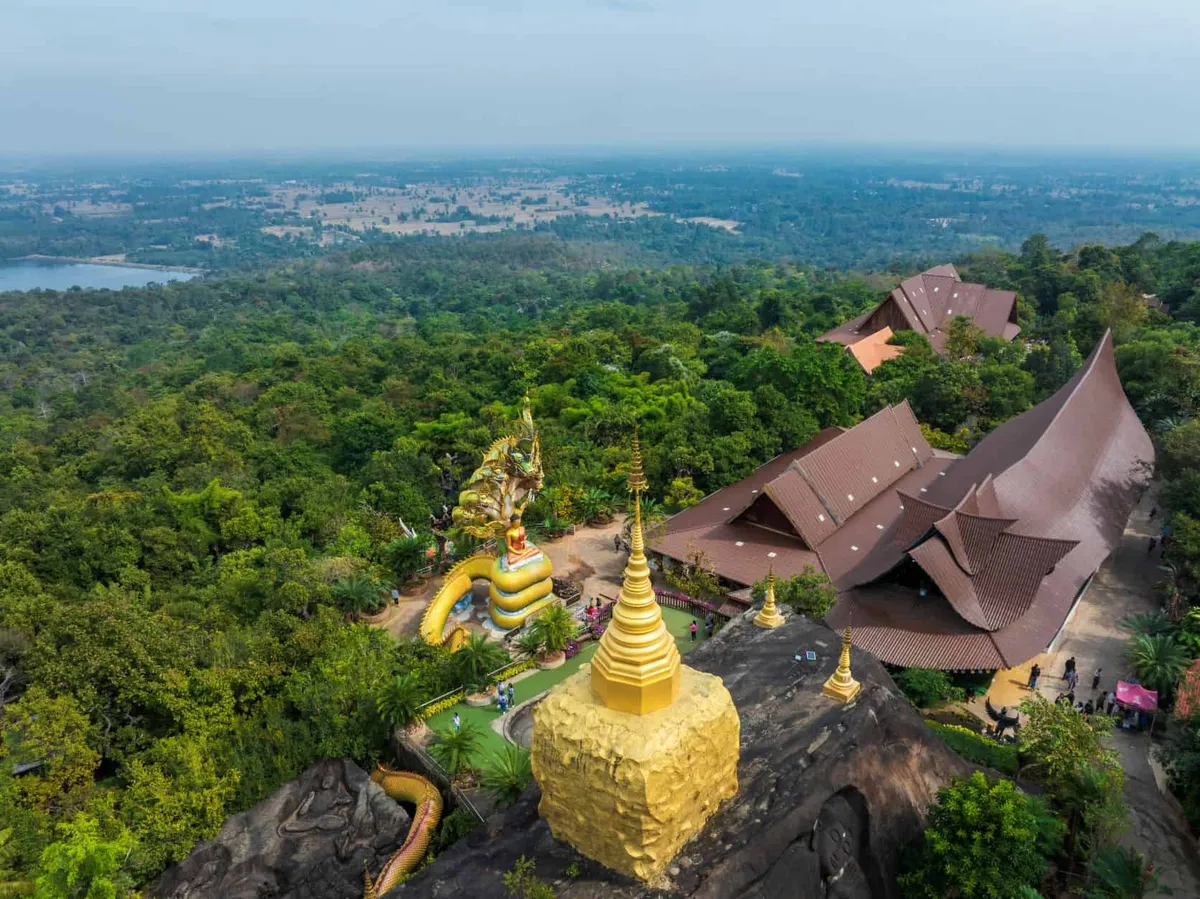




Wat Tham Kham owes its significance to one monk: Ajahn Fan Acharo, a disciple of Ajahn Mun Bhuridatto, one of the two founding figures of Thailand’s Forest Tradition. Born in nearby Phanna Nikhom district in 1899, Ajahn Fan was led into the forest by local villagers in 1953 to a large cave they called Tham Kham, on the summit of Phu Kham mountain. Local legend holds that a tiger was already living in the cave when he arrived, and left on its own once Ajahn Fan settled in — a story commemorated today by bronze tiger statues around the temple grounds. He went on to develop two temples in Sakon Nakhon: this hilltop cave retreat, and the forest temple Wat Pa Udom Somphon in his home district.
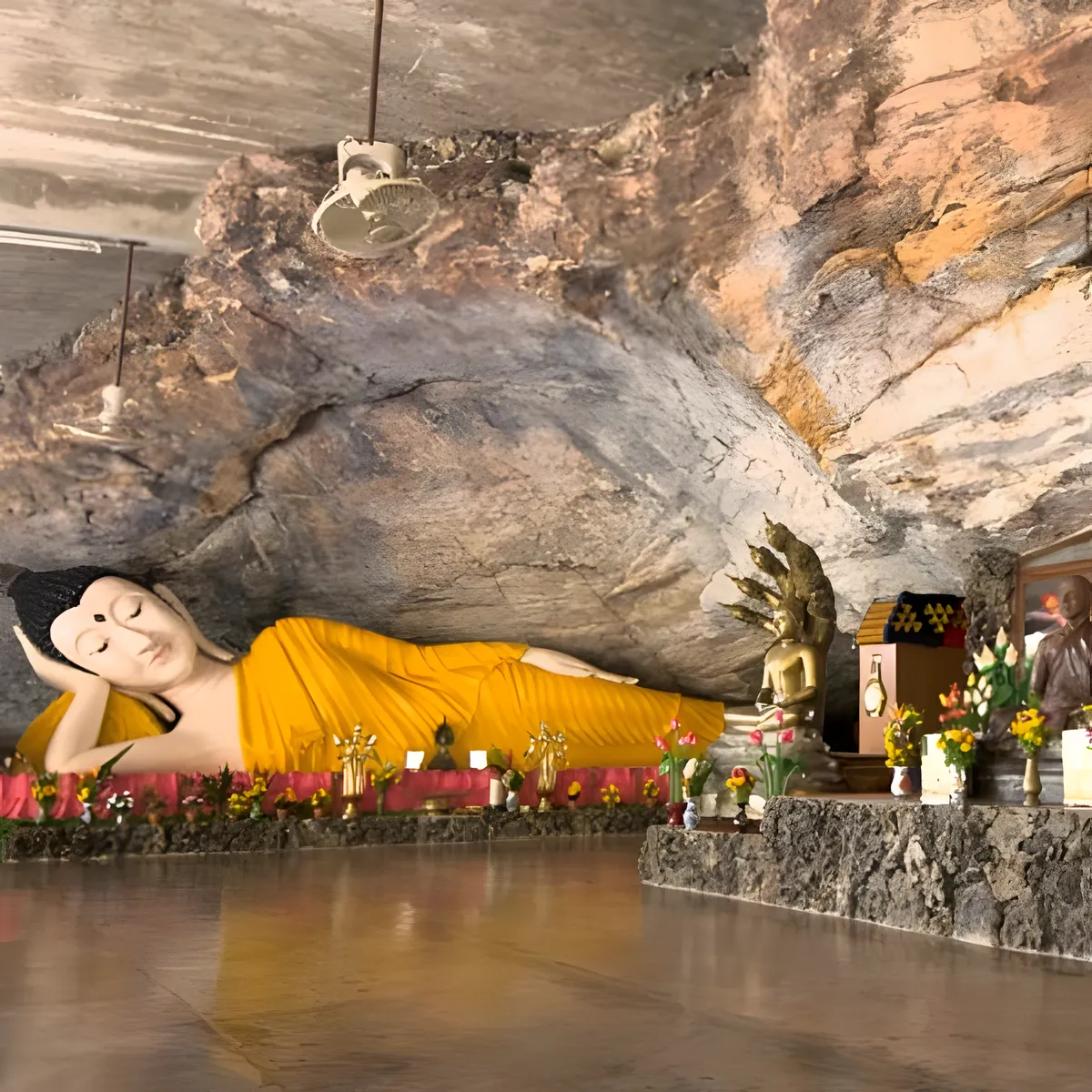
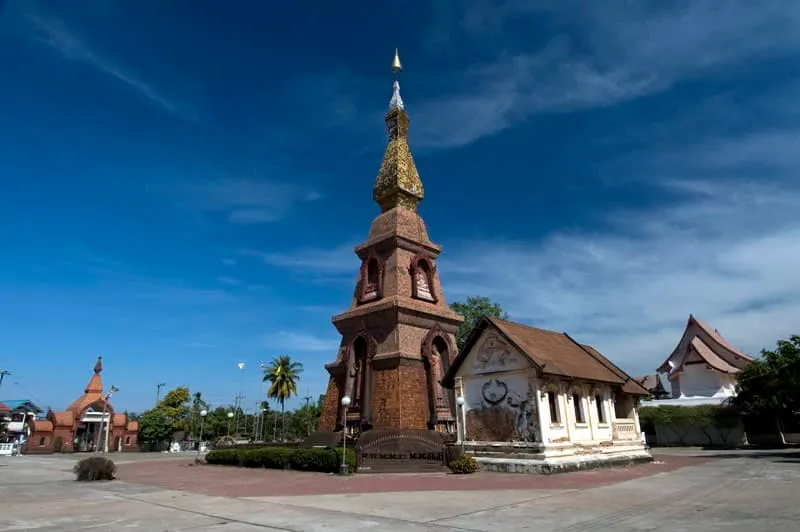
The cave complex itself holds a series of chambers with gilded Buddha images, giving the temple its name — tham (cave) and kham (gold). A separate cave lower on the cliff shelters a reclining Buddha image carved directly into the rock. Above ground, a pagoda built in a blended Isaan-Ayutthaya style anchors the compound, alongside teak doors carved with Hindu deity motifs — a decorative choice not uncommon in northeastern Thai temples with older artisan influences. From the summit, the views stretch out over the rice paddies and reservoirs of Sakon Nakhon province.
Insider Tip: the drive up is part of the experience — winding rural roads through villages rather than a direct highway route, so budget more time than the distance suggests. Wild monkeys and peacocks are regularly seen around the grounds, particularly in the early morning.
Watch out: a path near the summit is reserved exclusively for monks. It isn’t always obviously marked, so ask before wandering off the main visitor route, and don’t treat quiet, contemplative areas of a working monastery as open ground for photography.
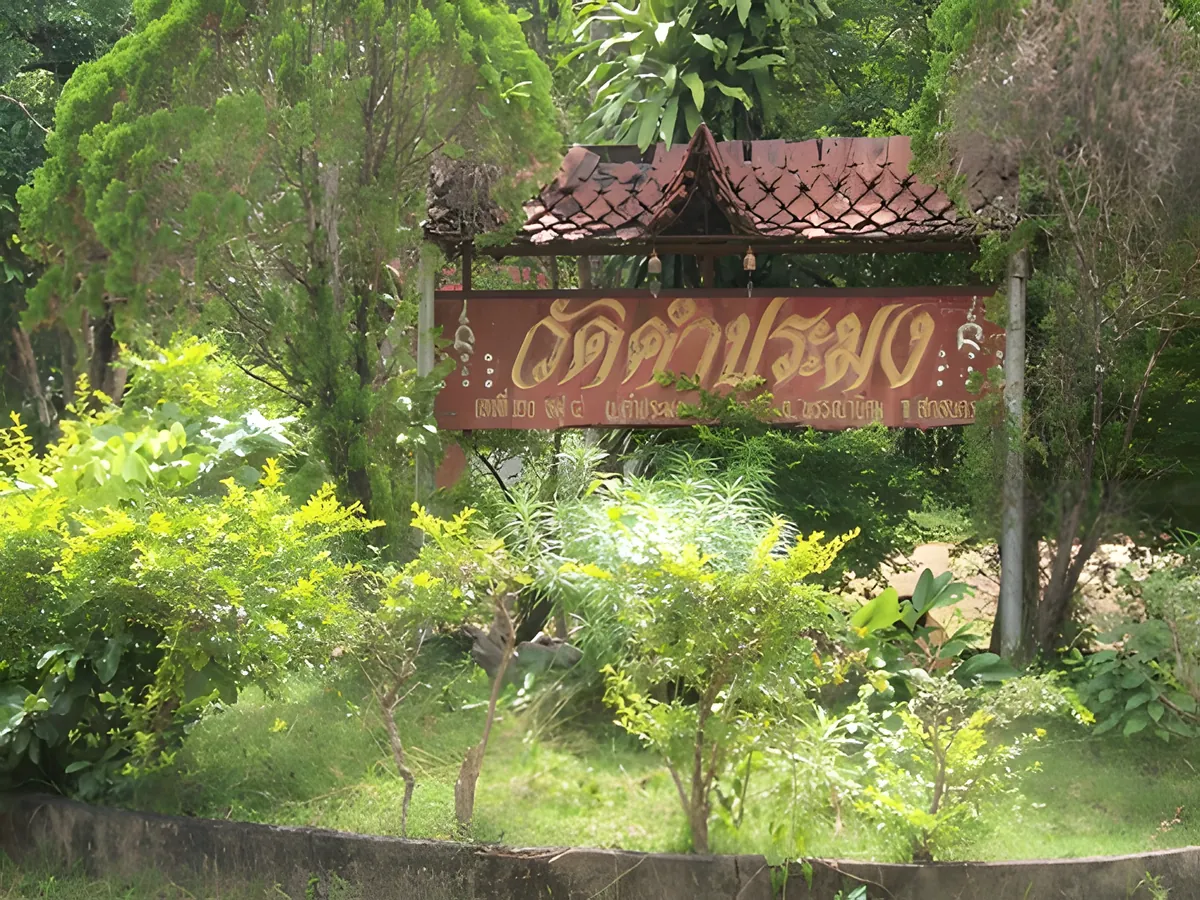
Wear modest clothing that covers your shoulders and knees, and bring a torch if you want to see the cave interiors properly rather than relying on the available candlelight. Remove your shoes before entering the shrine areas and keep your feet pointed away from Buddha images. For more of the region’s forest-tradition history, the Achan Fan Archaro Museum and Wat Kham Pramong, both in Sakon Nakhon’s Phanna Nikhom district, make natural pairings with a visit here.
- Founded as a meditation site: 1953, by Ajahn Fan Acharo
- Lineage: Thai Forest Tradition, disciple of Ajahn Mun Bhuridatto
- Name meaning: Tham Kham = Golden Cave
- Entry: Free, open daily 08:00-16:00
- Getting there: hilltop site on Phu Kham mountain, about 40 minutes from Sakon Nakhon city; car or motorbike required
Location & Directions
Mu 14
Sakon Nakhon, Thailand
Show your taxi or Grab driver
วัดถ้ำขาม
Frequently Asked Questions
Is Wat Tham Kham connected to the Thai Forest Tradition?
What does Tham Kham mean?
Is Wat Tham Kham free to enter?
How do I get to Wat Tham Kham?
What's inside the temple besides the cave shrine?
Spotted something out of date or incorrect? Let us know
Stay Near Wat Tham Kham
Compare places to stay in Sakon Nakhon, or open the map for options closest to the attraction.