Wat Phra That Nong Sam Muen
วัดพระธาตุหนองสามหมื่น
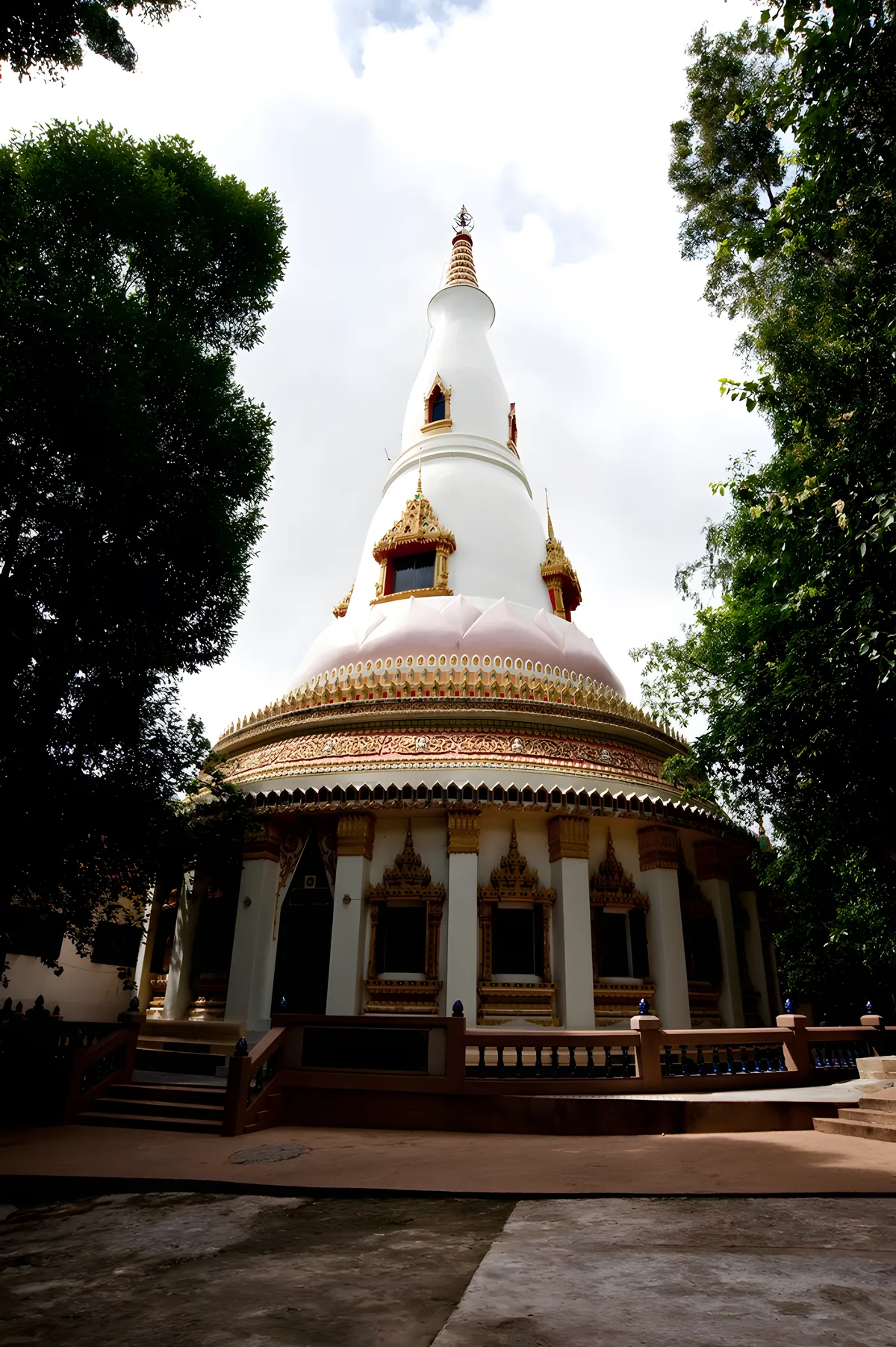
Wat Phra That Nong Sam Muen sits on a low ridge in Ban Kaeng subdistrict, Phu Khiao district — about 80 km from Chaiyaphum town via Highway 201, then a further 14 km on local roads. Its 12-cornered chedi rises roughly 45 metres on a square base, with stairways climbing all four sides. Entry is free, daily, 08:30 to 16:30.
The chedi’s design blends Lanna, Lan Xang, and Ayutthaya elements — art historians date it to the 21st-22nd Buddhist century (roughly the 1500s-1600s CE), built under King Chaiyachettha (Setthathirat) of Lan Xang, whose kingdom was based across the Mekong in Vientiane. Four niches at the cardinal points hold Buddha images: some seated in the contemplative Rampoeng pose, others standing in the walking Leela pose. The relics said to be enshrined inside are what draw merit-makers from across Isan, not the view. That said, the ridge does give an open sightline over the surrounding rice country, and there’s little shade once you’re past the treeline near the parking area.
What makes the site more than a temple stop is the ground beneath it. Archaeological surveys found moat traces, earthen ridges, and settlement mounds consistent with a substantial Dvaravati-period town — dating back to roughly the 7th-11th century CE, long before the chedi itself was built. Some scholars also point to a later Khmer overlay, including 13th-century Bayon-style Buddha imagery found in the area. So the temple you’re walking through sits on layered history: a Dvaravati settlement, a later Khmer presence, then the Lan Xang-era chedi that gives the site its name today.
Insider Tip: Combine the trip with Ban Non Salao, a silk-weaving village about 5 km away in the same district — you can watch weavers at the loom and buy scarves directly from the makers, which the roadside shops near the temple don’t stock.
Watch out: The final approach is on narrow local roads with no signage in English past Ban Kaeng. Screenshot a map before you lose signal, and budget extra time — locals estimate the last stretch takes longer than the distance suggests.
- Entry fee: Free
- Hours: Daily, 08:30-16:30
- Getting there: Highway 201 to Phu Khiao, then Highway 2055 and signposted local roads (~94 km from Chaiyaphum town)
- Chedi height: Approximately 45 metres, twelve-cornered design
- Built: ~21st-22nd Buddhist century (c. 1500s-1600s CE), Lan Xang period
Dress modestly — covered shoulders and knees — and remove shoes before entering the chedi’s inner chamber. As with any active Isan temple, don’t point your feet toward the Buddha images if you sit to rest. This is a working ridge-top monastery in Chaiyaphum province, best paired with Ban Non Salao silk-weaving village or the topiary gardens at Ban Khae, both a short drive away in the same district.
Location & Directions
Phu Khiao, Chaiyaphum
Chaiyaphum, Thailand
Show your taxi or Grab driver
วัดพระธาตุหนองสามหมื่น
Frequently Asked Questions
Is Wat Phra That Nong Sam Muen free to visit?
How old is the chedi?
Why is it called Nong Sam Muen?
What's inside the chedi?
How do I get there from Chaiyaphum town?
Spotted something out of date or incorrect? Let us know
Stay Near Wat Phra That Nong Sam Muen
Compare places to stay in Chaiyaphum, or open the map for options closest to the attraction.