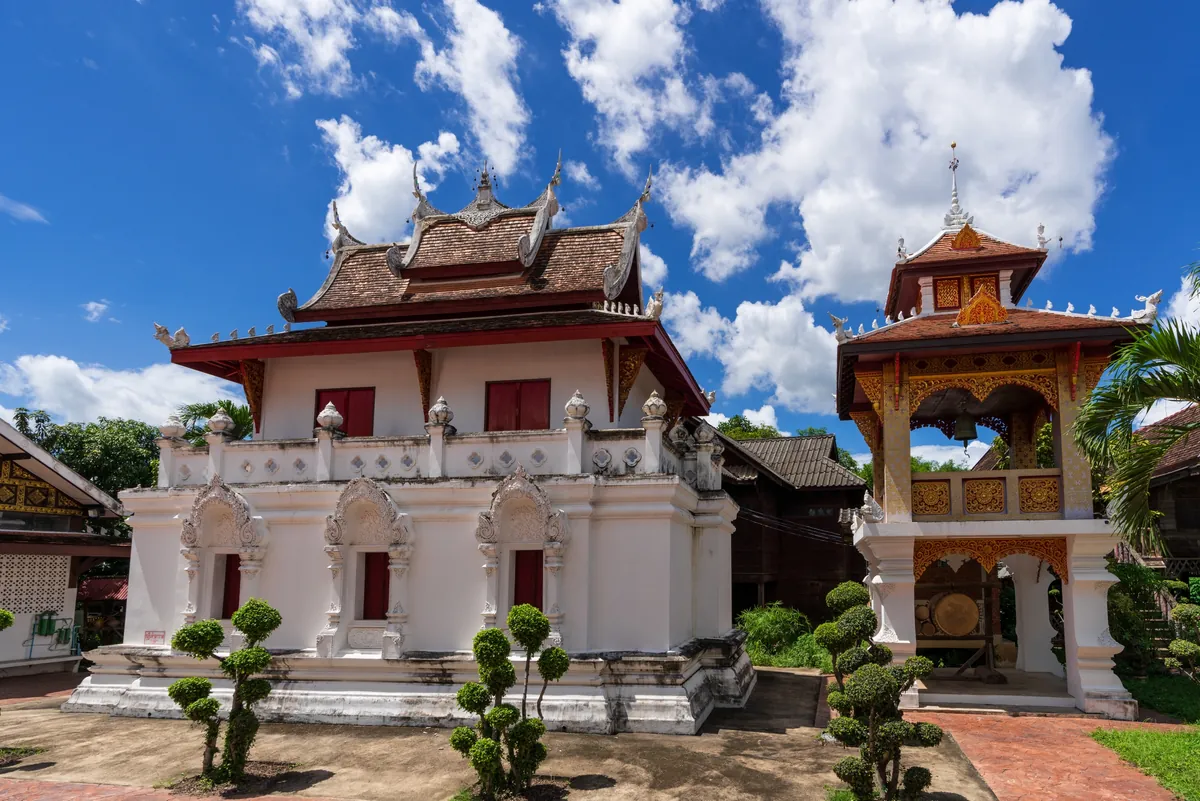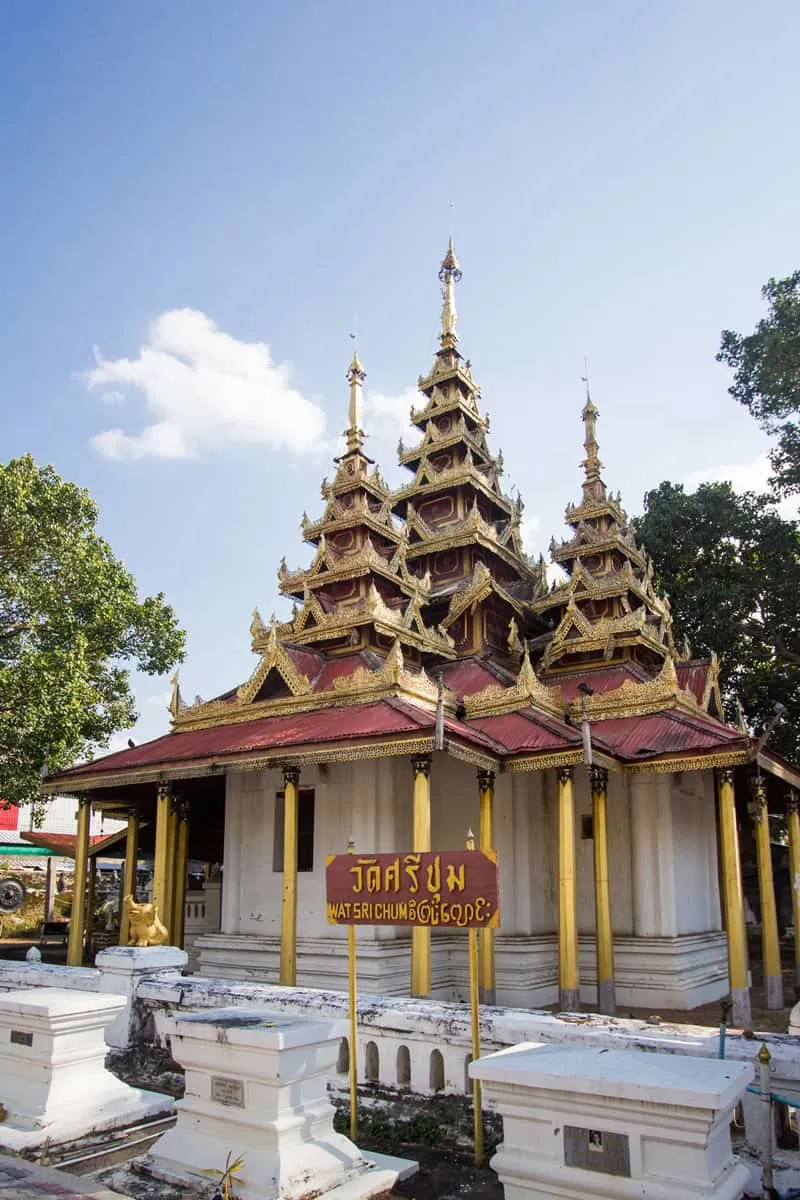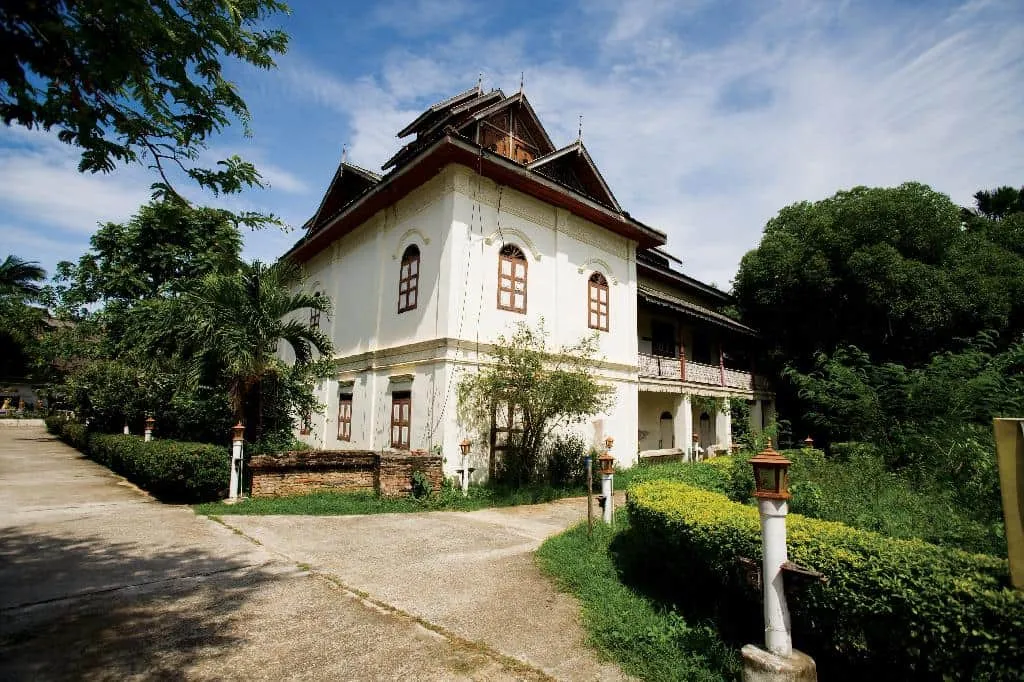


Wat Pong Sanuk Nuea holds the Viharn Phra Chao Phan Ong, the only religious building in Thailand to win a UNESCO Asia-Pacific Heritage Award for Culture Heritage Conservation — awarded in 2008 for a community-led restoration of the cruciform teak pavilion. Entry is free, and the temple is open daily 05:00–20:00, a short trip from central Lampang.
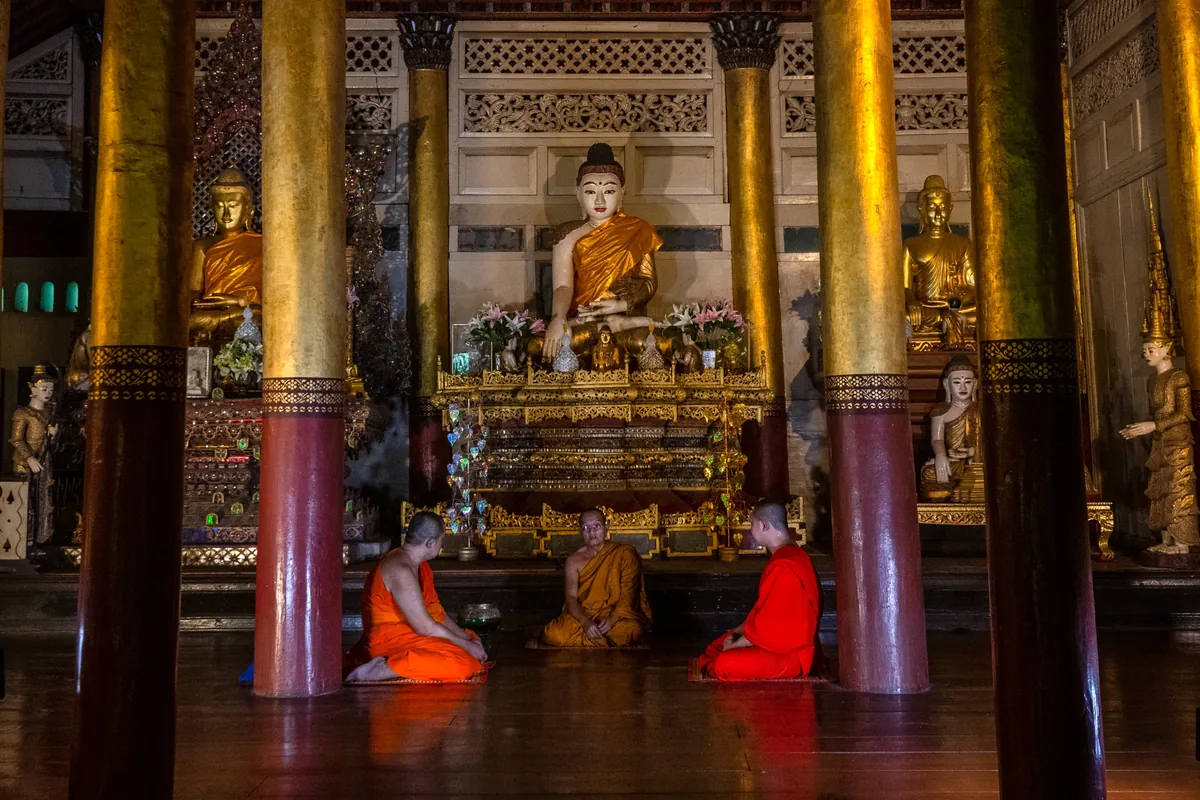
The viharn itself dates to the closing years of the 19th century, built in a cruciform (จัตุรมุข) plan under a triple-tiered roof — a form now believed to survive nowhere else in the country. Its open sides and teak-wood construction blend Lanna, Burmese and Chinese carpentry, a mix common to Lampang’s history as a teak-trading town worked by Shan and Burmese craftsmen. Inside, the upper walls are lined with 1,080 small seated Buddha images, which is where the hall gets its popular name: Phra Chao Phan Ong, “the Buddha of a thousand bodies.” A whitewashed Burmese-style chedi rises behind the viharn, and a small community museum housed in the old ordination hall displays local artifacts collected from the temple grounds over the decades. The wider Wat Pong Sanuk complex was originally a single, larger monastery; it was split administratively into northern (Nuea) and southern (Tai) halves so the resident monks and novices could be organised more manageably, and the two now function as separate temples standing side by side.
The restoration that won the UNESCO award ran roughly 2005–2007, using traditional joinery and reclaimed teak rather than modern materials, and was judged against 45 nominated conservation projects from 13 countries. It was the first time a Thai project had won the award. That history is easy to feel on the ground: carved makara and naga finials cap the roof ridges, the floorboards have the soft give of old teak, and the whole structure smells faintly of wood oil and incense rather than fresh paint. Morning is the best time to be here — soft light through the open sides catches the carving detail, and the compound is genuinely quiet, a contrast to the tour-bus rhythm at Wat Phra That Lampang Luang 20km south.
Insider Tip: Combine the visit with Lampang’s old town on foot — Wat Pong Sanuk Nuea sits close enough to the Wang River shophouse district and the Saturday-Sunday Kad Kong Ta walking street that you can cover both without needing transport in between.
Watch out: The viharn floor is bare, worn teak — socks help if you’re sensitive to hot boards in the midday sun, since shoes come off before entering.
- Entry fee: Free
- Hours: Daily 05:00–20:00
- UNESCO recognition: Asia-Pacific Heritage Award (Award of Merit), 2008 — first Thai recipient
- Highlight: Viharn Phra Chao Phan Ong, a late-19th-century cruciform teak pavilion with 1,080 Buddha images
- Dress code: Covered shoulders and knees; shoes off before entering the viharn
Getting there from central Lampang takes about 10 minutes by songthaew (shared red truck taxi) or tuk-tuk; the temple sits in Wiang Nuea subdistrict, close to the old riverside quarter. There’s no strict dress-code enforcement at the gate the way there is at some royal temples, but shoulders and knees should still be covered, and shoes come off before stepping onto the viharn floor. Photography is fine throughout the grounds — just ask before photographing monks directly or during an active ceremony.
Location & Directions
Mueang Lampang, Lampang
Lampang, Thailand
Show your taxi or Grab driver
วัดปงสนุกเหนือ
Frequently Asked Questions
Why did Wat Pong Sanuk Nuea win a UNESCO award?
What does "Phan Ong" mean and why is the viharn called that?
Is Wat Pong Sanuk Nuea different from Wat Pong Sanuk Tai?
Is there an entrance fee for Wat Pong Sanuk Nuea?
What's the best time to visit for photos?
Spotted something out of date or incorrect? Let us know
Popular tours in Lampang

Stay Near Wat Pong Sanuk Nuea
Live prices for places closest to Wat Pong Sanuk Nuea — tap a pin to compare.