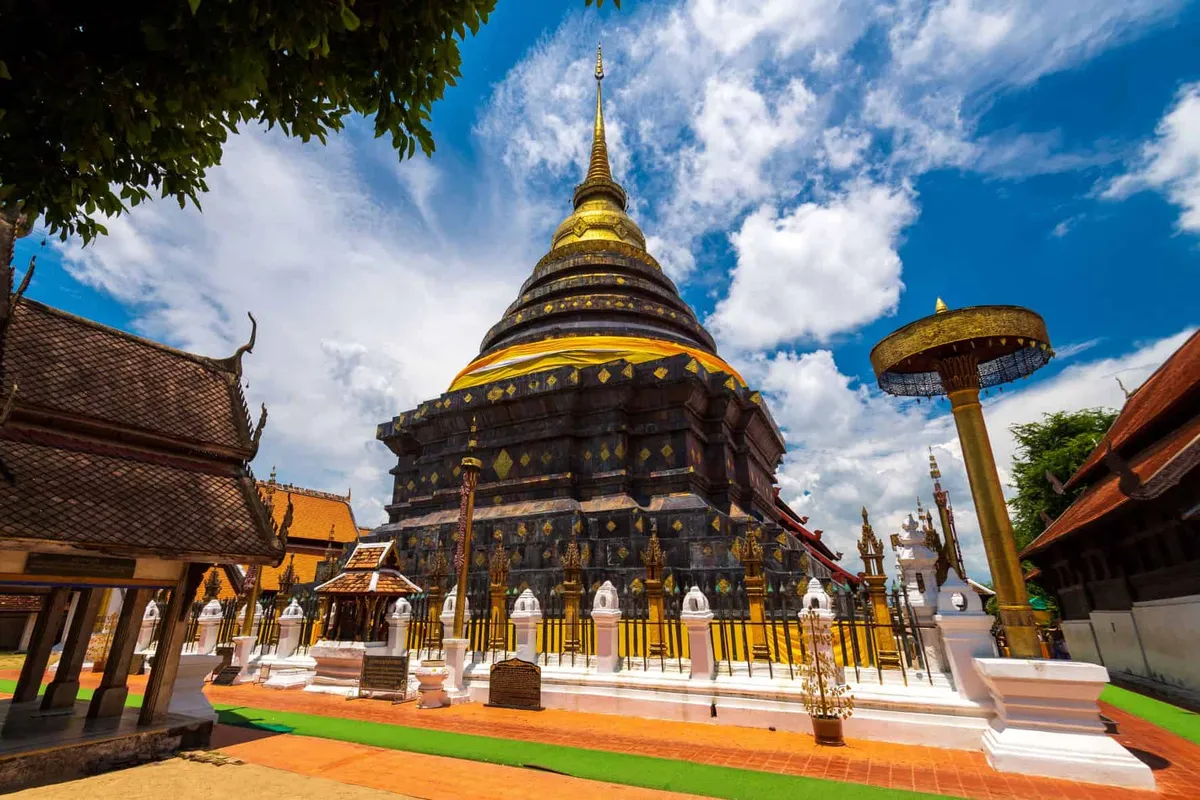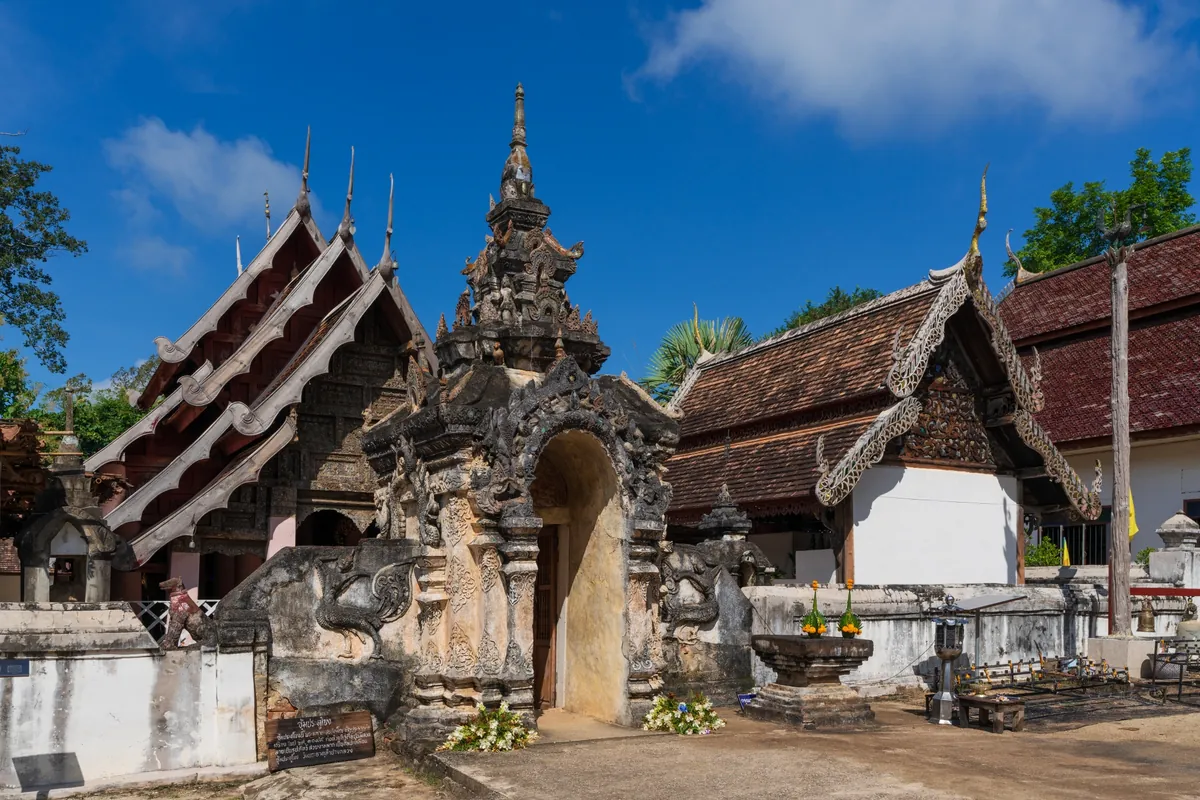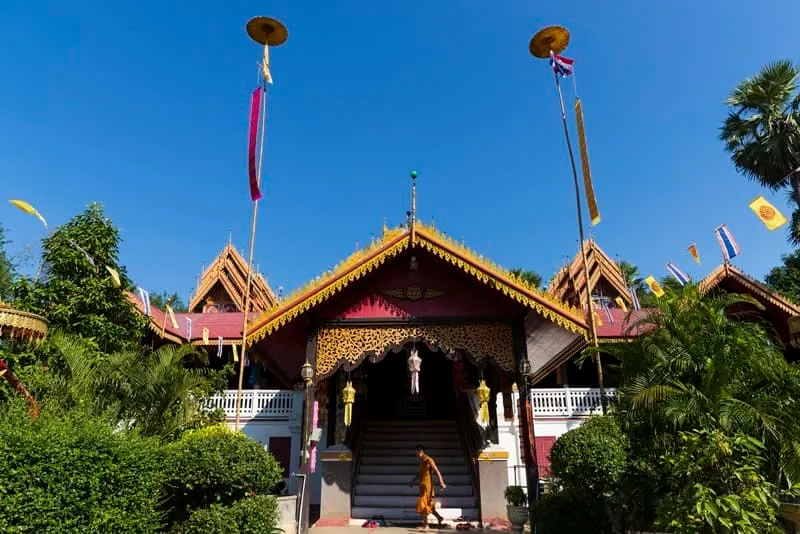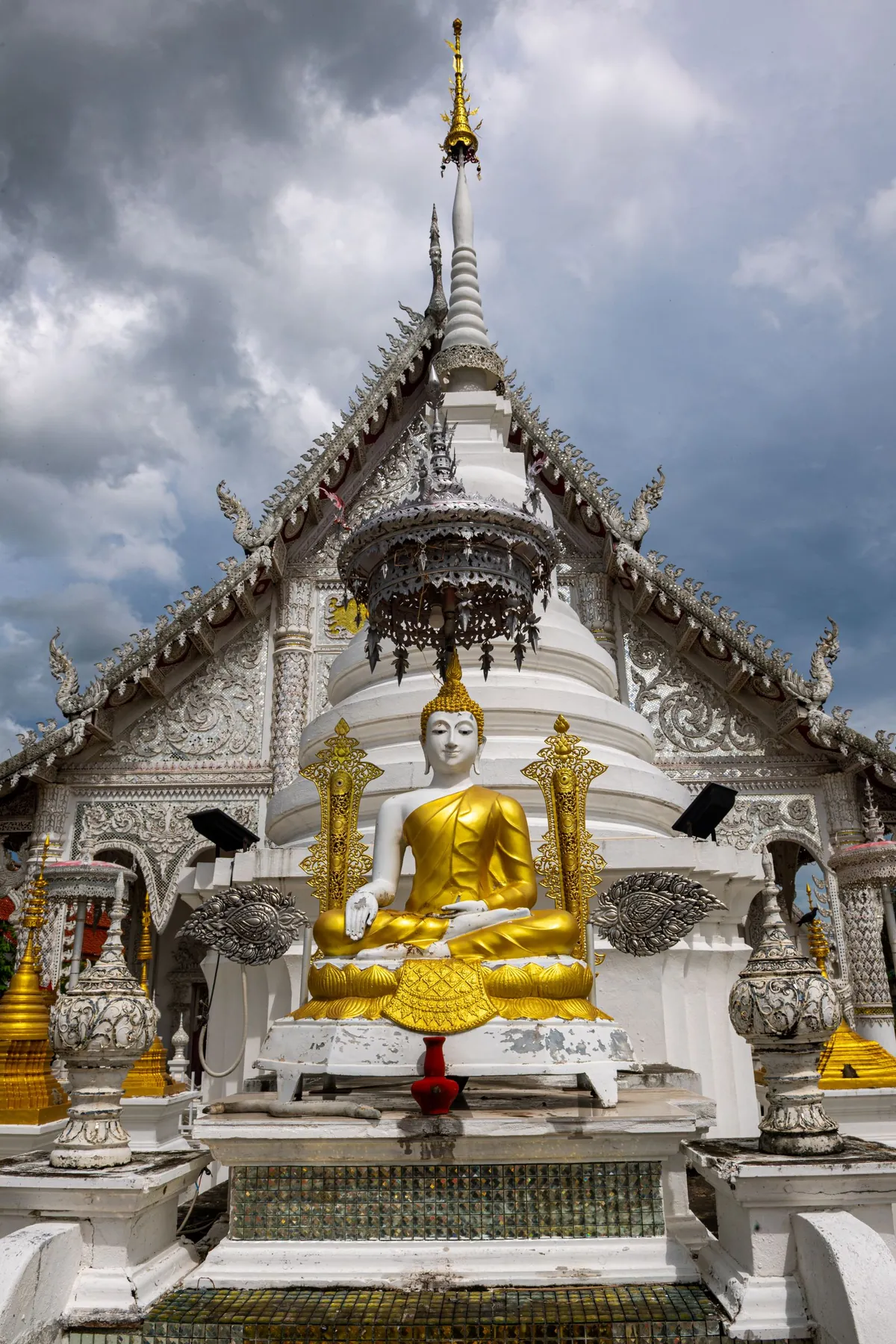





Wat Pong Yang Khok’s main draw is a viharn unlike almost any other in Lampang province: the Chamthewi viharn has no walls below roof height, leaving the hall open on all sides to the surrounding courtyard. Temple history dates the founding to around 700 CE, and the site sits roughly 25 km southwest of Lampang town — about 8 km from the better-known Wat Phra That Lampang Luang, close enough to combine both on one trip. Entry is free, and the grounds are open daily from 08:00 to 18:00.
The viharn is named for Queen Chamthewi (Chamadevi), the ruler of the Hariphunchai kingdom (present-day Lamphun), whose visit here forms the temple’s founding legend: travelling to see her son Anantayot, who governed the nearby city of Khelang (old Lampang), her procession stopped at this spot en route to pay homage at Lampang Luang. Sources disagree on exactly when the current open-sided structure was built — estimates run from the mid-1600s to the mid-1700s — but its wooden pillars carry gilded lacquer paintings attributed to master craftsmen of the old Khelang school, and it shelters an aged mondop shrine rather than a conventional raised Buddha altar.
The temple’s second claim to fame is a person rather than a building: Nan Thip Chang, later known as Phraya Sulawa Ruechai Songkhram, was born in the village of Pong Yang Khok and studied and ordained here as a young man before leading Lanna resistance against Burmese forces in the 1730s-1750s. He went on to found the Chao Chet Ton (Seven Princes) dynasty, whose descendants ruled Lampang, Chiang Mai, and Lamphun through the 18th and 19th centuries — a lineage still referenced in northern Thai royal history. Local guides sometimes point out sword-cut marks on the temple’s woodwork, attributed to fighting from that era, though these should be taken as oral tradition rather than a documented record.
Insider Tip: Because the viharn has no walls, the light inside shifts through the day — late afternoon, when low sun angles in under the roofline and catches the gilded pillars, is the best time for photos. Watch out: the temple gets little foreign foot traffic, so there’s no English signage explaining the Nan Thip Chang connection on-site — read up before you go if the history is the reason for the visit. Songthaew or private transport from central Lampang along the Hang Chat-Ko Kha road is the only practical way in.
- Founded: Around 700 CE, per temple history
- Notable feature: Chamthewi viharn, open-sided with no lower walls
- Historical figure: Birthplace of Nan Thip Chang, founder of the Chao Chet Ton dynasty
- Entry fee: Free
- Hours: Daily 08:00-18:00
Location & Directions
70 Moo, 9 Hang Chat-Ko Kha Road
Lampang, Thailand
Show your taxi or Grab driver
วัดปงยางคก
Frequently Asked Questions
What is the Chamthewi viharn?
Why is Wat Pong Yang Khok historically significant?
Is there an entry fee?
How far is it from Wat Phra That Lampang Luang?
What should I wear to visit?
Spotted something out of date or incorrect? Let us know
Popular tours in Lampang

Stay Near Wat Pong Yang Khok
Compare places to stay in Lampang, or open the map for options closest to the attraction.