



Wat Phrathat Lampang Luang
วัดพระธาตุลำปางหลวง
Wat Phrathat Lampang Luang is one of northern Thailand’s most important Lanna temples — a walled complex on a raised mound in Ko Kha district, 20 km southwest of Lampang town. It’s open daily 07:30-17:00; Thai visitors enter free, foreigners pay 40 THB. Unlike many of Lampang’s other old wats, this one still functions as a fortified hilltop citadel as much as a place of worship — the walls around the compound date to a 17th-century rebuild, when the site doubled as a defensive stronghold during Burmese rule of the region.
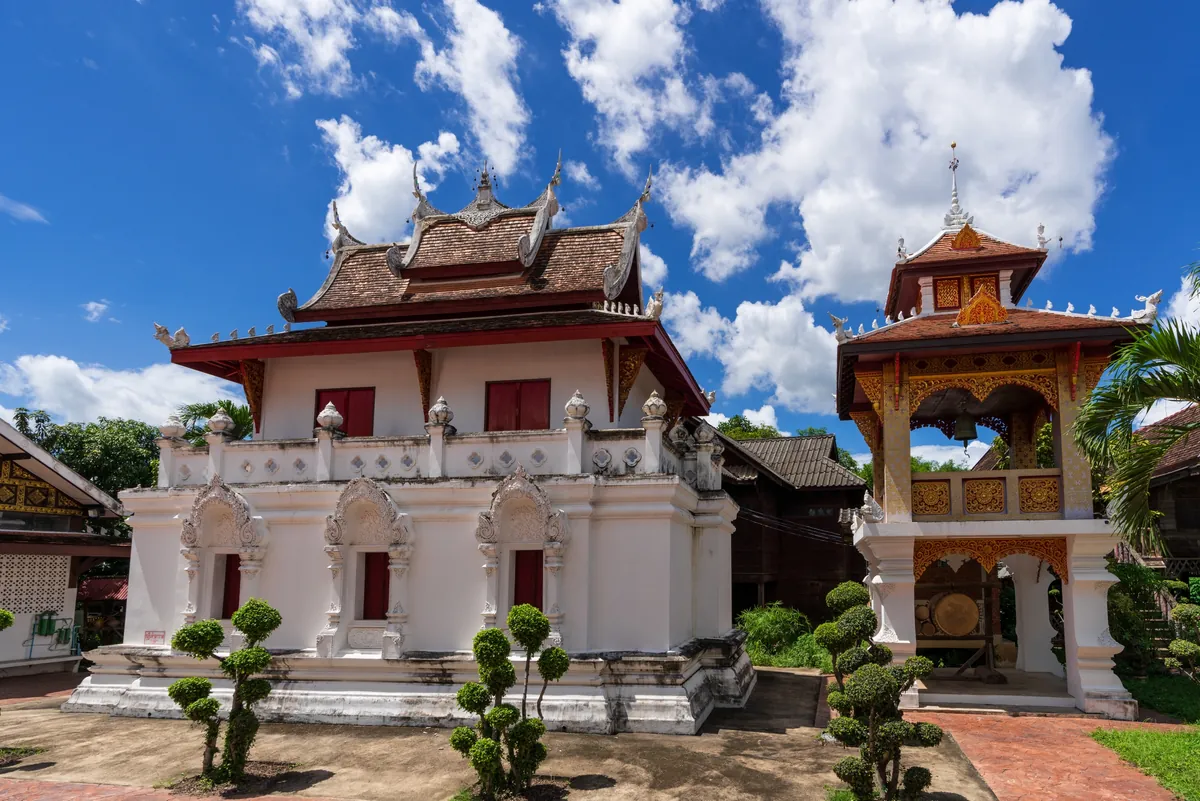
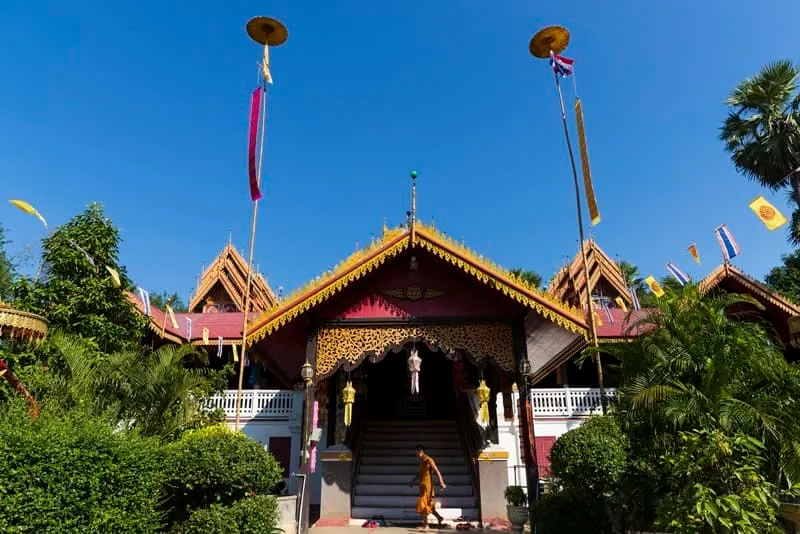
Local legend traces the site back to the 7th century, to Queen Chamadevi of the Haripunjaya kingdom, whose son is credited with founding Lampang itself around a Buddha relic enshrined here. Whatever the truth of the earliest chapter, what stands today was mostly built between the 13th and 16th centuries: the open-sided Viharn Luang dates to 1485, under King Tilokaraj of the Mangrai dynasty, with the triple-tiered roofline typical of early Lanna design. Behind it, the 45-metre gilded chedi was restored to its current form in 1496 by Chao Haan Sri Tat, blending Lanna proportions with Sukhothai-influenced detailing. A smaller structure on the grounds, Viharn Nam Tam, is widely considered the oldest surviving wooden religious building in Thailand.
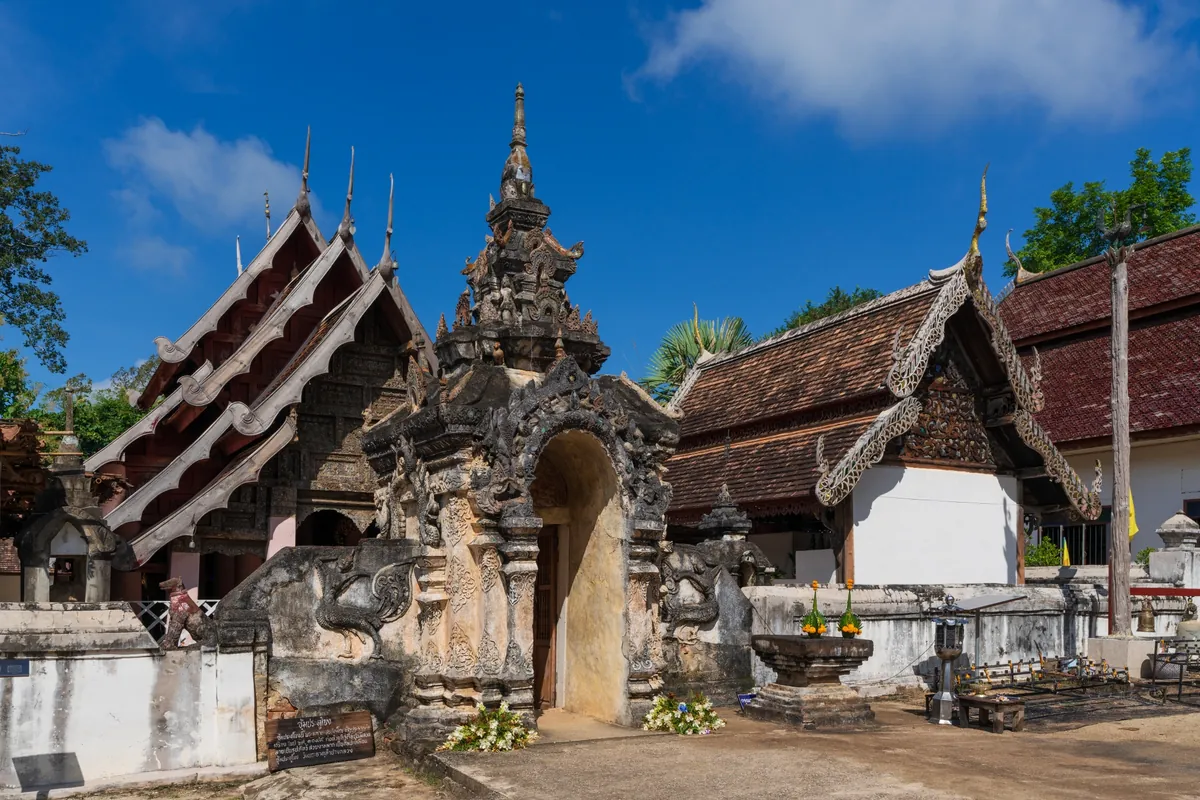
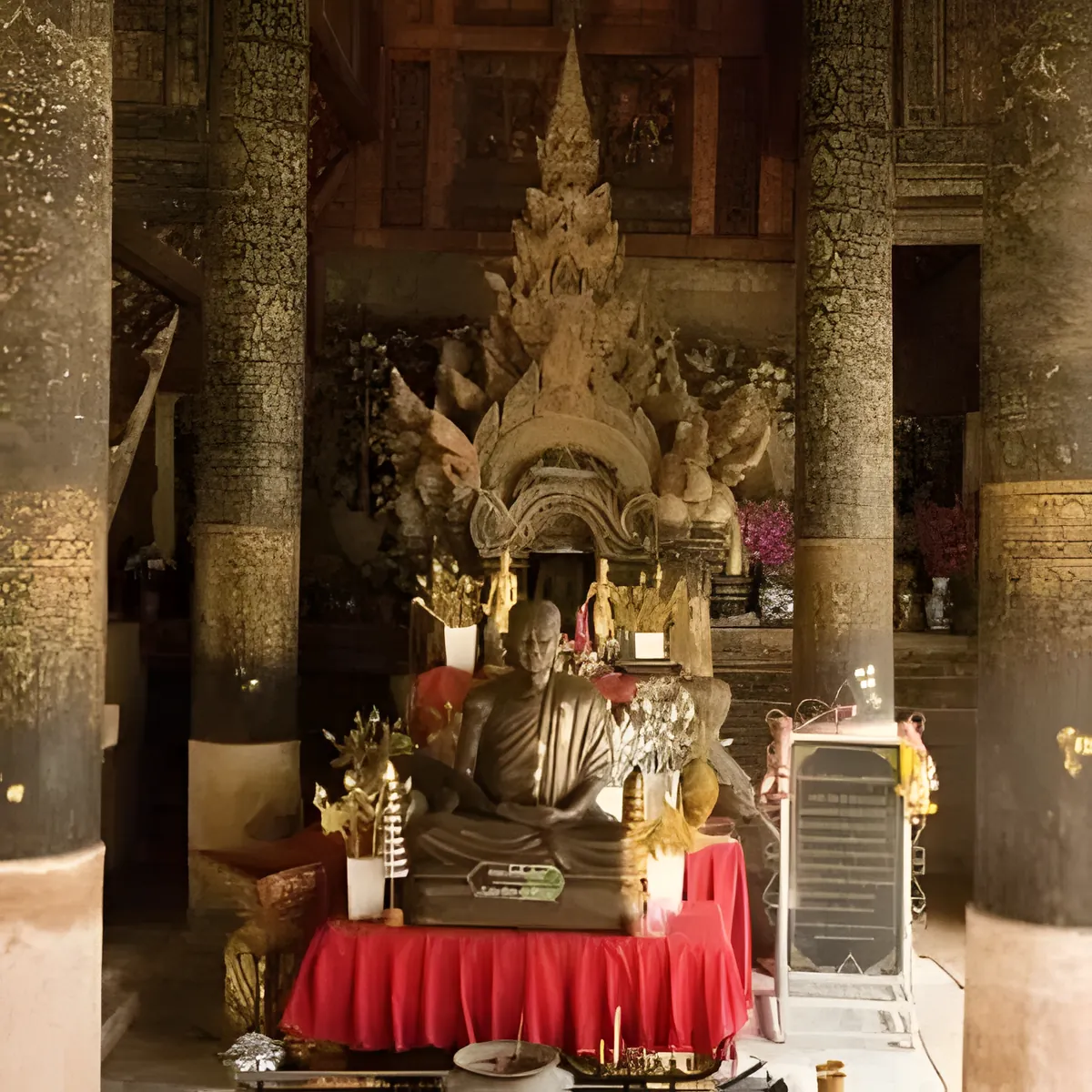
Past the carved entrance gate, the Viharn Luang’s open sides let you see straight through to Buddha images seated beneath heavy teak beams — no walls to block the view, just pillars and a soaring roof. The chedi behind it dominates the compound, its copper-and-bronze sheeting catching the light differently depending on the hour. Smaller shrines and a scattering of Lanna, Burmese, and Shan architectural touches fill the rest of the grounds, evidence of the trade and cultural traffic that passed through this part of the north for centuries.
Watch out: Guides and drivers sometimes tell visitors this is where the Emerald Buddha was enshrined — it wasn’t. That statue’s 32-year stay in Lampang was at Wat Phra Kaew Don Tao, a different temple back in town. Lampang Luang’s own claim to fame is quieter but just as interesting: a genuine optical illusion.
Inside the small Ho Phra Phuttabat building near the Buddha footprint, closing the door creates a natural camera-obscura effect — sunlight through a small opening projects an upside-down image of the golden chedi onto a white cloth on the inside wall. It’s one of only a handful of places in Thailand where you can see this. Before the great chedi, look for two bullet holes in the boundary railing, said to have been fired by the Lampang folk hero Thipchang during an 18th-century raid that helped drive Burmese control out of the province — he’s since been honoured with the title Phraya Chaisongkhram.
Insider Tip: Arrive before 9 AM. Tour buses from Chiang Mai and Lampang town start filling the car park by mid-morning, and the Viharn Luang’s open sides mean crowd noise carries much further than in an enclosed hall. If you have the rest of the day, pair the visit with the Burmese-style Wat Si Chum and the antique teak mansion Ban Sao Nak, both back in Lampang town.
- Entry fee: 40 THB (foreigners), free (Thai nationals)
- Hours: Daily 07:30-17:00
- Distance from Lampang town: ~20 km southwest, Ko Kha district
- Don’t miss: Camera obscura in Ho Phra Phuttabat; bullet-marked railing before the chedi
- Not the Emerald Buddha temple: that’s Wat Phra Kaew Don Tao, in Lampang town
Dress modestly — covered shoulders and knees — and remove your shoes before entering the viharn. Women should note the local custom against entering the Ho Phra Phuttabat building itself, though the wider temple grounds are open to everyone. Bring water; there’s little shade across the open courtyard between buildings.
Location & Directions
Ko Kha, Lampang
Lampang, Thailand
Show your taxi or Grab driver
วัดพระธาตุลำปางหลวง
Frequently Asked Questions
Did the Emerald Buddha stay at Wat Phrathat Lampang Luang?
What is the camera obscura effect?
What are the bullet holes in the railing?
Is entry really free?
How do I get to Wat Phrathat Lampang Luang from Lampang town?
Spotted something out of date or incorrect? Let us know
Tours visiting Wat Phrathat Lampang Luang

Stay Near Wat Phrathat Lampang Luang
Compare places to stay in Lampang, or open the map for options closest to the attraction.