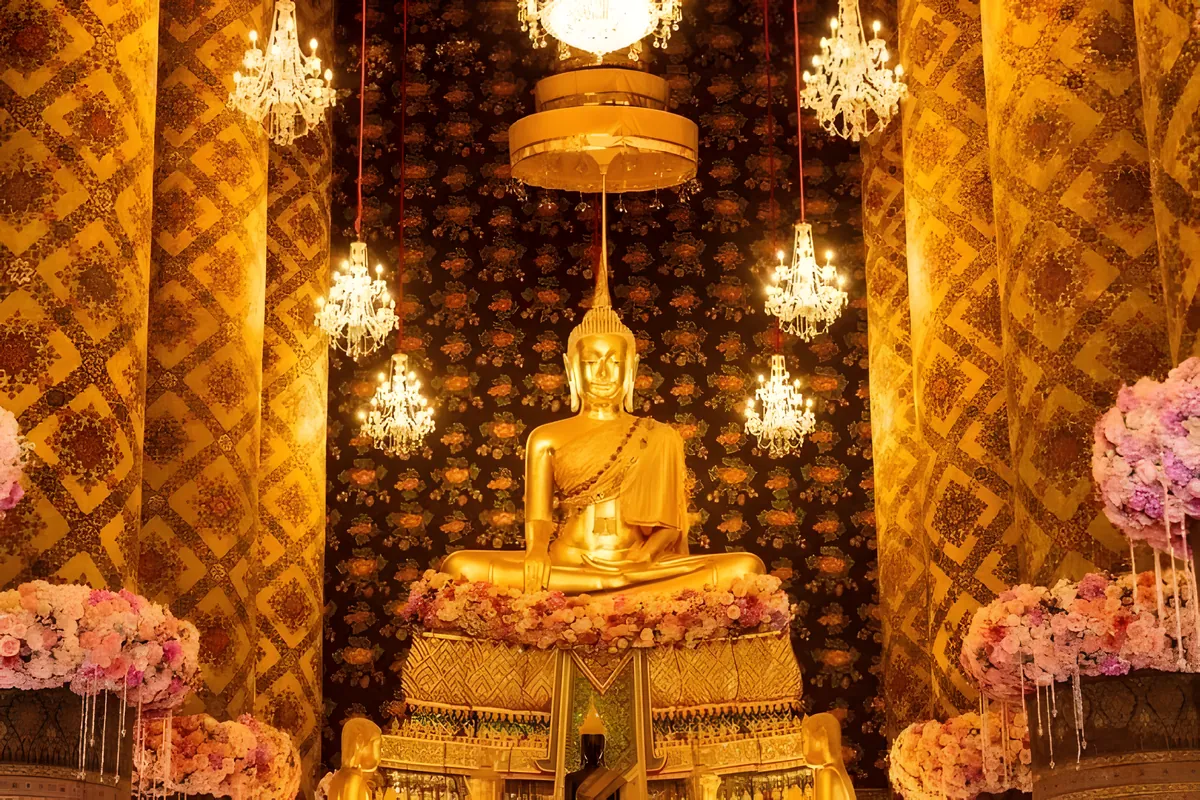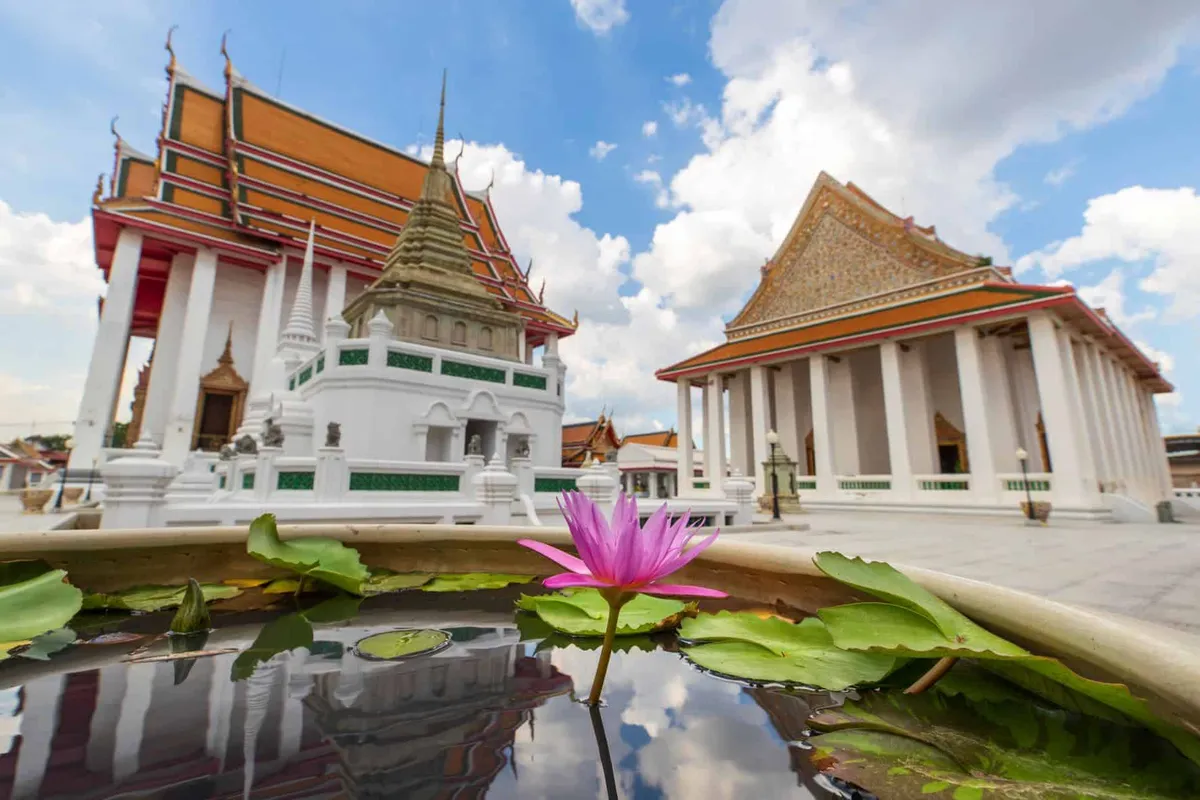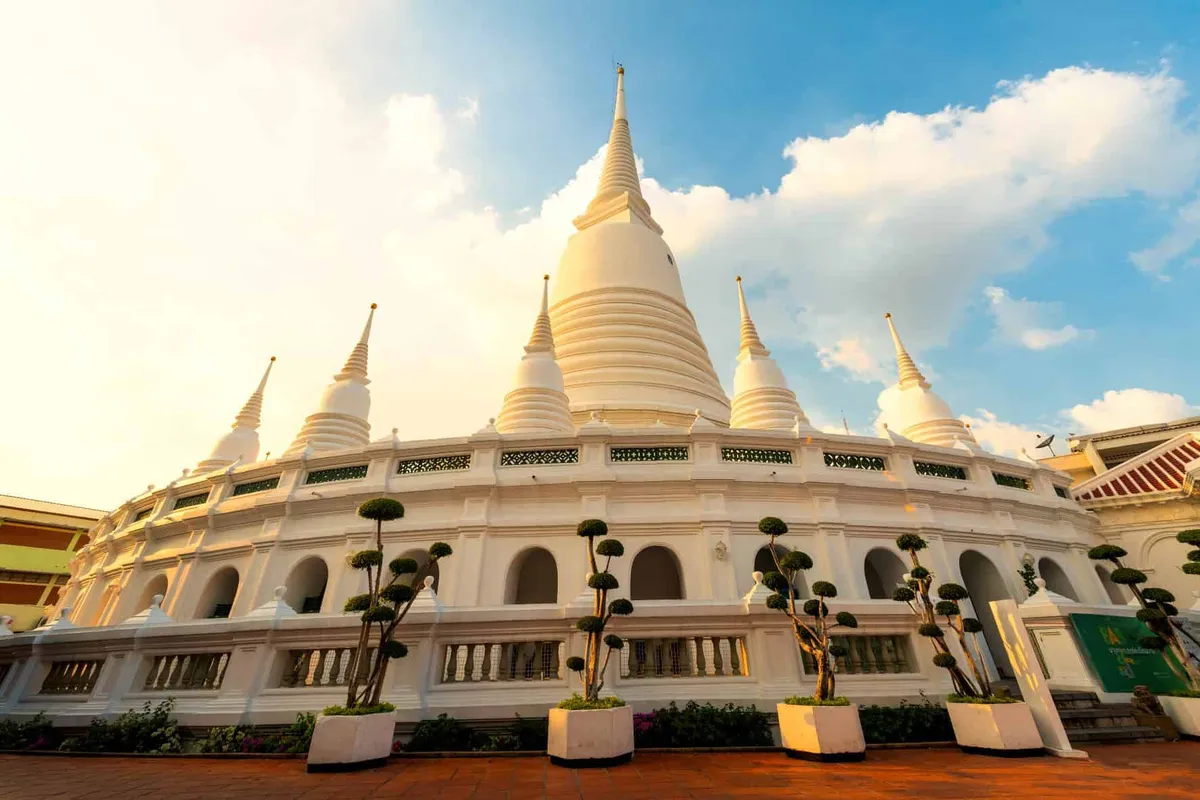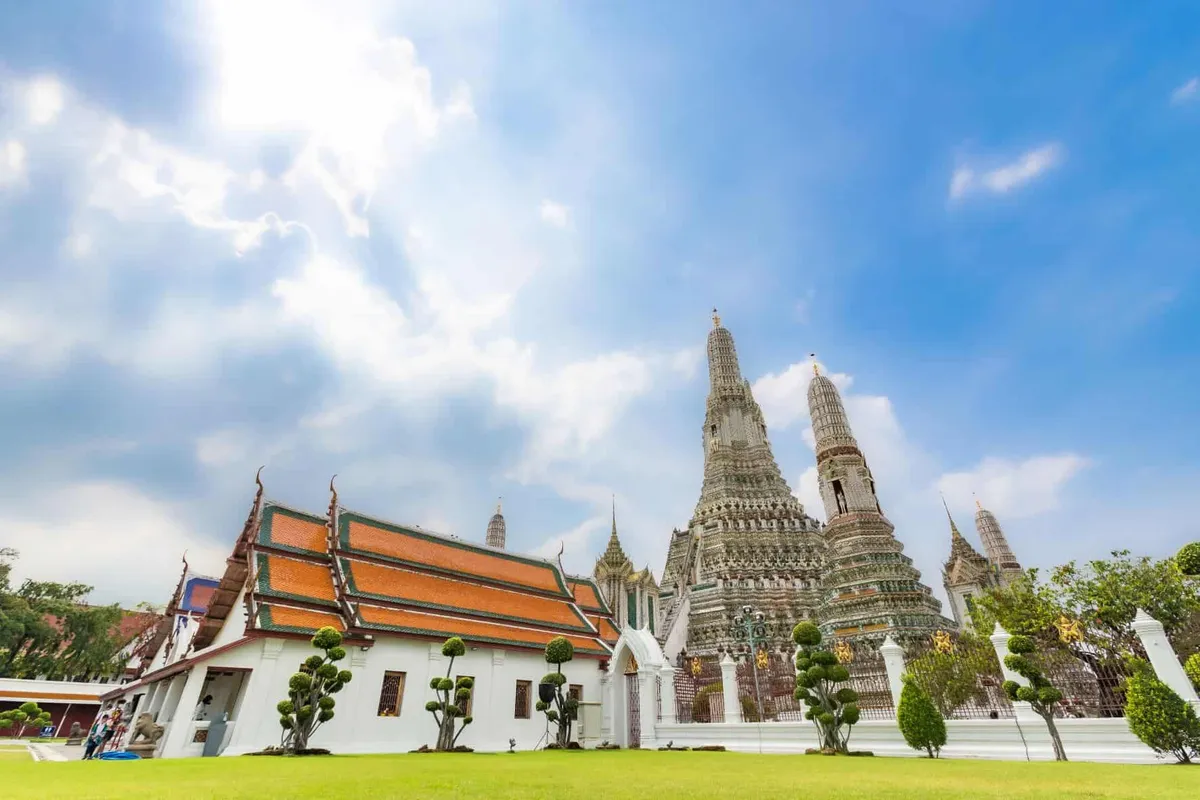
Wat Ratchaorasaram Ratchaworawihan is a first-class royal temple (Ratchaworawihan) in Chom Thong district on Bangkok’s Thonburi side, beside Khlong Bang Khun Thian — not one of the central riverside royal temples clustered near the Grand Palace. Entry is free. It’s historically significant as the first Thai temple built in the Chinese-influenced style that King Rama III favoured throughout his reign, a full generation before he took the throne.
The site predates Bangkok itself, believed to have started as an ordinary Ayutthaya-period monastery known locally as Wat Chom Thong, Wat Chao Thong, or Wat Kong Thong — its original founder is unrecorded. Around 1820, Prince Chetsadabodin, the future Rama III, stopped here while leading a naval force to intercept Burmese troops at the Three Pagodas Pass in Kanchanaburi. He paused to perform a ceremony from the old treatise on war strategy and pray for victory; the Burmese army never came. Afterward, he personally funded and oversaw a full renovation of the temple and offered it as a royal monastery. King Rama II then renamed it Wat Ratchaorasaram — roughly “the royal son’s temple” — in recognition of his son’s work, even though Chetsadabodin was still only a prince.
Insider Tip: Because Rama III paid for and directed the renovation personally rather than as a state project, he shaped the artistic choices to his own taste — which is exactly why this temple, rather than a more prominent one, ended up as the first example of his signature Chinese-Thai fusion style.
That fusion is visible in the ordination and image halls: the roof gables are finished in plain brick and mortar rather than the chofa, bai raka, and hang hong ornaments typical of Thai temple roofs, replaced instead by decorative Chinese-pattern glazed tiles. Murals inside cover the walls with Chinese landscape scenes and auspicious motifs, and the support columns are large and rectangular, without the lotus-bud capitals seen on most Thai temple pillars. The overall effect — Thai temple form carried out in a deliberately Chinese decorative language — became a template later copied at other Rama III-era temples across the city.
- Entry: Free
- Status: First-class royal temple (Ratchaworawihan)
- Known for: Thailand’s first Rama III-era Chinese-Thai fusion (“phra ratcha niyom”) temple
- Address: 258 Soi Ekkachai 4, Ekkachai Road, Bang Kho, Chom Thong
Dress modestly — shoulders and knees covered — as at any working Thai temple, and remove your shoes before entering the halls. It’s away from Bangkok’s main tourist temple circuit, so a car, taxi, or ride-hailing app from central Bangkok is more practical than public transport. Bang Khun Thian District Museum, covering the same stretch of Thonburi’s canal-side history, makes a reasonable pairing if you’re exploring this part of Bangkok beyond the main riverside temples.
Location & Directions
258 Soi Ekkachai 4, Ekkachai Road
Bangkok, Thailand
Show your taxi or Grab driver
วัดราชโอรสาราม ราชวรวิหาร
Frequently Asked Questions
Is this the same as the famous royal temples near the Grand Palace, like Wat Pho or Wat Arun?
Why is Wat Ratchaorasaram known for Chinese-style architecture?
What is Rama III's connection to the temple?
Is entry free?
What was the temple called before its current name?
Spotted something out of date or incorrect? Let us know
Popular tours in Bangkok




Stay Near Wat Ratchaorasaram Ratchaworawihan
Live prices for places closest to Wat Ratchaorasaram Ratchaworawihan — tap a pin to compare.