



Wat Arun (Temple of Dawn)
วัดอรุณราชวรารามราชวรมหาวิหาร
Wat Arun sits on the Chao Phraya’s west bank, its central prang clad in a mosaic of broken Chinese porcelain that catches the first light of dawn, the reason King Taksin named it Wat Chaeng, the Temple of Dawn, after arriving here in 1767. Rama II began raising the central prang to its present height, but the work spanned two reigns: it was not completed until 1851, under Rama III, who oversaw both the construction and the elaborate Chinese-porcelain cladding, along with the four smaller prangs at its corners. This was the royal temple while Thonburi was the capital, and it briefly housed the Emerald Buddha before Wat Phra Kaew was completed across the river.
The prang is the draw. Up close, the porcelain is astonishing: floral mandalas, lotuses, and chains of chrysanthemums set into cement, every fragment a 19th-century import from Chinese trade ships that used the shards as ballast. You can climb the outer staircase partway up for a raised view of the river and the Rattanakosin skyline opposite. The steps are narrow and steeply angled. Hold the rail, especially on the way down.
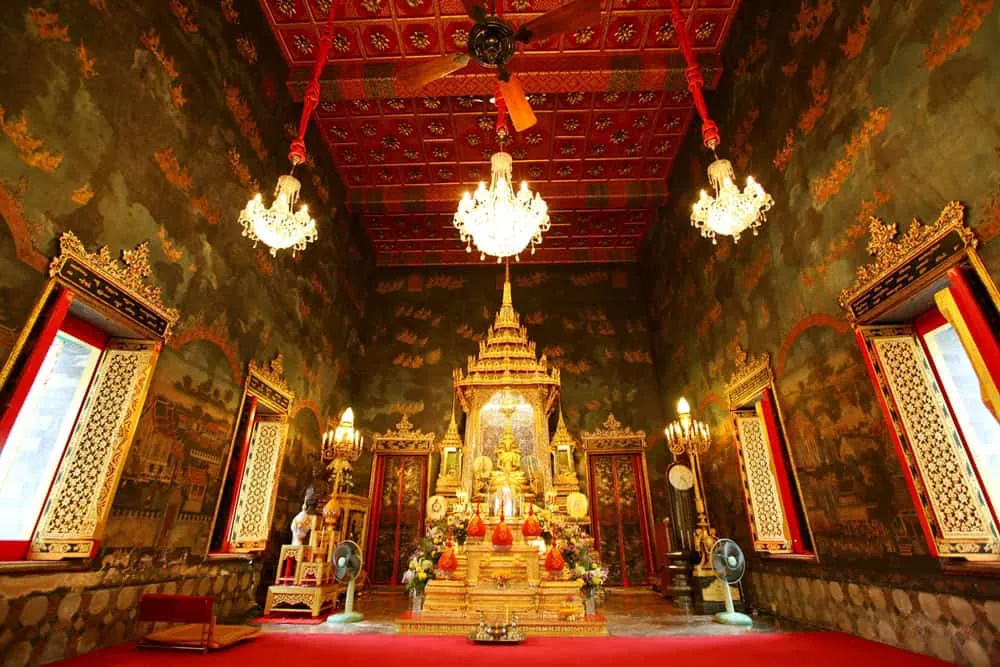
At the base, the four satellite prangs represent the four winds, and the courtyard carries stone yaksha guardians, kinnari figures, and staircase statues of Chinese merchants and soldiers, cargo ballast repurposed as art. The ordination hall to the north of the prang complex is less photographed but houses Buddha images and cloister murals commissioned under Rama II.
Insider Tip: The iconic sunset photo of Wat Arun is taken FROM the east bank, not from inside the temple. Book a rooftop drink at The Deck (Arun Residence) or Eagle Nest (Sala Rattanakosin) above Tha Tien pier and shoot the prang against the dusk sky. For the temple itself, arrive at 08:00 opening: morning light, low crowds, and the name “Temple of Dawn” actually makes sense.
The easiest access is the Tha Tien cross-river ferry: a 2-minute crossing, 5 THB per person, running every few minutes. Combine with a morning at the Grand Palace and Wat Pho for the classic Rattanakosin loop, then cross here in the late afternoon for photographs as the light softens.
Watch Before You Go
Watch before you go: Wat Arun
How to Get There
- Cross-river ferry from Tha Tien: The 2-minute crossing is 5 THB per person, boats every 5-10 minutes until around 18:00. Take MRT Blue Line to Sanam Chai, then walk 5 minutes north to Tha Tien pier.
- Chao Phraya Express Boat to Tha Tien: The orange-flag boat from Sathorn (Central Pier, near BTS Saphan Taksin) runs direct to Tha Tien. About 20 THB. Then the cross-river ferry.
- Taxi or Grab: 150-250 THB from most tourist areas. The temple is on the Thonburi side of the river, so drivers cross one of the bridges. Ask for "Wat Arun main entrance."
- Combine with the Grand Palace and Wat Pho: Most visitors cover all three in a single day. Morning at the Grand Palace, Wat Pho around midday, cross to Wat Arun in the afternoon or at sunset.
Insider Tips
- The iconic sunset photo of Wat Arun is taken FROM the east bank, not at the temple itself. Book a rooftop drink at a bar above Tha Tien pier (The Deck at Arun Residence, Eagle Nest at Sala Rattanakosin) and shoot the prang against the dusk sky.
- Visit at 08:00 opening to see it with morning light, low crowds, and the name "Temple of Dawn" actually making sense. Most tour groups arrive after 10:00.
- You can climb the outer staircase of the central prang partway up. The steps are narrow and steeply angled. Grip the rail, and take the descent slowly.
- Late-afternoon light (16:30 onwards) hits the porcelain mosaic at a low angle and shows the detail better than harsh midday sun.
- If the cross-river ferry is loading as you arrive at Tha Tien, it's full. Next one is in 5 minutes, no point rushing.
Common Mistakes & Scams to Avoid
- Visiting in midday heat. The prang has no shade and the riser tiles radiate warmth. 12:00-15:00 is the worst window. Morning (08:00-10:00) or late afternoon (16:00-18:00) is far more pleasant.
- Expecting to see the Emerald Buddha here. It briefly lived here but moved to Wat Phra Kaew in 1784. The prang, the porcelain, and the ubosot murals are the reasons to come now.
- Paying 200+ THB for a taxi across the bridge when the ferry is 5 THB. The Tha Tien cross-river ferry is the standard locals-used option. Don't let drivers talk you into a Thonburi detour.
- Climbing the prang in flip-flops. Several stair sections are steep enough that unstable footwear is genuinely dangerous. Closed shoes or sandals with a heel strap.
- Staying inside only. Half the draw of Wat Arun is the view OF it from the opposite bank at sunset. Build in time for the east-side photo after you leave.
Dress Code
Covered shoulders and knees required. Sarong and shirt rental available near the entrance. Less strict than the Grand Palace but still enforced. Shorts and vest tops will be turned back. Shoes off inside the ordination hall.
Good to Know
On site
Location & Directions
158 Thanon Wang Doem, Wat Arun, Bangkok Yai, Bangkok 10600
Bangkok, Thailand
Show your taxi or Grab driver
วัดอรุณราชวรารามราชวรมหาวิหาร
Frequently Asked Questions
How much does Wat Arun cost to visit?
What are Wat Arun's opening hours?
Can you climb Wat Arun's central prang?
When is the best time to photograph Wat Arun?
How do I get to Wat Arun from central Bangkok?
Is Wat Arun the Temple of Dawn?
Spotted something out of date or incorrect? Let us know
Tours visiting Wat Arun (Temple of Dawn)




Stay Near Wat Arun (Temple of Dawn)
Live prices for places closest to Wat Arun (Temple of Dawn): tap a pin to compare.