



Wat Rattanaram (Wat Kaeo)
วัดรัตนาราม (วัดแก้ว)
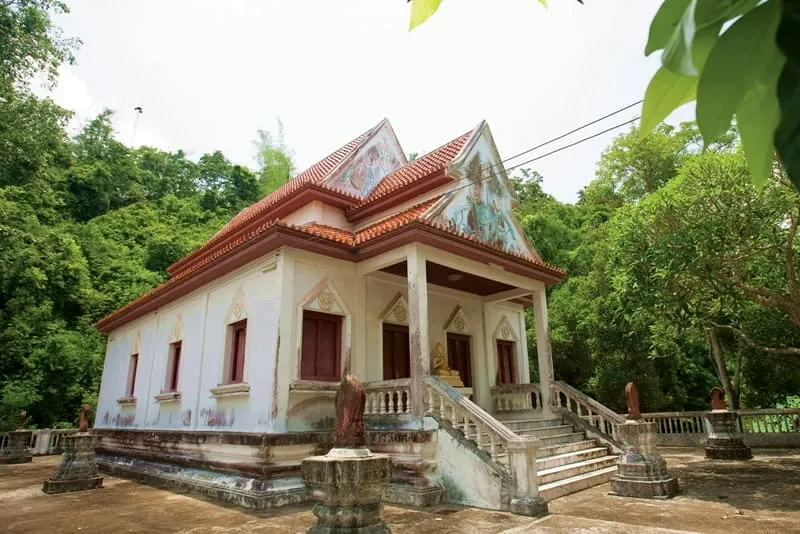
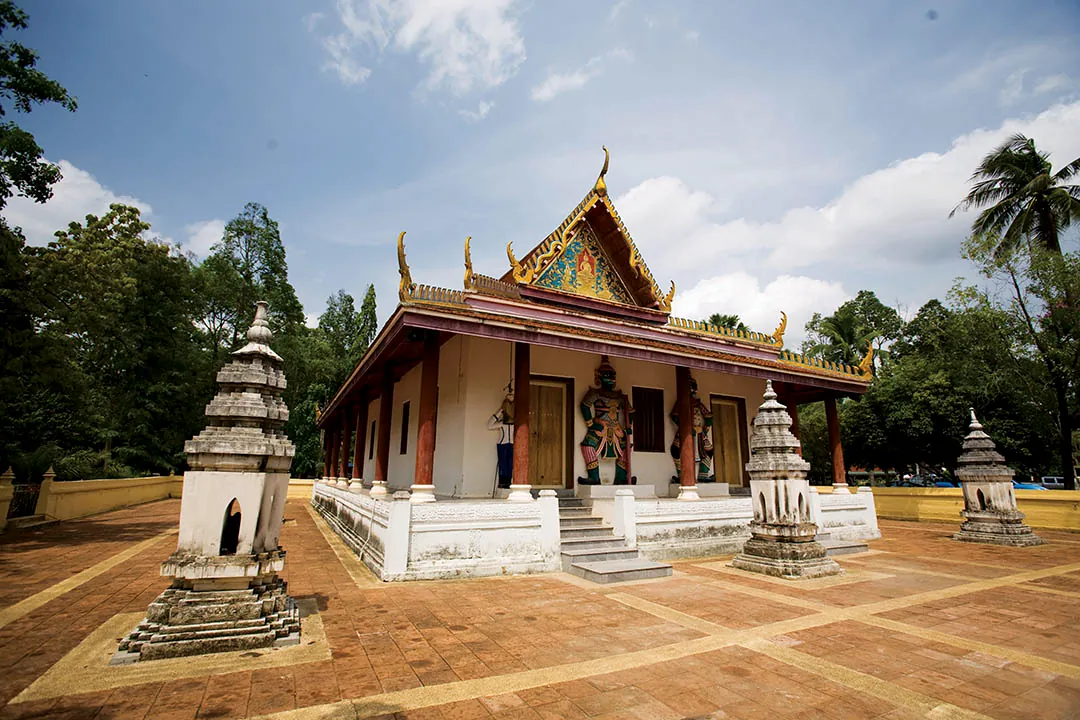
A partly-collapsed brick sanctuary tower from the Sri Vijaya era stands within the grounds of a working temple in Chaiya, Surat Thani province — hence the double name. Wat Kaeo refers to the ancient monument itself, thought to date from roughly the 8th to 10th century CE; Wat Rattanaram is the modern temple that has grown up around and now maintains it. Both names point to the same 12-rai compound in Ban Wat Kaeo, a short drive from central Chaiya.
The tower follows a cruciform plan — a cross-shaped footprint rare enough in Thailand to draw comparisons to Central Javanese candi architecture — built from unmortared brick roughly 18 metres square at the base. Only the foundation and central chamber survive; the upper tower and roof collapsed centuries ago. On the south side, a limestone doorframe about 1.6 metres high has held up better than the rest of the brickwork, giving a sense of scale that the crumbled upper sections don’t. The Fine Arts Department has restored sections of the structure since the 1970s and lists it as a protected ancient monument, the same official status held by the more famous chedi at Wat Phra Borommathat Chaiya a few kilometres away.
Insider Tip: Excavations here turned up a stone Shiva lingam and a red sandstone Ganesha statue — both Hindu artefacts on a Buddhist site, a reminder that Sri Vijaya-era Chaiya absorbed both traditions. See them in person at Chaiya National Museum, not at the ruins themselves — nothing that valuable is left on site.
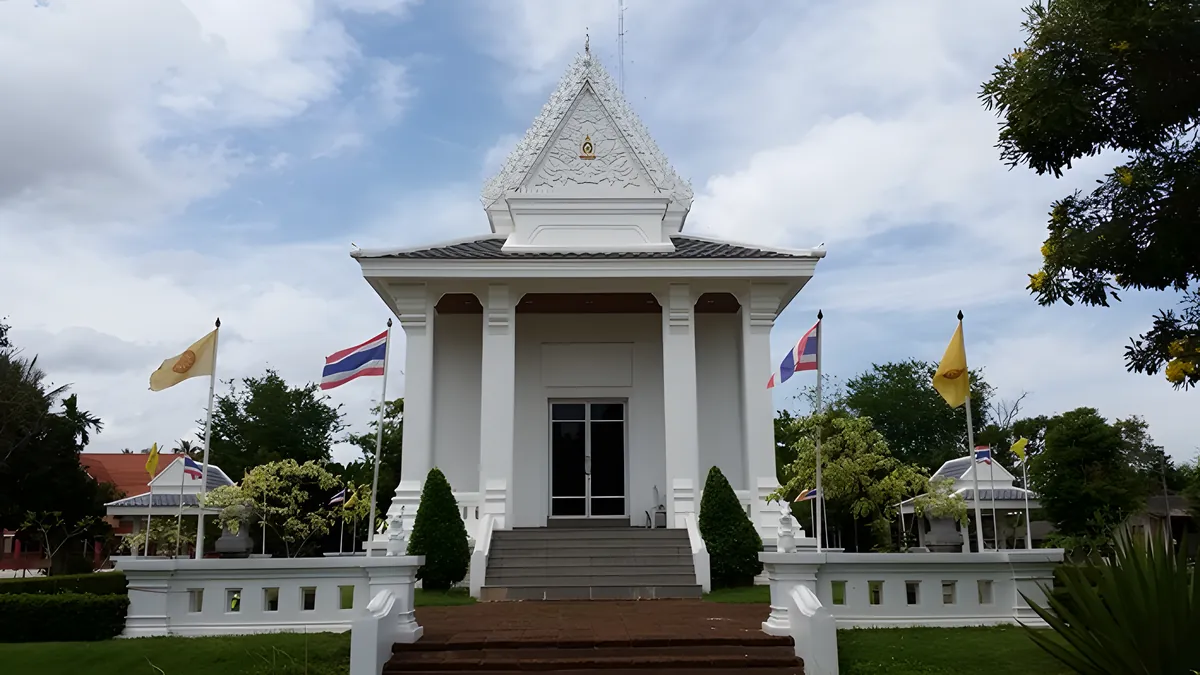
Don’t expect an active worship atmosphere at the ruins specifically — this is an archaeological monument you walk around and read, not a temple with regular ceremonies happening in front of you. The wider Wat Rattanaram compound is a genuine working temple with a school for monks and novices studying Dhamma and Pali, so there’s a functioning religious community here, just centred a short walk from the ancient tower rather than inside it.
- Location: Ban Wat Kaeo, Tambon Lamet, Chaiya district — near Chaiya Witthaya School
- Entry: Free, daily roughly 07:00-17:00
- Era: Sri Vijaya period, approx. 8th-10th century CE
- Structure: Cruciform brick sanctuary tower, ~18 x 18m base, partly collapsed
- Related sites: Artefacts on display at Chaiya National Museum; contemporary with Wat Long and Wat Phra Borommathat Chaiya
Pair the visit with the other Sri Vijaya remains nearby — Wat Long shares the same era and construction style — and finish at Wat Phra Borommathat Chaiya, the district’s best-preserved chedi from the same centuries-old artistic tradition. Wear closed shoes; the brick ruins have uneven footing, and there’s little shade directly around the tower.
Location & Directions
124 Moo 2
Surat Thani, Thailand
Show your taxi or Grab driver
วัดรัตนาราม (วัดแก้ว)
Frequently Asked Questions
Are Wat Rattanaram and Wat Kaeo two different temples?
What is there actually to see?
How old is it, and what's been found here?
Is it a working temple or a ruin you just look at?
Is there an entry fee?
Spotted something out of date or incorrect? Let us know
Stay Near Wat Rattanaram (Wat Kaeo)
Live prices for places closest to Wat Rattanaram (Wat Kaeo) — tap a pin to compare.