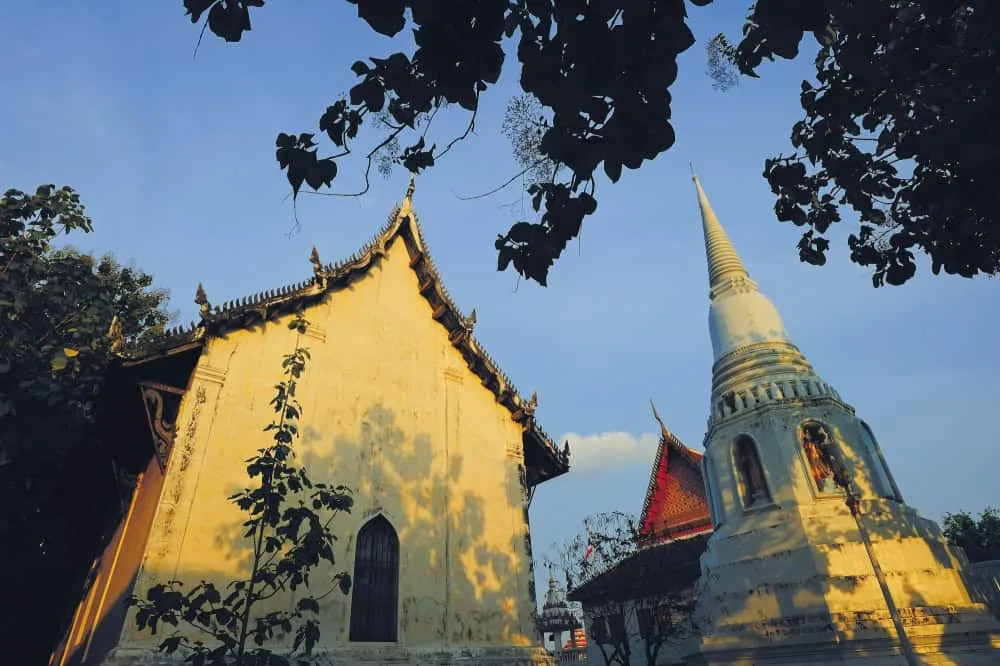



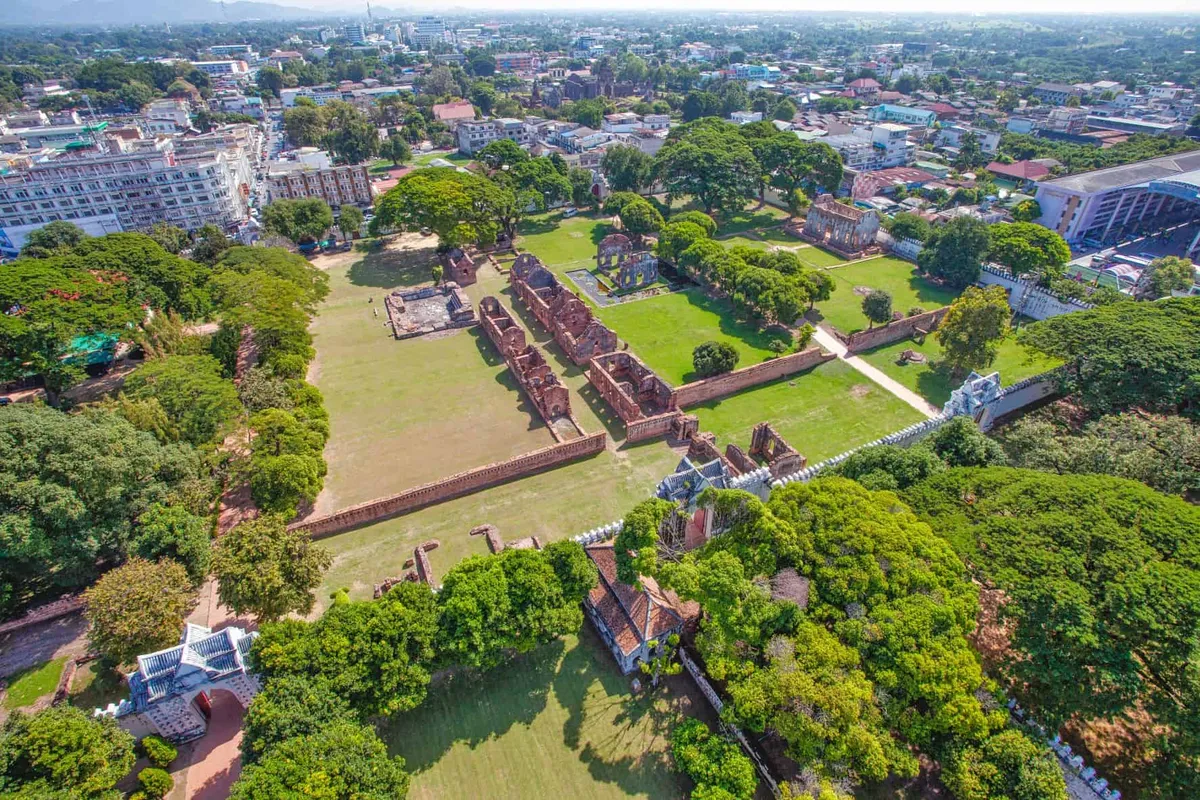
Wat Kawisararam Ratchaworawiharn sits on Phet Racha Road in Lop Buri’s Tha Hin subdistrict, just south of the ruined walls of Phra Narai Ratchaniwet — King Narai the Great’s 17th-century palace. The temple started life as the older Wat Khwid, which King Narai restored during his reign; it was later re-established and renamed under King Mongkut (Rama IV) in the 19th century, and restored again under King Chulalongkorn (Rama V), who invited monks of the Mon Buddhist tradition to take up residence. That royal patronage across three reigns is what earns it the formal rank of a third-class royal temple, Ratchaworawihan grade — a step up from an ordinary parish wat.
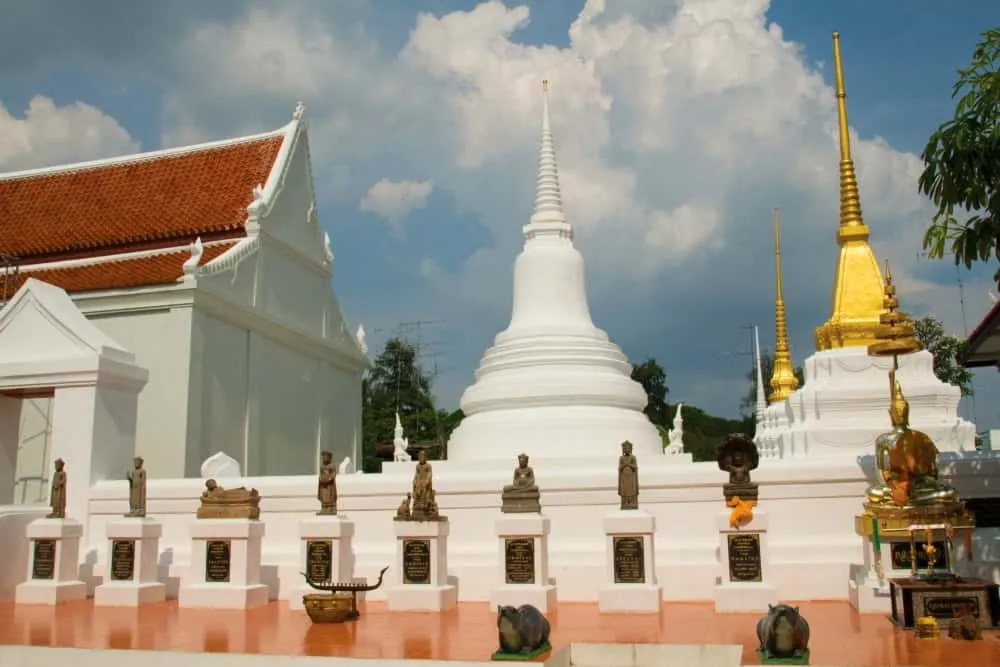
The centrepiece is the ubosot, or ordination hall, built in a sober, late-Ayutthaya style: thick octagonal columns carved with 19th-century floral motifs support the roof, and a principal Buddha image sits in the bhumisparsha mudra, the earth-touching gesture associated with the moment of enlightenment. A bell-shaped chedi stands behind the hall. Natural light once entered through narrow rectilinear openings in the walls before electric lighting was installed — a detail of the original design still visible today. Watch out: the ordination hall itself is usually kept locked and is rarely opened to the public despite its historical interest, so don’t plan a visit around seeing the interior; the exterior architecture, the chedi and the grounds are what most visitors actually see.
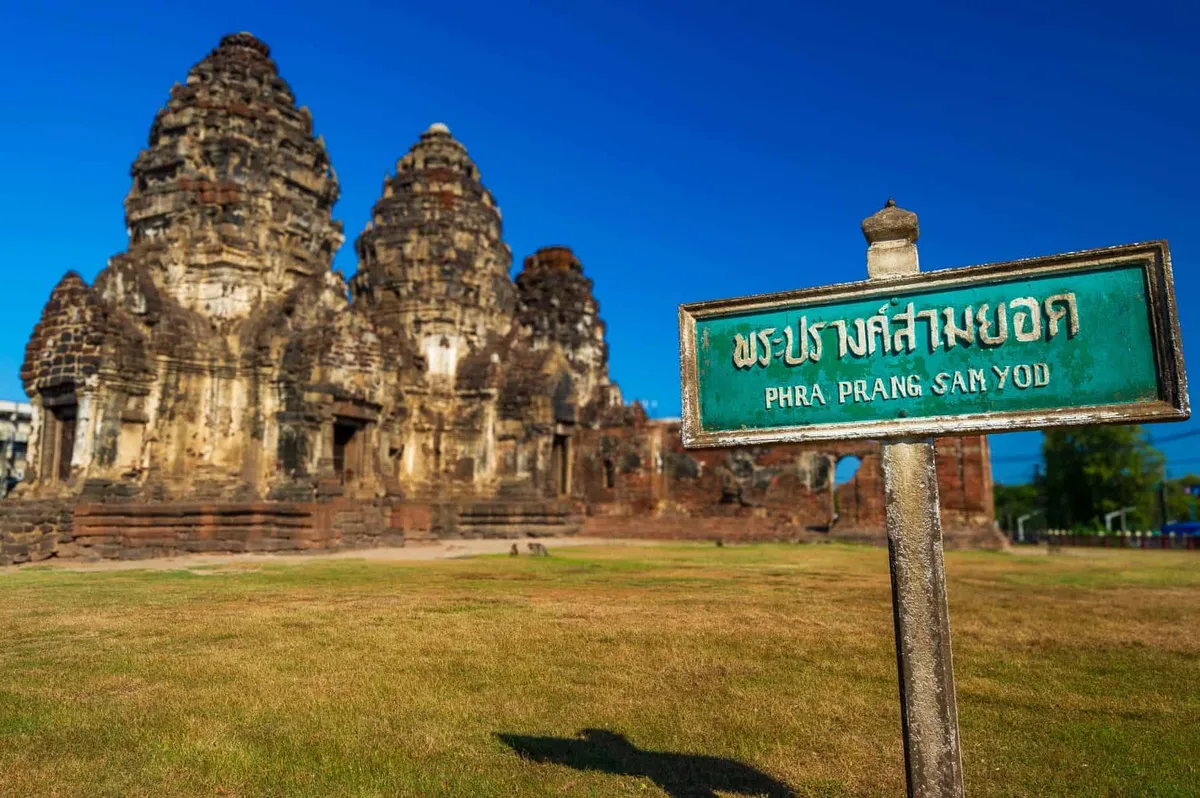
Because it remains a working temple rather than a preserved ruin, Wat Kawisararam has none of the roped-off feel of Lop Buri’s Khmer-era prang sites nearby. It’s a quieter, less-visited stop than the Phra Narai Ratchaniwet museum complex next door, and pairs naturally with a walk past Wat Sao Thong Thong, another temple in the same Tha Hin cluster.
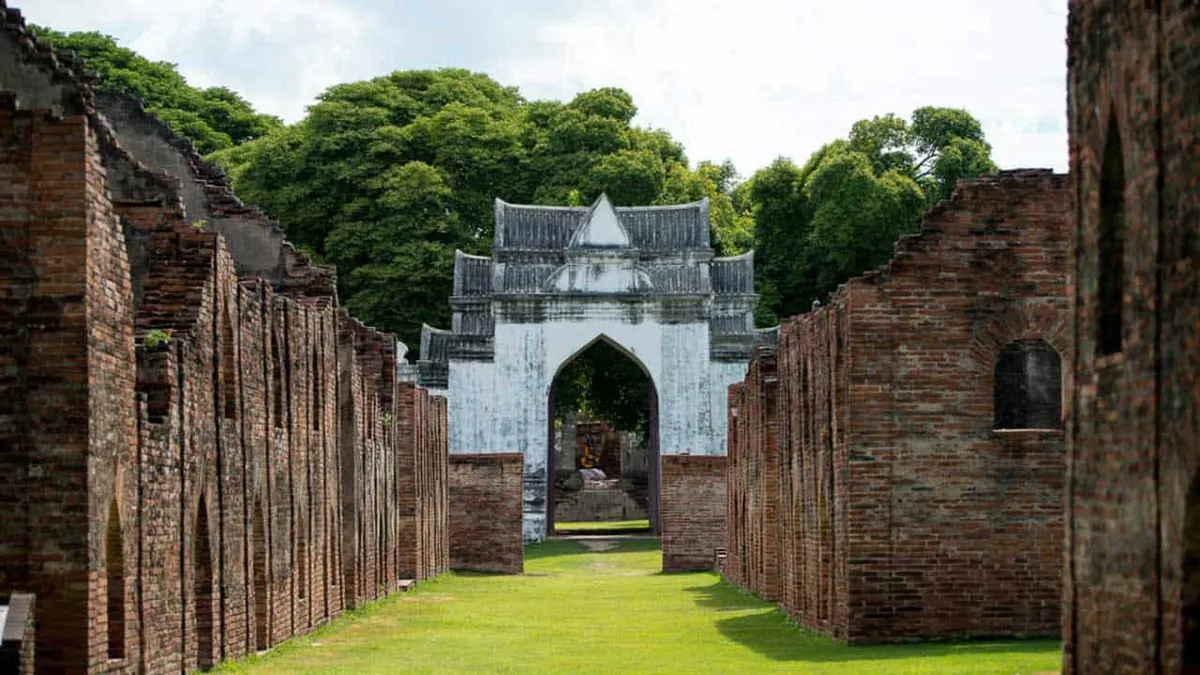
Insider Tip: Combine this with the palace next door rather than making it a separate trip — the walk between the two takes a few minutes, and the contrast between the palace’s Ayutthaya-French-influenced ruins and this temple’s still-active grounds is worth seeing back to back.
Entry is free, as with the great majority of working Thai temples. Dress modestly — covered shoulders and knees — and expect to remove your shoes before stepping onto any raised temple floor, even where the buildings themselves are closed.
- Rank: Third-class royal temple, Ratchaworawihan grade
- History: Originally Wat Khwid; restored by King Narai (17th century), renamed under Rama IV, restored again under Rama V
- Ordination hall: Late-Ayutthaya style, usually locked to visitors
- Entry: Free
- Location: Phet Racha Road, Tha Hin subdistrict, south of Phra Narai Ratchaniwet
The wider Lop Buri hub covers the rest of the old royal capital, including the palace complex and its Khmer-era prang temples.
Location & Directions
Moo 10 Phet Racha Road
Lop Buri, Thailand
Show your taxi or Grab driver
วัดกวิศรารามราชวรวิหาร
Within Walking Distance




Frequently Asked Questions
What's the history behind Wat Kawisararam?
What does 'Ratchaworawiharn' mean?
Can I go inside the ordination hall?
Is there an entrance fee?
What else is nearby?
Spotted something out of date or incorrect? Let us know
Stay Near Wat Kawisararam Ratchaworawiharn
Compare places to stay in Lop Buri, or open the map for options closest to the attraction.