


Wiang Kosai National Park
อุทยานแห่งชาติเวียงโกศัย
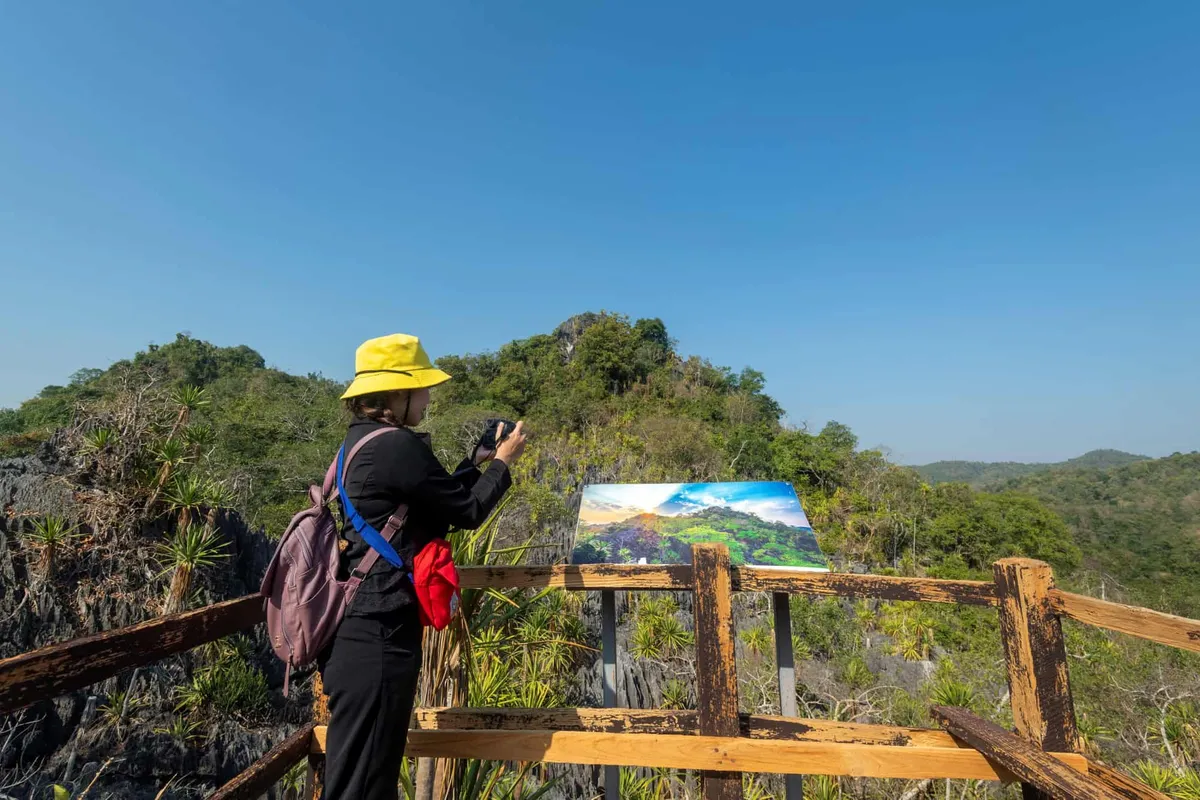
Wiang Kosai National Park takes its name from Wiang Kosai, the historic name for Phrae itself — fitting, since this was Phrae’s first national park, gazetted in 1981. It covers roughly 410 square kilometres (256,115 rai), spreading from Wang Chin district in Phrae across the provincial line into three districts of Lampang (Mae Tha, Thoen, and Sop Prap). The terrain is rugged upland within the Phi Pan Nam range, topping out at Doi Mae Tom, 1,267 metres.
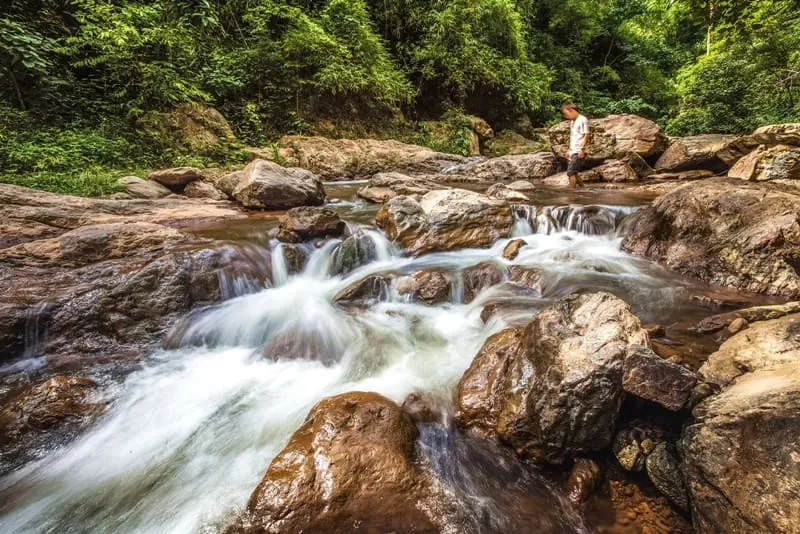
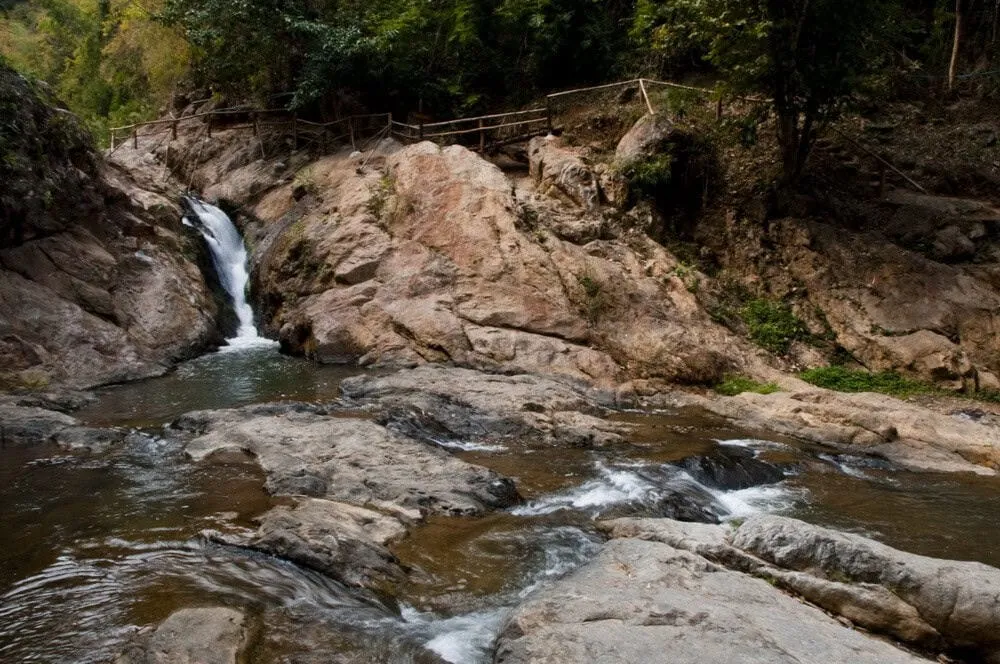
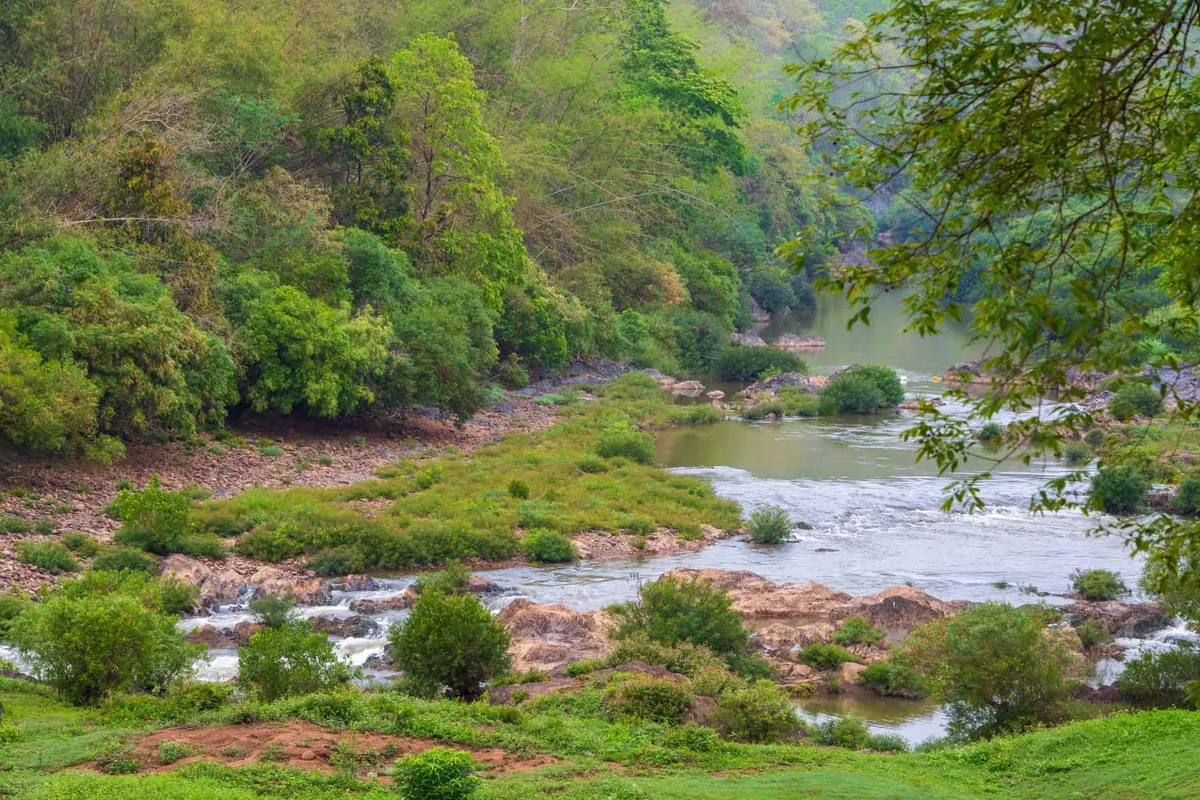
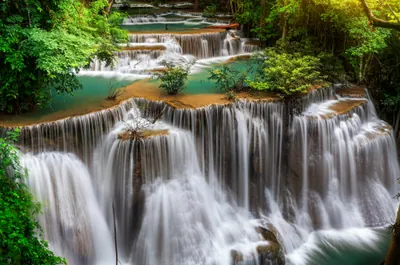
Two waterfalls anchor most visits: Mae Koeng Luang and Mae Koeng Noi, both tiered cascades that step down through the forest rather than a single drop. A separate draw is the Mae Chok hot spring, fed by the same mountain drainage that also gives rise to the Mae Koeng, Mae Sin, and Mae Pak rivers. Forest cover shifts with elevation — dry evergreen and mixed deciduous lower down, giving way to pine stands and grassy balds near the ridgelines. The park’s best-known grove holds Takian Thong trees (Hopea odorata), some more than a century old and wide enough that three or four people linking arms are needed to reach around the trunk.
Wildlife here has thinned over the decades. Elephants once ranged through Wiang Kosai and tigers were once common; both have effectively disappeared from the park in recent decades. What remains is still worth watching for: Indian muntjac (barking deer), tree shrews, and the Indochinese flying squirrel, which glides between the canopy after dusk.
Insider Tip: Visit the Mae Chok hot spring in the late afternoon after a warm hike — the water stays a consistent temperature year-round, so it is at its most welcome once the day’s heat starts to fade.
Cool season, November through February, gives the clearest air and the most comfortable hiking temperatures; the rest of the year runs hot and humid at lower elevations. The park sits about 60 km from Phrae town, 70-90 minutes by car via Wang Chin district roads — there’s no scheduled public transport to the entrance, so plan on a private vehicle. Visitor infrastructure is limited: expect basic ranger stations rather than a visitor centre, and confirm trail conditions with rangers at the gate before setting out, since signage on longer routes is sparse.
Watch out: Facilities are minimal by national park standards — bring your own food, water, and insect repellent, since there is little to buy once past the entrance gate.
- Entry fee: 200 THB adult / 100 THB child (foreigners); 40 THB adult / 20 THB child (Thai nationals)
- Hours: Daily, 08:30-16:30
- Established: 1981 — Phrae’s first national park
- Highlights: Mae Koeng Luang & Mae Koeng Noi waterfalls, Mae Chok hot spring, century-old Takian Thong forest
- Getting there: About 60 km / 70-90 min by car from Phrae town via Wang Chin district; no direct public transport
Two other protected areas make sense to pair with a Phrae itinerary: Mae Yom National Park to the north along the Yom River, and Doi Pha Klong National Park, both under an hour or so from Phrae town. Anyone based in Phrae province chasing waterfalls specifically should also check Namtok Huai Rong, a smaller and easier-to-reach cascade closer to town.
Location & Directions
Moo 7 T.Maekoeng
Phrae, Thailand
Show your taxi or Grab driver
อุทยานแห่งชาติเวียงโกศัย
Frequently Asked Questions
Is Wiang Kosai National Park free to enter?
Where does the name Wiang Kosai come from?
Does the park really border Myanmar?
What are the main things to see inside the park?
How far is the park from Phrae town?
Spotted something out of date or incorrect? Let us know
Stay Near Wiang Kosai National Park
Live prices for places closest to Wiang Kosai National Park — tap a pin to compare.