
Wihan Phramongkhon Bophit
วิหารพระมงคลบพิตร
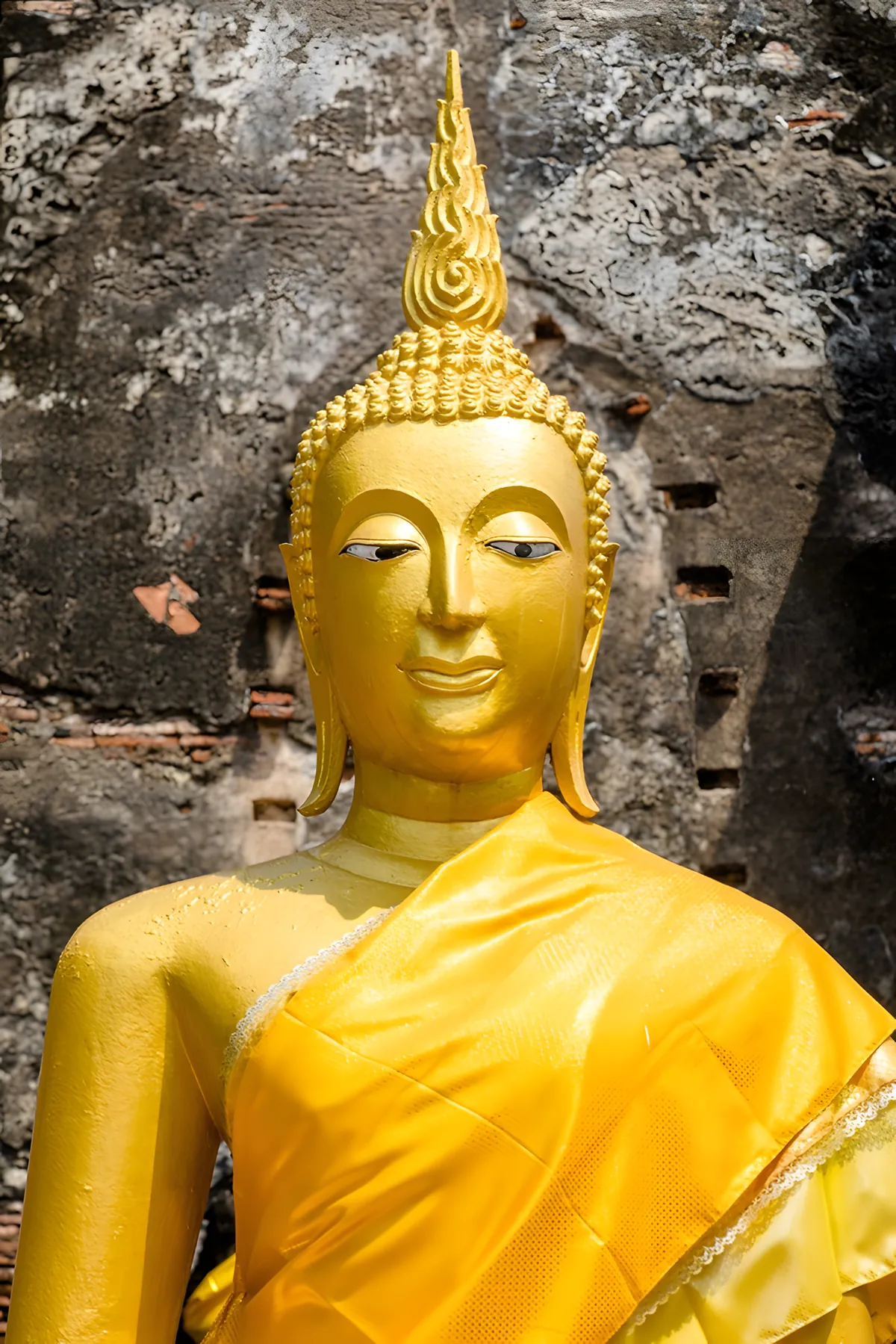
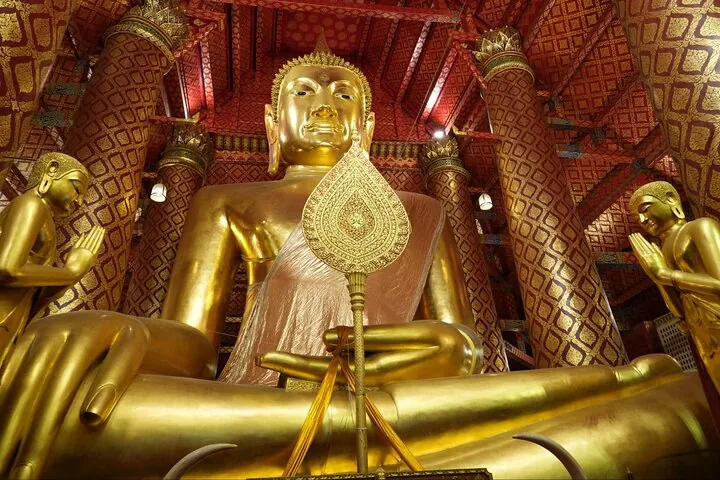
Wihan Phra Mongkhon Bophit, on the south side of Wat Phra Si Sanphet inside the Ayutthaya Historical Park, houses Phra Mongkhon Bophit — a bronze-cast Buddha image 12.45 metres tall (without its pedestal) and 9.55 metres across the lap, among the largest of its kind in Thailand. Entry to the wihan is free, daily 08:30–16:30; the neighbouring ruins at Wat Phra Si Sanphet charge separately.
The image was cast around 1538 under King Chairachathirat and originally stood east of Ayutthaya’s royal palace. In 1610, King Songtham had it moved west to its current spot and built a mandapa (a spired hall) to cover it. That structure survived until the early 1700s, when a lightning strike during the reign of King Suea set the spire alight, breaking the image’s neck and head; a larger sanctuary — the Maha Wihan seen in the layout today — replaced it. The building suffered worse damage during the fall of Ayutthaya in 1767: Burmese forces burned the roof and broke off the head and right arm, leaving the Buddha exposed to the elements for over a century.
Restoration came in stages. Phraya Boran Rachathanin reset the head in 1920, and further repairs followed in 1931. Workers restoring the shoulder in 1955 found small votive Buddha images embedded inside it, a discovery still noted by temple guides. The wihan itself — the building that now shelters the image — was rebuilt in 1956–57 with funding from the Burmese government, an act read locally as reconciliation for 1767. Gold leaf was applied to the whole image in 1992 by the Mongkhon Bophit Foundation, which is the gilded bronze surface visitors see today.
Inside, the scale is the whole point: a single seated figure filling a plain, high-roofed hall, lit mostly by the doorway and a run of small clerestory windows. There’s none of the ornamentation of Wat Phra Si Sanphet’s chedis next door — just the Buddha, a low altar rail, and space to sit. Morning is quietest; by mid-morning, day-tour groups from Bangkok fill the single entrance, and the hall can feel crowded within minutes. Locals come to pray before work, and it’s common to see monks receiving alms at the compound gate at dawn.
The open ground east of the wihan was once Sanam Luang, Ayutthaya’s royal cremation ground, where kings and senior royalty were cremated during the kingdom’s four centuries as capital. When Bangkok became the new capital after 1782, the same function — and the same name — transferred to the Sanam Luang that still stands in front of Bangkok’s Grand Palace today, making this unassuming stretch of grass the direct predecessor of one of Thailand’s most recognisable public spaces.
Ayutthaya is roughly 80 km north of Bangkok — about 1 to 1.5 hours by car, or a short train ride to Ayutthaya station followed by a bicycle, tuk-tuk, or songthaew into the historical park. The wihan sits inside the UNESCO World Heritage–listed Ayutthaya Historical Park, on the same central island as most of the city’s major ruins, so it’s easy to fold into a half-day loop on foot or by rented bike rather than treating it as a standalone stop.
Insider Tip: Ask a guide to point out where the 1955 restoration found small Buddha images embedded in the left shoulder — it’s a detail most visitors walk straight past.
Watch out: Day-tour buses from Bangkok cluster here from roughly 10:00 to 14:00, and the wihan has one main entrance — it bottlenecks fast. Arrive at 08:30 opening or after 16:00 for space to actually see the image.
- Entry fee: Free (wihan only)
- Hours: Daily 08:30–16:30
- Image height: 12.45m without pedestal, 9.55m across the lap
- Cast: c. 1538, reign of King Chairachathirat
- Current wihan built: 1956–57, Burmese-government-funded
Combine the visit with Wat Phra Si Sanphet next door and Wat Mahathat, a short walk away — all three sit inside the historical park’s central island.
Location & Directions
Phra Nakhon Si Ayutthaya, Phra Nakhon Si Ayutthaya
Ayutthaya, Thailand
Show your taxi or Grab driver
วิหารพระมงคลบพิตร
Frequently Asked Questions
How big is the Phra Mongkhon Bophit Buddha image?
Is Wihan Phra Mongkhon Bophit free to enter?
Why does the Buddha image look repaired rather than original?
Where is the wihan in relation to Ayutthaya's other ruins?
What's the best time to visit?
Can I see it alongside other Ayutthaya sites in one trip?
Spotted something out of date or incorrect? Let us know
Popular tours in Ayutthaya




Stay Near Wihan Phramongkhon Bophit
Live prices for places closest to Wihan Phramongkhon Bophit — tap a pin to compare.