Ku Phra Chao Meng Rai
กู่พระเจ้าเม็งราย
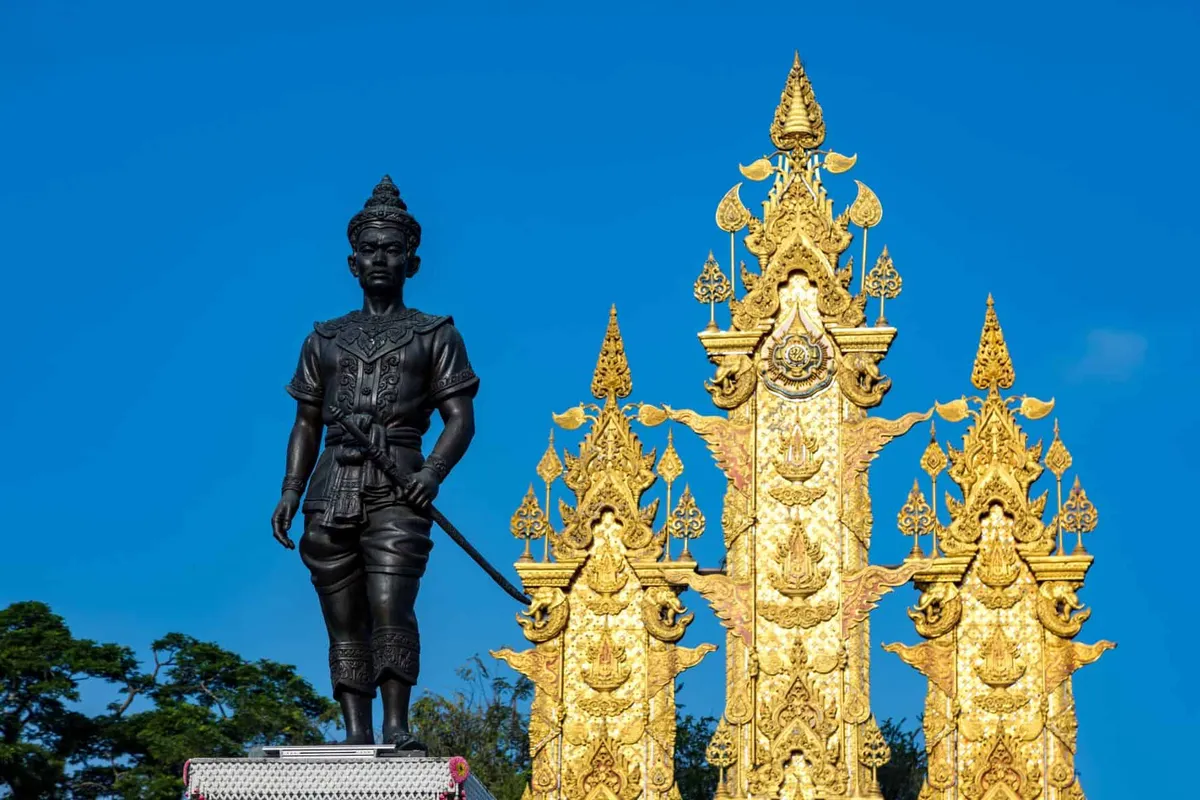
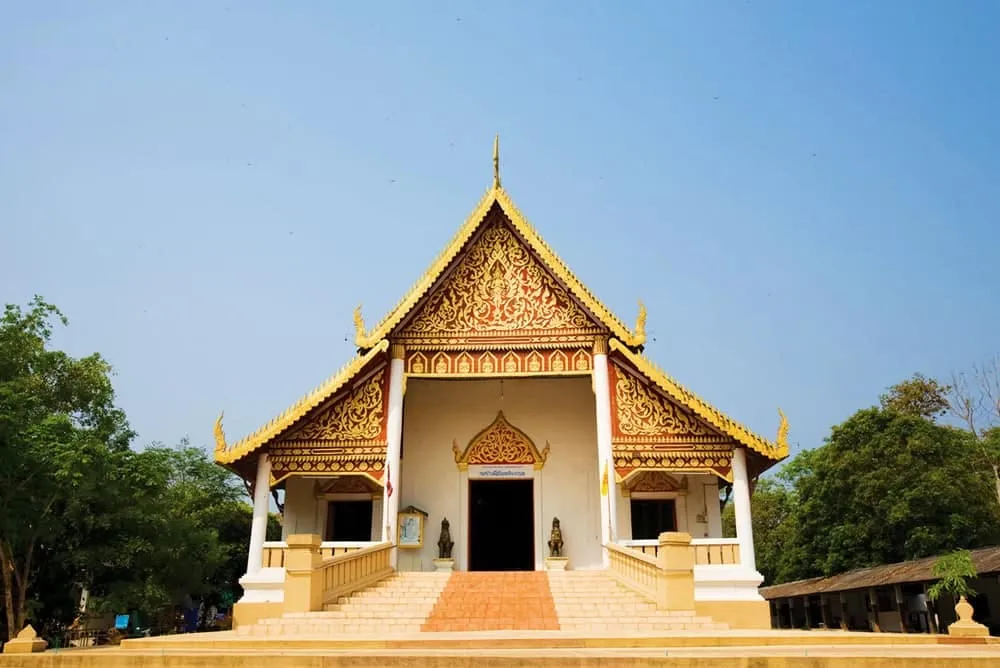
Ku Phra Chao Meng Rai is not the bronze statue many visitors expect — that monument stands elsewhere, at Pho Khun intersection on the edge of Chiang Rai city. This is a brick, Lanna-style chedi on Doi Ngam Muang, a low hill inside Wat Ngam Muang (also called Wat Doi Ngam Muang), traditionally said to enshrine the ashes of King Mangrai — the 13th-century ruler who founded Chiang Rai in 1262 and, later, Chiang Mai. Temple history holds that his son, Chao Chai Songkhram, built the ku here after handing the Lanna throne to his brother, Chao Saen Phu, and bringing his father’s remains back to the city Mangrai had founded.
The chedi itself sits behind the temple’s main viharn, built up from a square brick base in stepped tiers, rising through a lotus-moulding section to an octagonal upper body and a bell-shaped crown — the standard form for a Lanna-period reliquary stupa, though centuries of rebuilding mean what stands today isn’t necessarily the 14th-century original. Small alcoves set into the octagonal section hold Buddha images. Thai visitors come here specifically to pay respects to Mangrai as the founder-king of the north, not as casual sightseers; you’ll usually find a handful of people lighting incense or offering flowers rather than tour groups.
Watch out: Thai academic sources note real uncertainty over whether the enshrined ashes are documented fact or long-standing tradition — one account describes an earlier chedi on the site being demolished and a later structure built in its place. Treat the site with the respect its visitors show it, but don’t repeat the “confirmed royal tomb” framing as settled history.
Wat Ngam Muang is a working temple, so there’s no admission fee and no formal opening hours beyond the temple’s own — arrive during daylight and dress as you would for any Buddhist site, shoulders and knees covered. The hill is small enough that the whole visit, chedi and viharn together, takes 20-30 minutes.
Insider Tip: If you also want to see the more famous equestrian bronze of King Mengrai — the one most photos labelled “Mengrai statue” actually show — that’s a separate stop at Pho Khun intersection, a short drive away. The two sites tell different parts of the same story: the statue commemorates the living king, the ku holds what tradition says are his remains.
- Entry fee: Free
- Hours: Daylight hours, roughly 08:00-18:00
- What it is: A brick Lanna-style chedi (ku), not a statue
- Location: Wat Ngam Muang, Doi Ngam Muang, central Chiang Rai
- Nearby: Phaya Mengrai the Great Monument (the bronze statue) is a separate site elsewhere in the city
For the bronze monument this page is often confused with, see Phaya Mengrai the Great Monument. The Chiang Rai destination guide covers the rest of the city’s temples and landmarks.
How to Get There
On Doi Ngam Muang, a small hill on Ngam Muang Road inside Wat Ngam Muang (also called Wat Doi Ngam Muang), a short walk or tuk-tuk ride from central Chiang Rai. It is a separate site from the bronze Phaya Mengrai the Great Monument at Pho Khun intersection elsewhere in the city.
Location & Directions
Wat Ngam Muang, Ngam Muang Road, Mueang Chiang Rai, Chiang Rai
Chiang Rai, Thailand
Show your taxi or Grab driver
กู่พระเจ้าเม็งราย
Within Walking Distance




Frequently Asked Questions
Is Ku Phra Chao Meng Rai a bronze statue?
What does "Ku" mean?
Who built it and when?
Is entry free?
Is King Mangrai's ash relic confirmed to still be inside?
Spotted something out of date or incorrect? Let us know
Popular tours in Chiang Rai






Stay Near Ku Phra Chao Meng Rai
Compare places to stay in Chiang Rai, or open the map for options closest to the attraction.