
Mae Fah Luang Art and Cultural Park
อุทยานศิลปะวัฒนธรรมแม่ฟ้าหลวง
Mae Fah Luang Art and Cultural Park houses Chiang Rai’s main collection of Lanna-period art inside three teak pavilions on the site of a former hill-tribe training centre. Entry is 200 THB for foreigners (100 THB for Thai nationals), Tuesday to Sunday, 10:00-18:00.
The park began in 1977 as Rai Mae Fah Luang, a training compound run by the Thai Hill Crafts Foundation — established in 1972 by Princess Srinagarindra, known to hill-tribe communities as “Mae Fah Luang” (Royal Mother from the Sky) for the helicopter visits she made to their remote villages. The Foundation’s original goal, in 1972, was simply to help hill-tribe artisans sell their handicrafts; by 1973 that had grown into a formal youth training programme, teaching vocational skills to hill-tribe teenagers so they could return home and lead development projects in their own communities rather than migrate to the cities. It was later repurposed to preserve Lanna art and culture rather than expanded as farmland or housing, becoming the cultural park visitors see today.
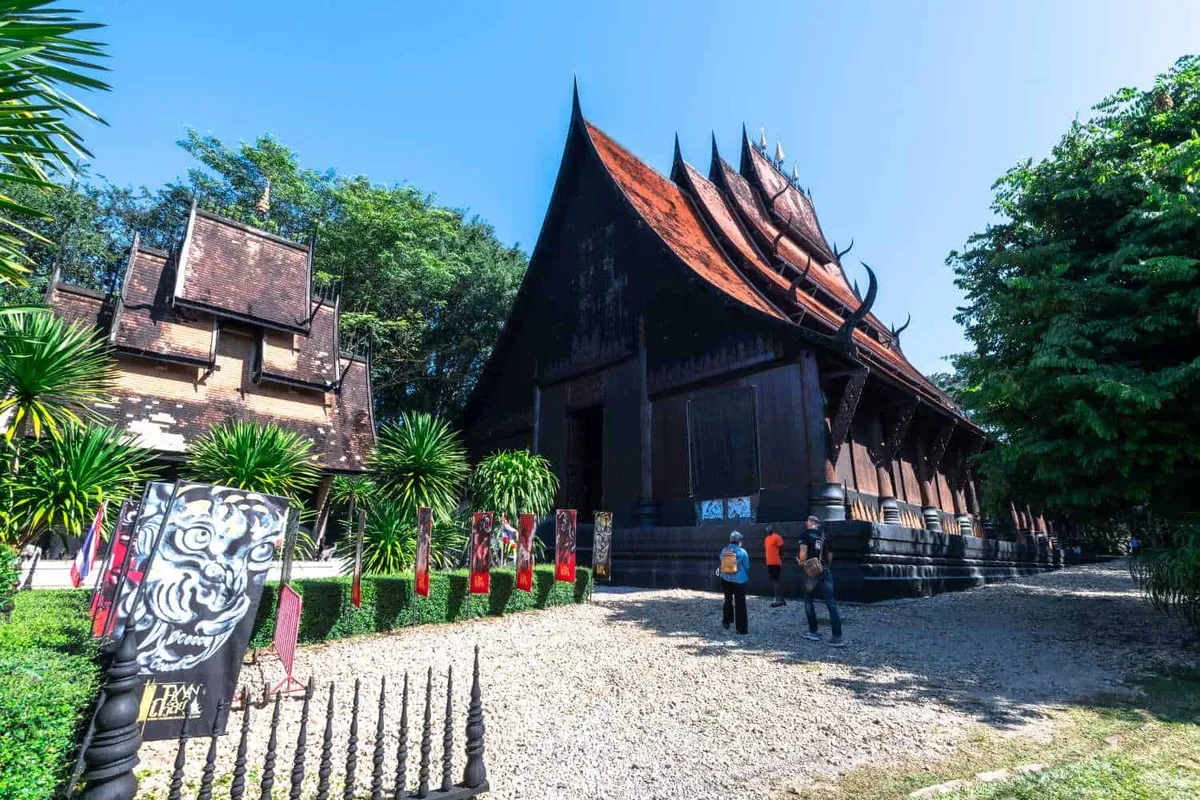
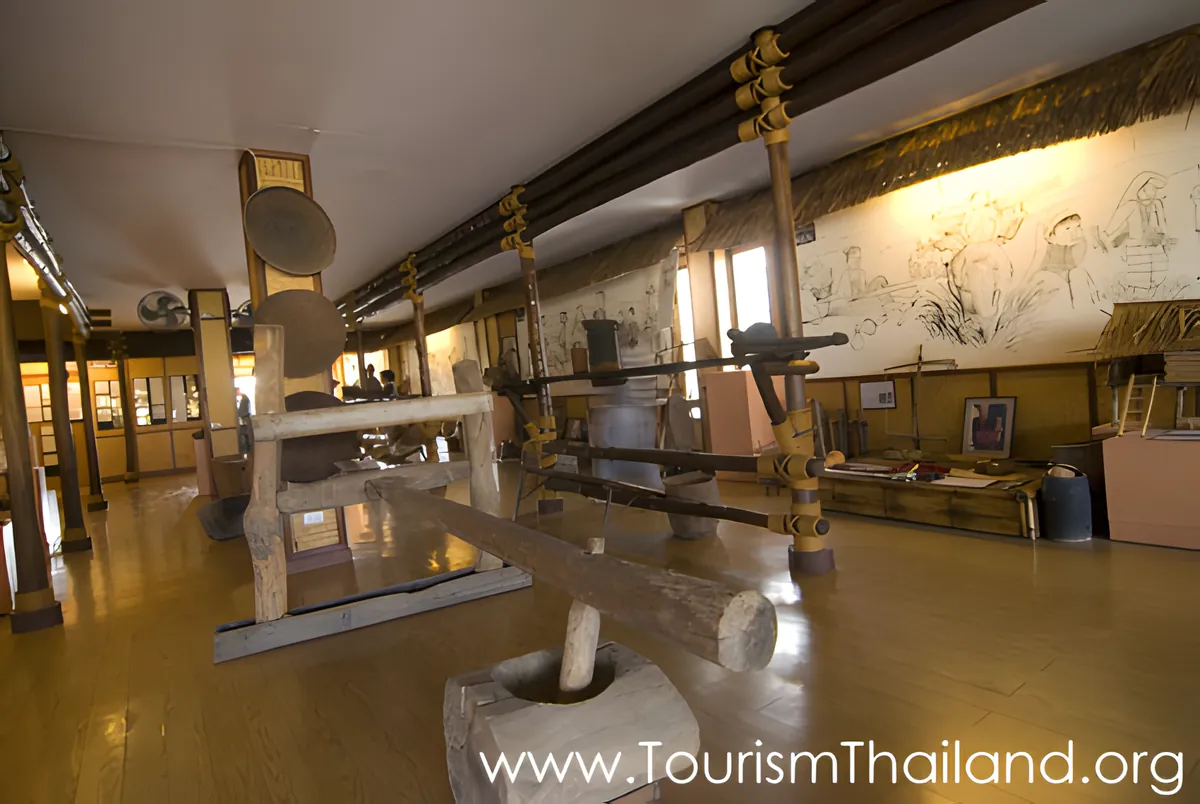
Three buildings anchor the site. Haw Kham (the Golden Pavilion) is the centrepiece — a temple-like tower built in 1984 from the salvaged timber of 32 traditional Chiang Rai teak houses, presented to the Princess Mother for her 84th birthday and now Chiang Rai’s first dedicated Lanna art museum. Haw Kham Noi, the smaller building beside it, displays 19th-century Lanna murals. Haw Kaew rounds out the trio with permanent and rotating exhibitions built around carved teak pieces. The collection itself dates largely to the 1980s, when Foundation directors began acquiring later-Lanna-period artifacts (18th to early 20th century) that were otherwise being sold off into the antique trade and leaving the region.
Between the pavilions, the grounds are landscaped with lawns and shade trees rather than left as bare compound space — a quiet setting given the park sits in Rop Wiang, the same central subdistrict as Chiang Rai’s night market and clock tower.
Insider Tip: Photography rules and English signage vary by building — check with staff at the entrance before shooting inside Haw Kham, where lighting is kept low to protect the older pieces.
- Founded: 1977, as Rai Mae Fah Luang
- Centrepiece: Haw Kham pavilion, built 1984 from 32 teak houses
- Entry: 200 THB (foreigners), 100 THB (Thai nationals)
- Hours: Tue-Sun 10:00-18:00, closed Mondays
- Contact: 0 5371 6605-7
The park sits close to central Chiang Rai town. For more of the province’s contemporary and hill-tribe-focused art scene, pair a visit with Ban Dam (the Black House) or the Hill Tribe Museum and Education Center, which covers the same communities the original training centre served.
Location & Directions
313 Mu 7
Chiang Rai, Thailand
Show your taxi or Grab driver
อุทยานศิลปะวัฒนธรรมแม่ฟ้าหลวง
Frequently Asked Questions
What is Rai Mae Fah Luang?
Why is Princess Srinagarindra called "Mae Fah Luang"?
What's inside the Haw Kham pavilion?
Is the park open every day?
Are the murals in Haw Kham Noi original?
Spotted something out of date or incorrect? Let us know
Popular tours in Chiang Rai




Stay Near Mae Fah Luang Art and Cultural Park
Live prices for places closest to Mae Fah Luang Art and Cultural Park — tap a pin to compare.