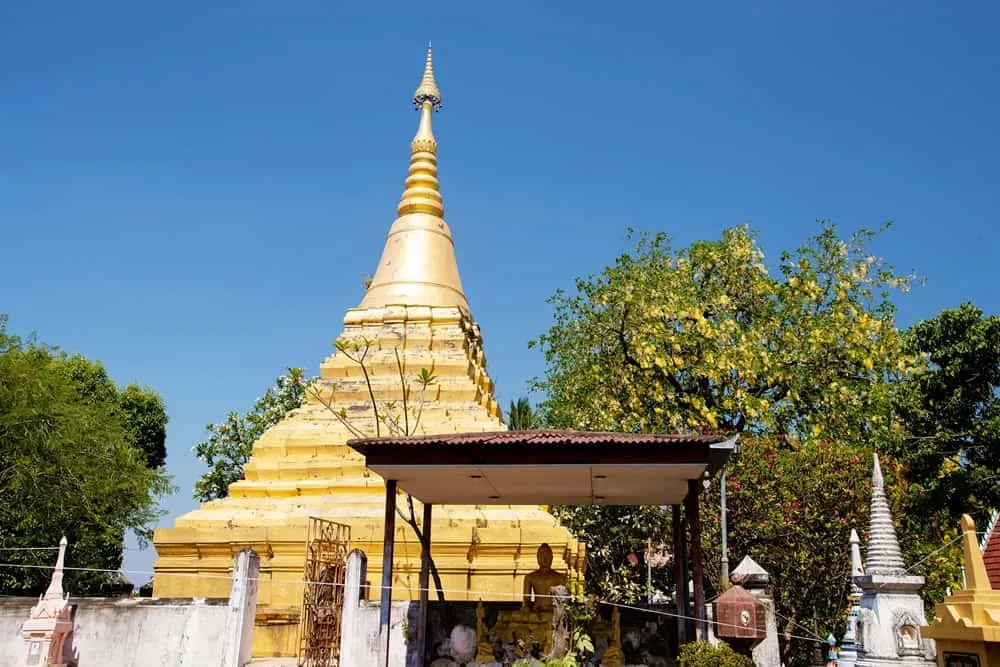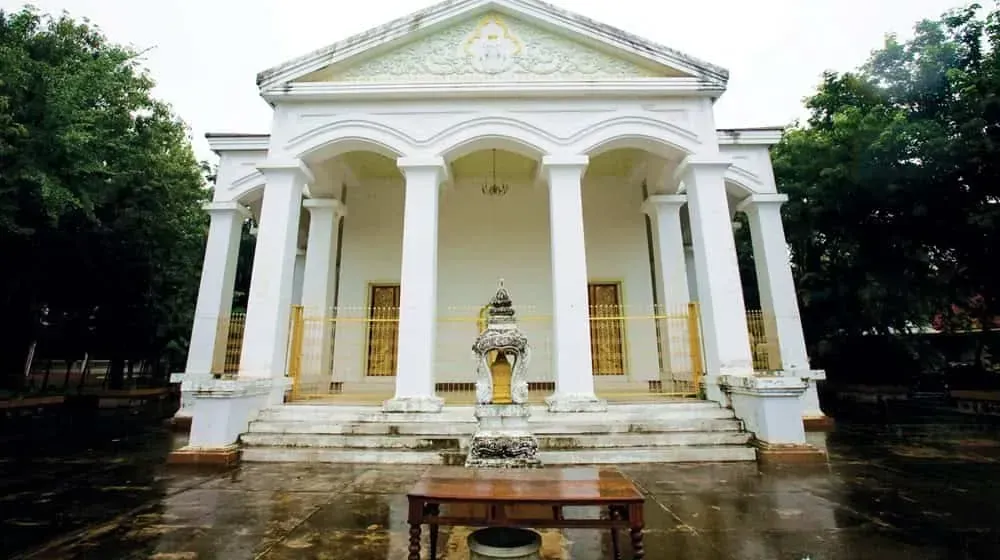


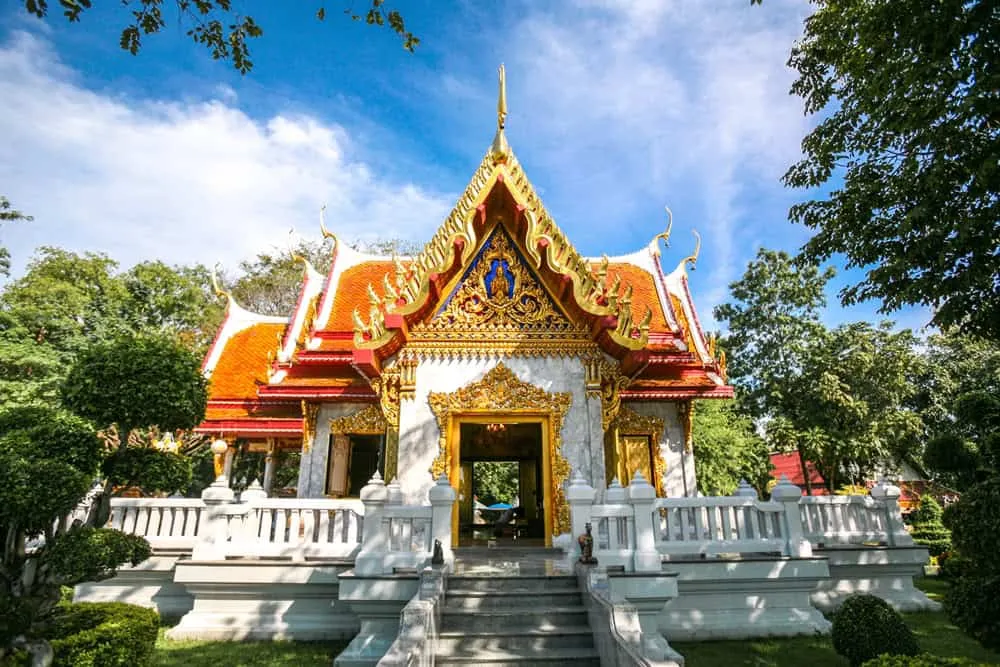
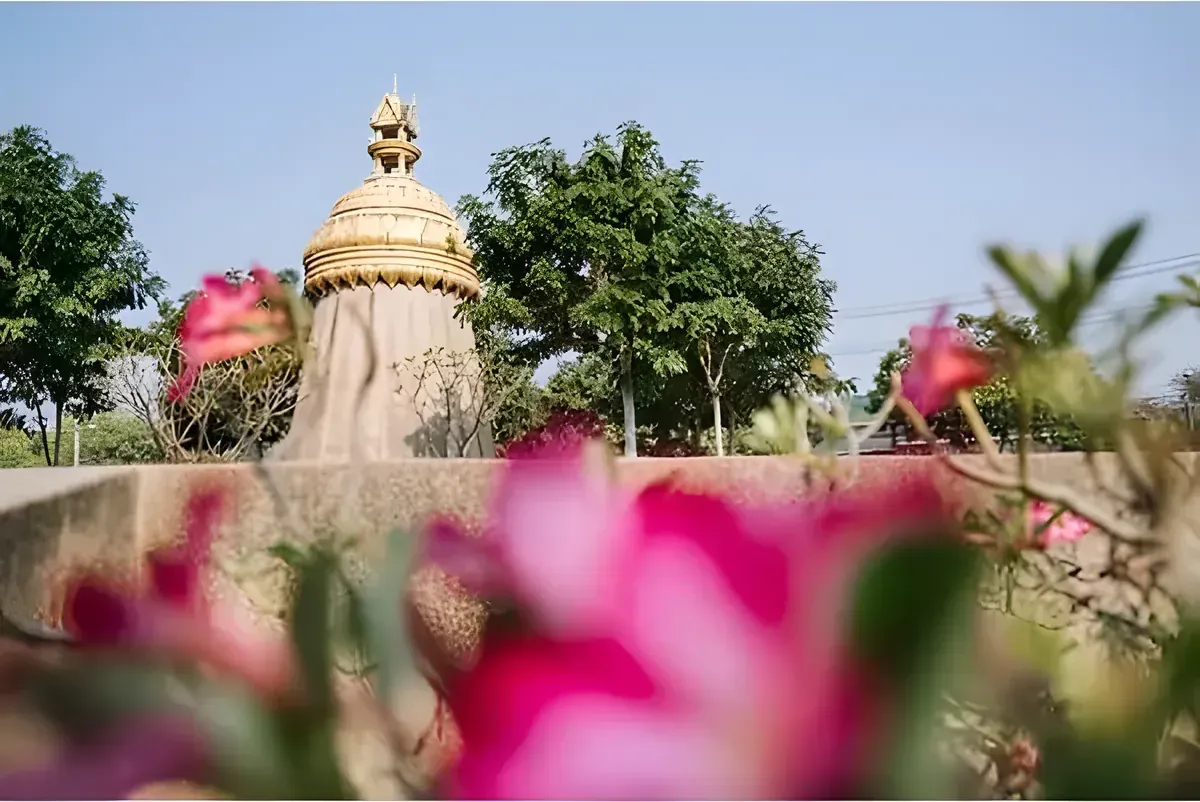
Wat Bot Manee Siboonrueng centres on a golden Mon-style chedi fronted by a Thai-style vihara, in Nong Luang subdistrict on the edge of Tak town. There’s no admission fee and no fixed visiting hours — the grounds stay open through the day.
The temple was founded in 1857 by Phraya Wichit Raksa, then the ruler of Tak city, with the ordination hall finished a decade later in 1867. It began life as two separate, adjoining temples — Wat Bot Manee Rat and Wat Sri Bunyrueng — divided only by a wall between the compounds. The two were formally combined into a single temple in 1954, taking the merged name it carries today. Tak itself sits on the old route between the central plains and the Burmese border — King Taksin governed the town before he rose to unite Siam after the fall of Ayutthaya, which is why the province’s shrine to him remains its best-known landmark today.
The vihara houses Luangpho Phutthamon, a bronze Buddha image in the Sukhothai style, seated in the Mara Vijaya posture with the right hand touching the earth. A Silpakorn University thesis on the building’s wall murals concluded the painting style blends Bangkok court conventions with Lanna influences, a mix attributed to the Rama V era when the murals were completed — evidence of Tak’s position on the old trade routes between central Siam and the north, rather than a purely northern building. Candlelight and incense smoke fill the vihara during the day, and the gilded chedi behind it catches the afternoon sun.
Insider Tip: Ask a caretaker to point out the mural panels near the entrance — the Fine Arts Department has them on record as a documented example of Rama V-era painting, but there’s no signage explaining this on-site.
- Entry fee: Free
- Hours: No fixed hours; open through daylight
- Founded: 1857, merged from two temples in 1954
- Main image: Luangpho Phutthamon, Sukhothai-style bronze Buddha
- Location: Nong Luang subdistrict, Mueang Tak district
Dress modestly and remove your shoes before entering the vihara. The temple is a short taxi or songthaew ride from Tak town centre, an easy add-on if you’re already visiting Wat Phra Boromthat or the King Taksin the Great Shrine elsewhere in the province.
Location & Directions
Mueang Tak, Tak
Tak, Thailand
Show your taxi or Grab driver
วัดโบสถ์มณีศรีบุญเรือง
Within Walking Distance




Frequently Asked Questions
What is the main Buddha image at Wat Bot Manee Siboonrueng called?
Is Wat Bot Manee Siboonrueng an old temple?
Why does the temple have two names combined?
Is entry free?
Is the architecture Lanna-style?
Spotted something out of date or incorrect? Let us know
Stay Near Wat Bot Manee Siboonrueng
Compare places to stay in Tak, or open the map for options closest to the attraction.